

The Benefits of Grain-Free Dog Food: A Science-Backed Nutrition Guide for 2026


Grain-free nutrition isn't just about what's missing; it's about the superior, animal-based proteins that take center stage for your dog's health. You've likely noticed how many pet owners are exploring the benefits of grain-free dog food to address persistent issues like chronic skin allergies, ear infections, or frequent digestive upset. It's frustrating to watch your pet struggle while you try to decode confusing marketing labels or worry about heart health reports. We understand that you view your dog as a family member and deserve clear, science-backed answers.
This guide will help you cut through the noise to discover how a high-quality, grain-free diet can provide skin relief and improved vitality for your companion. You'll learn exactly how to identify premium recipes that prioritize nutrient density over cheap fillers. We'll examine the latest 2026 labeling standards and clarify the current state of nutritional research so you can make an informed choice. From expert nutritional consultations to selecting the right holistic blend, we're here to help you improve your dog's quality of life today.
Key Takeaways
- Identify how replacing fillers like wheat and corn with nutrient-dense alternatives like sweet potatoes can stabilize your dog's energy levels.
- Explore the core benefits of grain-free dog food for managing chronic skin allergies, inflammatory responses, and sensitive digestion.
- Gain clarity on the DCM discussion by understanding the evidence-based distinction between dietary associations and causal links in 2026.
- Apply the "Meat First" checklist to your shopping routine to avoid common marketing traps like ingredient splitting and low-protein fillers.
- Consult with nutrition experts to select vetted holistic brands that act as a long-term investment in your pet's vitality and longevity.
What is Grain-Free Dog Food? Defining the Nutritional Shift
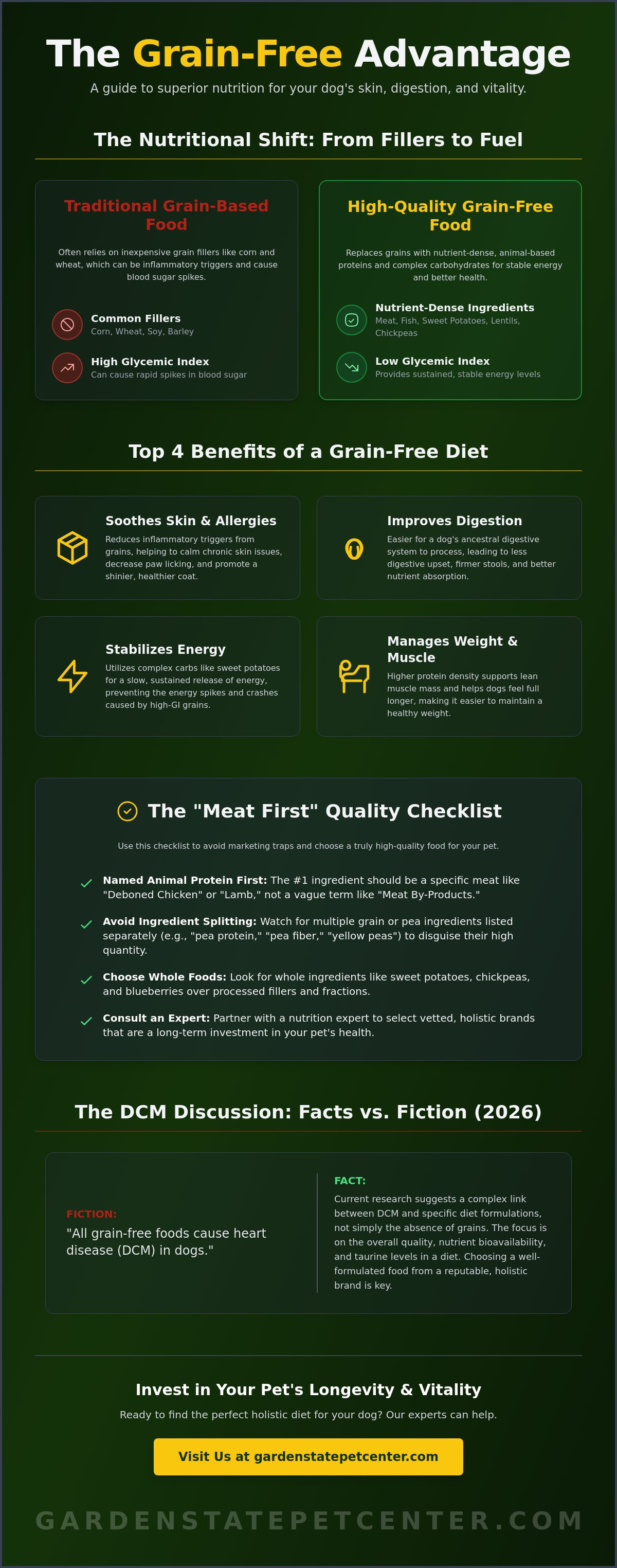
Grain-free dog food is a specialized nutritional category that removes all cereal grains from your pet's diet. This means the recipe completely excludes wheat, corn, rice, barley, and oats. For many years, mass-market kibble relied on these grains as inexpensive binders to hold the pellets together. However, modern pet nutrition has shifted toward high-quality alternatives. When researching What is Grain-Free Dog Food?, you'll find it represents a move away from "filler" culture and toward more nutrient-dense ingredients.
Understanding the benefits of grain-free dog food starts with recognizing that "grain-free" isn't always "low-carb." Instead, these recipes use complex carbohydrates like sweet potatoes, chickpeas, and lentils to provide energy. This shift focuses on providing steady fuel without the inflammatory potential often associated with processed wheat or corn. It's about optimizing the quality of every calorie your dog consumes.
To better understand this concept, watch this helpful video:
Grains vs. Grain-Free: A Comparison of Ingredients
Traditional pet foods often use corn gluten meal or wheat middlings to create structure. These ingredients have a high Glycemic Index (GI), which can cause rapid spikes in blood sugar. In contrast, grain-free alternatives like lentils and chickpeas have a lower GI. They digest more slowly, providing a sustained release of energy. You can see this difference in our curated dry dog food selection, where we prioritize recipes that use functional fibers. These alternatives don't just hold the food together; they support healthy gut bacteria and provide essential minerals that grains often lack.
The Evolutionary Argument for Grain-Free Nutrition
The canine digestive tract is remarkably efficient at processing animal proteins and fats. While dogs have evolved to handle some starch, their ancestral diet was largely devoid of the heavy grain loads found in modern commercial foods. Biologically appropriate nutrition focuses on what a dog's body is designed to thrive on. Grain-heavy diets can sometimes lead to digestive strain or skin issues because they don't align with these ancestral needs. By choosing a grain-free path, you're embracing a philosophy that prioritizes animal-based proteins as the primary source of vitality. This approach respects your dog's physiology while utilizing modern science to ensure a balanced, holistic meal.
Top 4 Benefits of Grain-Free Dog Food for Canine Health
Switching your dog to a grain-free diet often leads to visible, tangible improvements in their daily comfort and vitality. When you remove heavy fillers like corn and wheat, you make room for nutrient-dense ingredients that support your pet's biological needs. While some discussions like the FDA investigation into grain-free diets have dominated headlines, many pet owners continue to see transformative results for their dogs' daily health. These improvements aren't just anecdotal; they're the result of high-quality protein sources and lower systemic inflammation.
One of the primary benefits of grain-free dog food is the support it provides for muscle maintenance and weight management. Because these recipes typically feature higher protein density, your dog receives more usable energy per cup. This helps maintain lean muscle mass while keeping them satiated for longer periods. If your dog struggles with weight, a grain-free diet can help by reducing the high-starch "empty calories" often found in traditional grain-heavy kibble.
Addressing Food Sensitivities and Chronic Allergies
Grain-based proteins can act as persistent inflammatory triggers for sensitive dogs. If you've noticed your dog constantly licking their paws, dealing with recurring ear infections, or struggling with a dull coat, a grain-free shift might be the solution. Premium grain-free recipes often utilize "novel proteins" like venison, duck, or lamb, which are less likely to trigger an immune response. Within weeks, most owners report seeing a shinier coat and clearer skin. You'll likely notice less scratching and a significant reduction in the redness associated with dietary sensitivities.
Enhanced Digestibility and Nutrient Bioavailability
Bioavailability refers to how much of the food's nutrition your dog's body actually absorbs. Grains often add significant "bulk" to a diet, which results in large, soft stools and wasted nutrients. In contrast, high-protein, grain-free recipes are designed for maximum efficiency. When a dog processes meat-first nutrition, their digestive system works more effectively, leading to firmer, smaller stools and better energy levels. We invite you to explore our dog dry food collections to see examples of these high-absorption recipes. By focusing on ingredients your dog can actually use, you ensure that every bite supports their long-term health. If you aren't sure which formula fits your pet's specific needs, consider scheduling one of our pet nutritional consultations to find the perfect match.
Understanding the DCM Controversy: Facts vs. Fiction in 2026
Navigating pet nutrition often requires looking past sensational headlines to find the underlying science. In 2026, our understanding of canine dilated cardiomyopathy (DCM) has matured significantly since the initial concerns raised in 2018. The FDA concluded its formal investigation by noting there was insufficient data to establish a direct causal link between grain-free diets and heart disease. Instead, the focus has shifted toward the overall nutritional balance and the quality of ingredients used in specific formulations. While early reports noted that 90% of dogs in DCM cases were eating grain-free food, this was an association rather than proof of cause. Today, pet owners can enjoy the benefits of grain-free dog food with confidence by choosing brands that prioritize rigorous testing and amino acid integrity.
The distinction between a "causal link" and an "association" is vital for any pet parent to understand. An association means two things happened at the same time; a causal link means one definitely caused the other. According to veterinary nutritionists on DCM, the issue is likely multifaceted, involving genetics, ingredient processing, and nutrient interactions. By 2026, premium manufacturers have evolved their recipes to ensure that the benefits of grain-free dog food are paired with complete nutritional profiles that support heart health from every angle.
What Recent Research Tells Us About Heart Health
Post-2020 studies have shed light on why some diets were more scrutinized than others. Researchers found that "boutique" brands often lacked the long-term feeding trials and consistent nutritional analysis performed by established premium manufacturers. We now know that genetics play a massive role, as certain breeds show a higher predisposition to heart issues regardless of their diet. Current veterinary consensus emphasizes nutrient balance over the mere presence or absence of grains. This shift in perspective allows us to focus on the quality of the animal protein rather than worrying about the carbohydrate source alone.
The Role of Taurine and L-Carnitine
Taurine and L-carnitine are essential amino acids that act as the primary building blocks for healthy cardiac muscle function. While most dogs can synthesize taurine on their own, they need high-quality animal proteins to provide the necessary precursors. Some grain-free diets in the past relied too heavily on legumes, which might have interfered with how a dog absorbs these vital nutrients. In 2026, the highest quality grain-free recipes are formulated with supplemental taurine and a diverse array of animal tissues. We recommend looking for brands that perform regular, transparent nutritional analysis. This ensures your dog receives the "meat-first" nutrition they need to thrive while maintaining a strong, resilient heart.
How to Choose the Best Grain-Free Dog Food: A Quality Checklist
Selecting the right recipe is the only way to truly unlock the benefits of grain-free dog food. Not all bags on the shelf are created equal. You must look beyond the "grain-free" claim on the front of the packaging and scrutinize the actual ingredient list. A high-quality formula should prioritize animal-based nutrition over cheap binders. Start by identifying "Meat First" as your non-negotiable standard. The first ingredient should always be a specific animal protein, such as deboned chicken, beef, or salmon. If the first ingredient is a starch or an unnamed "meat meal," the food lacks the biological appropriateness your dog needs to thrive.
Be wary of a common industry trick known as "ingredient splitting." This occurs when a manufacturer lists several different types of the same starch separately, such as pea protein, pea fiber, and pea starch. By splitting them up, each individual component weighs less, allowing the meat source to appear higher on the list than it actually is. To avoid this, look for recipes that utilize "Whole Food" carbohydrates like sweet potatoes or chickpeas rather than refined starches like potato flour. These whole ingredients provide better fiber and a more stable energy release for your pet.
Reading the Label: Red Flags and Green Lights
Train your eyes to spot specific red flags during your search. Avoid any products containing "animal by-product," "unnamed fats" (like poultry fat), or "excessive pea protein." These are often signs of a lower-tier formula. Instead, look for green lights: specific meat meals (like "Salmon Meal"), chelated minerals for better absorption, and natural preservatives like tocopherols. For personalized guidance on your pet's specific health requirements, we recommend speaking with a pet nutritional expert who can help you navigate these complex labels.
Transitioning Your Dog to a Grain-Free Diet Safely
Never switch your dog's food "cold turkey." A sudden change can shock the canine microbiome, leading to the digestive upset you are trying to avoid. Follow this 7-day transition schedule to ensure success:
- Days 1-2: 25% new grain-free food / 75% current food
- Days 3-4: 50% new grain-free food / 50% current food
- Days 5-6: 75% new grain-free food / 25% current food
- Day 7: 100% new grain-free food
During this week, monitor your dog for "success signals." You should see consistent, firm stools and a steady increase in energy levels. If you're ready to start this journey, browse our premium grain-free dry food collections to find a formula that meets these high professional standards. Quality nutrition is a long-term investment in your dog's health and happiness.
Elevating Your Dog’s Health with Premium Holistic Nutrition
Choosing the right nutrition is a long-term investment in your pet's wellness and longevity. It's about more than just managing symptoms; it's about providing the biological building blocks for a more vibrant life. The benefits of grain-free dog food are most apparent when you embrace a holistic approach that prioritizes ingredient integrity. By moving away from mass-produced fillers, you're giving your dog a diet that supports their immune system, joint health, and cognitive function for years to come. This commitment to quality ensures that your companion doesn't just survive, but thrives in every stage of life.
Variety is another essential component of a successful nutritional plan. While high-protein kibble is a great foundation, many owners find success by incorporating raw or freeze-dried grain-free options. These formats, such as those from SmallBatch or Vital Essentials, preserve natural enzymes and nutrients that high-heat processing can sometimes diminish. Rotating between different protein sources and textures can keep your dog engaged with their meals while providing a broader spectrum of amino acids and minerals. It's a proactive way to maintain their interest and health simultaneously.
Why Expert Curation Beats Big-Box Retail
Mass-market retailers often prioritize volume over value. This frequently results in "one-size-fits-all" recipes that don't account for the specialized needs of sensitive dogs. We take a different path by offering a curated selection of expert-vetted brands. Our focus on specialized pet nutrition means every bag on our shelves has been scrutinized for clinical precision and safety. We believe that every dog deserves access to high-quality diets, which is why we offer nationwide shipping to bring these professional-grade solutions directly to your door. You can trust that the brands we carry, from Fromm Family to Open Farm, meet the highest standards of the industry.
Finding the Right Fit for Your Dog
Every dog is an individual with unique metabolic requirements. We encourage you to shop our dog food collections to explore our vetted grain-free options. Whether you're looking for gently cooked meals or air-dried formulas, we have a solution that fits your pet's lifestyle. To stay informed about the latest shifts in pet health, invite you to engage with our digital platforms for ongoing nutritional updates and community tips. If you're feeling overwhelmed by the choices, don't guess. Schedule one of our pet nutritional consultations today to receive a personalized plan tailored to your dog's specific needs. We're here to be your knowledgeable partner in your pet's health journey.
Empower Your Pet’s Health Journey
Optimizing your dog's nutrition involves more than just reading the front of a bag. It requires a commitment to high-quality animal proteins and a clear understanding of how different ingredients impact long-term wellness. You now have the tools to identify premium formulations that avoid the pitfalls of ingredient splitting while embracing the benefits of grain-free dog food for better digestion and inflammatory relief. By focusing on nutrient density and biological appropriateness, you're making a proactive choice for your pet's future.
We're here to help you navigate these choices with clinical precision and specialized care. Our inventory features only expert-vetted premium brands, and we offer the guidance of an on-site certified pet nutritionist for personalized support. With nationwide shipping on all holistic diets, accessing superior nutrition is simple and reliable. We invite you to explore our collection and see the difference that professional-grade nutrition can make for your companion.
Shop Our Curated Selection of Premium Grain-Free Dog Food
Your dog's health is our priority, and we're excited to help them thrive for years to come.
Frequently Asked Questions
Is grain-free dog food better for dogs with allergies?
Grain-free diets are highly effective for dogs with specific sensitivities to proteins found in wheat, corn, or barley. By removing these common triggers, you can significantly reduce systemic inflammation that leads to chronic itching and redness. Many owners report the benefits of grain-free dog food include clearer skin and a reduction in persistent ear infections within the first few weeks of the switch.
Does grain-free dog food cause heart disease?
Current scientific data from the FDA's multi-year investigation concluded there is insufficient evidence to establish a direct causal link between grain-free diets and canine dilated cardiomyopathy (DCM). The focus in 2026 has shifted toward ensuring recipes have a complete amino acid profile, including supplemental taurine. Choosing a premium, expert-vetted brand ensures your dog receives the heart-supportive nutrients they need without unnecessary fillers.
What do veterinarians say about grain-free diets in 2026?
Modern veterinary consensus emphasizes the importance of nutrient balance and ingredient quality over the simple presence or absence of grains. Most professionals now recommend looking for high-quality animal proteins as the primary ingredient and ensuring the diet is formulated for your dog's specific life stage. They often suggest grain-free options for pets struggling with digestive sensitivity or recurring skin issues that haven't responded to traditional diets.
Can puppies eat grain-free dog food safely?
Puppies can thrive on grain-free diets as long as the formula is specifically labeled for "growth" or "all life stages." These recipes provide the high protein levels necessary for healthy muscle development and skeletal growth. Always check the label to ensure the food meets AAFCO nutritional standards to support your puppy's rapid developmental needs during their first year.
How do I know if my dog needs a grain-free diet?
Watch for signs of dietary intolerance such as frequent gas, loose stools, chronic paw licking, or a dull, brittle coat. If your dog seems lethargic after eating grain-heavy meals, they might be struggling to process high-glycemic binders. A nutritional consultation can help you determine if the benefits of grain-free dog food align with your pet's specific health profile and activity level.
What are the best grain alternatives in dog food?
Premium recipes utilize complex carbohydrates like sweet potatoes, chickpeas, and lentils to provide steady energy. These ingredients offer a lower Glycemic Index than corn or wheat, which helps prevent blood sugar spikes. They also provide essential dietary fiber and minerals that support a healthy gut microbiome and consistent stool quality.
Is grain-free dog food more expensive than regular food?
The cost of grain-free food generally reflects the higher concentration of animal-based proteins and the inclusion of whole-food ingredients. While the price per bag might be higher than mass-market kibble, the increased nutrient density often means you can feed smaller portions. This makes it a long-term investment in your pet's health that may reduce the need for specialized care related to allergies.
Will grain-free food help my dog lose weight?
Grain-free diets can assist with weight management by replacing empty starch calories with satiating proteins and fibers. High-protein recipes help your dog feel full for longer periods while maintaining lean muscle mass. When paired with proper portion control and regular exercise, these formulas can be a powerful tool for achieving a healthy body condition.

Article by
Victor Santucci
Victor Santucci is the owner of Garden State Pet Center in Audubon, NJ, where he specializes in premium pet nutrition, exotic animals, and expert-level care. With years of hands-on experience and a passion for helping pets thrive, Victor is dedicated to educating pet owners on proper nutrition, enrichment, and species-specific care. His mission is simple: provide every pet with the highest quality products and every customer with honest, knowledgeable guidance.
Share this post
- 0 comment
- Tags: benefits of grain-free dog food, Canine Diet, DCM, Digestive Health, Dog Allergies, Dog Nutrition, Grain-Free Dog Food, Pet Health, Reading Pet Food Labels