

How to choose a dog harness Best Practices and Expert Advice


What if your dog's harness was actually a sophisticated communication tool rather than just a way to keep them from running off? Many owners struggle with the constant battle of pulling or the terrifying moment a pup slips out of a collar. Learning how to choose a dog harness is about more than just picking a favorite color. It's about protecting your companion's delicate trachea and ensuring their physical comfort. With 65.1 million dog-owning households in the U.S., finding the right gear is a common challenge that impacts the daily quality of life for both you and your pet.
We understand the frustration that comes with endless clips, straps, and materials. You want a peaceful walking experience and the confidence that your gear won't cause painful chafing or restricted movement. This guide helps you master the art of selecting the perfect harness to ensure your dog’s safety and long-term health. We'll break down the best practices for different breeds and walking styles, providing expert advice to help you invest in high-quality equipment that truly lasts.
Key Takeaways
- Protect your dog's sensitive neck by transitioning to a torso-based restraint system designed to prevent tracheal damage.
- Identify the functional differences between attachment points to manage pulling behavior without causing discomfort.
- Master how to choose a dog harness that matches your pet's specific build, including specialized Y-shaped plates for broad-chested breeds.
- Apply the "Two-Finger Rule" and precise measurement techniques to ensure a comfortable, escape-proof fit.
- Select professional-grade materials that support your dog's long-term physical health and active lifestyle.
Beyond the Collar: Why a Harness is Essential for Modern Dog Care
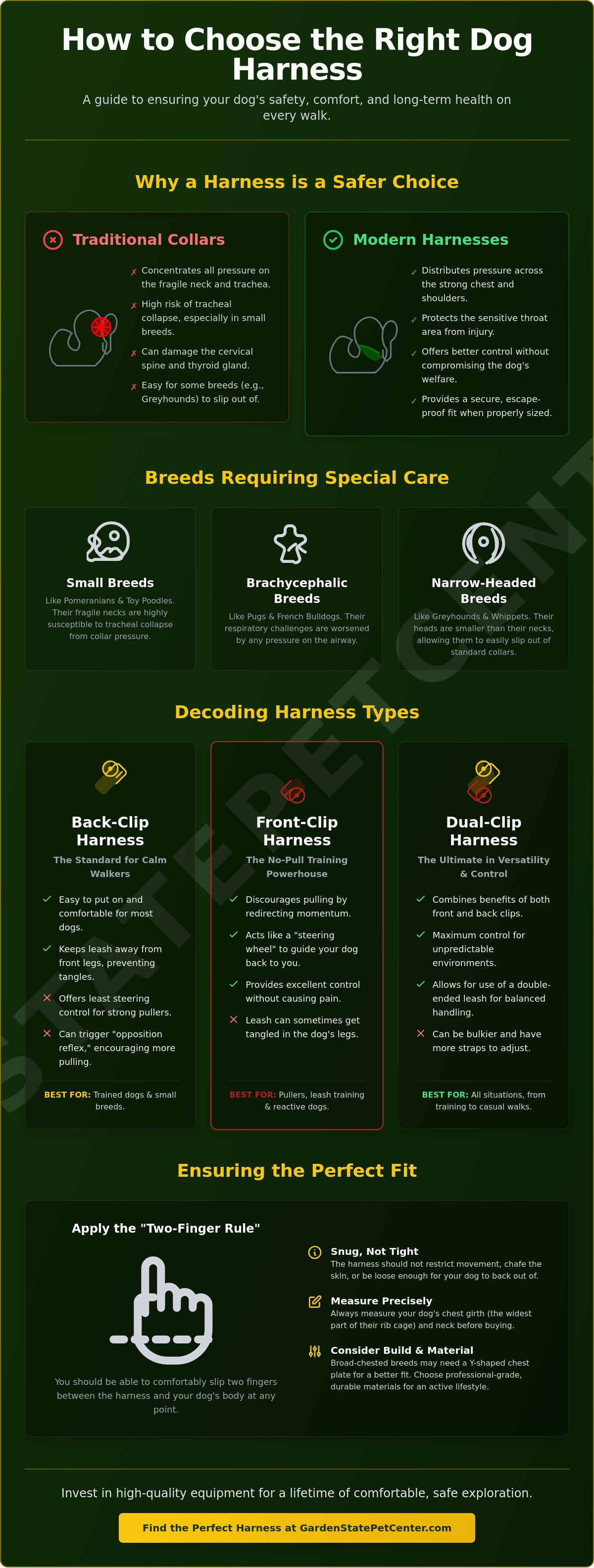
A dog harness serves as a torso-based restraint system designed to prioritize safety and physical health above all else. Unlike a traditional collar that focuses all tension on the throat, a harness distributes pressure across the strongest parts of the body. Learning how to choose a dog harness is a vital step for any responsible owner who wants to avoid long-term injury. For many breeds, this isn't just a personal preference; it's a medical necessity that ensures every walk remains a positive experience.
Traditional collars pose a significant risk of tracheal collapse, a condition where the cartilage rings of the windpipe weaken and flatten over time. This is particularly dangerous for small breeds like Pomeranians or Toy Poodles, whose necks are incredibly fragile. Brachycephalic breeds, such as Pugs and French Bulldogs, also require this specialized care. These dogs already face respiratory challenges due to their flat faces, and any extra pressure on the neck can severely restrict their oxygen intake. Additionally, dogs with unique anatomy like Greyhounds or Whippets often require a harness because their narrow heads allow them to slip out of standard collars with ease.
The Biomechanics of Safe Walking
Properly fitted gear shifts the force of a pull from the delicate neck to the sturdy chest and shoulders. When a dog lunges while wearing a collar, the sudden tension impacts the cervical spine and the thyroid gland, potentially leading to inflammation or metabolic issues. This Dog Harness Overview highlights how these tools offer better control without compromising the animal's welfare. In canine anatomy, load distribution refers to the intentional spreading of mechanical force across a wider surface area of the musculoskeletal system to minimize localized stress.
Identifying When Your Dog Specifically Needs a Harness
Watch your dog closely during walks for signs of distress. If you hear persistent coughing or gagging when the leash goes taut, your current setup is likely causing harm. Senior dogs often benefit from a harness as well, as many designs include handles to help owners assist with mobility on stairs or into vehicles. Puppies also need this protection during the lunging phase of early training to prevent them from snapping their necks back when they reach the end of the leash. Mastering how to choose a dog harness during these formative months sets the foundation for a lifetime of comfortable, safe exploration.
Decoding Harness Types: Front-Clip, Back-Clip, and Dual-Attachment
Understanding the mechanical differences between attachment points is the first step in learning how to choose a dog harness that actually works for your lifestyle. Each design serves a distinct purpose in how it manages your dog's momentum and movement. The right choice can transform a chaotic walk into a controlled, pleasant experience. Beyond just the clips, the physical structure of the harness, such as step-in versus over-the-head models, caters to different temperaments. If your dog is "head-shy" and dislikes things moving over their ears, a step-in model is a gentle alternative that eliminates stress before the walk even begins.
For high-control situations or working environments, tactical harnesses with built-in handles offer an extra layer of safety. These handles allow you to quickly secure your dog in crowded spaces or assist them over difficult terrain during a hike. When researching Veterinarian Advice on Harnesses, you'll find that the goal is always to balance effective restraint with the dog's natural range of motion.
Back-Clip Harnesses: The Standard for Calm Walkers
Back-clip models are the most common choice for small dogs and those who have already mastered leash manners. They keep the leash away from the dog's front legs, reducing the risk of tripping. However, they can trigger the "opposition reflex" in dogs that like to pull. This is a natural instinct where the dog pulls harder against the pressure felt on their back. While they're easy to use, they offer the least amount of steering control for reactive pets.
Front-Clip and Dual-Clip: The Training Powerhouses
Front-chest attachments act much like a steering wheel. When your dog lunges forward, the leash tension gently pivots their body back toward you, naturally discouraging the pulling behavior without causing pain. A dual-clip harness provides the ultimate communication bridge. It features attachment points on both the chest and the back, giving you maximum control in unpredictable environments. You can use the front clip for training in busy areas and switch to the back clip once you reach an open park.
Success with a new harness often depends on how you introduce it. Pair your training sessions with high-value dog treats to build a positive association with the gear. This ensures your dog feels excited rather than anxious when the harness comes out. If you're ready to upgrade your walking routine, explore our selection of premium dog leashes and accessories to find a durable match for your new harness. Mastering how to choose a dog harness is easier when you have the right tools and a bit of patience.
Matching the Harness to Your Dog’s Build and Activity Level
Selecting the right equipment requires a deep understanding of your dog's unique physical architecture. Broad-chested breeds like Bulldogs, Boxers, and Pit Bulls have a deep, wide stance that standard harnesses can often restrict. For these powerful animals, a "Y-shaped" chest plate is the gold standard. This specific design sits directly on the sternum, leaving the shoulder joints completely free to move without interference. When you're determining how to choose a dog harness, look at the front of the gear; if the straps cross horizontally like a "T," they might impede your dog's natural gait and cause long-term joint strain.
Material choice is just as critical as the physical shape. Lightweight mesh offers superior breathability for summer walks or high-humidity environments, while heavy-duty nylon provides the structural integrity needed for strong pullers. If your pet has sensitive skin or short fur, prioritize fleece-lined or padded straps. These prevent the painful friction known as "harness burn" that often occurs in the sensitive "armpit" area behind the front legs. Remember that physical comfort is a pillar of holistic health. A well-fitted harness perfectly complements a premium dog diet, ensuring your pet is healthy from the inside out.
Harnesses for High-Energy and Outdoor Adventures
Active dogs need gear that can keep up with rugged terrain and varying weather conditions. If you enjoy hiking or trail running, look for water-resistant fabrics and reflective stitching for low-light visibility. A built-in "lift" handle on the back is a vital safety feature for helping your companion over fallen logs or rocky inclines. Lightweight materials are essential for these adventures to prevent unnecessary fatigue during long-distance endurance walks.
The Connection Between Weight Management and Gear
Nutrition directly impacts how your walking gear fits over time. Fluctuations in body condition, often managed by dry food quality, can change your dog's girth measurements significantly. This is why multiple adjustment points are critical for any high-quality harness. They allow the gear to grow or shrink with your pet, maintaining a safe and snug fit regardless of seasonal weight changes. A healthy weight makes for a more comfortable harness experience by preventing the straps from digging into soft tissue or sagging loosely. When you master how to choose a dog harness, you're investing in a tool that supports your dog's active lifestyle and nutritional goals.
The Perfect Fit: Measuring and Maintaining Your Dog’s Gear
Achieving a secure fit is the final, most critical stage of learning how to choose a dog harness. A harness that is too loose becomes an escape risk, while one that is too tight can cause bruising or restrict breathing. The "girth" is your most important metric; it's the circumference of the widest part of your dog's rib cage, usually just behind the front legs. If the gear shifts significantly when the dog moves, it's likely too large. Conversely, if you see the straps "cutting" into the skin or causing the dog to walk with a stiff, unnatural gait, it's likely restricting their shoulder blade movement.
Many guides mention the "Two-Finger Rule," but precision matters for different harness styles. You should be able to slide two fingers flat between the strap and your dog's body at two specific locations: the base of the neck and the chest girth strap. At the neck, this prevents pressure on the windpipe. At the chest, it ensures the dog can't back out of the harness while still allowing for full lung expansion during heavy exercise. If you can fit more than two fingers, the dog might slip out; if you can't fit any, it's too tight.
Step-by-Step Measurement Guide
Grab a soft measuring tape or a piece of string and a ruler to get started. Focus on three critical points: the base of the neck where a collar usually sits, the chest girth at its widest part, and the sternum length. This last measurement is the distance from the chest bone to the end of the rib cage. Always measure while your dog is standing. Measuring a sitting or lying dog can result in a 10% to 15% variance in girth size, which often leads to an improperly sized purchase.
Long-Term Maintenance and Safety Checks
Inspect your gear every week for frayed edges, cracked plastic buckles, or rusted D-rings. Salt from winter roads or sand from the beach can degrade nylon webbing over time if not rinsed away promptly. For cleaning, hand wash the harness in warm water with a mild pet-safe detergent to remove mud and odors. If you use a machine, place it in a mesh laundry bag to protect the hardware and use a gentle cycle. Retire any harness immediately if the webbing shows signs of thinning or if a buckle no longer "clicks" securely into place.
Ready to put these measurements to use? Find a reliable match for your pup by browsing our premium dog accessories and gear. Mastering how to choose a dog harness ensures every outdoor excursion is both safe and stylish for your companion.
Elevating Your Walk: Why Quality Gear Matters
Investing in a professional-grade harness is a long-term health decision that pays dividends in your dog's comfort and safety. Throughout this guide, we've explored the biomechanics of load distribution and the importance of a precise fit. Choosing high-quality gear ensures that you aren't just restraining your pet, but supporting their physical integrity during every excursion. When you understand how to choose a dog harness, you move beyond basic containment and into the realm of specialized care. This commitment to quality gear is a natural extension of a holistic lifestyle, where every choice, from nutrition to walking equipment, contributes to your companion's total well-being.
Consult with experts who view themselves as your partners in pet care rather than just vendors. A knowledgeable resource can help you navigate the nuances of your dog's specific breed requirements, whether you're managing a delicate senior or a powerful, broad-chested puller. Reliability and excellence in gear selection prevent the frustration of equipment failure and the danger of tracheal damage. By prioritizing professional standards, you ensure that your dog remains protected, comfortable, and ready for a lifetime of exploration by your side.
To find gear that meets these high standards, you can explore the curated selection at Panda Cows, an online retailer that specializes in high-quality pet accessories and innovative supplies for active animals.
The Specialist Difference
Boutique pet stores provide a curated selection that big-box retailers simply cannot match. We focus on brands that prioritize canine ergonomics and use durable, high-end materials that stand up to the elements. Choosing a specialist means you're accessing a depth of knowledge tailored to sensitive or niche requirements. Explore our full dog collection to find gear that meets these rigorous standards for safety and design. Our goal is to make every pet owner feel at home while providing the clinical precision needed for high-level maintenance and care.
Ready for Your Next Adventure?
Take the next step in your dog’s walking journey with confidence. Remember that even the most advanced harness is only as effective as the training and love behind the leash. Use your new equipment as a bridge for better communication and a more peaceful bond during your daily routines. Our community of pet enthusiasts is active and attentive, ready to help you find the perfect solution for your dog's unique build and temperament. Browse our premium dog harnesses and gear today! Mastering how to choose a dog harness is the first step toward a more rewarding and safe outdoor life for you and your pet.
Secure Your Canine’s Comfort and Safety
Mastering how to choose a dog harness is a transformative step for your daily walks. By prioritizing torso-based restraint, you effectively safeguard your pet against tracheal injuries and chronic neck strain. Remember to match the harness geometry to your dog's specific physical build; this ensures that shoulder movement remains unrestricted for long-term joint health. A precise fit, verified by the two-finger rule, guarantees that your companion stays secure without the risk of painful chafing.
We provide specialized knowledge in canine ergonomics to help you make an informed decision for your pet's welfare. Our inventory features expert-selected brands known for their exceptional durability and reliability in the field. Whether you're navigating rugged trails or quiet neighborhood sidewalks, we're here to support your pup's physical well-being. Take advantage of our nationwide shipping on all dog accessories to get professional-grade equipment delivered straight to your home.
Explore Our Curated Collection of Premium Dog Gear today to elevate your walking experience. We look forward to helping you and your companion enjoy every step of your journey together with confidence and peace of mind.
Frequently Asked Questions
Is it better for a dog to wear a harness or a collar?
Harnesses are generally the safer choice for active walks, especially for small or brachycephalic breeds. They eliminate the risk of neck injury by moving the point of contact to the chest and shoulders. While collars are convenient for displaying identification tags, they don't provide the same level of physical protection. Learning how to choose a dog harness tailored to your pet's needs ensures they stay comfortable and secure during every outing.
Can a harness cause a dog to pull more?
Some models can indeed encourage pulling if they feature only a back-clip attachment. This happens because dogs have a natural instinct to pull against pressure felt on their spine. If your dog is an enthusiastic puller, look for a front-clip design. These tools allow you to redirect their energy back toward you, making it much easier to maintain control without using painful or restrictive methods.
How do I know if my dog’s harness is too tight?
Check the fit by sliding two fingers between the straps and your dog's skin. If you feel excessive resistance or can't fit your fingers at all, the gear is too tight. Pay close attention to the armpit area and the neck base. You should also watch for signs of discomfort like skin chafing or a sudden reluctance to walk, which often indicate the straps are digging into soft tissue.
What is the best type of harness for a dog that pulls?
A front-clip or dual-attachment harness is the most effective training tool for pullers. These designs provide a mechanical advantage by steering the dog's chest to the side when they attempt to lunge forward. This gentle redirection breaks their momentum and forces them to check in with you. It's a key part of understanding how to choose a dog harness that supports positive reinforcement training rather than just physical restraint.
Should I leave my dog’s harness on all day?
Remove the harness once you return home from your walk. Leaving it on all day can lead to painful skin irritation, fur matting, or "harness burn" in sensitive areas. There is also a safety risk if the straps get snagged on household items or crate wires while you aren't watching. Think of it as specialized outdoor gear that should be swapped for a comfortable collar once the adventure ends.
How do I measure my dog for a harness without a tape measure?
Use a non-stretch string or even your dog's leash to wrap around the widest part of their rib cage. Mark the meeting point with a pen or your finger, then measure that segment against a standard ruler or a carpenter's level. This method allows you to get an accurate girth reading even without specialized tools. Accuracy is vital to ensure the gear doesn't sag or allow for an easy escape.
Are front-clip harnesses safe for all breeds?
Front-clip models are safe for most breeds, but the placement of the chest strap is critical. It should never sit directly over the shoulder blades, as this can alter a dog's natural gait and lead to joint issues. For broad-chested dogs, a Y-shaped front is often the most ergonomic choice. This ensures the pressure stays on the sternum while allowing the front legs a full range of motion.
What should I do if my dog is between harness sizes?
Opt for the larger size if your dog falls between two different measurements. Most high-quality harnesses feature multiple adjustment points that allow you to tighten the straps for a customized fit. A smaller size might be too restrictive or cause the buckles to sit in uncomfortable spots. Choosing the larger option gives you the flexibility to accommodate seasonal coat changes or slight fluctuations in your dog's weight.

Article by
Victor Santucci
Victor Santucci is the owner of Garden State Pet Center in Audubon, NJ, where he specializes in premium pet nutrition, exotic animals, and expert-level care. With years of hands-on experience and a passion for helping pets thrive, Victor is dedicated to educating pet owners on proper nutrition, enrichment, and species-specific care. His mission is simple: provide every pet with the highest quality products and every customer with honest, knowledgeable guidance.
Share this post
- 0 comment
- Tags: dog care, dog harness, dog safety, dog training tips, dog walking, harness fit, how to choose a dog harness, no-pull harness, pet supplies