


Cat Shedding Supplements: Quality Ingredient Guide


No supplement can stop a cat’s natural shedding, but balanced nutrition can support healthy skin and a well-maintained coat. Cat supplements for shedding may help fill nutritional gaps, and omega-3 fatty acids are one ingredient to understand when considering skin and coat support.
Finding loose fur everywhere is frustrating, especially when you already brush your cat and keep up with their care. Shedding can change with the seasons or continue more consistently indoors, so extra fur alone doesn’t mean your cat needs a supplement.
Learn how omega-3s and ingredient quality relate to coat health, what seasonal changes and possible skin allergies can mean, and why supplements can’t replace veterinary advice. You’ll also find out when a sudden increase in shedding, skin irritation, or bald patches calls for a veterinary check.
Key Takeaways
- Look for how omega-3s fit into overall skin and coat nutrition, rather than expecting one ingredient to address every cause of shedding.
- Consider seasonal coat changes and indoor conditions when judging whether your cat’s shedding pattern has shifted.
- Choose cat-specific supplements with ingredients suited to your cat’s nutritional needs, and consult a veterinarian before adding supplements or combining them.
- Watch for skin irritation, bald spots, or a sudden increase in shedding, which can warrant veterinary attention.
- Learn how possible allergens and ingredients such as biotin and vitamins may relate to skin and coat support.
How omega-3s may support skin and coat health
Skin and coat health depend on more than one nutrient. Omega-3 fatty acids can contribute to skin moisture and have anti-inflammatory properties, but their role makes most sense within a complete diet. Looking at the overall nutrition picture helps explain why a single supplement may not address every coat concern.
Nutritional deficiencies and coat health
A nutritional deficiency occurs when a cat’s diet or changing needs don’t provide enough of a nutrient. Illness and age can alter those needs, affecting whether the current diet remains a good fit. Coat condition is one part of the picture, not a stand-alone measure of nutrition. Consider your cat’s food and health history together instead of assuming loose fur points to a specific deficiency.
Supplements for skin and coat health
Skin and coat supplements provide nutrients such as fatty acids and vitamins in a product designed for cats. Some formulas combine omega-3s with vitamin E, so reading the ingredient panel helps clarify what a product contains. The useful question is whether an ingredient addresses a genuine dietary need. A supplement label describes its contents, but it doesn’t establish that every listed nutrient is needed by every cat.
Diet supplies the broader foundation. Cats need good-quality protein, essential fatty acids, vitamins, and minerals to support healthy skin and fur. These nutrients have different roles, so focusing on omega-3 alone can overlook other parts of the diet. For example, reviewing a cat’s regular meals alongside a proposed supplement gives a more complete view than considering the supplement in isolation. A well-rounded feeding plan matters because coat support involves multiple nutrients working within the overall diet.
Omega-3 and omega-6 fatty acids both belong in that wider nutritional context. A balanced diet containing both can promote healthy skin and fur. This is why product selection should account for what the cat already eats, not simply add another source of one fatty acid. Cat food options can be considered as part of that broader diet review, rather than as a replacement for tailored nutritional guidance.
Probiotics serve a different purpose from fatty acids. They are beneficial bacteria that help maintain the balance of a cat’s gut microbiome. That makes them relevant to gut balance, while omega-3s contribute fatty acids to the diet. For example, choosing a probiotic because a cat has coat concerns alone confuses these distinct roles. Match each ingredient to its intended nutritional purpose, and consider the complete diet when assessing skin and coat support.
When increased shedding warrants a veterinary check
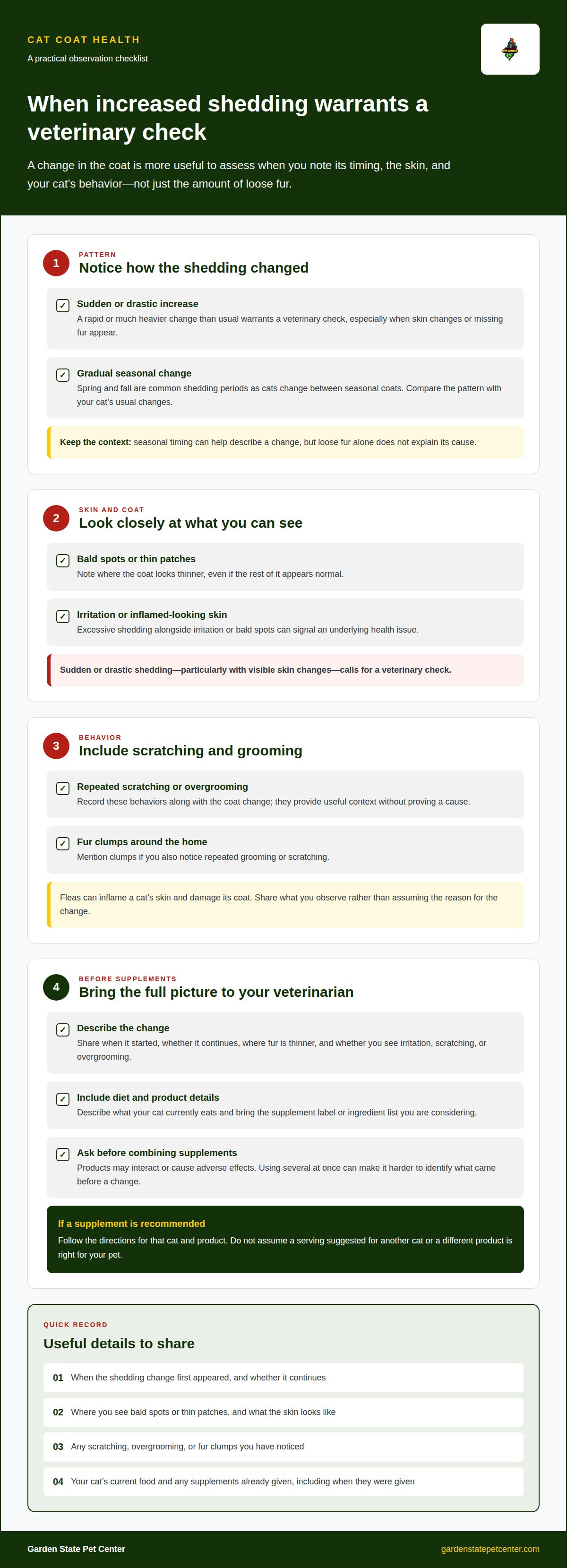
Pay attention when shedding changes suddenly or becomes much heavier than usual. A seasonal shift is different from a drastic increase accompanied by skin irritation or missing fur. Note whether the change developed gradually or appeared over a short period. Sudden or drastic shedding warrants a veterinary check, especially if bald spots or thin patches appear.
Look at your cat’s skin as well as the loose hair. Excessive shedding with irritation or bald spots can signal an underlying health issue. Note where the coat looks thinner and whether the skin appears inflamed. For example, pointing out a visible patch of fur loss gives the veterinarian a more specific observation than saying, “She’s shedding more.” Mention changes in the pattern even if the rest of the coat looks normal.
Include scratching and overgrooming in your observations. Fleas can inflame a cat’s skin and damage its coat, while scratching and overgrooming may contribute to fur clumps around the home. If you find clumps and notice repeated grooming or scratching, record both. This connects the coat change with your cat’s behavior without assuming a cause.
Consult a veterinarian before adding a supplement. Describe when the shedding changed, what the skin looks like, and what your cat currently eats. Bring the product label or ingredient list if you’re considering a supplement. This context helps the veterinarian assess the ingredients alongside your cat’s diet and health.
Ask your veterinarian before giving multiple supplements at once. Products may interact or cause adverse effects, and adding several at the same time can make it harder to identify what preceded a change. If a veterinarian recommends a supplement, follow the directions provided for that cat and product. Don’t assume a serving suggested for another cat or a different product is right for your pet.
Make your observations specific and easy to share. Record when you first noticed the change, whether it continues, and whether you see bald spots, thin patches, irritation, scratching, or overgrooming. For example, “The coat became thinner in one area, and she scratches there” is more useful than a general note about extra fur. Contact a veterinarian about sudden or drastic shedding, particularly alongside visible skin changes.
If you’re considering multiple supplements, pause and ask your veterinarian before giving them together. Explain which products you’re considering and wait for guidance before adding another. Supplements may interact or cause adverse effects, so using several at once can introduce risks to discuss with a veterinarian. If you’ve already started more than one, tell the veterinarian what you gave and when. Don’t assume a combination is appropriate just because you considered each product separately.
How seasonal changes and indoor conditions affect shedding
Spring and fall are common shedding periods as cats change between seasonal coats. In spring, a heavier coat may give way to a lighter one; fall shedding can accompany the reverse change. Timing provides context, but loose fur alone doesn’t explain why a cat is shedding. Compare the current pattern with your cat’s usual coat changes before deciding what it might mean.
Indoor conditions can make seasonal patterns less distinct. Cats exposed to artificial light may shed steadily throughout the year instead of showing a clear spring or fall peak. For an indoor cat, consistent loose fur may be more typical than a dramatic seasonal cycle. Note whether the pattern stays fairly even or shifts in spring and fall. This gives you a useful description to share if it changes.
Home temperature is also relevant. A warmer-than-average home with regular central heating may cause a cat to shed more. For example, a cat in a consistently heated home may not show the same seasonal pattern as one exposed to greater changes in indoor conditions. Consider heating alongside the time of year rather than attributing every increase to the season. These details help describe the setting in which the coat change occurs.
Keep a simple record of what you observe. Note whether loose fur increases in spring or fall, stays steady year-round, or changes when the heating is used regularly. Include where you notice it, such as on bedding, furniture, or a brush after grooming. These details help distinguish a recurring pattern from a newly noticeable change. A clear description is more useful than judging shedding from one day’s cleanup.
Regular brushing can remove loose fur before it spreads around the home and may help prevent hairballs. Rake or undercoat brushes are designed to remove dead undercoat, but use them gently and avoid excessive brushing. Stop if your cat resists or seems uncomfortable instead of brushing harder to collect more fur. The goal is comfortable coat care, not removing every loose hair at once.
Hydration and stress management can support a healthy coat and help manage shedding. Wet food or a water fountain may encourage your cat to drink more, while minimizing stress can support consistent care. These routine choices may help during seasonal coat changes and indoor shedding. If shedding becomes sudden or drastic, or you see irritation or bald spots, don’t assume lighting or heating explains it. Seek veterinary advice.
Ingredient quality and product selection
Choose a supplement based on its ingredients and intended purpose, not a promise to stop shedding. Cat supplements may contain vitamins, minerals, herbs, and other naturally occurring compounds, and are primarily intended to fill nutritional gaps. Start with your cat’s existing diet: a supplement should complement the food, not replace a balanced feeding plan.
Read the ingredient list closely. For example, a skin and coat formula may combine omega-3 fatty acids with vitamin E, while another product may focus on different nutrients. Identify what each listed ingredient is meant to provide. A long ingredient list doesn’t automatically make a formula a better fit, and a product’s marketing language doesn’t show whether your cat needs its nutrients.
Choose a product made for cats. Human supplements may contain ingredients harmful to cats, so don’t share a person’s fish oil, multivitamin, or herbal product with your pet. A cat-specific label identifies a product as formulated for cats, but doesn’t mean every ingredient suits every cat. Ask a veterinarian to assess the formula in light of your cat’s diet and health.
Use a simple selection check before choosing a product:
- Purpose: Match the product’s stated use, such as skin and coat support, to the concern you’re addressing.
- Ingredients: Note whether it contains omega-3 fatty acids, vitamin E, or other nutrients, rather than relying on broad claims.
- Existing diet: Consider whether the same nutrients already come from your cat’s food or another supplement.
- Cat-specific use: Avoid human products, including multivitamins and oils, unless a veterinarian directs otherwise.
That review helps prevent adding ingredients without a clear nutritional reason. For instance, if your cat already receives a supplement containing omega-3s, a second formula with the same ingredient could add overlap. The ingredient list can reveal that overlap, but it can’t determine your cat’s needs by itself. Share the product details and your cat’s current diet with a veterinarian before adding a new formula.
Treat supplement selection as part of a broader nutrition decision, not a shortcut to diagnosing shedding. A supplement may be relevant if there’s a nutritional gap, but coat changes can have other causes. Choose cat-formulated products carefully, focus on ingredients relevant to your goal, and consider the whole diet. This makes it easier to discuss an appropriate option with your veterinarian.
How supplements may support shedding and skin allergies
Supplements can support skin and coat nutrition, but they can’t stop a cat’s natural shedding. The key question is whether an ingredient addresses a nutritional need or supports skin affected by allergies. Fleas, certain foods, and environmental irritants are common allergens for cats, so identifying a likely trigger matters alongside considering nutrients.
In the United States, there’s no single set cost for cat shedding supplements. Prices vary by product, so compare the formula and intended use rather than relying on price alone.
Allergy-related skin irritation can lead to scratching or overgrooming, which may affect the coat. Omega-3 fatty acids from fish oils can moisturize skin and have anti-inflammatory properties. That makes them a possible nutritional support to discuss when skin discomfort accompanies shedding. They don’t remove fleas, change a food sensitivity, or eliminate an environmental irritant, so supplements should not be treated as allergy treatment by themselves.
Some ingredients have specific roles. Biotin supports fatty-acid synthesis and may benefit cats with flaky skin and brittle fur. Vitamins E and C can help mitigate the effects of free radicals associated with inflammation in allergic skin conditions. These nutrients may be included in skin-support formulas, but their presence doesn’t mean a particular cat needs them. Check the formula’s purpose and ingredients with a veterinarian before adding it.
Fish oil, cod liver oil, and evening primrose oil are options to discuss with a veterinarian for coat support. These ingredients differ, so don’t assume every oil serves the same purpose or suits every cat. A veterinarian can consider your cat’s current food, health, and any supplements already given. Avoid combining products without guidance, since supplements may interact or cause adverse effects.
Keep expectations realistic. Cat supplements for shedding can’t prevent the normal coat cycle, and the time it takes to see an effect varies with the underlying cause and your cat’s response. If an allergen continues to irritate the skin, a coat supplement alone may not address the source. Note changes in scratching, skin appearance, or fur condition and share them during veterinary discussions.
Use supplements as one part of a broader plan, not a substitute for investigating allergy signs. A sudden change, irritated skin, or bald patches deserves veterinary attention. Once your veterinarian has considered the cause and nutritional fit, explore cat vitamins and supplements as a possible part of coat care.
Remember that shedding is a natural process, and supplements can’t stop it entirely. Their role is supportive, not to end normal shedding.
Garden State Pet Center
Garden State Pet Center offers a practical way to consider your cat’s everyday nutrition alongside coat care. Its premium pet food selection can help you keep the diet in view while discussing supplement needs with your veterinarian. Supplements aren’t a substitute for veterinary assessment if shedding changes suddenly or skin irritation appears, but understanding your cat’s regular food can make that conversation more useful. An on-site Certified Pet Nutritionist can also help you explore nutrition questions.
Bring questions about how food choices relate to coat support, or explore options for your cat’s daily diet with Garden State Pet Center. For concerns about allergies, bald spots, or a new shedding pattern, seek veterinary advice first.
Contact Garden State Pet Center to discuss your pet care questions.
Choose a clear next step for your cat’s coat
Before choosing cat supplements for shedding, decide what kind of support your cat needs. A practical goal might be maintaining comfortable skin or supporting coat condition, rather than expecting a supplement to solve every concern. Ground your decision in your cat’s overall nutrition and veterinary guidance, especially if skin symptoms or a marked change in shedding are present.
Take the next step at a pace that keeps your choices clear. Discuss your goal with a veterinarian, then consider how nutrition fits into your cat’s care. Garden State Pet Center can help you explore premium pet food and other pet-care essentials as part of that broader conversation.
Contact Garden State Pet Center with your questions and keep building a thoughtful care routine for your cat.
Frequently Asked Questions
What Helps With Cat Shedding Naturally?
Regular, gentle brushing, adequate hydration, and a calm routine can help manage ordinary shedding. Brush your cat briefly and consistently, then watch how the skin and coat respond. Wet food or a water fountain may encourage water intake. These habits support coat care but won’t explain every change. If brushing reveals bald patches or irritated skin, arrange a veterinary check rather than relying on grooming alone.
Which cat shedding supplements have the best reviews and ingredients?
There isn’t enough information here to rank products by reviews. Choose a cat-specific formula based on its ingredients and your cat’s nutritional needs, not popularity alone. For example, a product may list omega-3 fatty acids or vitamin E for skin and coat support. Check the full ingredient list with your veterinarian, particularly if your cat already receives supplements. Don’t use human supplements, which may contain ingredients harmful to cats.
When should a cat see a veterinarian for excessive shedding or hair loss?
Arrange a veterinary check for sudden or drastic shedding, especially if your cat develops bald spots, thin patches, or irritated skin. A change accompanied by persistent scratching or overgrooming also deserves attention. For example, fleas can inflame the skin and damage the coat. Note when the change began and what other symptoms you’ve seen. These observations can help the veterinarian assess the pattern and consider possible causes.
Can supplements interact with common cat medications or health conditions?
Yes. Supplements may interact with each other or cause adverse effects, so discuss planned additions with your veterinarian. Share your cat’s medications, health conditions, current food, and supplement labels during the conversation. Don’t start several products at once: combinations can make it harder to identify a problem or assess how ingredients fit your cat’s needs. A veterinarian can review the proposed formula in the context of your cat’s care.
How much do cat shedding supplements cost in the United States?

Article by
Victor Santucci
Victor Santucci Jr. is the owner of Garden State Pet Center and a Certified Clinical Pet Nutritionist specializing in premium pet nutrition, raw and fresh feeding, holistic pet wellness, birds and exotic animals. Through years of hands-on retail and animal-care experience, Victor helps pet parents make informed decisions about nutrition, enrichment and species-appropriate care.
Share this post
- 0 comment
- Tags: cat coat health, cat health, cat shedding, cat supplements, cat supplements for shedding, feline nutrition, omega-3 for cats, seasonal shedding, skin and coat care