

Raw Dog Food Pros and Cons: A Complete 2026 Guide to Raw Feeding


Is your dog's dinner plate a source of peak vitality or a hidden safety hazard? With the global raw dog food market projected to reach $19.93 billion in 2026, it's clear that the shift toward biological diets is more than just a passing trend. You likely want the very best for your pet, but you might feel overwhelmed by the complex debate between BARF and PMR models or the fear of accidental nutritional gaps. It's a lot to manage when you're simply trying to be a responsible, loving owner.
This guide simplifies the raw dog food pros and cons so you can cut through the noise and make a confident choice for your home. We'll explore the latest 2026 FDA safety standards regarding Avian Flu and break down the science-backed health benefits of raw feeding. You'll also learn how to navigate the prep work by choosing balanced, high-quality commercial options like OC Raw or Solutions Pet Food. By the end, you'll have a clear safety checklist and the professional knowledge needed to decide if a raw diet fits your pet's unique needs.
Key Takeaways
- Understand the principles of a biological diet and why ancestral feeding patterns are gaining momentum among dedicated pet owners.
- Weigh the essential raw dog food pros and cons, comparing benefits like improved digestion and coat health against the critical need for bacterial safety.
- Identify how High-Pressure Processing (HPP) in commercial raw options provides a safer, more reliable alternative to the complexities of DIY meal preparation.
- Master the "Slow and Steady" transition method to help your pet safely adapt to raw nutrition while minimizing the risk of digestive upset.
- Discover how specialized pet nutritional consultations can help you select the right premium brands to ensure a perfectly balanced daily meal.
What is Raw Dog Food? Understanding the Biological Diet
At its core, raw feeding involves providing a diet centered on uncooked muscle meat, edible bones, and organ meats. Many owners start exploring the question of What is Raw Dog Food? to better mimic the ancestral diet of wild canines. The fundamental belief is that while dogs have lived alongside humans for millennia, their digestive tracts remain optimized for high-protein, moisture-rich meals rather than the heavily processed, starch-based kibble common in the 20th century. Evaluating raw dog food pros and cons requires a clear look at how these ingredients interact with your dog's unique biology.
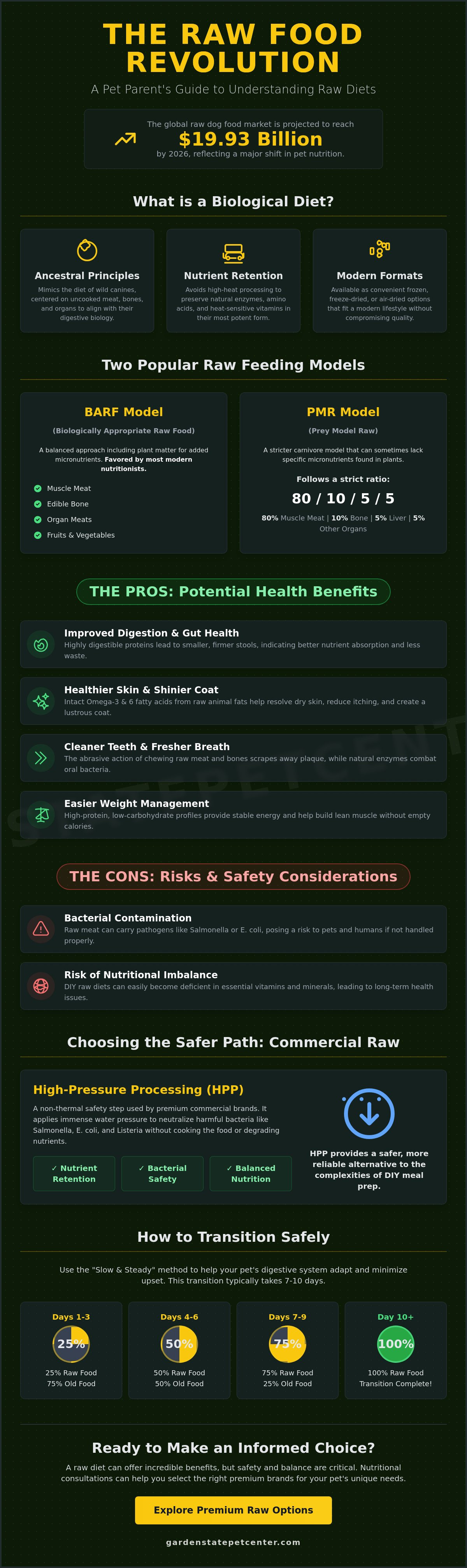
The practice has moved far beyond the early days of "tub" diets mixed in home kitchens. In 2026, the global raw dog food market is projected to reach $19.93 billion, reflecting a massive shift toward professional, high-tech formulations. Modern raw diets prioritize transparency and precision. Proponents argue that by removing high-heat processing, the food retains natural enzymes and amino acids that are often degraded during traditional manufacturing. This evolution ensures that today's pet parents can provide a biological diet that is both convenient and scientifically grounded.
BARF vs. PMR: Which Model is Better?
The BARF (Biologically Appropriate Raw Food) model includes a small percentage of fruits and vegetables to provide essential antioxidants and fiber. In contrast, the Prey Model Raw (PMR) approach follows a strict 80/10/5/5 ratio: 80% muscle meat, 10% bone, 5% liver, and 5% other secreting organs. Most modern nutritionists now favor the BARF approach. They find that the addition of specific plant matter provides vital micronutrients that a purely meat-based diet might lack.
The Different Forms of Raw Food in 2026
The market now offers several sophisticated formats for raw nutrition. Frozen raw remains the gold standard for those seeking maximum freshness. Freeze-dried raw has surged in popularity because it's shelf-stable and lightweight, making it perfect for travel or picky eaters. Air-dried options provide a jerky-like texture that preserves enzymes without the need for a freezer. If you're searching for premium dog food, these modern formats make it much easier to balance the raw dog food pros and cons in your daily routine.
The Pros: Why Owners Choose a Raw Food Diet
Transitioning your pet to a biological diet often leads to visible physical improvements within just a few weeks. While veterinarians frequently debate The Pros: Why Owners Choose a Raw Food Diet, many pet parents report a dramatic shift in their dog's vitality. When you evaluate raw dog food pros and cons, the most immediate benefit is often the production of smaller, firmer stools. Because raw meat is highly digestible, the canine body absorbs more nutrients and leaves significantly less waste behind. This efficiency isn't just a convenience for you during walks; it's a clear sign that your dog's digestive system is working as nature intended.
The aesthetic benefits are just as striking. Natural omega-3 and omega-6 fatty acids remain intact in raw animal fats, providing a deep shine to the coat and helping resolve chronic dry, itchy skin. Beyond the surface, raw feeding acts as a natural toothbrush. The mechanical action of chewing through muscle meat and edible bones helps scrape away plaque. Meanwhile, live enzymes in the meat work to break down bacteria in the mouth, leading to fresher breath and healthier gums. For sedentary or older dogs, the high-protein, low-carbohydrate profile of raw food makes weight management much simpler, providing stable energy without the "sugar crashes" associated with grain-heavy kibble.
Bioavailability and Enzyme Retention
Cooking food at high temperatures can degrade heat-sensitive vitamins like B-complex and certain fragile amino acids. Raw feeding preserves these delicate nutrients, ensuring they reach your dog in their most potent form. This approach reduces the workload on the pancreas, as it doesn't have to work as hard to produce digestive enzymes that are already present in the raw food itself. Many dogs with persistent food sensitivities find relief with raw proteins because they are easier for the body to assimilate without the interference of synthetic additives.
Addressing Chronic Inflammation
Chronic inflammation is frequently linked to high-glycemic diets filled with corn, wheat, or soy. By switching to a low-carb raw diet, you're removing the primary fuel for systemic inflammation, which can lead to improved joint mobility and reduced stiffness in senior pets. Raw diets eliminate filler-induced inflammatory responses by focusing on species-appropriate proteins that the canine body is designed to process. If you're ready to explore these benefits for your own pet, you can browse our curated selection of premium raw dog food to find a formula that fits your lifestyle.
The Cons: Risks, Safety, and Common Pitfalls
Every feeding choice involves a trade-off. While the benefits of biological diets are significant, a thorough evaluation of raw dog food pros and cons must address the very real safety concerns that come with handling uncooked proteins. The primary hurdle for many families is the risk of bacterial contamination. Pathogens like Salmonella, E. coli, and Listeria can thrive in raw meat. These bacteria don't just affect the pet; they pose a zoonotic risk to humans in the home, especially children or those with compromised immune systems. Recent data from an FDA study on raw pet food safety confirmed that raw diets are significantly more likely to test positive for these disease-causing organisms compared to processed alternatives.
Beyond bacteria, physical safety and long-term nutritional health are paramount. Feeding whole bones can lead to dental fractures, choking, or even life-threatening internal perforations if the bone splinters. There is also the "all-meat" pitfall. Many well-meaning owners believe that a bowl of steak or chicken is enough. Without the precise inclusion of secreting organs and specific calcium sources, a dog will eventually suffer from skeletal deformities or organ failure. Finally, you must consider the logistical commitment. Raw feeding requires dedicated freezer space, strict sanitization protocols, and a higher monthly budget. Premium commercial raw subscriptions often cost between $100 and $300 per month depending on the dog's size, requiring a steady financial commitment to maintain the diet correctly.
Pathogens and Zoonotic Risk
As of January 2025, the FDA requires manufacturers of raw foods containing poultry or cattle to include Highly Pathogenic Avian Influenza (HPAI) H5N1 as a known hazard in their safety plans. While a dog's highly acidic stomach and short digestive tract provide some protection against bacteria, they can still become asymptomatic carriers. This means they can shed pathogens into your environment through their saliva or waste. You must maintain rigorous hygiene, using dedicated cutting boards and stainless steel bowls that are sanitized after every single use.
The Danger of 'Incomplete and Unbalanced' DIY Diets
Amateur raw feeding often misses the mark on calcium-to-phosphorus ratios, which are vital for bone density. Overdoing liver can lead to Vitamin A toxicity, while a lack of variety might cause a Vitamin D deficiency. Even commercial brands face challenges. In May 2026, Albright's Raw Pet Food voluntarily recalled a lot of their Chicken Recipe due to Salmonella concerns. To protect your pet, always look for the "complete and balanced" claim on the label. This indicates the food meets specific nutritional standards through formulation or feeding trials. If you're unsure about your current plan, our team can help through specialized pet nutritional consultations to ensure your dog is getting exactly what they need.
Commercial Raw vs. DIY: Choosing the Safer Path
Deciding how to source your pet's biological diet is the most critical step in your journey. For most owners, commercial raw is the recommended entry point. It removes the guesswork that often leads to the nutritional imbalances discussed earlier. When you weigh the raw dog food pros and cons, convenience and safety usually tip the scales in favor of professional formulations. These products are crafted in controlled environments where every batch is measured for precise nutrient ratios, ensuring your dog receives a consistent profile of vitamins and minerals without you needing a degree in animal nutrition.
One of the biggest safety advantages of commercial brands is the use of High-Pressure Processing (HPP). While AAFCO has not yet officially defined HPP as of early 2026, the industry widely uses this cold-water pressure method to eliminate pathogens like Salmonella and Listeria. Because HPP doesn't use heat, it protects the delicate enzymes and proteins that make raw feeding so beneficial. This technology provides a level of safety that is simply impossible to replicate in a home kitchen. While the cost of premium raw food can range from $100 to over $300 per month depending on your dog's size, many owners view this as a proactive investment. By prioritizing high-quality nutrition now, you're often reducing the likelihood of expensive vet bills related to chronic inflammation or digestive issues later in life.
What to Look for in a Raw Food Brand
Always verify that a brand carries the AAFCO "Complete and Balanced" statement on the packaging. This ensures the food meets the minimum nutritional requirements for your dog's specific life stage. Look for companies that prioritize sourcing transparency and provide third-party laboratory testing results for every batch. The best brands, such as OC Raw or Vital Essentials, focus on whole food ingredients rather than relying on synthetic vitamin premixes to fill nutritional gaps. This commitment to quality ensures that the nutrients are as bioavailable as possible.
When DIY Raw Makes Sense (And When It Doesn't)
Formulating a balanced 80/10/10 diet at home has a steep learning curve. While it offers total control over ingredients, the margin for error is incredibly slim. This is especially true for puppies and giant breeds, where even a slight imbalance in calcium and phosphorus can lead to permanent skeletal damage. If you aren't prepared to weigh every gram of organ meat and bone daily, it's safer to rely on professional expertise. You can find a variety of scientifically balanced options in our dog food collection to get started without the stress of DIY formulation. Explore our selection of premium raw dog food today to find the perfect fit for your pet's needs.
How to Transition Your Dog to Raw Safely
Begin your pet's journey into biological nutrition with a focus on patience. While the health benefits are significant, a "cold turkey" switch can overwhelm a digestive system accustomed to processed starches. Use the "Slow and Steady" method to allow your dog's gut microbiome to adapt. Start by mixing 25% raw food with 75% of their current diet for the first three days. Gradually shift the ratio to 50/50 for the next three days, and move to 75% raw by day seven. By day ten, most dogs are ready for a 100% raw meal. Understanding the raw dog food pros and cons is only the first step; implementing the change requires this tactical, phased approach to prevent gastric upset.
Watch for "detox" symptoms during the first fortnight. It's common to see a temporary increase in ear wax or slight mucus in the stool as the body sheds toxins from previous fillers. These are usually signs of a successful transition. However, distinguish these from red flags. If your dog experiences persistent vomiting, extreme lethargy, or refusal to eat for more than 24 hours, pause the transition and contact your veterinarian. Every dog is an individual. You must customize the portion sizes and protein sources based on their specific age, weight, and daily activity level to maintain an ideal body condition.
The Role of Professional Nutritional Consultations
Schedule a one-on-one consultation to eliminate the guesswork from your transition plan. Professional nutritionists can analyze your dog's breed history or recent blood work to tailor specific raw ratios that meet their unique metabolic needs. This specialized care prevents common amateur mistakes, such as overfeeding rich organ meats or missing vital trace minerals. For a deeper look at how specialized diets support long-term health, explore our Premium Pet Food pillar article. This resource provides the necessary context for choosing high-end formulations that align with clinical standards.
Long-term Monitoring and Success
Track your dog's progress over a 90-day window to truly see the results of their new diet. Document changes in their coat shine, energy patterns, and muscle definition. You may need to adjust fat and protein levels as the seasons change; active dogs often require more calories in the winter to maintain body heat. By carefully weighing raw dog food pros and cons alongside professional advice, you ensure your pet thrives for years to come. If you're ready to make the switch with confidence, Contact Garden State Pet Center for expert guidance on selecting the best biological diet for your companion.
Empower Your Pet Through Biological Nutrition
Deciding on the best diet for your companion is one of the most impactful choices you'll make as a pet parent. By weighing the raw dog food pros and cons, you've taken a proactive step toward understanding how species-appropriate ingredients can transform your dog's vitality. Success in raw feeding isn't just about the meat; it's about the precision of the balance and the reliability of your sourcing. Whether you're looking for improved coat health or better digestive efficiency, the right approach makes all the difference.
Since 1990, we've specialized in holistic and biological diets to help pets thrive. Our on-site certified pet nutritionist is available to ensure your transition is seamless and scientifically sound. We offer nationwide shipping on premium raw brands, bringing high-quality nutrition directly to your doorstep. Shop Our Curated Selection of Balanced Raw Dog Food today to find a formula that fits your pet's unique needs. You've got the knowledge. Now it's time to see the results in your dog's wagging tail and bright eyes.
Frequently Asked Questions
Is raw dog food better than kibble for allergies?
Raw diets are often superior for managing allergies because they lack the synthetic binders, grain fillers, and high-heat processed proteins found in most kibble. By using a single protein source and avoiding common allergens like corn or soy, you can significantly reduce systemic inflammation. Many pets show relief from itchy skin and chronic ear infections within the first month of switching to a biological diet.
Can puppies eat a raw food diet safely?
Puppies can safely eat raw food provided the diet is specifically formulated for their rapid growth and skeletal development. Because puppies have zero margin for error regarding calcium and phosphorus ratios, we strongly suggest using a commercial raw brand labeled for "All Life Stages." This ensures their bones and joints develop correctly without the risks associated with unbalanced DIY recipes.
How do I avoid Salmonella when feeding my dog raw meat?
You can minimize the risk of Salmonella by choosing commercial raw brands that utilize High-Pressure Processing (HPP) to neutralize pathogens. Additionally, maintain a rigorous sanitation routine by using stainless steel bowls and dedicated prep surfaces. Always wash your hands and surfaces with hot, soapy water immediately after handling the food to protect everyone in your household.
Do vets recommend raw dog food diets?
Most traditional veterinary organizations do not recommend raw diets due to concerns over bacterial contamination and nutritional imbalances. However, many holistic practitioners and pet nutritionists advocate for raw feeding when managed correctly. We encourage you to consult with a specialist to weigh the raw dog food pros and cons for your specific pet's health history.
What are the first signs that a raw diet is not working for my dog?
Persistent digestive upset, such as liquid diarrhea or frequent vomiting, is the most common sign that a specific raw formulation isn't suiting your dog. You should also watch for a loss of muscle mass, extreme lethargy, or a coat that remains dull after the initial transition period. If these symptoms last more than 48 hours, it's vital to consult a professional to adjust their nutrient profile.
Can I mix raw dog food with kibble in the same meal?
Mixing raw food with kibble is a common way to boost nutrition, though some dogs with sensitive stomachs may experience gas due to different digestion rates. If you choose this path, monitor your pet closely for any signs of discomfort. For many owners, this hybrid approach provides a manageable balance between the health benefits of raw and the convenience of dry food.
How much does it cost to feed a dog a raw diet monthly?
The monthly cost of a raw diet depends entirely on your dog's weight, activity level, and the specific protein sources you choose. While premium raw nutrition requires a higher initial investment than standard kibble, many owners find it balances out through reduced long-term health issues. Factors like sourcing human-grade ingredients and specialized packaging also influence the total investment in your pet's wellness.
Is freeze-dried raw as good as frozen raw food?
Freeze-dried raw is nutritionally comparable to frozen raw because the low-temperature moisture removal preserves essential enzymes and vitamins. It offers incredible convenience for travel and doesn't require freezer space. However, frozen raw provides natural hydration that is beneficial for kidney health, so we recommend rehydrating freeze-dried morsels with water or bone broth before serving.
Share this post
- 0 comment
- Tags: ancestral diet, BARF diet, commercial raw dog food, dog food safety, dog health, dog nutrition, raw dog food, raw dog food pros and cons, raw feeding