

How to transition a dog to raw food Best Practices and Expert Advice


What if the most impactful health decision you make for your companion starts with a return to their ancestral roots? You likely want the vibrant energy and shiny coat that come with a biologically appropriate diet, but the fear of digestive upset or confusing nutrient ratios often stands in the way. It's completely normal to feel overwhelmed by conflicting opinions when you begin researching how to transition a dog to raw food for the first time.
At Garden State Pet Center, we understand that your dog's well-being is your top priority. You deserve a reliable partner to help you navigate these specialized nutritional choices with confidence and precision. Switching diets shouldn't be a source of stress or a gamble with your pet's comfort. Focus on a proactive strategy that builds digestive resilience through a careful, step-by-step process rather than a rushed change.
This guide provides a clear, day-by-day schedule to help you master the safe transition to raw meals while avoiding common metabolic pitfalls. You will learn how to choose the right proteins and balance essential nutrients to ensure your dog thrives. Prepare to see visible health improvements and feel empowered in your journey toward holistic pet care.
Key Takeaways
- Learn how your dog’s digestive pH levels shift to safely process raw proteins and bone.
- Determine if the gradual bridge method or a direct approach is the right choice for your pet's age and health status.
- Follow a reliable 10-day schedule to master how to transition a dog to raw food without causing digestive upset.
- Distinguish between normal detox signs, such as minor coat changes, and symptoms that require expert attention.
- Gain the confidence to choose complete and balanced raw meals that provide specialized nutrition for long-term vitality.
Table of Contents
-
Understanding the Biological Shift: Why Transition to Raw Food?
-
Sourcing Excellence: Professional Support for Your Dog's Diet
Understanding the Biological Shift: Why Transition to Raw Food?
The move toward raw feeding represents a fundamental biological reset for your pet. Most owners choose between two primary methods: Biologically Appropriate Raw Food (BARF), which includes a mix of muscle meat, bone, organ, and specific vegetation, or the Prey Model Raw (PMR), which focuses exclusively on whole animal parts. This raw feeding overview details how these approaches prioritize whole-food bioavailability over the synthetic supplements found in processed kibble. When you begin learning how to transition a dog to raw food, you're shifting their source of nutrition from lab-created vitamins to the live enzymes and high-quality amino acids their bodies were designed to process.
To better understand the practical steps involved in this change, watch this helpful video:
The Benefits of a Biologically Appropriate Diet
Switching to a raw diet often results in striking visible improvements that reflect internal health. You'll likely notice a significantly shinier coat and cleaner teeth as natural enzymes work to break down plaque and tartar. Because raw food is highly digestible, stools become smaller and less odorous; the body absorbs almost everything and leaves very little waste. Beyond the surface, these diets support enhanced immune function and more effective weight management. By eliminating the inflammatory load caused by high-carbohydrate fillers and grains, you promote long-term vitality and resilience. Our dog food collections offer premium, specialized options to help you start this journey with the highest quality ingredients available.
Kibble vs. Raw: The Digestive Challenge
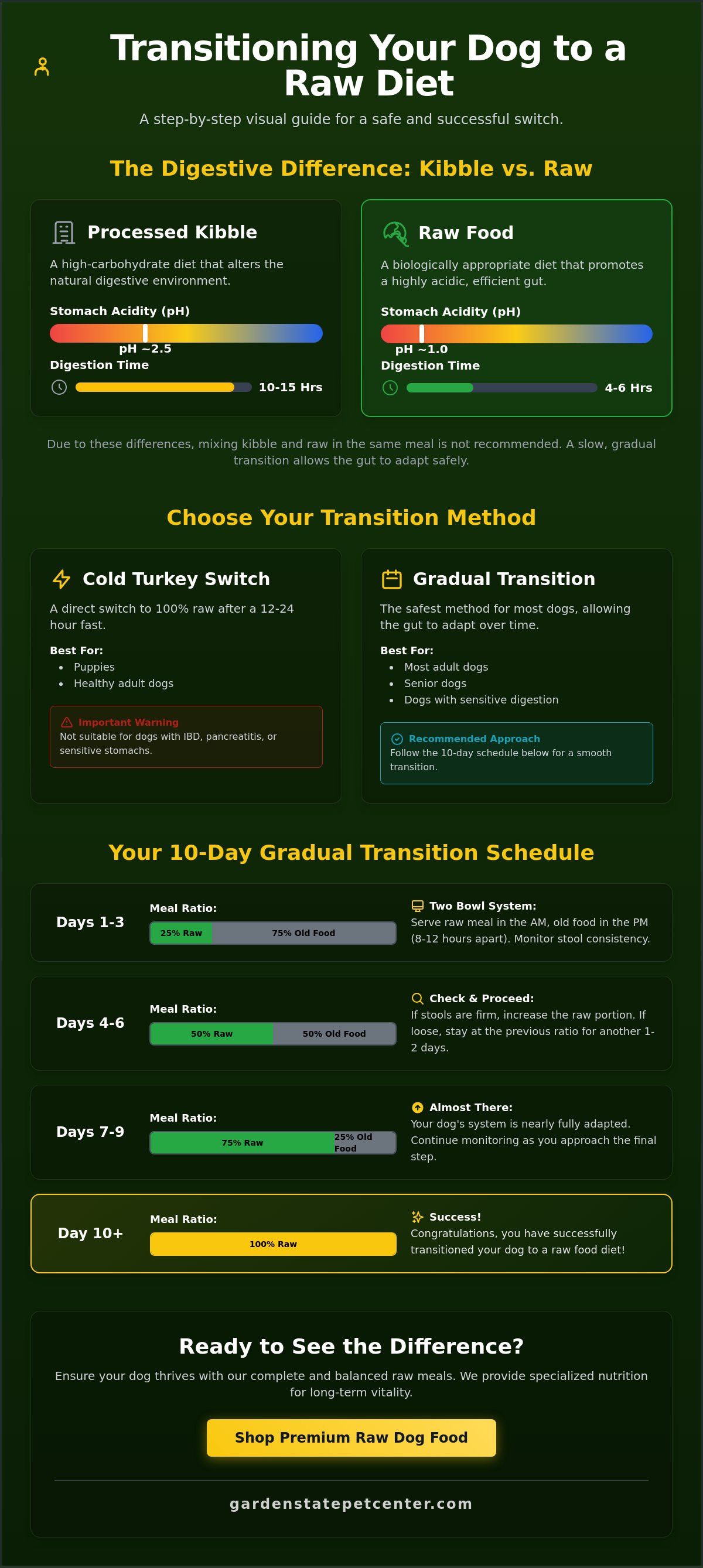
The most critical biological difference between these diets involves stomach acidity and transit times. A dog eating processed kibble typically maintains a stomach pH of approximately 2.5. In contrast, a raw-fed dog develops a much more acidic environment with a pH of around 1.0. This high acidity is vital for breaking down raw bone and neutralizing potential bacteria. Digestion rates also vary significantly. Kibble is a complex carbohydrate that can take 10 to 15 hours to move through the digestive tract. Raw food, being a natural protein, is often processed in just 4 to 6 hours. Because of these conflicting speeds and pH requirements, a slow approach is essential. Rushing the process can lead to metabolic shock or digestive upset. Mastering how to transition a dog to raw food requires patience to allow the gut flora and acidity levels to adapt to this more efficient, nutrient-dense way of eating.
Choosing Your Method: Gradual vs. Cold Turkey
Selecting the right approach depends entirely on your dog's age, health history, and current digestive resilience. Puppies and exceptionally healthy adult dogs often thrive with a "cold turkey" switch. This method typically involves a 12 to 24 hour fast followed by a full raw meal. It's efficient and prevents the digestive confusion that sometimes occurs when mixing different food types. However, this isn't a universal solution. Dogs with a history of IBD or pancreatitis should never go cold turkey. Their systems require a much more measured introduction to avoid a painful flare up. Learning how to transition a dog to raw food effectively means choosing the path of least resistance for their specific biology.
The Gradual Transition (The 10-Day Rule)
For most adult and senior dogs, a gradual 10 day window is the gold standard for minimizing digestive upset. This timeframe allows the gut microbiome to shift and stomach acidity to increase safely. We recommend a "two bowl" system during this phase. Instead of mixing raw and kibble in the same dish, serve them as separate meals at least 8 to 12 hours apart. This helps manage the different transit times inherent in each food type. Watch your dog's stool consistency closely. It's the most reliable indicator of progress. If stools remain firm, you can increase the raw portion. If they become loose, stay at the current ratio for another day or two before moving forward.
The Freeze-Dried 'Bridge' Approach
Many owners feel nervous about handling fresh meat or worry about a pet's sensitive stomach. This is where freeze-dried dog food serves as an excellent bridge. Freeze drying locks in vital nutrients while providing a shelf stable, convenient alternative to frozen raw. It's a great way to introduce raw proteins without the mess. Always rehydrate these meals with warm water or bone broth. This preparation helps the digestive tract adjust to the high moisture content of a fully raw diet. While you explore these options, review the FDA safety facts on raw pet food to ensure you're maintaining a clean and safe prep area at home. If you're unsure which protein to start with, our team can help you select the ideal premium raw options for your pet's needs.
Mastering how to transition a dog to raw food is a journey of observation. By choosing a method that respects your dog's current health status, you set the foundation for a successful and permanent dietary change. Whether you choose a direct switch or a slow bridge, the goal remains a happy, thriving companion with a resilient digestive system.
Navigating the 'Detox' Phase and Avoiding Common Mistakes
When you begin researching how to transition a dog to raw food, you'll likely encounter the term "detox" phase. This period represents the body’s natural process of shedding toxins accumulated from years of processed fillers and synthetic additives. You might notice your dog shedding an old, dull coat to make way for new growth, or perhaps a temporary increase in ear wax discharge. Some owners even see a bit of mucus in the stool. While these signs can be startling, they are typically normal indicators that the immune system is recalibrating. However, you should always distinguish these from concerning signs like extreme lethargy, persistent vomiting, or bloody diarrhea, which require a prompt consultation with a professional.
What is Normal During the First 14 Days?
The first two weeks are often a rollercoaster of physical adjustments. You might see a temporary dip in energy levels as the metabolic system works harder to process new nutrients. Don't worry; this is usually followed by a significant "raw energy" spike once the system stabilizes. Stool changes are perhaps the most common point of confusion. If you see white or crumbly stools, it's often a sign of slightly higher bone content, which is common in many raw dog food blends. Additionally, some dogs may stage a "hunger strike" when first presented with raw textures. They aren't necessarily being picky; they are simply confused by the change from crunchy kibble to moisture-rich meat. Stay patient and consistent during these moments.
One of the most frequent errors is introducing too many proteins too quickly. We recommend sticking to a single, low-fat protein like chicken or turkey for at least the first week. Jumping into rich meats like beef or organ-heavy blends can overwhelm a sensitive gut. Another pitfall involves improper bone-to-meat ratios in DIY raw diets. Without the right balance, your dog could face nutritional deficiencies or constipation. Choosing a pre-balanced commercial raw option from our premium selections can eliminate this guesswork and ensure your pet receives clinical precision in every meal.
Safety and Hygiene Protocols
Maintaining a clean environment is vital for the health of both your pet and your family. Treat raw pet food with the same level of care you use when preparing a chicken dinner for yourself. Always wash your hands, surfaces, and utensils thoroughly after feeding. The choice of equipment matters, too. Stainless steel bowls are superior to plastic because plastic is porous and can harbor bacteria in microscopic scratches over time. When it comes to preparation, proper thawing is essential. Never use a microwave to defrost raw bone-in diets, as this can cause the bone fragments to harden and become a choking hazard. Instead, thaw meals slowly in the refrigerator. Reviewing the AVMA policy on raw pet food provides additional perspective on the industry standards for safe handling. By following these proactive steps, you can successfully navigate how to transition a dog to raw food while keeping your home safe and your companion thriving.
Your 10-Day Step-by-Step Raw Transition Schedule
Success depends on a slow, methodical pace. While your dog's ancestors thrived on variety, a modern pet's digestive system needs time to recalibrate its enzyme production. Mastering how to transition a dog to raw food involves a disciplined 10-day approach that prioritizes gut stability over speed. This schedule moves your pet from a carbohydrate-heavy diet to a moisture-rich, protein-dense one without overwhelming their metabolic capacity. Understanding how to transition a dog to raw food properly is the key to avoiding the digestive pitfalls that stop many owners before they see the benefits.
Days 1-3: Starting with White Meat
Begin with a single, low-fat "white" protein. Chicken or turkey are the best starter choices because they are exceptionally gentle on the stomach. During these first three days, keep your raw portions slightly smaller than the calculated daily requirement. This prevents the system from being shocked by the nutrient density of the new food. We often suggest adding high-quality dog vitamins and supplements, specifically probiotics or digestive enzymes, to support the gut flora during this shift. If you notice firm stools and high interest in the bowl, you're ready to move forward.
Days 4 through 6 represent the integration phase. By now, your dog's stomach acidity is beginning to increase. You can move to a 50/50 split between the old food and the new raw diet. Continue using the two-bowl method to ensure different digestion rates don't cause discomfort. Observe your pet's behavior closely. If they remain energetic and their digestion is consistent, you can confidently increase the raw volume to 75 percent during days 7 through 9.
Days 7-10: Finalizing the Switch
By day 7, your dog is ready to explore "red" meats like beef or lamb. These are richer and contain different amino acid profiles that are essential for long-term health. This is also the time to slowly introduce organ meats. Organs are the most nutrient-dense part of the diet, but they are very rich. Start with tiny amounts, roughly 5 percent of the total meal, to avoid loose stools. By day 10, your dog should be eating a 100 percent raw diet. Before declaring the transition a success, run through this final checklist: are the stools small and firm? Is the energy level stable? Is the skin clear of new irritations? If the answer is yes, your dog has successfully adapted.
Ready to begin the journey toward better health? Explore our full range of premium raw dog food to find the perfect starting protein for your companion today.
Sourcing Excellence: Professional Support for Your Dog's Diet
Choosing high-quality ingredients is the final, most critical step in your journey toward better pet health. While the DIY approach appeals to many, it often lacks the clinical precision required to prevent long-term nutritional deficiencies. Commercial raw diets labeled "Complete and Balanced" ensure your pet receives the exact ratios of muscle meat, organ, and bone needed for daily vitality. When you're learning how to transition a dog to raw food, starting with a professionally formulated product removes the guesswork and risk associated with unbalanced home-prepared meals. Our team prioritizes sourcing transparency and reliability, seeking out brands that utilize High-Pressure Processing (HPP) to eliminate pathogens while preserving the integrity of live enzymes and amino acids.
The Value of Expert Consultation
Specialized pet stores provide a level of nuanced guidance that big-box retailers simply can't match. Consulting with a certified pet nutritionist allows you to customize a feeding plan specifically for your dog's unique life stage or health history. This is especially vital for pets dealing with chronic allergies or inflammatory conditions where every single ingredient matters. We believe in a holistic view of animal welfare that goes beyond the bowl. Professional disease screening and DNA testing aren't just for our avian friends; they're part of a comprehensive health strategy for any pet. If you're also cat owners, remember that felines are obligate carnivores and require different transition protocols and higher taurine levels than their canine counterparts.
Premium Raw Options for Every Dog
We've carefully vetted the industry’s leading brands to ensure they meet our rigorous standards for quality and safety. Trusted names like OC Raw, Vital Essentials, and Instinct offer a variety of proteins and formats to suit any lifestyle or preference. For many owners, the convenience of pre-portioned patties is a total game changer. These patties allow for mess-free serving and accurate calorie control without the need for a kitchen scale. If you prefer more flexibility for larger households, bulk blocks or freeze-dried morsels provide excellent alternatives that don't sacrifice nutritional value. Mastering how to transition a dog to raw food is a much smoother experience when you have access to reliable, high-end nutrition from the very start. Shop our curated selection of premium dog food to find the perfect match for your companion’s new dietary journey.
Empower Your Dog with Ancestral Nutrition
Transitioning to a raw diet is one of the most proactive steps you can take for your pet's long-term vitality. By following a structured 10 day schedule and prioritizing single protein starters, you've learned how to transition a dog to raw food while avoiding common metabolic hurdles. Remember that monitoring stool consistency and managing the initial detox phase are normal parts of this rewarding journey toward holistic health. These small steps lead to significant improvements in coat quality, dental hygiene, and overall energy levels.
You don't have to navigate this dietary change alone. Our team features an on-site Certified Pet Nutritionist who is specialized in holistic and raw diets to help you customize the perfect plan for your companion. We offer nationwide shipping on premium brands, ensuring that high quality, biologically appropriate nutrition is always within reach for your household. Expert guidance ensures your pet receives the precise balance of nutrients they need to thrive at every life stage.
Consult with our Certified Pet Nutritionist to start your dog's raw journey!
Embrace the visible health improvements and the vibrant energy your dog will gain from this specialized care. We look forward to supporting you and your pet through every stage of their nutritional evolution.
Frequently Asked Questions
Can I mix raw food and kibble in the same meal?
Avoid mixing raw meat and kibble in the same bowl. These food types digest at different rates; kibble takes much longer to process than fresh protein. Mixing them can lead to digestive confusion or gas. Instead, serve them as separate meals spaced at least 8 to 12 hours apart to allow the stomach pH to adjust for each type.
Is raw food safe for puppies and senior dogs?
Yes, raw diets are safe for both life stages as long as the food is labeled complete and balanced. Puppies need specific calcium and phosphorus ratios for healthy bone growth. Senior dogs often thrive on the high bioavailability of raw proteins, which helps maintain muscle mass. Always choose a formula tailored to their specific life stage and nutritional needs.
What should I do if my dog gets diarrhea during the transition?
Slow down the process immediately and revert to the previous day's food ratio. You can add a tablespoon of plain canned pumpkin to help firm up the stool naturally. If the upset persists for more than 48 hours or your dog seems lethargic, contact a professional. Most minor issues resolve by simply extending the transition period by a few extra days.
How much raw food should I feed my dog daily?
Feed approximately 2 percent to 3 percent of your dog's ideal adult body weight each day. A 50 pound dog typically requires between 1 and 1.5 pounds of food. You should adjust this amount based on your pet's activity level and age. Use a kitchen scale for precision and monitor their body condition score to ensure they stay at a healthy weight.
Do I need to add vitamins or supplements to a raw diet?
Most premium commercial raw foods already include the necessary vitamins and minerals. You don't need to add supplements unless you are feeding an unbalanced DIY diet. However, adding a high quality probiotic can be very helpful during the first week. This provides extra digestive support while you learn how to transition a dog to raw food successfully.
How do I know if the raw food I'm buying is balanced?
Look for the AAFCO statement on the packaging that confirms the diet is complete and balanced. This ensures the food meets the minimum nutritional requirements for your dog's specific life stage. Reliable brands also provide sourcing transparency and use methods like High Pressure Processing to ensure the food is safe and free from harmful pathogens.
Can I feed my dog raw meat from the grocery store?
Don't rely on grocery store meat as a standalone diet. This meat is intended for human cooking and lacks the essential ratios of bone and organ meat that dogs require. It may also contain added sodium or preservatives. Specialized raw pet food is formulated with clinical precision to provide a holistic nutritional profile that grocery store cuts simply cannot provide.
What are the best 'starter' proteins for a raw transition?
Lean white meats like chicken or turkey are the best choices for the introductory phase. These proteins are easier on the digestive system than richer red meats like beef or lamb. Using a single, gentle protein makes it much easier to monitor your pet's progress as you begin the journey of how to transition a dog to raw food safely.
Share this post
- 0 comment
- Tags: BARF diet, canine health, digestive upset in dogs, dog diet, dog nutrition, holistic pet care, how to transition a dog to raw food, pet care, raw feeding, raw food transition