

The Ultimate Sugar Gliders & Supplies Buying Guide for 2026


The generic "small animal" tag on a pet store shelf is often a hidden hazard for your exotic companions. It's a frustrating reality for many owners who discover that standard hamster wheels or bird toys can actually cause serious injury to a glider's delicate tail or gliding membrane. You want to create a sanctuary, yet you're likely facing a sea of conflicting advice regarding cage bar spacing and the complex nutritional requirements needed to prevent Hind Leg Paralysis. We understand that your goal isn't just to keep a pet; it's to nurture a thriving, social family member. Finding the right sugar gliders & supplies shouldn't feel like a guessing game when your pet's wellness is on the line.
This guide cuts through the confusion to help you select the safest, highest-quality essentials for 2026. You'll learn how to identify specialized vertical habitats that encourage natural climbing and which bonding tools actually work to build a lasting connection. We also provide a clear roadmap for a balanced nutrition plan, moving away from basic pellets toward the specialized, fresh diets that modern exotic care demands. From verifying USDA-regulated sources to mastering the art of the bonding pouch, you'll gain the expertise needed to build a safe and enriching environment where your gliders can truly flourish.
Key Takeaways
- Identify glider-safe materials like non-toxic plastics and untreated woods to ensure a secure, chemical-free environment.
- Prioritize vertical height and narrow bar spacing when browsing sugar gliders & supplies to accommodate their arboreal nature.
- Master the balance of staple diets and fresh supplements to maintain the critical Calcium-to-Phosphorus ratio required for metabolic health.
- Strengthen your bond using specialized pouches and scent-recognition tools that facilitate safe, stress-free socialization.
- Explore professional-grade habitats and holistic nutrition starters tailored for the specific biological needs of exotic pets.
Essential Criteria for Selecting Sugar Glider Supplies
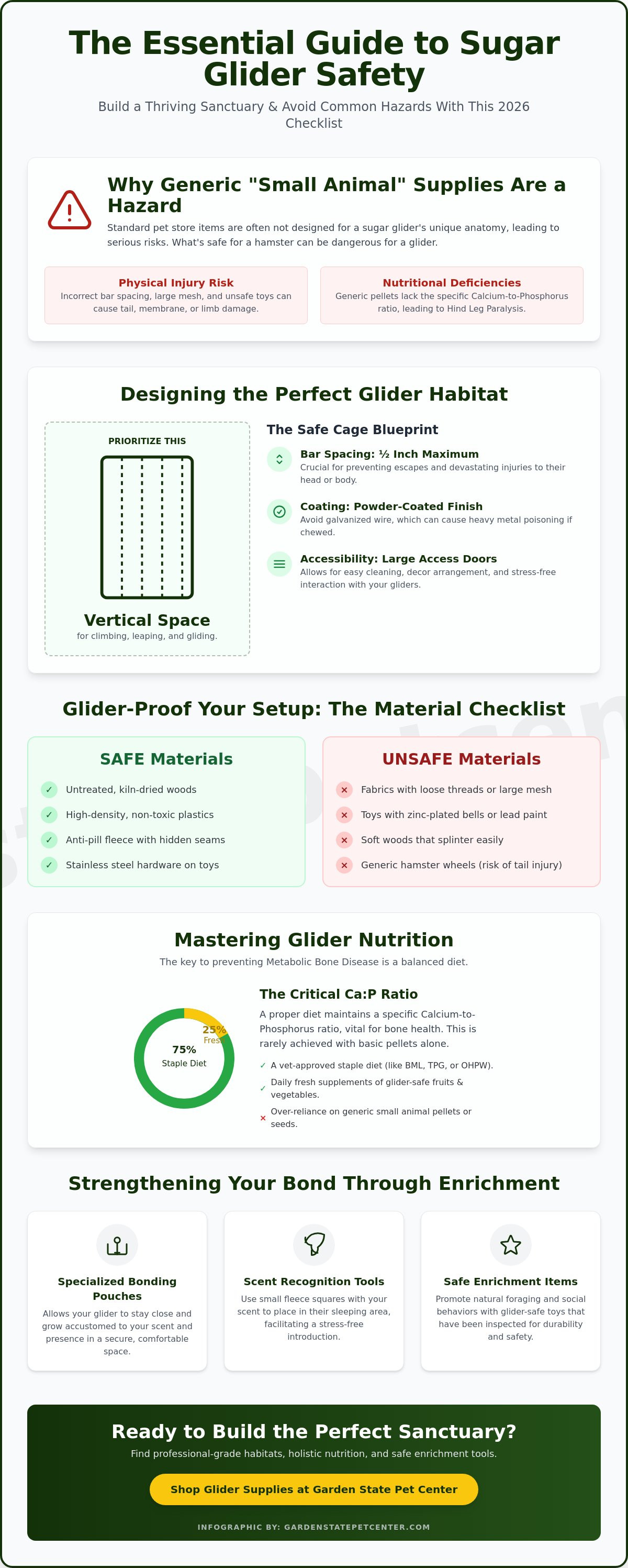
Choosing the right sugar gliders & supplies begins with understanding the specific biological needs of the Sugar Glider. These marsupials are highly active, nocturnal, and incredibly curious. Their environment must withstand vigorous play while remaining chemically safe for their sensitive respiratory systems. "Glider-safe" isn't just a marketing term; it refers to materials like high-density, non-toxic plastics and untreated kiln-dried woods that won't release harmful fumes or splinter under pressure. When you select items for their habitat, you're looking for professional-grade durability that accounts for their unique climbing and jumping behaviors.
Many owners mistakenly reach for generic small animal supplies designed for hamsters or guinea pigs. However, gliders have unique anatomical features, such as their gliding membranes, that make standard mesh or fabric accessories dangerous. Loose threads in fleece pouches or hanging toys are a primary cause of limb entanglement and circulation loss. Similarly, mesh sizes that are too large can lead to trapped paws or heads, which is why specialized gear is non-negotiable. Every accessory should be inspected for double-stitched seams and hidden hardware to ensure your pet stays safe throughout the night.
To help visualize the social needs and initial setup requirements for these unique pets, watch this helpful video:
The "Exotic Expert" Difference
Specialized care requires a shift in perspective that prioritizes welfare over convenience. Consulting with a professional who understands exotic nutrition often changes your entire supply list, as they can identify hidden toxins in common pet store items. Bird toys often use zinc-plated bells or lead-based paints that are toxic to gliders. High-quality manufacturing in this niche focuses on stainless steel hardware and secure attachment points. This expert approach ensures that your enrichment items promote natural foraging and social behaviors without introducing unnecessary risks.
Safety Standards Checklist
A safe habitat relies on technical specifications that prevent accidents. Use this checklist to evaluate your sugar gliders & supplies:
- Bar Spacing: Secure your enclosure with spacing no wider than 1/2 inch to prevent escapes or devastating injuries.
- Coating: Choose powder-coated finishes over galvanized wire. Galvanized metal can lead to heavy metal poisoning if a glider chews on the bars.
- Material Durability: Your gear must be robust enough to handle nocturnal chewing sessions. Look for materials that won't break into small, swallowable pieces when gnawed on by sharp teeth.
- Fabric Integrity: Stick to high-quality anti-pill fleece with hidden seams to prevent nail snags.
Habitat and Housing: Finding the Perfect Sugar Glider Cage
Sugar gliders are arboreal by nature, meaning their world exists in the vertical plane. When you are evaluating sugar gliders & supplies, prioritize height over floor width every time. A tall enclosure allows these marsupials to perform natural leaping and gliding behaviors that are essential for their physical health. Understanding their biological drive for movement is just as vital as mastering Sugar Glider Nutrition, as a sedentary lifestyle in a cramped cage can lead to obesity and related health complications. Your goal is to provide a vertical runway that mimics the tree canopies of their native habitat.
Functionality should never be an afterthought for the owner. Look for enclosures featuring large access doors that allow you to reach every corner for bonding and decor adjustments. Ease of maintenance is equally critical; cages with deep, pull-out plastic or metal trays make daily cleaning much more manageable. Because high-quality glider habitats are often large and heavy, investing in a model with heavy-duty casters is a smart move. This portability allows you to move the enclosure for deep cleaning or to relocate your pets to a quieter area of the home during the day without straining your back.
Social dynamics within a colony also dictate your housing choices. Even the best-bonded pairs can experience friction during mealtime. To prevent food guarding and ensure every glider receives its fair share of nutrients, plan for multiple feeding stations at different heights throughout the cage. This simple setup reduces stress and promotes a more harmonious colony environment. If you're looking for a foundation for your pet's home, you can browse our high-quality habitat solutions designed specifically for exotic needs.
Cage Sizing for Pairs and Colonies
A single pair of gliders requires a minimum enclosure size of 24 inches wide by 24 inches deep and at least 36 inches tall. However, as your colony grows, you must scale your enclosure proportionally. Larger colonies thrive in "mansion" style setups that reach five or six feet in height. This extra volume provides the necessary space for large-scale vertical climbing gear, such as cargo nets and bridges, without overcrowding the living area.
Placement and Environment Essentials
The location of the cage is just as important as the cage itself. Gliders are sensitive to drafts and extreme temperature fluctuations; aim to keep their room between 65 and 85 degrees Fahrenheit. While they are nocturnal, they still require a consistent day and night cycle to regulate their internal clocks. Ambient room light is usually sufficient, but be careful not to confuse their needs with reptile lighting requirements. Unlike many lizards or turtles, gliders don't need intense UVB or localized heat lamps, which can actually cause overheating or eye damage in these nocturnal mammals.
Nutritional Supplies: Formulating a Balanced Sugar Glider Diet
Providing a balanced diet is perhaps the most complex part of glider ownership. Unlike more traditional pets, these marsupials require a specific blend of proteins, calcium, and nectar-mimicking liquids to stay healthy. Your choice of hardware plays a silent but vital role in this process. Heavy ceramic food bowls are a necessity because gliders are energetic eaters and easily tip over lightweight plastic dishes. Similarly, selecting high-quality, drip-proof water bottles ensures their habitat stays dry, which is essential for preventing the growth of harmful bacteria in their bedding. These choices reflect the same rigorous Premium Pet Food principles we apply to all specialized species under our care.
While many retailers offer generic food options, navigating the world of sugar gliders & supplies requires a deeper understanding of metabolic health. This is where consulting with an expert who understands pet nutritional consultations makes a significant difference. A professional can help you design a rotating menu that includes staple proteins, fresh produce, and the correct vitamin powders to prevent common ailments like Hind Leg Paralysis. This proactive approach to nutrition ensures that your pets don't just survive on fillers but thrive on a diet that supports their high-energy lifestyle and long-term wellness.
Staple Diets and Pelleted Nutrition
A high-quality pelleted base serves as the nutritional floor for your pets. When you browse for a staple diet, look for formulations that list identifiable protein sources as the first ingredients. Avoid products that rely heavily on "filler" ingredients like corn and soy, which offer little biological value to a glider. If you're dealing with a picky eater, try introducing new pellets slowly by mixing them with a small amount of fruit puree or a high-quality nectar supplement. This gradual transition helps their sensitive digestive systems adjust without causing unnecessary stress.
Supplementation and Treats
Proper supplementation is the only way to protect your gliders from metabolic bone disease. Because many fruits and vegetables are naturally high in phosphorus, you must use a calcium powder to balance their intake. The ideal calcium-to-phosphorus ratio for a healthy sugar glider is 2:1. For enrichment, nectar pods and honey-based treats are excellent choices that mimic the natural tree saps gliders eat in the wild. These treats provide more than just calories; they offer a sensory experience that keeps your pets engaged and satisfied during their nocturnal foraging sessions.
Bonding and Enrichment: Must-Have Accessories for Socialization
Socialization is the most rewarding aspect of owning these unique marsupials, but it requires a strategic approach to trust-building. Because gliders are colony animals, they rely heavily on scent to identify family members and safe spaces. You can facilitate this process by selecting sugar gliders & supplies that encourage scent association. Placing a small piece of your worn fleece or a scent cloth inside their sleeping area allows them to become familiar with your smell in a non-threatening environment. This foundational step reduces stress and prepares them for active bonding sessions during their waking hours.
Exercise is equally vital for their mental and physical health, but standard wheels found in the generic pet aisle are often hazardous. Traditional "center-axle" wheels pose a significant risk of tail entanglement and spinal injuries for gliders. When you browse for exercise equipment, look for specialized, open-faced designs that lack a central bar. These reliable, glider-safe wheels allow for high-speed running and jumping without the fear of a trapped tail or membrane. Providing a safe outlet for their nocturnal energy is a proactive way to prevent the development of stereotypical behaviors like pacing or over-grooming.
Mental stimulation often comes from the challenge of foraging. Much like the complex needs addressed by specialized bird toys, gliders need to work for their rewards to stay sharp. Interactive supplies that hide treats or require manipulation mimic the natural behaviors gliders exhibit in the wild when searching for insects or sap. By integrating these tools into their habitat, you transform their cage from a simple enclosure into a dynamic learning environment that supports their high intelligence.
The Art of the Bonding Pouch
A bonding pouch is a specialized tool designed to keep your pet close to your body during the day. Unlike sleeping pouches, which stay in the cage, bonding pouches feature secure zippers and breathable mesh viewing windows. These windows allow your pet to observe the world while feeling safe in your "pocket." Always select pouches made from anti-pill fleece with hidden seams to ensure their sharp nails don't get snagged. If you're planning to travel or need a safe place for them while you're away, our guide on Pet Boarding offers excellent tips for maintaining their routine on the go.
Foraging and Mental Stimulation
Rotation is the secret to a successful enrichment plan. Even the most engaging sugar gliders & supplies can become boring if they remain in the same spot for months. Change the layout of their toys and foraging stations every two weeks to keep their environment fresh. Always perform a safety check during these rotations; remove any items with small parts that could be swallowed or fabric that has begun to fray. This commitment to variety ensures your pets remain curious and active throughout their lives.
Enhance your bonding experience today by exploring our curated selection of safe enrichment accessories.
Standout Products from the Garden State Pet Center Collection
Selecting the right sugar gliders & supplies is a significant responsibility that requires more than just a trip to a general pet store. At Garden State Pet Center, we curate our inventory to meet the rigorous safety standards discussed throughout this guide. Our "Glider-Safe" cage options are the cornerstone of our collection, featuring the critical 1/2 inch bar spacing and non-toxic powder coatings that prevent escapes and metal toxicity. We don't just sell enclosures; we provide the foundation for a secure, vertical home where your pets can leap and climb without restriction. Our team is always available to provide expert guidance, ensuring first-time owners feel confident in their setup from day one.
To help you prioritize your budget, we've organized our collection into essential and advanced categories. This structured approach ensures your gliders have their biological needs met before you move into luxury enrichment. Use this checklist to evaluate your current setup:
- The Essentials: A vertical cage with 1/2 inch spacing, a calcium-balanced staple diet, drip-proof water bottles, and a high-quality bonding pouch.
- The Enrichment Tier: Stealth-style exercise wheels, multi-level foraging systems, and custom-designed climbing ladders to encourage natural movement.
- The Comfort Tier: Anti-pill fleece sets, nectar pods for social treats, and specialized vitamins to support long-term metabolic health.
Top Picks for New Owners
Our "Complete Starter Enclosure" is specifically designed to eliminate the guesswork for beginners. It features large access doors for easy cleaning and the heavy-duty casters required for mobility. To support their complex dietary needs, our "Nutritional Balance Bundle" includes holistic nutrition starters and the necessary calcium supplements to maintain that vital 2:1 ratio. These bundles are top sellers because they prioritize pet welfare while simplifying the shopping process. Browse our full Sugar Glider & Supplies collection here to find everything you need for a healthy start.
Advanced Enrichment Gear
Once your gliders are settled, you can enhance their nocturnal environment with our advanced gear. We feature stealth-style exercise wheels that operate silently, allowing your pets to run at high speeds without disrupting your sleep. For experienced colonies, our multi-level foraging systems provide a mental challenge that mimics wild behaviors. We also offer custom-designed fleece sets that provide maximum comfort while ensuring there are no loose threads to snag delicate nails. These additions transform a standard habitat into a thriving, interactive sanctuary. Whether you're looking for basic small animal essentials or specialized exotic gear, our team is ready to help you make the best choice for your unique pets.
Start Your Exotic Journey with Confidence
Caring for these unique marsupials is a rewarding commitment that centers on providing a species-specific environment. You've learned that safety starts with technical details like 1/2 inch bar spacing and avoiding dangerous center-axle wheels. Nutrition is equally vital; maintaining a 2:1 calcium-to-phosphorus ratio prevents metabolic issues and ensures long-term vitality. By moving away from generic store options, you prioritize your pet's welfare through high-quality, reliable gear. Successful ownership is about more than just a purchase; it's about building a sanctuary where your pets can thrive.
Our team at Garden State Pet Center brings USDA-compliant exotic pet expertise and a Certified Pet Nutritionist to every consultation. We understand the nuances of exotic care and offer nationwide shipping on all glider gear to support your home sanctuary. Whether you're setting up your first vertical habitat or looking for advanced enrichment tools, we provide the specialized sugar gliders & supplies required for a healthy life. We're here to help you every step of the way as you welcome these incredible animals into your family.
Shop Premium Sugar Gliders & Supplies for Nationwide Delivery
Frequently Asked Questions
What supplies do I need for a new sugar glider?
You need a tall vertical cage with 1/2 inch bar spacing, a safe exercise wheel without a center axle, and a specialized bonding pouch. Your initial setup should also include heavy ceramic food bowls, drip-proof water bottles, and a variety of fleece sleeping pouches. Because gliders are social animals, you must also ensure you have enough sugar gliders & supplies to accommodate at least a pair of these marsupials.
Can I use a bird cage for my sugar glider?
You can use a bird cage as long as the bar spacing is no wider than 1/2 inch and the wire is powder-coated. Many bird enclosures offer the vertical height gliders crave, but you must check that the doors are secure. Gliders are remarkably intelligent and can easily slide open standard bird cage latches. Adding small clips or locks to the doors is a proactive way to prevent escapes.
How often should I replace sugar glider toys and pouches?
Inspect your fabric accessories daily and replace them the moment you see any fraying, loose threads, or holes. Even tiny snags can catch a glider's nail and lead to serious injury. Plastic toys and climbing gear should be swapped out or deep-cleaned every few weeks to maintain hygiene. Regular rotation of these items keeps your pets mentally sharp and prevents the boredom that leads to over-grooming.
Are wood shavings safe for sugar glider bedding?
Most wood shavings are unsafe for gliders because they contain volatile oils that cause respiratory distress and liver issues. Cedar and pine are particularly dangerous and should never be used in their habitat. If you prefer a substrate, choose a paper-based bedding or kiln-dried aspen. Many experienced owners find that using washable fleece liners is a more reliable and cost-effective way to keep the enclosure clean and scent-free.
Do sugar gliders need a heat lamp or specialized lighting?
Sugar gliders don't require specialized UVB lighting or heat lamps if your home remains between 65 and 85 degrees Fahrenheit. Intense heat lamps can actually be harmful, causing dehydration or damaging their sensitive nocturnal eyes. They do need a consistent day and night cycle to regulate their internal clocks. Ambient light from a nearby window is usually sufficient to help them distinguish between their sleeping and waking hours.
What is the best exercise wheel for a sugar glider?
The best exercise wheel is an open-faced "stealth" design that does not have a central axle. Wheels with a middle bar are dangerous because they can catch a glider's long tail or delicate gliding membrane during high-speed play. When you select sugar gliders & supplies for exercise, prioritize wheels with a solid running surface. This prevents their tiny toes from getting stuck in mesh or wire gaps.
How do I choose a safe bonding pouch?
Choose a pouch made from high-quality anti-pill fleece that features hidden internal seams. This construction prevents their sharp nails from getting caught in loose threads while they sleep. A safe pouch should have a secure zipper to prevent accidental escapes and a mesh window for proper ventilation. Avoid any pouches with long straps or decorative baubles that could become a choking hazard or cause entanglement during use.
Can sugar gliders eat generic small animal treats?
No, you should avoid generic treats designed for hamsters or rabbits as they often contain fillers, artificial dyes, and excessive sugar. These ingredients can lead to obesity and tooth decay in gliders. Stick to specialized treats like dried insects, nectar pods, or small pieces of fresh, calcium-rich fruit. Using treats that are specifically formulated for exotic marsupials ensures you aren't accidentally disrupting their delicate nutritional balance.
Share this post
- 0 comment
- Tags: Animal Care Guide, Exotic Pets, Pet Supplies, Sugar Glider Bonding, Sugar Glider Cage, Sugar Glider Diet, Sugar Gliders, sugar gliders & supplies