


Personalized Raw Diet Plans for Dogs at Every Life Stage


A raw diet for dogs is made with uncooked animal ingredients. A balanced recipe includes muscle meat, bones, and organs. A personalized raw diet plan for dogs tailors those ingredients to an individual dog’s life stage, routine, and needs instead of relying on one fixed menu.
Choosing what goes into your dog’s bowl can feel complicated, especially when puppies, adults, and seniors may have different needs. This guide explains how personalized meals can be considered at each life stage, what carbohydrates contribute, and how to approach a change in feeding thoughtfully.
You’ll learn what raw feeding involves, how to assess meal ingredients, and how transition resources can help you plan next steps. Use these fundamentals to understand your options and make feeding decisions with your dog’s individual needs in mind.
Key Takeaways
- Learn how age, activity, and individual needs can shape a dog’s raw meal plan.
- Understand where optional carbohydrates may fit and why they aren’t a required part of every dog’s diet.
- Explore practical ways to plan a gradual transition and choose feeding resources that suit your routine.
- See why homemade raw meals need careful attention to nutritional balance, ingredient variety, and supplements.
- Find out how professional pet nutrition guidance and premium food options can support informed feeding decisions.
Meal plans for different life stages and needs
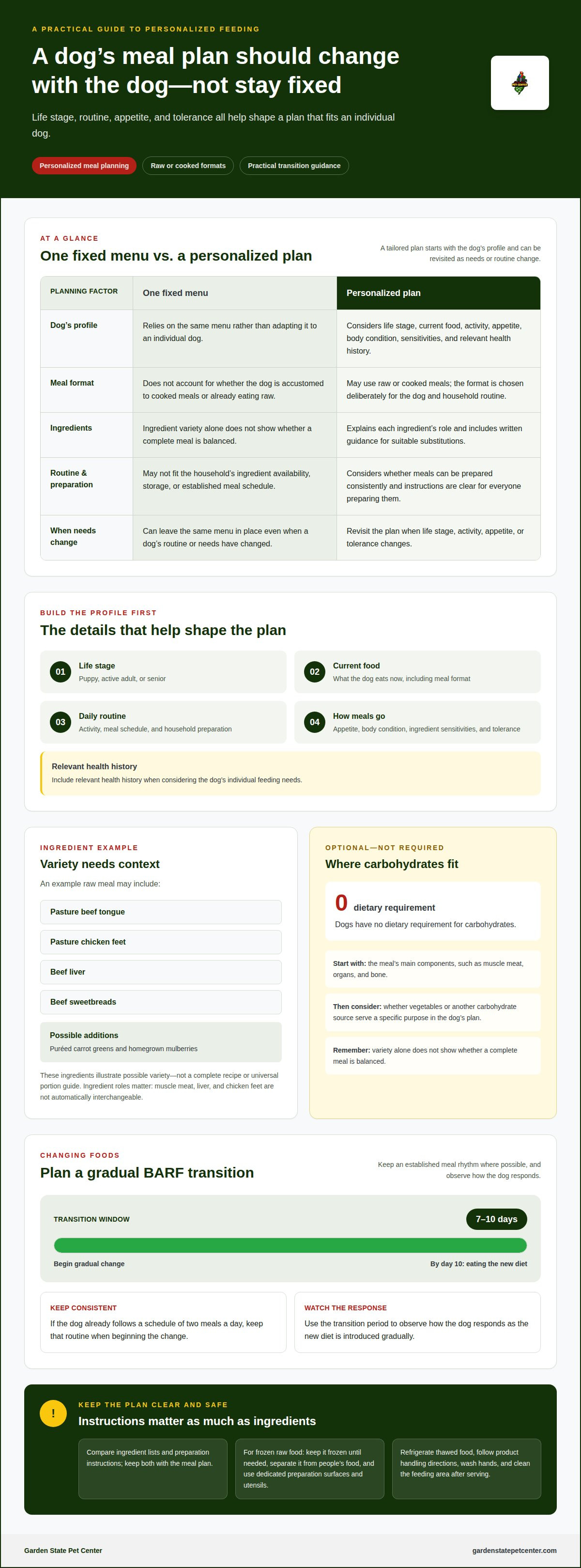
Puppies, active adult dogs, and seniors can have different feeding needs. A personalized raw diet plan for dogs should reflect the individual dog’s profile, routine, and meal format.
Customized Raw and Cooked Plans
A tailored plan may use raw or cooked meals, depending on the approach and the dog’s needs. Compare ingredient lists and preparation instructions, and consider how each option fits the dog’s routine. A dog accustomed to cooked meals may need a different plan from one already eating raw food. Choose a format deliberately and make sure the written instructions clearly explain each meal.
Start with a practical profile: life stage, current food, activity, appetite, body condition, ingredient sensitivities, and relevant health history. These details can help distinguish a preference from a dietary constraint. For example, if a dog leaves part of a meal, review whether the portions suit the dog and whether the ingredients are acceptable. Update the profile when the dog’s routine or needs change.
A personalized raw diet plan for dogs should also fit the household’s preparation routine. A plan that is difficult to prepare consistently may be harder to follow. Consider ingredient availability, storage, and how meals fit the dog’s established schedule. If an adult dog’s activity changes, review the plan rather than assuming the same meals will always remain appropriate.
Example Raw Meal Ingredients
One example raw meal includes pasture beef tongue, pasture chicken feet, beef liver, and beef sweetbreads. Puréed carrot greens and homegrown mulberries are examples of additions. These ingredients illustrate possible variety, not a complete recipe or universal portion guide. A personalized raw diet plan for dogs should explain each ingredient’s role in the complete meal and how it suits the individual dog.
Take care when swapping products, too. Identify an ingredient’s role before replacing it: muscle meat, liver, and chicken feet aren’t automatically interchangeable. Written substitution guidance can clarify which alternatives fit the plan and when a proposed change calls for reviewing the meal as a whole. Keep ingredient names and preparation details together so anyone preparing the food can follow the same instructions.
Revisit the meal plan when life stage, activity, appetite, or tolerance changes. A puppy growing into adulthood, for example, may need a fresh review rather than the same custom menu indefinitely. Record the ingredients and preparation method with the plan. This helps prevent routine changes from turning into unplanned recipe changes.
Optional carbohydrates in raw dog food
Carbohydrates are optional in raw dog food because dogs have no dietary requirement for them. That doesn’t mean every carbohydrate-containing ingredient is unsuitable. Consider whether an ingredient has a purpose in the dog’s overall meal plan alongside protein and fat sources.
Choosing Whether to Include Carbohydrates
Start with the meal’s main components, such as muscle meat, organs, and bone. Then consider whether vegetables or another carbohydrate source serve a specific purpose in the dog’s plan. A raw recipe containing ground meat and vegetables may look varied, but variety alone doesn’t show whether the complete meal is balanced. Treat carbohydrates as an intentional choice, not a required feature of every canine diet.
Keep the difference between an optional ingredient and a nutritional need clear. The fact that a commercial pet food contains carbohydrates doesn’t, by itself, show whether it suits a particular dog. Review the full ingredient and feeding information, then consider the dog’s life stage, routine, and tolerance. A custom plan should explain each ingredient’s contribution instead of relying on labels such as “grain-free” or “low-carb.”
Commercial Foods and Formulation
Commercial foods offer a different planning route from assembling individual raw ingredients at home. Because a formulated product combines ingredients as food, its directions and stated nutritional information matter. Don’t assume that a single ingredient, such as ground muscle meat, makes a complete meal. Compare the food’s intended use with the dog’s needs and the rest of the feeding plan.
For a useful comparison, write down the current meal format, the proposed food, and any planned additions. That makes it easier to spot duplicated ingredients or an unplanned change in the balance of the meal. If you’re reviewing dog food options, compare product information rather than judging by carbohydrate presence alone.
Handling Frozen Raw Food
Keep frozen raw food frozen until needed. Handle raw food carefully and keep it separate from food intended for people. Use dedicated preparation surfaces and utensils, then clean them after handling. These steps help limit cross-contamination between raw ingredients, hands, and other kitchen items.
Keep thawed food refrigerated and follow the product’s handling directions to help limit bacterial growth. Follow the product’s handling directions and avoid leaving a serving out while preparing other parts of the meal. Wash hands and clean the feeding area after each serving. These habits matter whether the food is a single-protein item or a ground mixture.
Making a Gradual Transition
Plan a gradual transition to a BARF diet over 7-10 days, rather than changing the entire menu at once. By the tenth day, the dog should be eating the new diet. If the dog already follows an established schedule of two meals a day, keep that routine when beginning the change. A familiar meal rhythm can make the transition easier to manage while you observe how the dog responds.
Raw feeding education and transition resources
Useful raw-feeding resources turn general advice into clear instructions for selecting a recipe, serving meals, and monitoring changes.
Raw Feeding Learning Resources
Look for guidance that explains ingredient roles, preparation, portions, and safe handling, not just a sample menu. A transition resource should provide a gradual schedule and describe what to observe, such as appetite, stool, or willingness to eat. Blending or grinding fruit and vegetables can help dogs digest them because dogs cannot digest cellulose skins. This makes the preparation method clear.
80/10/10 Feeding Guides
A feeding guide for an 80/10/10 premade grind should explain how the product fits into a complete daily plan. Check its serving directions and whether the recipe calls for additional ingredients or supplements. Don’t assume every grind has the same instructions. Use the specific product guidance, then consider the dog’s size, activity, and existing diet before making it a regular meal.
Portions and Feeding Schedules
Use calorie information to determine portions when it’s available. If calories aren’t provided, body weight, activity, age, and body condition all affect the amount needed. One general guideline recommends adult dogs eat around 3% of their body weight per day, but that figure doesn’t account for every dog’s energy needs. Treat it as a starting reference, not a substitute for observing condition and adjusting the plan.
Keep the dog’s established routine in view. If the dog already eats two meals a day, maintaining that schedule can make a diet change easier to manage. Record each meal, portion, and notable response. This simple feeding history can help distinguish a one-time refusal from a pattern that may call for reviewing the recipe.
Raw Feeding and Health Conditions
A health condition can affect which ingredients, textures, and feeding routines suit a dog. For example, a plan for a dog with a known food sensitivity needs to account for that ingredient rather than rely on a generic recipe. Keep relevant veterinary diagnoses and current diet information together when reviewing meals. Don’t present raw food as treatment for a medical condition or a replacement for prescribed care.
Interpret claims about raw-feeding benefits carefully. Separate marketing promises from observable changes in the individual dog, such as appetite or stool consistency. A balanced raw recipe still needs appropriate ingredients and portions; “raw” alone doesn’t establish nutritional completeness. Fresh fish is recommended no more than once a week as part of a BARF diet, so follow the recipe’s guidance rather than adding it without a plan.
Is homemade raw dog food healthy?
Homemade raw dog food can be balanced only when its ingredients supply the nutrients a dog needs. A recipe built around chicken alone doesn’t show that the complete meal contains adequate vitamins and minerals.
Balancing Homemade Meals
A balanced raw diet includes muscle meat, bones, and organs, but ingredient names alone don’t prove nutritional completeness. Each ingredient needs a defined role in the recipe, and the meal must be considered as a whole. Adding chicken muscle meat, for example, doesn’t automatically balance a meal’s mineral content. Review the complete ingredient list, preparation directions, and feeding amount together.
Weight and life stage also shape meal planning. A recipe for one dog may not suit another with different activity, body condition, or nutritional needs. Keep a written record of ingredients and portions so changes are deliberate rather than improvised. Don’t remove ingredients or add supplements without understanding how the change affects the full nutrient balance.
Veterinary and Nutritionist Guidance
Veterinary and nutrition guidance can help assess whether a homemade recipe suits a dog’s health history and nutritional needs. Bring the current food label, proposed recipe, supplement list, and the dog’s weight to the discussion. Ask how the plan accounts for protein, essential nutrients, and minerals, and what changes should prompt a review. Garden State Pet Center has a Certified Pet Nutritionist on-site who can help clarify the meal’s overall structure.
Planning With a Veterinary Nutritionist
To create a personalized raw dog food plan with a veterinary nutritionist, provide the dog’s weight, life stage, activity, health history, current food, and ingredient sensitivities. Ask for a complete recipe with precise ingredients, portions, preparation guidance, and any supplement instructions. A raw-feeding consultation includes a 30-minute session with a Certified Professional Canine Nutritionist; a phone consultation with a certified canine nutritionist lasts one hour.
Use the plan as a practical reference at feeding time. It should explain how to prepare each meal and what to do if an ingredient changes. If the dog’s weight or health needs shift, revisit the recipe instead of making multiple untracked changes. Clear instructions help keep homemade meals consistent from one serving to the next.
Veterinary Discussion Before Switching
Before changing foods, ask your veterinarian: Does my dog’s health history affect whether a raw diet is appropriate? Which nutrients or minerals need particular attention, and how should I monitor weight during the change? Ask how the proposed recipe fits any existing treatment or dietary guidance, too. These questions connect the feeding decision to your dog’s actual health needs.
Bring a sample meal plan and the exact ingredient list, including any chicken, organs, bones, and supplements. Ask which signs would warrant pausing the transition and how to maintain the dog’s current routine while changing foods. Specific answers make the plan’s nutritional purpose easier to understand and follow consistently.
What is a Raw Diet for Dogs?
Raw-feeding shopping lists are most useful when every item matches a written recipe. Use the recipe to identify calcium sources, organs, plant ingredients, and supplements before adjusting a meal.
Calcium Sources and Supplements
Start by locating the calcium source named in the recipe. If the plan includes bone, identify the ingredient and its preparation form. If it calls for a supplement, record its exact name and serving instructions. These details keep shopping and meal preparation aligned. Don’t assume that adding a calcium product is a harmless substitute for a missing recipe ingredient.
Keep the recipe and supplement label together, then follow the written directions. If a product changes, compare its instructions with the plan before swapping it. Calcium sources aren’t automatically interchangeable, and an unplanned addition can change the meal’s overall balance. A useful shopping list shows what to buy, where it appears in the recipe, and whether it needs separate preparation.
Organs, Plants, and Supplements
List each organ and plant ingredient separately, using the recipe’s own names. For example, write “liver” rather than the broad label “organ,” and specify a vegetable if the recipe names one. This makes it easier to spot items missing from the shopping basket or preparation. Keep supplements in a separate list with their stated serving directions.
Use the recipe to guide additions. Don’t add several supplements simply because they’re marketed for general wellness; each item should have a defined role in the plan. If the recipe changes, review the entire list instead of carrying every old addition forward. This keeps swaps deliberate and makes it easier to discuss the meal with a nutrition professional.
Before shopping, organize the plan into ingredients, supplements, and preparation notes. A practical checklist can include:
- Ingredients: every named meat, organ, plant, and calcium source.
- Amounts: the recipe’s stated quantity for each item.
- Supplements: exact product names and written directions.
- Preparation: any grinding, blending, or portioning steps.
Check each item against the recipe before preparing a batch. If a listed ingredient is missing, don’t guess by filling the gap with another food or supplement. Identify the missing item and have the meal plan reviewed before changing its composition. Keep an updated copy with the shopping list, especially when ingredients or products change.
For help reviewing dog food and supplement choices against a feeding plan, arrange a pet nutritional consultation.
Garden State Pet Center
Garden State Pet Center can help connect these principles with practical food choices. Its selection of premium pet foods includes raw, freeze-dried, and gently cooked options. The Certified Pet Nutritionist on-site can help you consider food choices alongside your dog’s life stage, routine, and ingredient needs. Bring questions about food format or how a product fits your current approach. No single food choice is right for every dog.
For individualized nutrition concerns or health conditions, discuss the diet with your veterinarian. Contact Garden State Pet Center to speak with the on-site Certified Pet Nutritionist about your pet food questions.
Make Your Next Feeding Choice With Confidence
A feeding approach should work in your dog’s daily routine, not just look appealing on paper. Before choosing a product or changing ingredients, decide what matters most: preparation time, familiar foods, feeding format, or help with nutrition questions. That clarity can make it easier to discuss a personalized raw diet plan for dogs with your veterinarian and choose a next step that fits your household.
Garden State Pet Center offers premium pet food, toys, and accessories, along with products for birds and other animals. Its wider selection serves varied pet needs, while this guide focuses on your dog’s feeding. If you’re weighing food options or want help with nutrition questions, start a conversation with the on-site Certified Pet Nutritionist.
Contact Garden State Pet Center and take the next step toward a feeding routine that feels practical and considered.
Frequently Asked Questions
What raw ingredients do I need to include?
A raw recipe needs ingredients that work together as a complete meal, not just a single meat chosen on its own. Start with the exact recipe and shopping list, then identify each named ingredient and its role. If a recipe lists several animal parts, don’t replace one simply because another seems similar. Keep preparation notes with the ingredient list so substitutions don’t quietly change the meal.
Are There Different Kinds of Raw Diets for Dogs?
Yes. Raw diets can be homemade or premade, and premade raw food is sold frozen, dehydrated, or freeze-dried. These formats differ in storage and preparation, so follow the specific product’s directions. A homemade recipe requires a different planning process, with ingredients and portions arranged according to that recipe. Choose a format by considering your preparation routine and how you’ll store and serve the food.
Is it cheaper to make your own raw dog food?
Making raw food at home isn’t automatically cheaper; the total depends on the recipe and ingredients you buy. Consider the full shopping list, including every animal ingredient, plant addition, and supplement the recipe requires. Account for storage and preparation needs, too. Compare the complete meal plan with the feeding option you’re considering, rather than comparing one ingredient with the cost of a finished food.
What about bone?
Bone can be part of a balanced raw diet, but follow the recipe rather than adding it by guesswork. Check whether the meal plan specifies a bone ingredient or another calcium source, and keep that choice consistent with the complete recipe. If a bone ingredient is unavailable, don’t assume another item is an equivalent replacement. A planned substitution should account for the whole meal.
Why Should I Feed Raw?
Some owners choose raw feeding because they want to select and prepare their dog’s meal ingredients. That preference doesn’t establish that raw food will produce a particular health outcome. Consider what you want from the feeding routine, how you’ll manage preparation, and whether the chosen recipe is complete for your dog. A veterinarian can discuss how a proposed diet fits your dog’s health needs.
What nutrients must a complete and balanced raw diet for dogs provide, and in what proportions?
A complete recipe balances nutrients across the whole meal rather than relying on one ingredient to provide everything. Ingredients and supplements should work together, with clear amounts and preparation directions. Don’t infer proportions from the visible amounts of meat, organs, or vegetables. Use a recipe designed as a complete diet and review its formulation with a qualified nutrition professional.
How much raw food should a dog eat per day by weight and life stage?
Daily portions depend on the dog’s weight, life stage, activity, body condition, and the food’s calorie content. Weight-based guidance for adult dogs can be a starting reference, but it won’t give a precise amount for every puppy, adult, or senior. Follow the recipe’s or product’s feeding directions, then consider the dog’s condition and routine when reviewing portions. Keep meals consistent enough to assess changes over time.
What are the risks of raw diets for dogs, including Salmonella, parasites, and nutritional deficiencies?
Raw meat can encourage bacterial growth and cross-contamination if mishandled. Thaw it in the refrigerator, keep it separate from food for people, and clean hands, utensils, surfaces, and the feeding area. Homemade meals also need careful attention to nutritional balance.

Article by
Victor Santucci
Victor Santucci Jr. is the owner of Garden State Pet Center and a Certified Clinical Pet Nutritionist specializing in premium pet nutrition, raw and fresh feeding, holistic pet wellness, birds and exotic animals. Through years of hands-on retail and animal-care experience, Victor helps pet parents make informed decisions about nutrition, enrichment and species-appropriate care.
Share this post
- 0 comment
- Tags: canine health, dog food transition, dog nutrition, personalized feeding, personalized raw diet plan for dogs, puppy nutrition, raw dog food, raw feeding, senior dog diet