

Pond cleaning near me Best Practices and Expert Advice


Pond cleaning isn't just a landscaping chore; it's a clinical intervention for your aquatic pets' habitat. If you're searching for "pond cleaning near me," you're likely looking for more than a quick scrub. You need a partner who understands that your backyard oasis is a delicate, living ecosystem. We know how stressful it is to face recurring algae blooms or the constant fear of losing prized koi during a routine maintenance visit. It's common to feel overwhelmed by technical jargon regarding filtration systems and biological loads when all you want is a peaceful view.
You deserve a clear, vibrant pond that supports thriving plants and active fish without demanding every minute of your free time. This guide provides the expert advice you need to maintain a crystal-clear environment through professional cleaning and specialized biological management. We'll walk you through the best practices for seasonal care, explain how to keep your aquatic life safe during service, and show you how to achieve a healthy, low-maintenance balance that lasts.
Key Takeaways
- Understand the critical difference between visual water clarity and true biological health to protect your aquatic pets from "Old Tank Syndrome."
- Discover why a biological cleanout acts as an essential system reset that preserves beneficial bacteria while optimizing your filtration.
- Learn the necessary steps to prepare for professional pond cleaning near me, including pre-service fasting for fish and securing safe temporary habitats.
- Maintain your pond’s delicate balance between professional visits by using premium nutritional strategies and consistent water quality testing.
- Explore how a holistic care approach supports a thriving ecosystem for your aquatic life, visiting wildlife, and exotic birds alike.
Why Professional Pond Cleaning is Vital for Aquatic Health
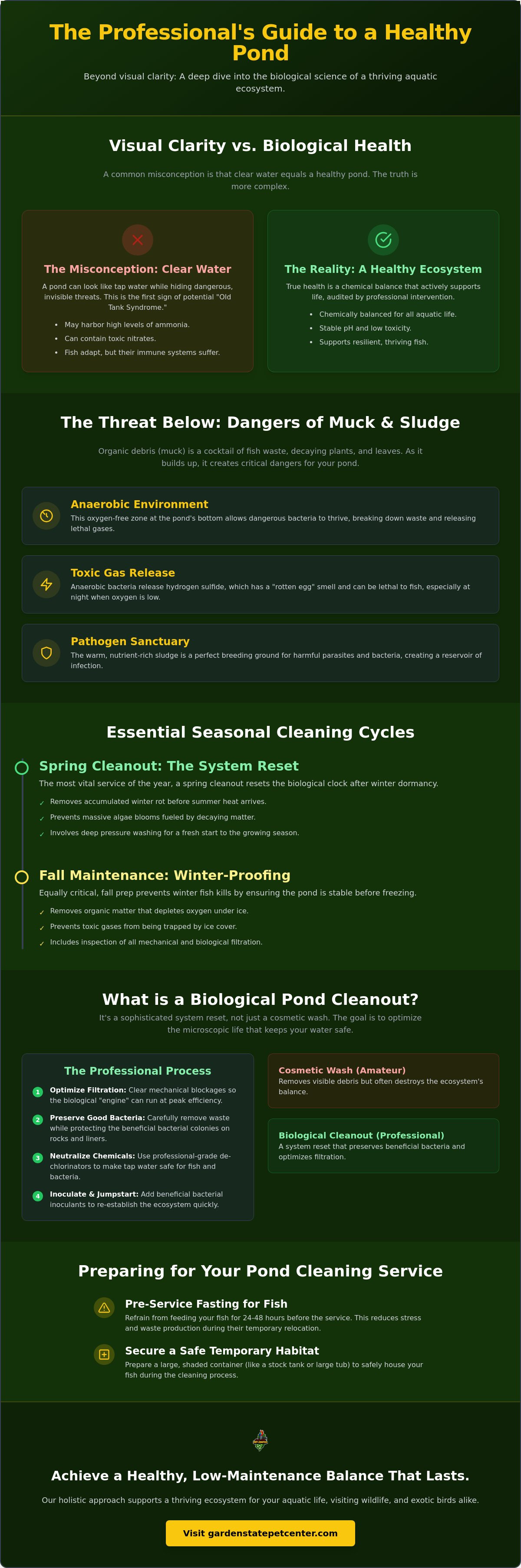
Many homeowners assume that if they can see the bottom of their pond, the environment is healthy. This is a common misconception. Visual clarity and biological health are two distinct metrics. A pond can look like tap water while harboring dangerous levels of ammonia or nitrates. When you search for pond cleaning near me, you aren't just hiring someone to remove leaves; you're inviting an expert to audit the life-support system of your aquatic pets. Professional intervention ensures that the water isn't just clear, but chemically balanced to support life.
Regular maintenance addresses "Old Tank Syndrome," a condition where the water chemistry slowly drifts toward acidity and high toxicity over months or years. Fish are incredibly resilient and often adapt to these gradual changes, but their immune systems suffer in the process. Without regular intervention, a minor environmental shift can lead to a sudden, catastrophic loss of life. Maintaining Water gardens requires a deep understanding of these invisible cycles to ensure long-term stability for your koi and goldfish.
The Impact of Muck and Sludge Buildup
Organic debris, often called muck, is a heavy cocktail of fish waste, decaying aquatic plants, and windblown leaves. As this layer thickens, it creates an anaerobic environment at the bottom of your pond. This oxygen-free zone is dangerous. Anaerobic bacteria break down this waste and release toxic gases like hydrogen sulfide. These gases can be lethal to fish, especially during the night when oxygen levels naturally dip. If you notice a "rotten egg" smell when disturbing the pond floor, your ecosystem is in trouble.
Sludge also acts as a sanctuary for harmful pathogens. Parasites and bacteria thrive in the warm, nutrient-rich layer of muck. Regular professional cleanouts remove this reservoir of infection, acting as a preventative health measure. By eliminating the muck, you're directly reducing the biological load on your filtration system and giving your fish more room to breathe. This process is far more effective than simple skimming, as it removes the source of the toxins rather than just the surface symptoms.
Seasonal Cleaning Cycles You Should Follow
Timing your maintenance is just as important as the cleaning itself. Spring cleanouts are the most vital. This service resets the biological clock after a winter of dormancy. It removes the accumulated rot before the summer heat accelerates bacterial growth and algae blooms. A professional team will carefully relocate your fish to a safe holding tank, drain the system, and perform a deep pressure wash that a simple garden hose can't match. This ensures a fresh start for the growing season.
Fall maintenance is equally critical for preventing winter fish kills. When ice forms over a pond, it traps gases inside. If your pond is full of decaying organic matter, those trapped gases will quickly deplete the oxygen and suffocate your fish. Professional services differ from DIY skimming because they involve inspecting mechanical components and ensuring the biological filtration is prepared for the cold. This proactive care keeps your pond a vibrant, safe sanctuary through every season.
What is a Biological Pond Cleanout?
When you start looking for pond cleaning near me, it's vital to distinguish between a cosmetic wash and a true biological cleanout. A biological cleanout is a sophisticated system reset. It doesn't just focus on removing visible debris; it prioritizes the microscopic life that keeps your water safe. Managing invisible water quality parameters like dissolved oxygen, ammonia, and pH is vital for aquatic health, and a professional cleanout is the most effective way to restore these levels.
The process involves a transition from relying solely on mechanical filtration to optimizing biological filtration. Mechanical filters, like skimmers and pads, catch leaves and twigs. Biological filtration, however, uses colonies of beneficial bacteria to process fish waste. During a cleanout, we clear the mechanical blockages so the biological engine can run at peak efficiency. This isn't about making the pond sterile. It's about removing the "bad" waste while protecting the "good" bacteria that live on the rocks and liner.
Refilling the pond requires clinical precision. We never just "turn on the hose." Municipal tap water contains chlorine or chloramines that are lethal to both fish and beneficial bacteria. We use professional-grade de-chlorinators to neutralize these chemicals instantly. We also add bacterial inoculants to jumpstart the ecosystem. To ensure the water stays crystal clear after the service, we inspect UV sterilizers. These units use specific light wavelengths to neutralize floating algae cells, preventing the "pea soup" look that often follows a water change. If you're feeling unsure about your pond's current balance, our team provides expert guidance on aquatic environments to help you maintain a stable habitat.
Preserving the Nitrogen Cycle
Beneficial bacteria are the unsung heroes of any water feature. They perform the nitrogen cycle, converting toxic ammonia from fish waste into nitrites, and finally into harmless nitrates. A common DIY mistake is scrubbing the pond liner until it's "squeaky clean." This actually crashes the ecosystem by killing the bio-film where these bacteria reside. We leave a thin, healthy layer of this film on the rocks. We also focus on cleaning and maintaining the biomedia inside your external filters, ensuring the bacteria have a high-surface-area home to thrive in.
The Role of Aquatic Plants in Filtration
Think of your aquatic plants as nature's filters. They are your best allies in the fight against algae because they compete for the same nutrients, like nitrates and phosphates. During a professional cleanout, we prune and thin these plants to prevent them from becoming overgrown and adding to the muck layer. Floating plants, such as water lilies, are particularly important. They provide essential shade that keeps water temperatures down, which is a key part of thermoregulation for your fish during the hot summer months.
Steps to Prepare for Your Pond Cleaning Service
Preparation is the foundation of a successful ecosystem reset. When you schedule a professional pond cleaning near me, taking a few proactive steps ensures the safety of your aquatic life and the efficiency of the service crew. Start by fasting your fish. Stop feeding them 24 to 48 hours before the team arrives. This reduces the amount of waste they produce while they are in temporary holding tanks, which is vital for preventing dangerous ammonia spikes in a confined space.
Site access is equally important. Clear the perimeter of your pond by moving patio furniture, potted plants, or fragile garden decor. This gives the technicians a safe workspace and prevents accidental damage to your landscaping. Double check that your outdoor electrical outlets are functioning and that your garden hose can reach the pond. Professionals need reliable power for high volume pumps and a consistent water source for the rinsing and refilling process. Following a comprehensive Maintaining Your Pond strategy starts with these logistical basics.
Ensuring Fish Safety During the Process
Your fish are the heart of your water feature, and their welfare is our primary concern. During a full drain, we move fish into specialized holding tanks. These tanks must be aerated with portable bubblers to maintain high dissolved oxygen levels, especially on warm days. Respiratory stress is a major risk during transitions, so constant airflow is non-negotiable.
Reintroducing your fish isn't as simple as dropping them back in. We use a careful acclimation process to match the water temperature and chemistry of the new water. We also recommend using stress-reducing water additives that bolster the natural slime coat of the fish. These conditioners neutralize any trace heavy metals and provide a soothing environment as they adjust to their refreshed home.
Evaluating Your Filtration Equipment
A cleanout is the perfect time to audit your hardware. Before the service, check your pump's efficiency. Listen for grinding noises that might indicate impeller wear or blockages. If your pump has been underperforming, it's better to identify the issue now while the system is already offline.
Inspect your mechanical filtration components as well. Filter pads, brushes, and sponges eventually lose their structural integrity. If they are falling apart or permanently clogged, replacement is more effective than a simple rinse. Finally, consider if your fish load has grown. A pond that was balanced three years ago might now require an aeration upgrade to support larger, more active koi. Discussing these upgrades during your cleaning ensures your equipment can handle the biological demands of the upcoming season.
Maintaining Your Pond Between Professional Cleanings
While scheduling a professional pond cleaning near me provides the essential reset your ecosystem needs, your daily habits determine how long that clarity lasts. Think of professional service as a clinical physical and your interim care as the daily diet and exercise that keeps the patient healthy. You can significantly extend the time between deep cleanings by taking a proactive approach to water chemistry and biological support. This doesn't require hours of labor; it simply requires consistency and the right tools.
Monitoring your water quality is the most effective way to prevent a crisis before it starts. Use regular water testing kits to track ammonia, nitrite, and pH levels at least once a week. Ammonia and nitrite should always remain at zero, as even small traces can burn fish gills and suppress immune systems. To support the nitrogen cycle discussed earlier, introduce beneficial bacteria treatments on a bi-weekly basis. These liquid or powdered additives bolster the existing colonies in your filter, helping them keep up with the waste produced by your fish and visiting wildlife.
If your water feature houses more than just fish, you must account for the higher biological load. For those maintaining habitats for turtles or amphibians, utilizing specialized reptile care knowledge is vital. Turtles are significantly "messier" than koi, often requiring more frequent bacterial dosing and robust filtration to prevent the water from becoming stagnant or foul. You can find all the necessary supplies and expert advice by visiting our online pet resource center today.
The Link Between Nutrition and Water Clarity
Most water quality issues begin at the surface during feeding time. Low-quality fish foods often contain "fillers" that fish cannot fully digest, leading to excess phosphorus in the water. This phosphorus acts as a high-octane fuel for algae blooms. By switching to a highly digestible, premium aquatic diet, you ensure that more nutrients go into the fish and fewer end up as sludge on the pond floor. Premium fish nutrition reduces solid waste by up to 30%, directly lowering the burden on biological filters. This simple change in your nutritional strategy is one of the most effective ways to maintain crystal-clear visibility.
Managing Algae Without Harsh Chemicals
Algae is a natural part of any outdoor environment, but it requires balance. It is helpful to distinguish between "good" carpet algae, which grows short and green on rocks, and "bad" string algae that can choke out pumps. Instead of reaching for harsh algaecides that can stress your fish, consider natural inhibitors. Barley straw or liquid barley extracts release humic acids that safely prevent algae growth without harming sensitive plants. Combine these treatments with proper aeration. Keeping the water moving prevents the stagnant, sun-soaked conditions that string algae crave, ensuring your pond remains a vibrant and healthy sanctuary.
The Garden State Pet Center Approach to Holistic Pond Care
At Garden State Pet Center, we leverage over 30 years of specialized experience in animal welfare and nutrition to transform your water feature into a thriving sanctuary. When you search for pond cleaning near me, you aren't just hiring a maintenance crew; you're consulting with experts who view your pond as part of a larger, interconnected environment. We understand that a healthy pond supports more than just fish. It serves as a vital hydration and bathing station for exotic birds and visiting wildlife. Our holistic approach ensures that every cleaning and treatment supports the long-term vitality of every creature that visits your backyard oasis.
Consult with our knowledgeable team to design a maintenance plan that fits the specific biological needs of your ecosystem. We prioritize sourcing premium supplies that focus on the health of sensitive species, ensuring your pond remains a safe haven. By integrating professional cleaning with expert biological management, we help you achieve a low-maintenance balance that sustains life through every season. We aren't merely vendors; we're your partners in creating a high-standard habitat that reflects your passion for animal welfare.
Specialized Care for Sensitive Species
High-end Koi have vastly different physiological requirements than standard garden goldfish. These sensitive species require pristine water parameters and precise biological management to maintain their vibrant colors and active temperaments. Our team applies clinical precision to every service, ensuring that the water chemistry remains stable enough for even the most delicate aquatic stock. We also consider how your pond health impacts your terrestrial pets. Many small animals may interact with the water's edge, making it essential to use non-toxic, biological treatments that are safe for all species. By maintaining a high level of health awareness and disease screening, we help prevent the spread of pathogens that could compromise your entire collection.
Your Resource for Professional-Grade Supplies
Avoid the common mistakes found in "big box" pond management by utilizing our specialized expertise. We provide access to professional-grade supplies, including holistic diets and supplements designed specifically for the unique needs of exotic pets. Our consultants help you select the right equipment to prevent the mechanical failures that often lead to ecosystem crashes. We believe in proactive care that prioritizes the long-term welfare of your animals over quick-fix solutions. Consult our experts for specialized pet care advice to ensure your pond remains a source of joy and a testament to excellence in animal care.
Transform Your Aquatic Sanctuary
Your pond is more than a simple landscape feature; it's a living legacy that requires specialized care to flourish. By focusing on biological health rather than just visual clarity, you protect your aquatic pets from the hidden dangers of toxic buildup. A professional system reset ensures your nitrogen cycle remains robust, while premium nutrition reduces the waste that fuels algae growth. When you search for pond cleaning near me, you're choosing to prioritize the long-term welfare of your fish and visiting wildlife.
Garden State Pet Center has specialized in exotic animal welfare since 1990. As a family-owned resource, we provide the clinical precision and warm hospitality your ecosystem deserves. Our on-site Certified Pet Nutritionist is ready to help you select diets that support a low-maintenance balance. Take the next step in your hobby with confidence and reliability. Explore Premium Supplies for Your Exotic Pets and discover the difference that expert guidance makes for your sensitive species. We look forward to helping your backyard oasis become a vibrant, thriving success.
Frequently Asked Questions
How often should I have my pond professionally cleaned?
Most ponds require a full professional cleaning once per year, typically during the spring. This annual reset removes the heavy organic load accumulated over winter and prepares your biological filters for the rising temperatures of summer. Some high-stock koi ponds might benefit from a secondary light maintenance visit in the fall to manage leaf litter and prevent winter gas buildup.
Is it safe to drain my pond completely for cleaning?
It's safe to drain a pond completely if you follow a strict biological protocol to protect your ecosystem. Professionals use specialized, aerated holding tanks for your fish and ensure that a thin layer of beneficial bio-film remains on the rocks. This approach allows for a thorough removal of toxic muck while preventing the nitrogen cycle from crashing during the refill.
How much does professional pond cleaning typically cost?
Professional maintenance costs vary based on the size of your water feature and the specific services required. On a national average, homeowners spend between $450 and $5,000 annually for professional care. A standard spring cleanout for a mid-sized pond typically ranges from $850 to $1,000, while smaller garden ponds with minimal fish are generally less expensive to maintain.
Can I clean my pond myself without professional equipment?
What happens to my fish while the pond is being cleaned?
Fish are moved to aerated holding tanks filled with their original pond water to keep them stable and safe. These tanks are kept in a shaded area and covered with safety netting to prevent jumping. Once the cleaning is finished and the pond is refilled with de-chlorinated water, we carefully acclimate the fish to the new temperature before releasing them.
Why is my pond water still cloudy after a professional cleaning?
It's normal for water to appear slightly hazy for 24 to 48 hours as the biological balance re-establishes itself. This cloudiness is often caused by fine sediment settling or a temporary bacterial bloom as the new water stabilizes. Ensure your UV sterilizer is active, as this will quickly neutralize any suspended particles or algae cells stirred up during the process.
How do I stop algae from coming back after a cleanout?
Prevent algae by maintaining a low nutrient load through premium nutrition and regular bacterial dosing. High-quality fish food reduces the phosphorus levels that algae use as fuel. Adding aquatic plants like lilies also provides essential shade and competes with algae for nutrients, creating a natural deterrent that keeps your water clear between professional visits.
Do I need to clean my pond filter every week?
You don't need to clean your biological filter media every week, as over-cleaning can destroy the beneficial bacteria your pond requires. Mechanical filter pads should be rinsed whenever they become visibly clogged with debris to maintain flow. Always rinse your biological media in pond water rather than tap water to protect the colonies that manage your ammonia levels.

Article by
Victor Santucci
Victor Santucci is the owner of Garden State Pet Center in Audubon, NJ, where he specializes in premium pet nutrition, exotic animals, and expert-level care. With years of hands-on experience and a passion for helping pets thrive, Victor is dedicated to educating pet owners on proper nutrition, enrichment, and species-specific care. His mission is simple: provide every pet with the highest quality products and every customer with honest, knowledgeable guidance.
Share this post
- 0 comment
- Tags: Algae Control, Backyard Ponds, Fish Health, Koi Pond Care, Pond Cleaning, pond cleaning near me, Pond Maintenance, Water Quality