

How often should my dog be groomed Best Practices and Expert Advice


Is it possible that your dog's grooming schedule is based on an outdated myth rather than their actual biological needs? Many pet parents find themselves asking how often should my dog be groomed while struggling with uncontrolled shedding or the heartbreak of discovering painful mats in a thick coat. It's completely normal to feel confused when one neighbor suggests a monthly bath while another swears by quarterly visits. We understand that you want more than just a clean pet; you want a companion who feels as good as they look.
You're in the right place to find clarity. This guide helps you discover the ideal grooming schedule for your dog based on coat type, lifestyle, and nutritional health to ensure a happy, healthy pet. We'll explore how professional care and premium nutrition work together to prevent skin issues. You'll also learn the specific signs that indicate your dog needs immediate attention. This approach moves beyond guesswork and into a proactive routine that fits your unique lifestyle. By understanding the balance between specialized care and daily maintenance, you can keep your pet's coat vibrant and their skin healthy throughout every season.
Key Takeaways
- Learn the professional 4-to-8 week baseline for grooming visits and how your dog's unique biological hair growth cycle dictates their specific needs.
- Identify the environmental factors and skin sensitivities that help you determine exactly how often should my dog be groomed to prevent matting and irritation.
- Discover the "click-clack" rule for nail maintenance and essential techniques for protecting floppy-eared breeds from common infections.
- Explore the vital connection between premium nutrition and coat health, focusing on how specific proteins and Omega fatty acids simplify your maintenance routine.
- Build a sustainable, custom grooming calendar for 2026 that perfectly balances expert professional services with effective DIY home care.
The Baseline: Grooming Frequency by Coat Type
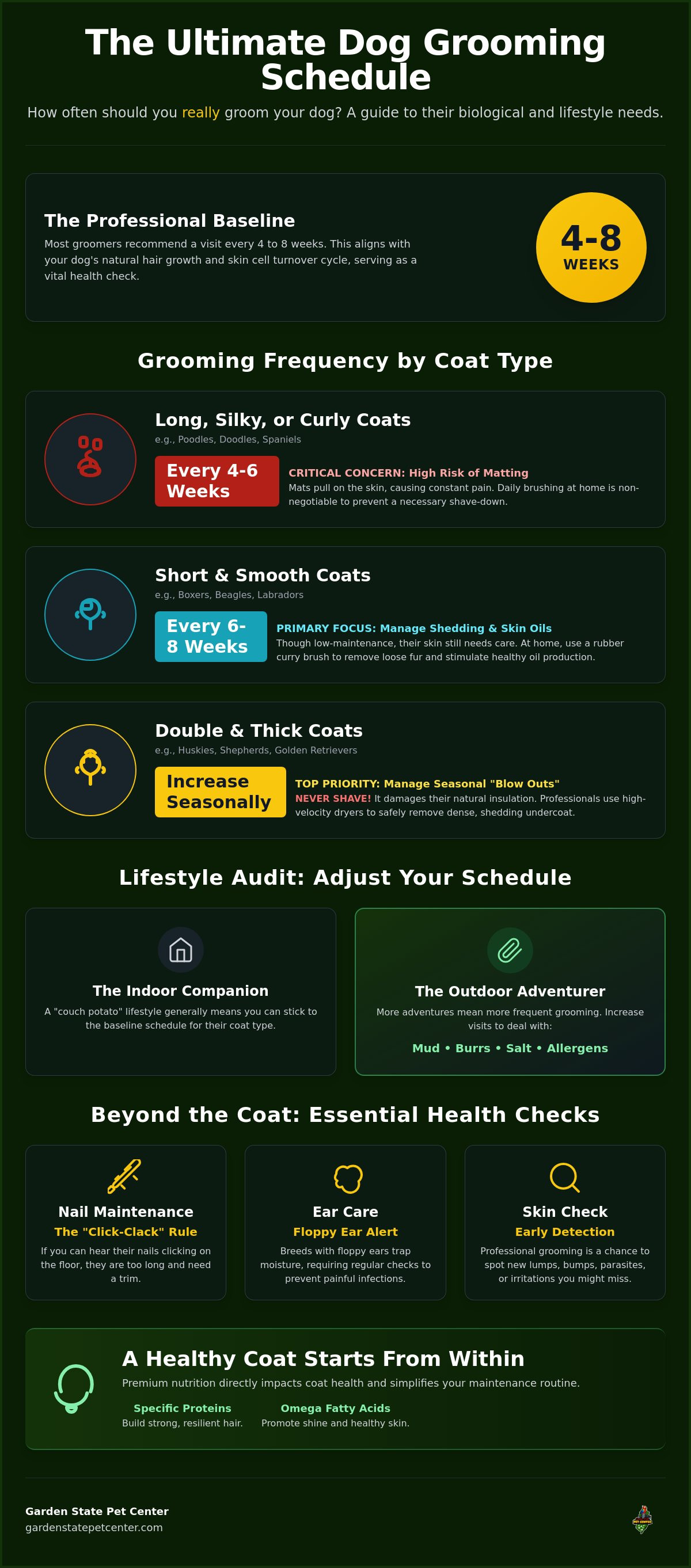
Establishing a reliable care routine starts with understanding the biological needs of your pet. While every dog is an individual, most professionals recommend a visit every four to eight weeks. This timeframe aligns with the natural hair growth cycle and skin cell turnover. Proper Dog grooming is about more than just aesthetics; it's a vital health check for the skin, ears, and paws. Consistent visits allow a professional to spot lumps, bumps, or parasites that you might miss during a quick cuddle on the couch.
Determining exactly how often should my dog be groomed depends heavily on their activity level and breed genetics. Look for signs that your current schedule is failing. You might notice a dull coat, a lingering "doggy" smell even after a home bath, or small tangles forming behind the ears and in the armpits. Professional intervention ensures these minor issues don't escalate into painful skin infections or severe matting. Maintaining a proactive schedule keeps your pet comfortable and your home cleaner.
To better understand this concept, watch this helpful video:
Short and Smooth Coats
Breeds like Boxers, Beagles, and Labradors might seem low maintenance, but they still require specialized care. Their primary needs involve managing skin oils and heavy shedding. A professional visit every six to eight weeks is usually sufficient for these breeds. Between appointments, use a rubber curry brush at home. This tool stimulates the skin and pulls away loose fur before it ends up on your furniture. You can find professional-grade tools in our dog accessories collection to help maintain these results. Regular deshedding treatments prevent the "glitter" of dog hair from taking over your living space.
Long, Silky, or Curly Coats
Poodles, Doodles, and Spaniels face a high risk of matting that can happen almost overnight. Their hair continues to grow without shedding out, leading to dense knots if ignored. To prevent the need for a complete shave-down, stick to a strict four to six week professional rotation. These coats require daily brushing at home to stay manageable. If you can't slide a metal comb through the hair all the way to the skin, it's time to see a professional. Matting is painful. It pulls on the skin with every step your dog takes, making regular appointments a matter of welfare rather than just fashion.
Double-Coated and Thick Undercoats
Huskies, Shepherds, and Golden Retrievers experience intense "blow out" seasons during spring and fall. During these times, you'll need to increase your grooming frequency to manage the massive volume of undercoat being shed. Never shave a double-coated dog; this destroys their natural temperature regulation and can cause permanent coat damage. Professionals use high-velocity dryers to safely blast out loose fur, which is far more effective than home brushing alone. This process allows the skin to breathe and prevents "hot spots" caused by trapped moisture and dead hair. Understanding how often should my dog be groomed during these seasonal shifts keeps their coat functional and beautiful.
Lifestyle Audit: Factors That Speed Up Your Schedule
It's helpful to distinguish between "outdoor dirty" and "biologically oily." Surface dirt from a walk in the park often just requires a quick towel-off or a water rinse. However, oily buildup is a biological process. Sebum traps dead skin and odors. This requires a professional-grade bath to reset the skin's balance. High-activity pets benefit from "mini-grooms" between major appointments. These sessions focus on high-friction areas like paw pads and the belly. Urban dogs face unique challenges from smog and pavement dust. This grit acts like sandpaper on the hair over time. Rural pets deal with heavy pollen and pests that hide deep in the undercoat. Keeping these environmental factors in mind is vital to your pet's health.
Health and Age Considerations
Senior dogs need a specialized approach. Long sessions are physically taxing for a dog with arthritis. We suggest shorter, more frequent appointments. This maintains hygiene without causing exhaustion. Managing skin folds in breeds like Bulldogs is another daily requirement. It prevents infections. Seasonal allergies also change the math. During peak pollen months, more frequent rinsing helps. It removes allergens before they cause a flare-up. If you're looking for the right tools to manage these needs, browse our selection of dog accessories for professional-grade solutions. Understanding how often should my dog be groomed during an active summer or a muddy spring prevents the coat from becoming a disaster.
Beyond the Coat: The 'Forgotten' Grooming Tasks
Focusing solely on the coat is a common mistake that overlooks the complex needs of your pet's body. Comprehensive care involves several "forgotten" tasks that are essential for long-term health. When pet parents ask how often should my dog be groomed, they usually envision a shampoo and a haircut. However, the health of the nails, ears, and teeth often dictates the pet's comfort level more than the length of their fur. Neglecting these areas can lead to chronic pain or expensive veterinary visits.
Dental hygiene is another vital component often left out of the conversation. Plaque can harden into tartar in as little as 48 hours. While professional cleanings are necessary for deep scaling, daily at-home brushing is the gold standard for preventing periodontal disease. Similarly, anal gland expression is a specialized service many dogs require to prevent "scooting" and discomfort. If you notice your dog dragging their hindquarters across the carpet, it's a clear signal that professional intervention is needed immediately. These tasks require precision and patience, which is why many owners prefer the expertise of a professional for these sensitive areas.
Nail and Paw Pad Care
If you hear a distinct click-clack on your hardwood floors, you've already waited too long for a nail trim. Overgrown nails don't just scratch the floor; they push the toe joints upward and backward. This alters your dog's posture and can lead to premature arthritis in the hips and spine. You should also regularly inspect paw pads for cracks or burns. Extreme weather, such as summer asphalt or winter ice, can cause significant damage. Browse our dog accessories for protective balms and boots that keep those sensitive pads safe year-round.
Ear and Eye Maintenance
Floppy-eared breeds are particularly prone to infections because their ear shape traps moisture and heat. This creates a perfect environment for yeast and bacteria to thrive. Check your dog's ears weekly for a yeasty smell or dark, waxy buildup. For light-colored breeds, managing tear stains is both a cosmetic and health concern. Dried discharge can irritate the skin beneath the eyes. Use a damp, soft cloth for daily cleaning, but always consult a professional for deep ear canal debris removal. The frequency of these maintenance tasks is just as critical as the coat when considering how often should my dog be groomed.
The Internal Factor: How Nutrition Affects Grooming
When you ask how often should my dog be groomed, the answer often lies at the bottom of their food bowl. A dog's coat is a direct reflection of their internal health. Hair is composed of nearly 90% protein. If a diet lacks high-quality, bioavailable proteins, the body diverts those nutrients to vital organs first. This leaves the coat brittle, dry, and prone to excessive shedding. High-quality fats are equally essential. They provide the fuel needed to maintain the skin's natural lipid barrier, which prevents dehydration and irritation.
Omega-3 and Omega-6 fatty acids play a specific role in skin elasticity and luster. Omega-3s act as natural anti-inflammatories, while Omega-6s support the structural integrity of the skin cells. A deficiency in these fats often leads to "doggy odor" and flaky skin. This happens because the skin overproduces sebum to compensate for the lack of moisture, creating a greasy film that traps bacteria. Improving your pet's diet can actually decrease how often should my dog be groomed by reducing the frequency of baths needed to manage these odors and oily buildup.
The Power of Raw and Freeze-Dried Diets
Transitioning to raw or freeze-dried diets can transform a problematic coat in just a few weeks. Brands like SmallBatch and Vital Essentials offer bioavailable nutrients that traditional high-heat kibble often loses during processing. These diets reduce inflammation-based skin itching by removing common fillers and synthetic additives. Raw feeding provides natural enzymes and balanced fats that normalize skin secretions, effectively reducing the "oily" feel and heavy odor often found in dogs on high-carb diets. This holistic approach ensures your pet's coat remains vibrant from the inside out.
Supplements for Skin and Coat Health
Sometimes, even a great diet needs a boost. Adding fish oils or specific vitamins to the bowl can target chronic dryness or seasonal shedding. There is a powerful link between gut health and skin clarity. Probiotics help balance the microbiome, which reduces the systemic inflammation that leads to "yeasty" skin and ears. If your pet struggles with persistent itching or a dull appearance, consider adding targeted dog vitamins & supplements to support your grooming goals. These additions provide the extra building blocks needed for a resilient, shiny coat.
Upgrade your pet's wellness routine by exploring our premium dog supplies to find the perfect nutritional match for their specific coat type.
Creating Your Sustainable Grooming Routine
Building a sustainable grooming routine requires more than just a sporadic visit to the salon. It involves a dedicated partnership between your home care and professional expertise. When you establish a clear calendar, the question of how often should my dog be groomed becomes a manageable part of your lifestyle rather than a source of stress. Start by marking your professional appointments at least six months in advance. Current industry data for 2026 shows that the average U.S. household spends about $250 per year on grooming. With a shortage of skilled professionals, wait times often reach 3 to 6 weeks. Securing these spots early ensures your pet never reaches the point of painful matting or skin irritation.
Consistency also turns grooming into a positive bonding experience. Instead of a high-stress event, short and frequent sessions build trust between you and your companion. Use high-value treats and a calm environment to show your dog that being handled is safe. Choosing the right products for maintenance is equally vital. Look for pH-balanced shampoos and conditioners that match a dog's specific skin chemistry to avoid stripping natural oils. This proactive approach keeps the skin healthy and the coat vibrant between professional visits. By staying organized, you can focus on the joy of having a clean, comfortable pet.
Your At-Home Maintenance Checklist
A reliable routine prevents small issues from becoming big problems. Follow this frequency guide for 2026 to stay ahead of the curve:
- Daily: Brushing to prevent mats and using dental wipes to manage plaque before it hardens into tartar.
- Weekly: Inspecting ears for yeasty odors and checking paw pads for debris, cracks, or irritation from the elements.
- Monthly: A full bath and nail trim if you aren't visiting a professional that month.
Professional Grooming Strategy
Finding the right professional is about more than just a convenient location. Look for a groomer who understands your breed's specific standards and anatomical needs. Ask about their handling techniques for senior dogs or those with anxiety to ensure they provide specialized care. Inquire about the products they use; professional-grade, soap-free formulas are preferred for sensitive skin. Remember that a great coat is a team effort. Support your dog's coat from the inside out with our premium dog food selection. By combining superior nutrition with a disciplined maintenance schedule, you ensure your pet remains a happy, healthy member of the community for years to come.
Elevate Your Pet's Wellness Routine
Since 1990, our family-owned business has provided specialized expertise to help local pets thrive. Our on-site certified pet nutritionist is ready to help you explore holistic and raw diets that transform coat quality from the inside out. Don't wait for the next shedding season to take action. Shop our curated selection of Premium Dog Food to support a healthy coat and see the difference that professional-grade nutrition makes. We are here to partner with you in your pet's long-term wellness journey.
Frequently Asked Questions
Is it possible to bathe my dog too often?
Yes, bathing your dog too frequently can strip away the natural oils essential for skin and coat health. This often leads to dry, itchy skin and a brittle coat. For most breeds, a bath every four to eight weeks is sufficient. If your dog gets muddy between appointments, try a simple water rinse or a damp towel. Always use a soap-free, pH-balanced shampoo to protect their sensitive lipid barrier.
How do I stop my dog from shedding so much between grooming sessions?
To manage shedding and determine how often should my dog be groomed, you must combine daily brushing with a high-quality diet. Brushing removes loose fur before it falls, while Omega-3 fatty acids from premium food strengthen the hair follicles. Professional deshedding treatments are also vital. They use high-velocity dryers to blast out the trapped undercoat that standard home brushes simply can't reach, significantly reducing the fur left on your furniture.
What should I do if my dog is terrified of the groomer?
Start by scheduling "happy visits" where your dog receives treats and praise without any actual grooming. This builds a positive association with the environment. You should also practice handling their paws and ears at home using high-value rewards. Find a professional who uses fear-free techniques and is willing to work at your dog's pace. Short, frequent sessions are often more successful than one long, stressful appointment for anxious pets.
How often should I brush my dog's teeth?
Daily brushing is the gold standard for preventing painful periodontal disease and expensive veterinary cleanings. Plaque can harden into tartar in as little as 48 hours, so consistency is key. Use a dog-specific toothbrush and enzymatic toothpaste rather than human products. If daily brushing isn't possible, aim for at least three times a week. Supplement this routine with dental chews or water additives to help manage bacteria levels.
Can I use human shampoo on my dog if I run out?
No, you should never use human shampoo on your dog because it's far too acidic for their skin. Dogs have a much more alkaline skin pH than humans. Using our products can disrupt their acid mantle, leaving them vulnerable to bacteria, parasites, and irritation. In an emergency, a plain water rinse is safer. Investing in a high-quality dog shampoo ensures their skin remains resilient and hydrated during every bath.
Do short-haired dogs really need professional grooming?
Many owners wonder how often should my dog be groomed when they have a short-haired breed like a Beagle or Boxer. While they don't need haircuts, these dogs still require professional nail trims, ear cleanings, and skin assessments. Professionals also provide deep-cleaning baths that remove dander and oils better than home tubs. Regular visits help manage the heavy shedding common in many short-haired breeds, keeping their skin healthy and your home much cleaner.
How much does professional dog grooming typically cost in 2026?
Grooming costs in 2026 are influenced by your dog's size, coat condition, and behavior. The industry is currently seeing a labor shortage with only about 150,000 to 180,000 groomers available in the U.S., which has led to increased wait times and higher service fees. Large breeds or those with severe matting require significantly more time and expertise. Expect to pay more for specialized handling or mobile services that offer the convenience of home visits.
What are the signs of a skin infection I should look for during grooming?
Watch for persistent redness, pustules, or a strong "yeasty" odor during your weekly home checks. You might also notice your dog licking specific areas constantly or see patches of hair loss. These are clear indicators of a potential infection or allergy flare-up. If the skin feels hot to the touch or looks crusty, consult your veterinarian immediately. Early detection during your routine prevents minor irritations from turning into painful, systemic health issues.

Article by
Victor Santucci
Victor Santucci is the owner of Garden State Pet Center in Audubon, NJ, where he specializes in premium pet nutrition, exotic animals, and expert-level care. With years of hands-on experience and a passion for helping pets thrive, Victor is dedicated to educating pet owners on proper nutrition, enrichment, and species-specific care. His mission is simple: provide every pet with the highest quality products and every customer with honest, knowledgeable guidance.
Share this post
- 0 comment
- Tags: dog bathing, dog coat maintenance, dog grooming, dog grooming tips, dog health, dog nail trimming, how often should my dog be groomed, pet care, pet nutrition