

The Ultimate Parrot Nutrition Guide: A Holistic Approach to Avian Health


Did you know that feeding your bird an all-seed diet is often compared by avian experts to raising a child on nothing but candy bars? It's a startling thought, especially when you consider that nutritional deficiencies remain a leading cause of health issues in captive birds. You likely want your companion to thrive, but it's easy to feel frustrated by conflicting advice or the high cost of fresh food that often goes to waste. We understand that managing a bird's diet can be a complex task, especially if you're dealing with a stubborn, seed-addicted parrot.
This parrot nutrition guide provides a science-backed framework to help you master a holistic approach to avian health. We'll show you how to implement the gold-standard 80/20 rule, which balances high-quality pellets with fresh, nutrient-dense foods. You'll gain a clear daily feeding schedule, a definitive list of safe versus toxic ingredients, and professional techniques to win over even the pickiest eaters. By focusing on preventative care through superior nutrition, you're investing in your parrot's longevity, vibrant plumage, and mental well-being for years to come.
Key Takeaways
- Learn why moving beyond a seed-based diet is the most critical step in preventing common "silent killers" like fatty liver disease.
- Master the 70/20/10 framework with this parrot nutrition guide to balance premium pellets, fresh "chop," and healthy treats.
- Explore the benefits of air-dried and freeze-dried diets that preserve essential enzymes often lost in standard pet food processing.
- Discover how to satisfy your bird's biological need for foraging to reduce boredom and improve behavioral health.
- Understand how specialized tools like DNA testing and nutritional consultations help identify gender-specific health risks before they become emergencies.
The Foundation of Avian Health: Why Diet is the #1 Factor
Diet is the bedrock of your parrot's life. While many owners focus on cage size or toys, the food in the bowl determines whether your bird lives ten years or fifty. Malnutrition remains the primary cause of disease in companion birds. It often manifests as "silent killers" like hepatic lipidosis, commonly known as fatty liver disease. This condition occurs when high-fat diets, usually heavy in sunflower seeds, cause fat to accumulate in the liver until the organ can no longer function. We see this frequently in birds that are allowed to choose only their favorite fatty morsels without professional guidance.
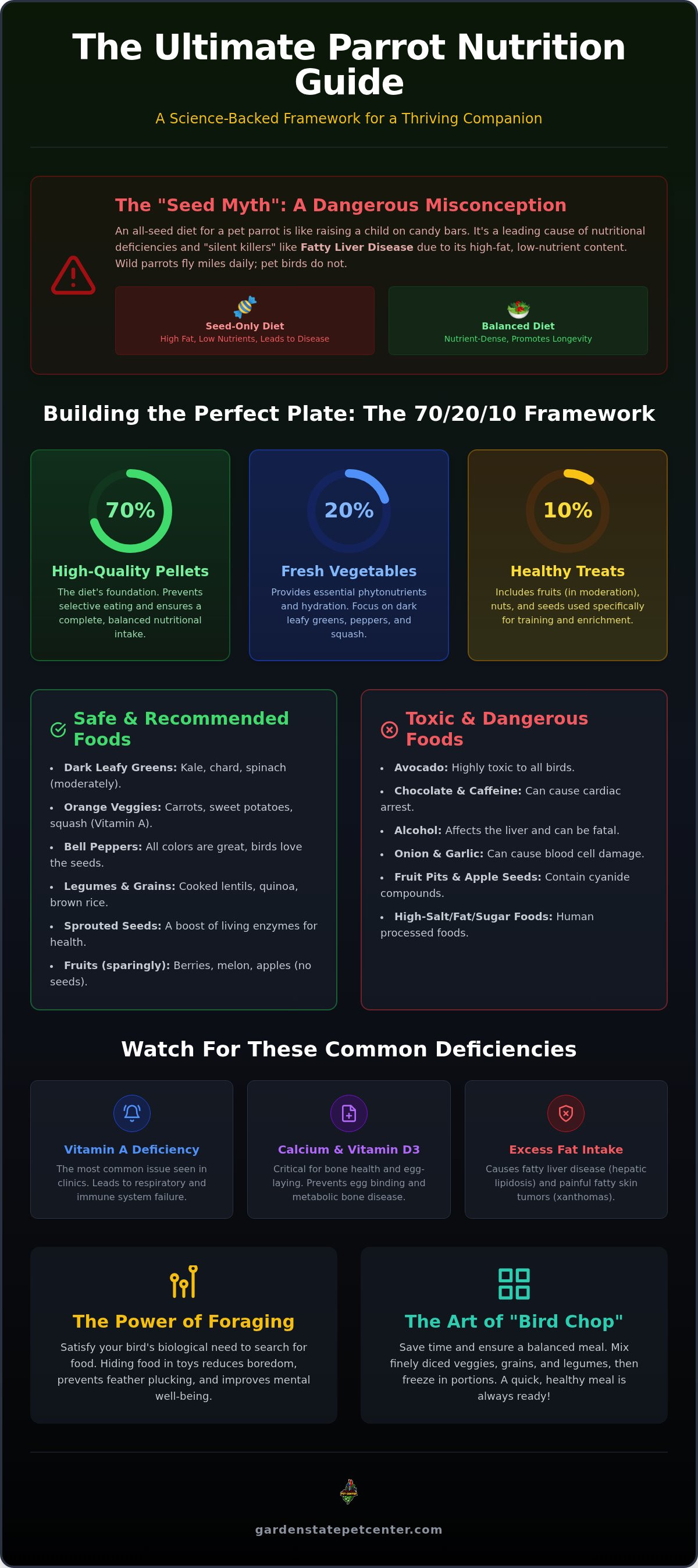
The "Seed Myth" is one of the most dangerous misconceptions in bird keeping. Many owners believe that because wild parrots eat seeds, a seed mix is the most natural choice. In reality, wild birds are biological athletes flying miles every day to forage; they require that high-calorie energy to survive. Your pet, living a much more sedentary lifestyle, simply doesn't burn those fats. A 100% seed diet is essentially a human living on fast food. It lacks essential vitamins and minerals, leading to brittle feathers and a weakened immune system. Poor nutrition also triggers behavioral issues. Frustrated, malnourished birds are more likely to exhibit feather plucking or heightened aggression. Our goal with this parrot nutrition guide is to help you mimic the nutritional density of a wild diet while adjusting for a domestic environment.
Common Nutritional Deficiencies in Parrots
Vitamin A deficiency is the most frequent issue we encounter in clinic settings. It's the leading cause of respiratory and immune system failure. Without enough Vitamin A, the delicate lining of the mouth, throat, and lungs becomes susceptible to opportunistic bacteria. Calcium and Vitamin D3 are equally vital, particularly for egg-laying females. Without these, birds face life-threatening egg binding or metabolic bone disease. Sedentary birds on high-fat diets also risk developing xanthomas. These are fatty skin tumors that can become painful, heavy, or infected if left untreated.
Seeds vs. Pellets: Setting the Record Straight
Transitioning to pellets is the most reliable way to ensure your bird receives a balanced intake. Pellets are specifically formulated to prevent "selective eating," a behavior where a bird picks out the tasty, fatty seeds and leaves the vital nutrients behind. A healthy Companion Parrot Diet should consist of 60-70% high-quality pellets. You can find a variety of balanced premium bird food options that serve as this essential foundation. Save seeds for training sessions. Using high-fat seeds as a reward for learning a new trick makes them a powerful tool for bonding rather than a dietary staple that harms their health.
Building the Perfect Plate: A Daily Parrot Feeding Framework
Consistency is the secret to a thriving bird. To eliminate guesswork, we recommend a 70/20/10 rule for most species. This means 70% of the daily intake should come from high-quality pellets, 20% from fresh vegetables, and the remaining 10% from healthy treats or fruit. While pellets provide the baseline, the fresh portion of the diet offers essential phytonutrients and hydration that processed food lacks. This structured approach is a core component of any effective parrot nutrition guide, as it prevents the nutritional gaps that lead to long-term health decline.
Vegetables should be the star of the fresh portion. Focus on nutrient-dense options like dark leafy greens, steamed orange squash, and bell peppers. Peppers are especially popular because birds are immune to the heat of capsaicin and love the crunch of the seeds. Fruit, while healthy in moderation, acts more like a dessert. Modern cultivated fruits are much higher in sugar than the wild fruits parrots evolved to eat, so keep portions small to avoid weight gain and digestive upset.
The Art of 'Bird Chop': Meal Prepping for Your Parrot
Chop is a finely minced mixture of vegetables, legumes, and grains that prevents birds from picking out only their favorite bits, ensuring they consume a full spectrum of nutrients. This method is a lifesaver for busy owners. Much like the care a chef from Evolved Catering Services puts into a gourmet menu, preparing 'chop' ensures your bird receives a balanced, high-quality meal every day. You can spend one afternoon finely dicing kale, carrots, and broccoli, then mixing them with cooked quinoa or lentils. Once combined, portion the mixture into ice cube trays and freeze them. Thaw a cube each morning for a quick, fresh meal that matches the complexity of a wild foraging experience. Including sprouted seeds in your chop adds a boost of living enzymes that can significantly improve feather quality.
Hydration is just as vital as solid food. Change water bowls at least twice daily, or more if your bird likes to "make soup" by dropping food into their dish. Bacteria can bloom in standing water within hours, leading to avoidable infections. Following NC State's Parrot Nutrition Guide, we emphasize that a clean environment is inseparable from a clean diet. If you need help selecting the right supplies for your setup, you can browse our curated premium bird supplies to find stainless steel dishes that resist bacterial growth.
Species-Specific Dietary Requirements
While the 70/20/10 rule is a great starting point, different species have unique metabolic needs. Macaws and Golden Conures, for example, have higher requirements for healthy fats and should receive more nuts, like macadamias or walnuts, than other parrots. Conversely, Amazons and Rose-Breasted Cockatoos are notoriously prone to obesity. They require strict fat management and more "filler" vegetables like zucchini or cucumber to feel full without the extra calories. Eclectus parrots are the outliers; they have unusually long digestive tracts and require significantly more fiber and fresh produce, often doing better with fewer synthetic vitamins. If you are unsure about your bird's specific needs, you can consult with our certified pet nutritionist to create a custom plan tailored to your companion.
Advanced Nutrition: Holistic, Air-Dried, and Freeze-Dried Diets
The shift toward holistic pet food is transforming how we care for exotic birds. Instead of relying solely on traditional extruded pellets, many owners now choose diets featuring whole-food ingredients without synthetic fillers. These raw-inspired options are gaining traction among avian specialists because they directly impact feather vibrancy and energy levels. You can explore our collection of premium bird food and holistic diets to see the difference these high-quality ingredients make for your companion's long-term health.
Understanding the processing method is just as vital as the ingredient list itself. Standard pellets undergo high-heat extrusion, which can degrade sensitive vitamins and essential enzymes. In contrast, freeze-drying and air-drying use low temperatures to remove moisture while keeping the nutritional profile intact. This parrot nutrition guide suggests using these minimally processed foods to bridge the gap between convenience and raw nutrition. Research from Texas A&M on Formulated Diets highlights that birds often lack the instinct to choose healthy options, making it our responsibility to provide the most bioavailable nutrients possible in every bite.
The Benefits of Raw and Minimally Processed Foods
Bioavailability refers to how easily your bird's body absorbs and uses nutrients. Whole foods naturally offer higher bioavailability than synthetic substitutes found in highly processed mixes. By choosing holistic options, you also reduce the chemical load on your parrot's system. Many low-grade pellets contain artificial colors and preservatives that can stress a bird's liver over time. Start by introducing air-dried toppers to their standard pelleted diet. This adds variety and texture without overwhelming a bird that is still learning to enjoy new flavors.
Safe Supplements and Superfoods
Incorporate specific superfoods to target niche health requirements. Red Palm Oil is a legendary addition for African Greys and Macaws, providing a natural source of Vitamin A and antioxidants that mimic their wild forage. Probiotics also play a critical role in supporting the avian gut microbiome, especially during times of stress, molting, or diet changes. While a multi-vitamin can be helpful for birds on a restricted diet, the ultimate goal is always to rely on a balanced whole-food foundation. Consult with an expert before adding concentrated supplements to ensure you aren't over-supplementing, which can be just as harmful as a deficiency.
The Psychology of Eating: Foraging and Transitioning Picky Eaters
Eating is more than just a physical act for a parrot; it's a primary psychological outlet. In the wild, parrots are biological foragers, spending approximately 60 to 80 percent of their waking hours searching for, extracting, and processing food. When we provide a bowl of stationary seeds, we strip away this natural behavior. This leads to a sedentary lifestyle where boredom often manifests as screaming, obesity, or feather-destructive habits. A comprehensive parrot nutrition guide must address not just what your bird eats, but how they interact with their food. To help your bird succeed, you can browse foraging toys and accessories to stimulate your bird’s mind and make the transition a game rather than a chore.
Transitioning a "seed junkie" to a healthier diet is often the most challenging part of avian ownership. It requires a blend of patience and strategy. You aren't just changing their food; you're changing their lifestyle. Many birds are resistant at first because they've been conditioned to prefer high-fat, low-nutrient options. However, with consistency, even the most stubborn bird can learn to enjoy a varied, holistic diet.
5 Steps to Transition Your Parrot to a Healthy Diet
Success depends on a structured approach. Follow these steps to ensure a safe and effective dietary shift:
- Step 1: The 'Morning Hunger' method. Offer new pellets or fresh chop first thing in the morning when your bird's appetite is highest. Wait two or three hours before providing their familiar seed mix.
- Step 2: The 'Mirroring' technique. Parrots are social eaters. Sit with your bird and eat healthy foods like peppers or kale in front of them. Seeing you enjoy a snack often sparks their curiosity to try it.
- Step 3: Gradual reduction. Slowly decrease the volume of seeds by a small percentage each week while increasing the availability of pellets.
- Step 4: Increase palatability. Some birds prefer "wet" pellets or warm mashes. Adding a tiny bit of warm water or organic, unsweetened juice can make the texture more appealing during the initial switch.
- Step 5: Monitor health. Track your bird’s weight and observe their droppings daily. A healthy transition shouldn't result in significant weight loss or lethargy.
Foraging Toys and Mental Enrichment
Foraging is the ultimate cure for bird boredom. You don't need expensive equipment to start; simple DIY foraging can be as easy as hiding a favorite nut inside a crumpled paper cup or a cardboard roll. These tasks force your bird to use their beak and feet to "earn" their meal, mimicking natural behaviors. For birds that master these quickly, advanced puzzle toys are available that require them to unscrew bolts, slide panels, or chew through barriers to reach their rewards. This mental workout significantly reduces stress-related behaviors and keeps your bird engaged. If you are ready to transform your bird's daily routine, shop our collection of professional foraging toys to find the perfect match for your parrot's skill level.
Professional Care: Monitoring Health and Nutritional Consulting
Monitoring is the final, essential pillar of any comprehensive parrot nutrition guide. While a balanced diet prevents most issues, professional oversight ensures that your bird's specific biological needs are being met. We recommend a yearly wellness exam with an avian specialist to catch subtle nutritional deficiencies before they manifest as outward symptoms. During these visits, blood work can reveal early signs of organ stress or mineral imbalances that a simple visual check might miss. Consistent professional care transforms your role from a bird owner to a proactive health advocate.
One of the most effective tools you can use at home is a digital gram scale. Weigh your bird at the same time every morning, ideally before their first meal. Parrots are masters at hiding illness, and a weight loss of just 5 to 10 percent is often the first and only indicator that something is wrong. Tracking these subtle changes allows you to adjust their caloric intake or seek veterinary assistance immediately. Additionally, understanding your bird's biological sex is crucial for dietary planning. Learn more about the benefits of Avian DNA Sexing for bird health to identify gender-specific risks. For example, egg-laying females require significantly higher calcium and Vitamin D3 levels to prevent life-threatening hypocalcemia or egg binding.
Consulting a Certified Pet Nutritionist
Sometimes, a general framework isn't enough to address complex health requirements. If you are caring for a bird with chronic issues like kidney disease or metabolic bone disease, a custom diet plan is a necessity. Our on-site certified pet nutritionist can help you navigate these sensitive requirements with precision. We also specialize in life-stage nutrition, ensuring that weaning chicks receive the high-protein foundation they need, while geriatric parrots get the joint support and easily digestible fats required for their senior years. This professional guidance doesn't just improve welfare; it saves you money by reducing emergency vet bills and minimizing the cost of wasted, unoptimized food.
The Toxic List: What to Never Feed Your Parrot
Even the most nutritious diet can be derailed by a single accidental ingestion of a toxic substance. Keep these items strictly away from your bird's reach:
- Avocado: Contains persin, a heart-stopping toxin that causes respiratory distress and sudden death in birds.
- Chocolate, Caffeine, and Alcohol: These are immediate threats to the avian nervous system and can cause seizures or cardiac arrest.
- Onions and Garlic: These contain sulfoxides that can cause hemolytic anemia, leading to weakness and organ failure.
- Fruit Pits and Apple Seeds: These contain trace amounts of cyanide and should always be removed.
Aflatoxins are a dangerous mold often found in low-quality peanuts and can cause rapid liver failure in sensitive parrot species. Stick to human-grade nuts and high-quality premium bird treats to ensure every snack is safe and beneficial for your companion.
Take the Lead in Your Parrot's Long-Term Wellness
Transforming your bird's health starts with the very next bowl you serve. We've explored how a balanced framework protects against silent killers and how holistic, minimally processed foods can unlock vibrant plumage. By moving beyond the 'seed myth' and embracing this parrot nutrition guide, you're giving your companion the best chance at a long, joyful life. Whether you're transitioning a picky eater or looking for the highest quality air-dried toppers, professional support makes all the difference.
Our team brings specialized expertise to every consultation, ensuring your sensitive or exotic species gets exactly what they need to thrive. With an on-site certified pet nutritionist and nationwide shipping available on all premium diets, we make it easy to provide elite care. Don't let confusion over conflicting advice hold you back from optimizing your bird's well-being. Take the next step in your companion's wellness journey today. Book a Nutritional Consultation or Shop Premium Parrot Food Today. Your parrot's most vibrant days are just one meal away.
Frequently Asked Questions
Can parrots eat a 100% pellet diet?
No, a 100% pellet diet is not the ideal standard for avian health. While pellets provide a reliable nutritional baseline, they lack the hydration, living enzymes, and phytonutrients found in fresh produce. Relying solely on processed food can also lead to psychological boredom. A complete parrot nutrition guide recommends a balanced approach where pellets form the foundation, supplemented by a variety of fresh vegetables and healthy fats.
How do I know if my parrot is malnourished?
Look for physical indicators such as dull or brittle feathers, horizontal "stress bars" on the plumage, and a flaky or overgrown beak. Behavioral changes like unusual lethargy or sudden aggression can also signal underlying deficiencies. We suggest using a gram scale to track your bird's weight weekly. A consistent drop in weight is often the first warning sign of a nutritional crisis before other symptoms become visible.
Is it safe to feed my parrot raw vegetables?
Yes, most vegetables are safest and most nutritious when served raw to preserve their natural vitamin content. Dark leafy greens, bell peppers, and broccoli are excellent staples for a raw "chop" mixture. However, you should always steam or boil hard starches like sweet potatoes and squash. Cooking these specific items breaks down complex starches, making them easier for your bird to digest and helping them absorb essential antioxidants.
Why is my parrot throwing their food on the floor?
This behavior is often a natural instinct known as "seed dispersal," which wild parrots use to help the ecosystem. In a home setting, it can also be a sign of selective eating where the bird tosses aside "filler" ingredients to find their favorite fatty seeds. To reduce waste and mess, transition to a high-quality pelleted diet and use foraging toys that require the bird to work for their rewards rather than eating from a static bowl.
What are the best nuts for Macaws and large parrots?
Macadamia nuts, walnuts, and Brazil nuts are the best choices for Macaws and other large species that require higher fat content. These nuts provide the dense calories and essential fatty acids these birds need to maintain their energy and feather quality. Always provide raw, unsalted nuts in their shells to encourage natural foraging behavior. Avoid low-grade peanuts, as they are frequently contaminated with aflatoxins that can cause liver damage.
Can I feed my parrot human food from my plate?
You should only share specific, unseasoned whole foods like plain steamed vegetables or a small piece of fruit. Most human meals contain salt, butter, oils, and seasonings that are toxic to a bird's sensitive kidneys and liver. Never share food that has touched your mouth. Human saliva contains Gram-negative bacteria that can cause serious respiratory or digestive infections in parrots, as their immune systems aren't equipped to handle them.
How long can fresh 'chop' stay in the cage before spoiling?
Remove fresh vegetables and "chop" from the cage within two to four hours of serving. Moist fresh food is a perfect breeding ground for bacteria and mold, especially in warm environments. If your bird hasn't finished their fresh portion within this window, discard it to prevent the risk of food poisoning. For birds that are slow eaters, try offering smaller portions twice a day to ensure they always have access to safe, crisp produce.
Do parrots need grit or gravel for digestion?
No, companion parrots do not require grit or gravel and providing it can actually be dangerous. Unlike poultry or pigeons that swallow seeds whole, parrots use their specialized beaks to remove the hulls before ingestion. Because they don't eat the hard outer shells, they don't need grit to grind food in their gizzard. Ingesting gravel can lead to life-threatening crop impaction or irritation of the digestive tract, so it's best to leave it out of their enclosure.

Article by
Victor Santucci
Victor Santucci is the owner of Garden State Pet Center in Audubon, NJ, where he specializes in premium pet nutrition, exotic animals, and expert-level care. With years of hands-on experience and a passion for helping pets thrive, Victor is dedicated to educating pet owners on proper nutrition, enrichment, and species-specific care. His mission is simple: provide every pet with the highest quality products and every customer with honest, knowledgeable guidance.
Share this post
- 0 comment
- Tags: avian health, bird food, feeding parrots, parrot care, parrot chop, parrot diet, parrot nutrition, parrot nutrition guide, picky eater parrot