

Professional Small Animal Grooming: The Complete Care and Hygiene Guide


What if the grooming routine you've been using for your pocket pet is actually causing them unnecessary stress or even health risks? It's a common concern for many owners who feel a deep sense of anxiety when handling delicate species. You aren't alone if you worry about injuring a fragile animal during a nail trim or feel confused about the specific hygiene needs of an exotic breed. Finding reliable small animal grooming in Audubon, NJ, is often the first step in managing aggressive shedding or matting that puts both you and your pet on edge.
This guide will show you how specialized care provides the expert handling your unique pets need to stay healthy and comfortable. Since 1990, our team has focused on the precise standards required for these sensitive animals. We'll explore professional techniques that minimize stress, the truth about bathing exotic species, and how to manage challenging coats for long-term wellness. Discover how professional care reduces the risk of infection and ensures your pet feels their absolute best.
Key Takeaways
- Learn why specialized small animal grooming in Audubon, NJ, is essential for the unique anatomy and safety of exotic pets compared to generalist services.
- Understand the critical role of regular nail trims and scent gland maintenance in preventing skeletal misalignment and long-term health issues.
- Discover how to manage intense molting cycles in rabbits and the distinct skin care requirements for various guinea pig breeds.
- Master professional handling techniques like towel wrapping to minimize stress for sensitive prey animals during their hygiene routines.
- Explore the connection between high-fiber diets and coat health, including how premium nutrition reduces excessive shedding and fur-pulling.
The Importance of Specialized Small Animal Grooming
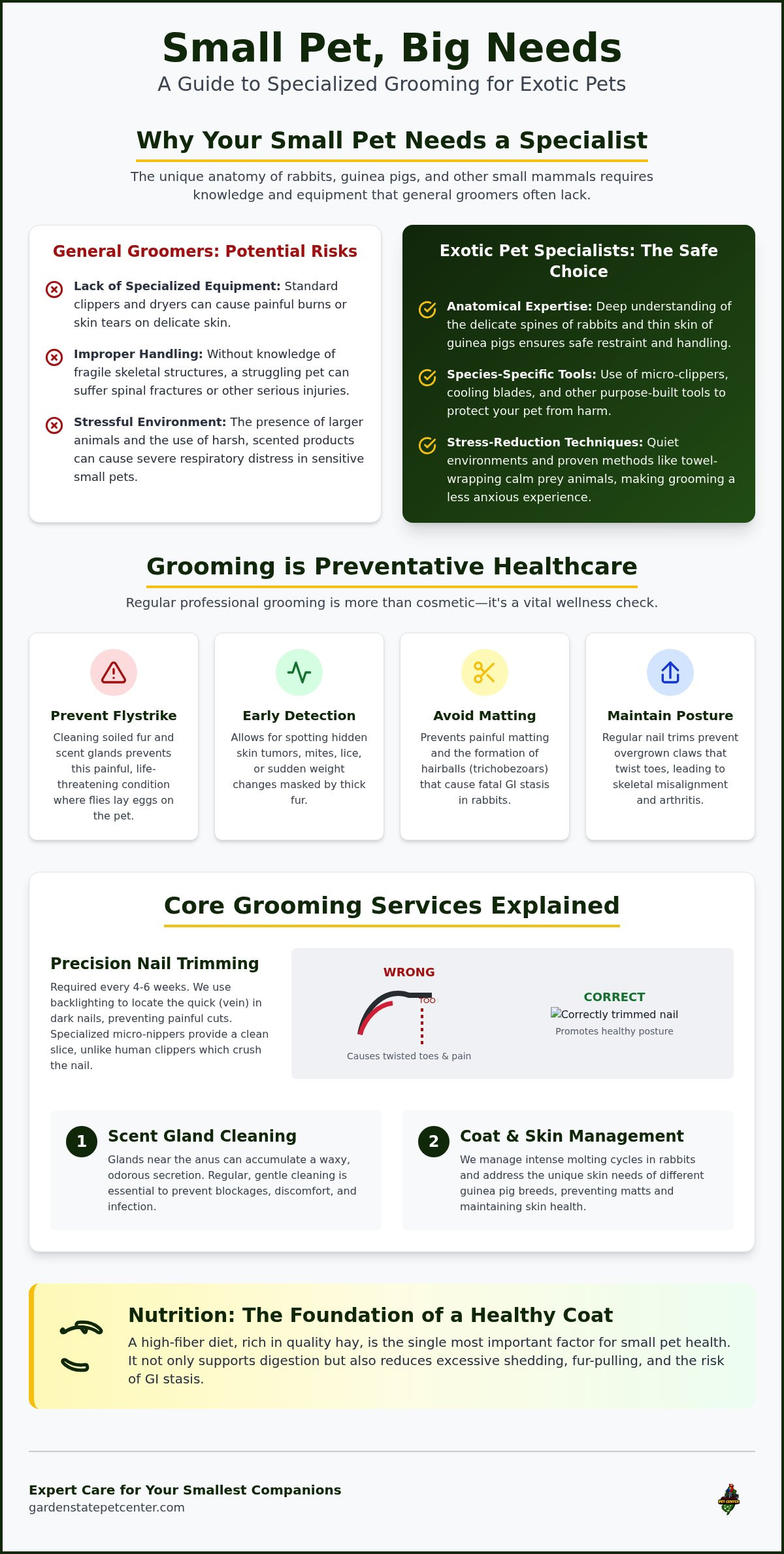
Specialized small animal grooming goes far beyond simple aesthetics. While many local shops focus on dogs and cats, the requirements for rabbits, guinea pigs, and rodents are vastly different. General dog groomers often lack the specialized equipment, like micro-clippers or specific cooling blades, needed for exotic pets. At Garden State Pet Center, our approach to small animal grooming in Audubon, NJ, focuses on the unique physiological needs of these sensitive creatures. We prioritize safety and health over just a "clean look," ensuring that every session serves as a vital wellness check.
Expert handling is vital because rodents and lagomorphs have fragile skeletal structures. A rabbit's spine is incredibly delicate. A single powerful kick from a frightened animal can lead to a fracture if they aren't restrained correctly. This is where professional grooming practices adapted specifically for exotics become a lifesaver. Unlike sturdier domestic pets, small mammals require a level of patience and anatomical knowledge that generalists rarely possess. We understand that these animals are prey species, which means their stress response is much more acute than a typical pet.
Anatomical Differences That Require Expert Handling
Rabbits possess powerful hind legs but very light skeletons. If they aren't supported with proper restraint techniques, they can easily injure themselves. Guinea pigs have exceptionally thin skin layers. Using standard dog clippers or high-heat dryers can lead to painful clipper burns or skin tears. Additionally, these animals have highly sensitive respiratory systems. Many standard grooming scents and powders can trigger respiratory distress. We use only species-safe, unscented products to keep their lungs healthy while their coats get clean.
Grooming as a Preventative Health Measure
Regular handling allows us to spot issues before they become emergencies. We look for early signs of skin tumors, mites, or lice that might be hidden under thick fur. It's also the best way to prevent flystrike, a life-threatening condition where flies lay eggs on soiled fur. By maintaining a clean coat and checking scent glands, we help prevent this painful ordeal. Grooming is also a key part of weight management. When we feel through the coat, we can detect sudden weight loss or gain that might be masked by fluffy hair. For long-haired breeds, professional brushing prevents the formation of trichobezoars, or hairballs, which can lead to fatal GI stasis in rabbits who cannot vomit. You can explore our range of small animal supplies to supplement your pet's home care routine between professional visits.
Our goal is to provide a service that supports the long-term health and comfort of your pet. By choosing a specialist for small animal grooming in Audubon, NJ, you're investing in a partner who understands the nuances of exotic pet care. We treat every rabbit, guinea pig, and rodent with the clinical precision and empathy they deserve.
Essential Maintenance: Nail Trims and Scent Gland Care
Proper hygiene for pocket pets involves more than just a quick brush. Two of the most critical, yet frequently misunderstood, tasks are nail maintenance and scent gland cleaning. Without regular nail trims, your pet’s posture can suffer significantly. Overgrown claws force the toes to twist sideways, leading to permanent skeletal misalignment and painful arthritis. For residents seeking small animal grooming in Audubon, NJ, our team provides the precision required to handle these delicate tasks safely and effectively.
Identifying the "quick" is the most challenging part of nail care, especially in species with dark or black nails. The quick is the internal vein that supplies blood to the nail. Cutting it causes immediate pain and bleeding. We use backlighting techniques, such as a high-intensity penlight, to reveal the vein through the nail wall before making a single cut. This ensures we take off enough length to keep the pet comfortable without causing injury.
Professional Nail Trimming for Sensitive Paws
Most small mammals require a trim every 4 to 6 weeks. Indoor environments rarely provide enough natural abrasion to wear nails down. Stop using standard human nail clippers; they often crush the nail rather than slicing it. We utilize specialized micro-nippers designed for the unique curve of rabbit and rodent claws. If you ever accidentally nick the quick during a home attempt, remain calm. Apply styptic powder or a small amount of cornstarch to the area with firm pressure to stop the bleeding instantly. If the bleeding persists, seek professional assistance immediately.
Scent Gland Cleaning and Hygiene
Scent glands are located in small pockets near the anus in rabbits and guinea pigs. Over time, these pockets accumulate a waxy, odorous secretion called castoreum. If left uncleaned, this buildup can become hard, irritating the skin or leading to localized infections. Male guinea pigs also possess a "grease gland" located on their lower back, just above where a tail would be. This gland can become overactive, leaving a sticky, matted mess that attracts dirt and bacteria.
Cleaning these sensitive areas requires a gentle touch. We use mineral oil or warm water on a soft cotton swab to loosen debris without pulling at the skin. Avoid using harsh soaps or alcohol-based cleaners, as these can cause chemical burns on exotic skin. Look for signs of trouble like redness, swelling, or a particularly foul odor, which may indicate an impaction or infection. Keeping these sensitive areas clean ensures your pet stays comfortable and odor-free. You can find high-quality small animal cleaning supplies at our center to help maintain hygiene between professional visits.
Species-Specific Requirements for Small Mammals
Every small mammal brings a unique biological blueprint to the grooming table. While a rabbit requires intensive de-shedding during seasonal changes; a chinchilla must never touch water. Understanding these distinctions is what separates a general pet store from a specialized resource for small animal grooming in Audubon, NJ. We view these species-specific routines not just as cleanup, but as an essential health maintenance activity that preserves the natural defenses of your pet’s skin and coat.
Different breeds within the same species also demand tailored approaches. Abyssinian guinea pigs, with their characteristic rosettes, require brushing in the direction of hair growth to prevent follicle irritation. Conversely, Skinny Pigs (the hairless variety) need a focus on skin hydration and the removal of excess oils that would normally be absorbed by fur. Ferrets present their own challenges; their natural musk is best managed through clean bedding and occasional professional ear cleaning rather than frequent over-bathing, which can actually trigger more oil production. Keeping ferret nails blunt is also a safety priority to prevent them from snagging on fleece bedding or carpets.
Managing Molting and Matting in Rabbits
Rabbits go through heavy molting cycles several times a year. For long-haired breeds like Angoras and Lionheads, this fur doesn't always fall away cleanly. It can form dense mats near the skin that restrict movement and trap moisture. We use specialized de-shedding tools designed to lift the dead undercoat without pulling on the rabbit’s paper-thin skin. If mats are left unaddressed, they can lead to painful skin infections or "hot spots" that require medical intervention. Regular professional brushing is the most effective way to ensure your rabbit doesn't ingest too much fur while self-grooming.
Bathing Protocols for Small Animals
Water is often the enemy in the world of exotic pets. Chinchilla fur is so dense, with over 80 hairs per follicle, that moisture trapped near the skin can lead to fungal rot. They should only ever use volcanic ash dust baths to stay clean. For other species like rabbits or guinea pigs, we generally recommend "butt baths." This involves cleaning only the soiled areas rather than a full submersion bath. Full baths are incredibly stressful for prey animals and put them at high risk for hypothermia. When a bath is medically necessary, we use professional-grade dryers on the lowest heat setting to ensure the pet is 100% dry before they leave our care. You can find the right dust and grooming tools in our small animal collection to maintain these results at home.
By respecting these species-specific needs, we provide a safer, more comfortable experience for your pets. Our team at Garden State Pet Center is dedicated to the nuanced care required for small animal grooming in Audubon, NJ, ensuring every pet receives exactly what their biology demands.
Stress Management and Safety During the Grooming Process
Understanding the "prey animal" mindset is the foundation of safe handling. For a rabbit or guinea pig, being picked up and restrained often feels like being captured by a predator. This biological reality means that stress management isn't just a comfort measure; it's a safety requirement. At Garden State Pet Center, our approach to small animal grooming in Audubon, NJ, prioritizes a quiet, predator-free environment. We ensure that your pet isn't exposed to the barking of dogs or the loud noises of a busy retail floor, which can trigger a dangerous panic response.
Recognizing the subtle signs of extreme stress is vital for any groomer. While a dog might whimper, a small mammal often "freezes." This isn't calm behavior; it's a state of tonic immobility where the animal is effectively paralyzed by fear. Other red flags include thumping, wide eyes showing the whites (sclera), or the most serious sign: open-mouth breathing. Because these animals are obligate nasal breathers, breathing through the mouth indicates severe respiratory distress or heat exhaustion. If we see these signs, we stop the session immediately to let the pet recover.
Handling Techniques for Fragile Pets
Safe handling requires constant support of the hindquarters to protect the delicate spine mentioned earlier in this guide. We use the "football hold," tucking the pet's head under an arm while supporting their bottom with the same hand. For more technical tasks like facial cleaning or nail trims, we utilize the "bunny burrito" method. This involves wrapping the pet snugly in a soft towel to prevent kicking while allowing access to specific areas. In many cases, we employ two-person grooming. One specialist focuses entirely on comforting and stabilizing the pet, while the other performs the grooming task. This teamwork minimizes the time the pet spends in restraint.
Post-Grooming Care and Observation
The work doesn't end when the grooming is finished. Stress can occasionally trigger Gastrointestinal (GI) Stasis, a condition where the digestive system slows down or stops. Monitor your pet closely for several hours after a session. Ensure they are eating hay and producing normal droppings. We recommend rewarding your pet with healthy small animal treats to build a positive association with the experience. If your pet is particularly high-strung or has a history of injury, it's always safer to consult a professional rather than attempting a DIY groom at home.
Don't risk your pet's safety with improper handling or high-stress environments. Trust our experienced team at Garden State Pet Center to provide the specialized care and professional handling your unique pet deserves. For households with both small animals and dogs, you can explore dog behavior training and specialized products at Agenda Canina to find expert behavioral guidance and quality supplies for your canine companions.
The Link Between Nutrition and Grooming Success
High-quality grooming begins at the food bowl. If your pet’s internal health is compromised, their coat will reflect it through dullness, brittleness, or excessive shedding. For owners seeking small animal grooming in Audubon, NJ, we offer a unique advantage: the ability to pair your pet’s hygiene session with professional nutritional guidance. Our on-site certified pet nutritionist helps you identify if a lackluster coat is actually a symptom of a dietary gap that needs addressing.
High-quality fiber is the most critical component for healthy fur in rabbits and guinea pigs. When a pet lacks enough roughage, they may develop "pica," a condition where they pull and eat their own fur or the fur of their cage mates. This leads to unsightly bald patches and dangerous hairballs. Omega fatty acids also play a vital role. These essential fats maintain skin elasticity and reduce dander, making the grooming process much more comfortable for your pet. Brittle fur or flaky skin often signals a deficiency that a simple topical treatment cannot fix.
Dietary Foundations for Skin and Coat
Timothy hay serves as the cornerstone of a healthy small mammal diet. It provides the necessary fiber to keep the digestive tract moving and wears down teeth naturally. A healthy gut ensures that nutrients are absorbed correctly, which directly impacts the shine and strength of the coat. You can also incorporate specific supplements designed to support skin health from the inside out to reduce seasonal dander. Explore our selection of premium small animal food to find the best options for your pet’s specific species and life stage.
Consulting with a Certified Pet Nutritionist
Customized diets lead to easier grooming sessions and happier pets. If your pet suffers from chronic skin irritations or recurring mats, a holistic dietary change might be the solution. Since 1990, we’ve helped local owners move beyond "one-size-fits-all" nutrition to solve complex coat issues. By addressing the root cause of skin dryness or fur loss, we can often reduce the frequency of intensive grooming interventions. Schedule a grooming and nutrition consultation today to give your pet the comprehensive care they deserve.
Combining professional small animal grooming in Audubon, NJ, with expert nutritional advice ensures your pet stays healthy, safe, and comfortable for years to come. We don't just want your pet to look good; we want them to thrive from the inside out.
Invest in Your Pet's Long-Term Wellness
Garden State Pet Center has provided expert handling for exotic species since 1990. Our facility offers a safe, quiet environment tailored specifically for the needs of prey animals. When you choose our team for small animal grooming in Audubon, NJ, you're consulting with knowledgeable partners who care about your pet’s welfare as much as you do. We invite you to Book Your Specialized Small Animal Grooming Appointment today to experience the difference that professional standards make. Your pet deserves to feel their absolute best; we're ready to help you reach that goal.
Frequently Asked Questions
How often should I have my rabbit’s nails trimmed professionally?
You should schedule a professional nail trim every 4 to 6 weeks. Indoor rabbits don't have access to hard, abrasive surfaces that naturally wear down their claws. If nails grow too long, they can snag on bedding or cause your rabbit’s toes to twist, leading to permanent skeletal damage and painful movement.
Is it safe to bathe a guinea pig at home?
Yes, but you should only perform "butt baths" or spot cleaning rather than full submersion. Full baths are extremely stressful for guinea pigs and put them at high risk for hypothermia if they aren't dried perfectly. Use only shallow, lukewarm water and species-safe shampoos to avoid irritating their sensitive skin.
What are the signs that my small animal’s scent glands need cleaning?
A strong, pungent odor or visible waxy buildup in the small pockets near the anus are the primary signs. You might also notice your pet scooting or over-grooming the area. Impacted scent glands can become hard and painful, so regular inspection is vital to prevent localized skin infections or discomfort.
Why does my chinchilla need a dust bath instead of water?
Chinchilla fur is so dense that moisture gets trapped against the skin and cannot air dry, which often leads to fungal rot. Volcanic ash dust is designed to penetrate the coat and absorb excess oils and dirt without the risks of water. Providing a dust bath two to three times a week keeps their fur plush and healthy.
Can professional grooming help reduce my pet’s shedding?
Yes, professional de-shedding treatments remove the dead undercoat far more effectively than standard home brushing. This is especially important for rabbits during heavy molting cycles to prevent them from ingesting too much fur. Our small animal grooming in Audubon, NJ, utilizes specialized tools that lift loose hair without pulling on delicate skin.
What should I do if my pet is too stressed to be groomed?
Stop the session immediately and place your pet in a dark, quiet environment to recover. Signs of extreme stress include freezing, thumping, or open-mouth breathing. Professional groomers use specific restraint techniques like towel wrapping to help prey animals feel secure, but the pet's safety always comes before the finished look.
Do ferrets need regular ear cleaning and nail trims?
Ferrets require nail trims every 2 to 3 weeks to prevent their sharp claws from snagging on fleece bedding. They also produce a significant amount of earwax that can lead to mites or infections if not cleaned regularly. Keeping their ears clear and their nails blunt is essential for their overall comfort and hygiene.
How can I tell if my rabbit is molting or if it has a skin condition?
Molting fur typically falls out in tufts and reveals a healthy, soft coat underneath, whereas skin conditions often involve redness, flakes, or scabs. Molting usually follows a predictable pattern from the head down to the tail. If you notice bare patches of skin or intense itching, it's time to seek small animal grooming in Audubon, NJ, for a professional assessment of their skin health.

Article by
Victor Santucci
Victor Santucci is the owner of Garden State Pet Center in Audubon, NJ, where he specializes in premium pet nutrition, exotic animals, and expert-level care. With years of hands-on experience and a passion for helping pets thrive, Victor is dedicated to educating pet owners on proper nutrition, enrichment, and species-specific care. His mission is simple: provide every pet with the highest quality products and every customer with honest, knowledgeable guidance.
Share this post
- 0 comment
- Tags: Audubon NJ, Exotic Pet Care, Guinea Pig Grooming, Nail Trimming, Pet Hygiene, Pet Wellness, Rabbit Grooming, Small Animal Grooming, small animal grooming Audubon NJ