

Reptile Terrariums: The Ultimate Buyer’s Guide for 2026


That expensive, all-glass enclosure you've been eyeing might actually be the wrong choice for your pet's long-term health. While glass remains a staple, the 2026 market shift toward PVC and composite materials shows that expert keepers now prioritize heat retention and moisture resistance over traditional looks. Choosing between different Reptile Terrariums is more than just a design choice; it's a critical decision that dictates your pet's biological success. With a 34-gallon PVC terrarium currently costing approximately $139.99 at major retailers, these durable alternatives are more accessible than ever for serious hobbyists.
We know you want a habitat that is escape-proof and easy to clean without the constant fear of poor heat retention leading to pet illness. It's common to feel overwhelmed by the technical needs of your species, especially with Gen Z now representing 33% of owners and driving the demand for more advanced, naturalistic setups. This guide will help you master the art of selecting the perfect habitat by understanding materials, dimensions, and species-specific environmental needs. We'll compare the benefits of PVC versus glass, show you how to optimize thermoregulation, and review the latest 2026 standards for premium, durable setups that will last for years.
Key Takeaways
- Learn why front-opening designs are essential for reducing predatory stress and creating a secure microclimate for your pet.
- Discover how to navigate the "Minimum vs. Optimal" space debate to ensure your arboreal or terrestrial reptile truly thrives.
- Compare how different Reptile Terrariums materials like PVC and glass impact your humidity control and monthly energy costs.
- Master the integration of advanced lighting and heating systems to create a safe, balanced ecosystem within the enclosure.
- Understand why selecting a habitat curated by specialty care experts ensures your setup meets the highest modern welfare standards.
Understanding Reptile Terrarium Types: The Foundation of Husbandry
Your choice of habitat is the most significant factor in your pet's long-term health. Think of Reptile Terrariums as life-support systems rather than simple display cases. Because reptiles are ectothermic, they rely entirely on their environment to regulate body temperature and metabolic functions. For a deeper look at how these systems evolved, you can consult this comprehensive guide to vivariums which details the history of environmental control in pet keeping.
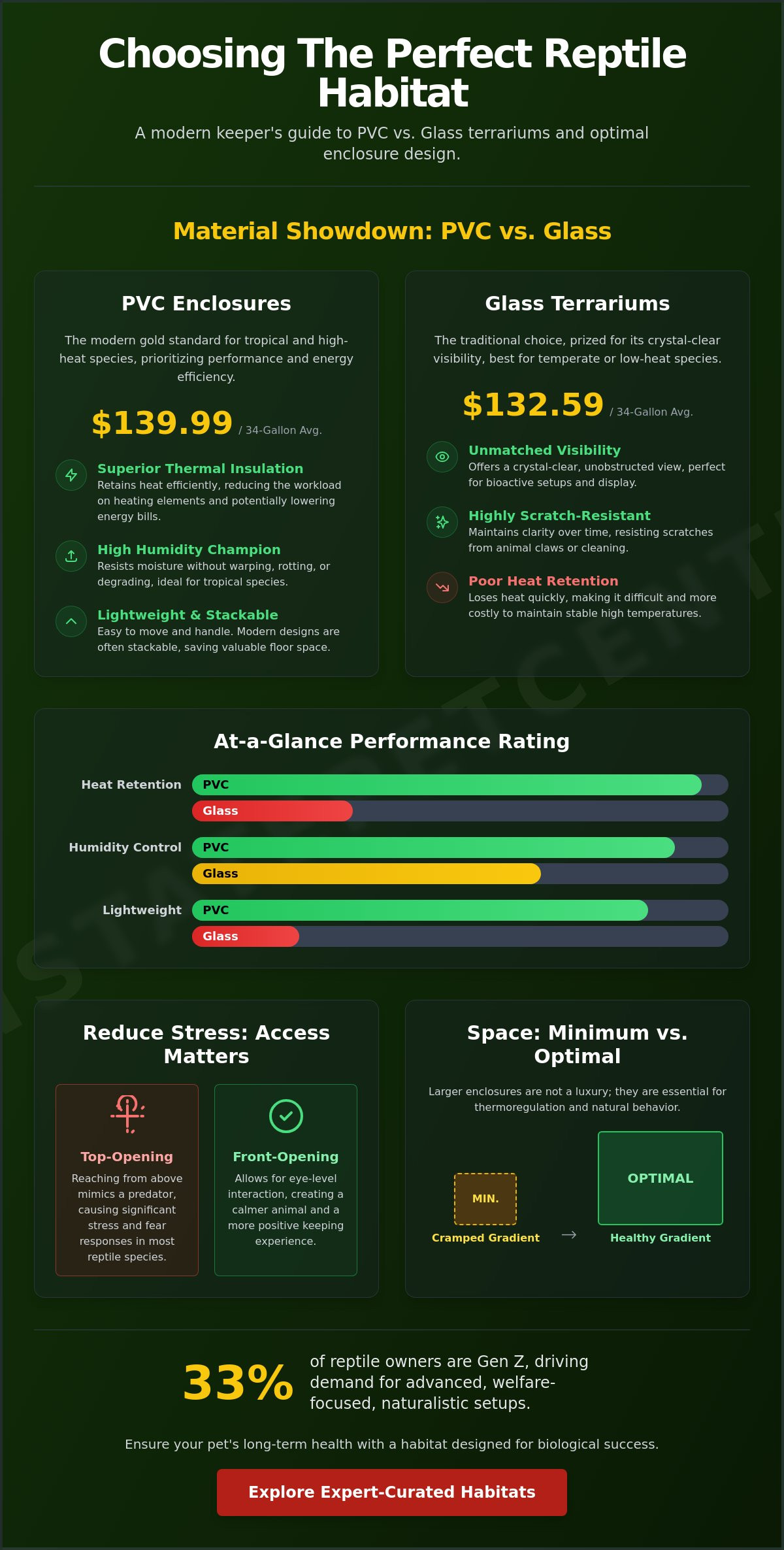
One often overlooked aspect of enclosure design is the psychological impact of access points. Many standard tanks require top-entry, which forces you to reach down from above. For most reptiles, a hand appearing from the sky mimics a predatory bird. Front-opening doors eliminate this stress, allowing you to interact with your pet at eye level. This simple design shift creates a much calmer animal and a more rewarding keeping experience for both of you.
To better understand how these habitats function as living ecosystems, watch this helpful video on maintaining a healthy environment:
Glass Terrariums: The Traditional Choice
Glass remains a popular option for its unmatched visibility and high scratch resistance. It's the ideal material for bioactive setups where you want a crystal-clear view of the complex ecosystem and "cleanup crew" within. However, glass is a poor insulator. It loses heat quickly through the walls, which can be a struggle for keepers of high-heat species. Glass is best suited for small amphibians, invertebrates, and temperate lizards that don't require extreme thermal gradients. As of May 2026, a 34-gallon glass terrarium typically retails for around $132.59, making it a budget-friendly entry point for new hobbyists.
PVC Enclosures: The Modern Gold Standard
If you're keeping tropical or high-heat species like ball pythons or monitors, PVC is the superior choice. These Reptile Terrariums offer incredible thermal insulation. This means your heating elements don't have to work as hard to maintain a steady temperature, potentially lowering your energy bill. PVC is also lightweight and moisture-resistant, so it won't rot or warp in high-humidity environments. Modern designs, such as the 2026 upgraded stackable models from major manufacturers, allow you to expand your collection without taking up extra floor space. You can explore our curated selection of premium reptile supplies to find the durable, high-quality materials your pet deserves.
Choosing the Right Size and Orientation for Your Reptile
Selecting the right dimensions for Reptile Terrariums is one of the most critical decisions you'll make for your pet's long-term health. While older standards often focused on "minimum" requirements, modern husbandry emphasizes providing "optimal" space. This shift reflects our growing understanding of animal welfare. Giving your pet room to forage, climb, and hide isn't just a luxury; it's a physiological necessity. Larger volumes also make it significantly easier to maintain a proper thermal gradient. In a cramped tank, the heat from a single lamp can quickly saturate the entire space. This leaves your pet with no way to cool down, which can lead to chronic stress or heat stroke.
A reliable veterinary guide to reptile husbandry highlights that environmental stability is directly tied to enclosure volume. When you plan your setup, think about the animal's adult size rather than its current juvenile state. Buying an adult-sized habitat from the start is a smart financial move. It saves you from purchasing multiple enclosures as your pet grows, potentially saving you hundreds of dollars over several years. With 33% of reptile owners now belonging to Gen Z, the trend is moving rapidly toward these larger, more naturalistic "forever homes" that prioritize the animal's natural behaviors.
Arboreal Habitats for Climbers
Species like Crested Geckos need vertical height to feel secure. These reptiles spend their lives in the canopy, so a tall orientation is non-negotiable. Tall enclosures require clever management of air flow. Without proper cross-ventilation, high humidity can lead to stagnant air and respiratory issues. You should utilize every inch of vertical space by installing branches, ledges, and background textures that mimic a forest environment. This encourages natural climbing behavior and provides multiple levels for thermoregulation.
Terrestrial and Fossorial Setups
For active hunters like the Corn Snake, floor space is the priority. These snakes need room to stretch out fully and explore different microclimates. You should create distinct "zones" within the horizontal footprint: a hot spot for digestion, a cool side for rest, and a humid hide to assist with shedding. For burrowing species, ensure Reptile Terrariums have a deep enough base to hold several inches of substrate. If you're unsure which footprint fits your home best, discover our specialized habitats to find the perfect match for your pet's specific needs.
Material Science: Thermal Retention and Humidity Control
Choosing the right material for your pet's home is a matter of physics. The density of Reptile Terrariums directly impacts how much you'll spend on heating each month. Glass is a thermal conductor, meaning it transfers heat from the inside to the outside very quickly. In contrast, high-density PVC acts as an insulator. By trapping heat more effectively, PVC enclosures allow your heat lamps to run less frequently. This efficiency can lead to a noticeable reduction in your monthly electricity bill, especially if you maintain multiple habitats in a single room.
The "Screen Top" problem is a common frustration for keepers of tropical species. Most glass tanks feature a full mesh top, which creates a "chimney effect" where heat and humidity escape constantly. This forces you to use higher-wattage bulbs and frequent misting just to maintain baseline levels. If you're struggling to keep a tropical pet's humidity above 70%, the screen top is likely the culprit. Switching to a solid-top PVC unit or a hybrid enclosure provides an immediate solution to this environmental instability.
While wood enclosures offer a beautiful aesthetic, they face significant longevity issues in high-humidity environments. Even with high-quality sealants, wood can eventually warp or rot when exposed to constant moisture. PVC is completely rot-proof and impervious to microbial activity. While the upfront cost of PVC is higher, the investment is justified by the enclosure's life span. You won't need to replace a PVC habitat every few years due to water damage, making it the more sustainable and cost-effective choice for long-term husbandry.
The Screen Cage Exception
There are times when maximum airflow is a biological necessity. Chameleons, for example, are prone to respiratory infections if air becomes stagnant. For these species, a full screen enclosure is the standard. The challenge here is maintaining humidity, as moisture vanishes almost instantly. Many successful keepers use hybrid solutions, such as enclosures with PVC sides to hold some moisture and a screen front or top to ensure constant fresh air exchange.
Bioactive Compatibility
If you're planning a bioactive setup, material integrity is paramount. These habitats require heavy soil, drainage layers, and constant moisture. Your enclosure must be 100% waterproof at the base to prevent leaks that could damage your flooring. PVC and glass are both excellent for this, as they don't degrade under the pressure of damp soil. When setting up your ecosystem, you can find essential small animal supplies that often include the specialized substrate and cleanup crew components needed to keep your bioactive terrarium thriving.
The Ecosystem Approach: Integrating Light and Heat
Your choice of enclosure acts as the chassis for your pet's life-support system. It dictates exactly where and how you can mount your essential equipment. In glass Reptile Terrariums, you're usually limited to placing heat lamps and UVB bars on top of a mesh screen. While this is simple, it's significantly less efficient than internal mounting. High-density mesh screens can block 30% to 50% of vital UVB radiation depending on the weave density. This means your pet might only receive half of the beneficial rays they need for calcium metabolism despite you buying a high-quality bulb.
Effective husbandry requires a distinct temperature gradient rather than a single uniform temperature. You're aiming to create a spread, typically at least 10 degrees, between the basking area and the cool end. This allows your reptile to move freely to regulate its metabolism and digestion. In a PVC enclosure, the insulating walls help hold this gradient steady. In glass, the heat dissipates so quickly that you might struggle to keep the cool side from becoming too cold or the hot side from overheating. Shop our expert-selected reptile habitats to ensure your setup is compatible with modern lighting standards and thermal needs.
Heating Elements and Safety
Modern keepers are moving away from simple heat mats and toward more naturalistic options like Deep Heat Projectors (DHPs) or Ceramic Heat Emitters (CHEs). DHPs are particularly effective because they provide infrared-A and B, which penetrate deeper into the muscle tissue. Regardless of the heat source, a high-quality thermostat is a non-negotiable requirement for every setup. It prevents the enclosure from reaching dangerous temperatures that could cause heat stroke. If you're mounting these elements inside a PVC cage, you must use a protective lamp guard. This prevents inquisitive snakes or lizards from making direct contact with the bulb and suffering severe burns.
Lighting for Life: UVB and Daylight Cycles
Proper lighting starts with determining the Ferguson Zone for your specific species. This classification system, developed by Dr. Gary Ferguson, groups reptiles by their natural sun-exposure behaviors. Once you know the zone, you can calculate the exact distance needed from the bulb to the basking spot. This ensures your pet gets the right UV Index (UVI) without the risk of eye damage from being too close. Secure your fixtures firmly to avoid "hot spots" or glare that could stress an anxious pet. By mirroring natural daylight cycles, you support your reptile's circadian rhythm, which is essential for long-term immune health and behavioral wellness.
Why Garden State Pet Center is Your Trusted Habitat Partner
Welcome to Garden State Pet Center, where we believe your reptile's habitat is the foundation of its entire life. Choosing between various Reptile Terrariums can be a daunting task, but you don't have to make that decision alone. We position ourselves as a "Knowledgeable Local Guardian" for the exotic pet community. Our commitment to "Specialty Care" means we don't just stock every product on the market. Instead, we curate a selection of enclosures that meet our rigorous welfare standards. Every unit we sell is designed to provide the durability, security, and environmental control your pet requires to thrive for years.
We understand the logistical worries that come with purchasing large habitats online. Whether you're ordering a lightweight PVC unit or a premium Zoo Med 36-inch naturalistic terrarium, our team utilizes expert packaging techniques to ensure your investment arrives safely. We offer national shipping that prioritizes the integrity of the glass and the precision of the frame. Our goal is to move beyond a simple transaction; we want to provide the long-term support you need to maintain a healthy, visually appealing setup. With the exotic pet market projected to reach $33.31 billion by 2035, we stay ahead of the curve to ensure you always have access to the latest innovations in husbandry.
Expert Guidance for Every Setup
Setting up a new habitat is often the most stressful time for both the keeper and the animal. We specialize in helping you navigate the "Anxious Pet" phase of new habitat acclimation. Our team includes enthusiasts who understand the nuances of the 2026 regulatory landscape, such as the Arkansas prohibitions on certain lizard genera that went into effect on April 16, 2026. We help you select the right equipment so you don't run afoul of local laws or biological needs. Before you commit, read our guide on choosing the right reptile store to see why expert consultation makes all the difference.
A Complete Care Solution
Our relationship with you doesn't end when the terrarium is assembled. We offer a holistic approach to pet ownership that includes everything from premium nutrition to specialized boarding services for when you're away. By joining our community, you can take advantage of our Astro Rewards program, which provides ongoing value for your loyalty. We invite you to visit us and consult with our experts to build a habitat that serves as a true life-support system. Shop our premium reptile terrariums today and give your pet the high-quality home it deserves.
Secure Your Pet's Future with the Right Habitat
Mastering the balance between thermal insulation and proper ventilation is the first step toward advanced husbandry. Whether you select PVC for its energy-saving properties or glass for its bioactive visibility, your choice defines the microclimate where your pet lives. Selecting from the best Reptile Terrariums requires a blend of material science and species-specific knowledge to ensure your pet thrives under the latest 2026 care standards. Planning for an adult-sized enclosure from the start is a smart financial move that prevents unnecessary stress for your animal.
At Garden State Pet Center, we offer more than just a retail transaction. We provide expert-tested habitats for birds, reptiles, and small animals, paired with specialized support for anxious pets and new owners. Our team ensures your investment is protected with nationwide shipping on premium enclosure brands. You don't have to navigate these technical requirements alone. We're here to help you build a safe, visually stunning home that mirrors the natural world. Take the next step in your hobby with a partner who cares about your pet's long-term well-being.
Browse Our Expert-Approved Reptile Terrariums
Frequently Asked Questions
What is the best material for a reptile terrarium?
PVC is the most effective material for the majority of modern reptile keepers due to its superior insulating properties. It holds heat 40% more efficiently than glass, which helps stabilize the internal microclimate. While glass is excellent for scratch resistance and visibility in Reptile Terrariums, PVC remains the gold standard for long-term health and energy efficiency. Choosing PVC ensures your heating equipment doesn't have to work as hard during cold winter months.
Is a glass tank or a PVC enclosure better for humidity?
PVC enclosures are far superior for maintaining high humidity levels compared to traditional glass tanks. Glass habitats with mesh tops allow moisture to escape constantly through the top. This forces keepers to mist 3 to 4 times more often than those using solid-top PVC units. For tropical species, PVC is the clear winner for environmental stability. This material prevents the "chimney effect" that dries out substrates and leads to poor shedding.
How big should my reptile terrarium be?
Your enclosure size should be based on the adult length of your pet to ensure they can fully stretch out and forage. For a medium-sized reptile like a bearded dragon, a 120-gallon (4x2x2 foot) setup is the 2026 industry standard for optimal welfare. Always prioritize horizontal floor space for terrestrial animals and vertical height for arboreal species. Planning for the animal's maximum size from day one saves you money on future upgrades.
Can I use a fish tank as a reptile terrarium?
You should avoid using standard fish tanks because they aren't designed for air circulation or heat gradients. Fish tanks lack the side ventilation ports found in purpose-built Reptile Terrariums, which can lead to stagnant air and respiratory infections. Additionally, top-only access increases stress for your pet during handling and maintenance. Investing in a proper reptile-specific habitat ensures better safety and a more natural environment for your pet's metabolic needs.
What is a bioactive terrarium and do I need one?
A bioactive setup is a living ecosystem that uses substrate, live plants, and tiny invertebrates like isopods to recycle waste. While not mandatory for every keeper, 28% of new owners in 2025 chose bioactive habitats for their psychological benefits to the animal. These setups mimic natural environments and significantly reduce the need for manual deep-cleaning. It's a great way to create a self-sustaining microclimate that supports your reptile's natural behaviors.
How do I clean and disinfect a PVC reptile enclosure?
Clean your PVC enclosure by wiping it down with a 10% bleach solution or a specialized veterinary disinfectant. Since PVC is non-porous, it won't absorb smells or bacteria like wood does. Simply spray the surface, let it sit for 10 minutes to kill pathogens, and then rinse thoroughly with clean water before returning your pet. This easy maintenance routine keeps the habitat hygienic without the risk of warping the structural panels.
Should I get a front-opening or top-opening terrarium?
Front-opening terrariums are the best choice for your pet's mental well-being because they eliminate the "predator from above" response. Reaching in from the top mimics a bird of prey, which can cause significant stress for lizards and snakes. Front access allows you to interact at eye level, making your pet feel much more secure. It also makes cleaning and feeding much easier since you don't have to move heavy lighting fixtures.
Do I need to use a thermostat with my terrarium heater?
You must use a thermostat with every heating element to prevent dangerous temperature spikes. Without a controller, a heat mat or ceramic emitter can reach temperatures exceeding 120 degrees Fahrenheit, which can cause fatal burns. A thermostat acts as a life-saving "off switch" that maintains a precise, safe environment for your pet. It's the single most important piece of safety equipment you'll buy for your new reptile habitat.
Share this post
- 0 comment
- Tags: Reptile Terrariums