

Rotating Proteins for Dogs: Benefits, Risks, and How to Start


A steady diet isn’t automatically boring, and a varied diet isn’t automatically healthier. If you’re researching “rotating proteins for dogs benefits,” the practical question is whether changing proteins could suit your dog, not whether every dog needs a rotation.
It’s understandable to want variety while worrying that a new food could upset your dog’s stomach. Thoughtful rotation may offer different flavors and ingredient profiles. Keeping track of proteins your dog has eaten may also help if a veterinarian later recommends an elimination diet. But rotation hasn’t been proven to prevent food allergies, and many dogs do well on one complete, balanced food.
This guide separates realistic possibilities from marketing promises, explains when rotation may not be appropriate, and outlines a gradual transition, often over 7 to 10 days. You’ll learn how to think about rotating protein sources, changing food formats, or making no change at all, while paying attention to your dog’s response. The goal is to keep meals complete, balanced, and well tolerated.
Key Takeaways
- Learn what protein rotation changes and how it differs from switching brands, recipes, food formats, or adding a topper.
- Consider potential rotating proteins for dogs benefits while keeping expectations realistic and prioritizing complete, balanced meals.
- Compare protein changes, food-format changes, and compatible toppers to decide which kind of variety, if any, fits your goal.
- Use a gradual, observant approach: introduce one suitable food, follow its label guidance, and watch how your dog responds.
- Decide whether to keep a diet that’s working or make a measured change, with nutrition guidance to help compare options.
What Does Rotating Proteins for Dogs Mean?
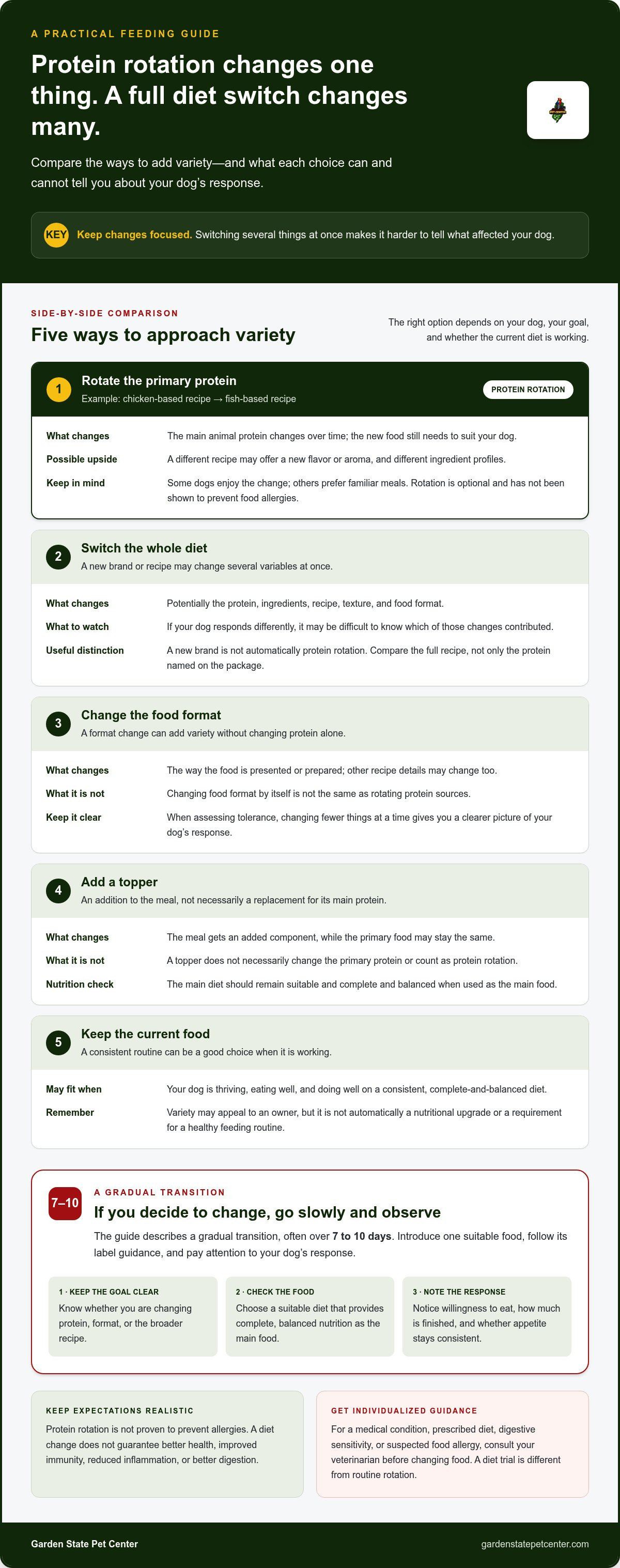
Protein rotation means changing the primary animal protein in a dog’s food over time while choosing foods that are otherwise suitable for that dog. For example, a dog might move from a chicken-based recipe to a fish-based recipe. The focus is on the main protein source, rather than changing every part of the feeding routine at once.
That distinction matters because “rotation” can describe several different choices. A new brand may also mean a new recipe, ingredients, texture, and food format. A topper changes the meal too, but doesn’t necessarily replace its primary protein. For a general overview of ingredients and feeding formats, see this guide to dog food nutrition.
The potential rotating proteins for dogs benefits are easier to assess when the term is clear. Rotation is one feeding approach, not a requirement or a guarantee of better health. Whatever the plan, the food should suit your dog and provide complete, balanced nutrition when used as the main diet.
Protein rotation versus changing the whole diet
Moving from a chicken-based food to a fish-based food can count as protein rotation if the new food is suitable and the primary change is the animal protein. Switching brands, recipe styles, and formats at the same time makes it harder to tell which change affected your dog. A different response could relate to any of those variables, not just the protein.
When practical, keep changes focused. Compare the labels and note what differs, including the primary protein, recipe, and format. If you’re assessing tolerance, changing fewer things at once gives you a clearer picture of your dog’s response. Rotation doesn’t require changing brands, and choosing a new food format alone isn’t the same as rotating protein sources.
Does every dog need rotating proteins?
No. Rotation is an option, not a necessary part of a healthy feeding routine. If your dog is thriving on a consistent, complete-and-balanced diet, eating well, and doing well with that routine, there may be no clear reason to change it. Variety may appeal to an owner, but it isn’t automatically a nutritional upgrade.
Consider a change for a specific reason, such as offering a different protein or exploring another suitable recipe. If your dog has a medical condition, a prescribed diet, or a history of digestive sensitivity, get individualized veterinary guidance before changing food. For broader help weighing food choices, Garden State Pet Center’s premium pet food guide offers additional context. The right approach is the one that fits your dog, not a rotation schedule followed simply because it’s popular.
What Benefits Can Rotating Proteins for Dogs Offer?
Protein rotation can add variety, but its value depends on the dog and the foods chosen. A different protein may bring a new aroma or flavor that some dogs find more appealing. Ingredients also differ in nutrient profiles. These are reasons to consider a change, not proof that rotation improves health or that every dog will enjoy it.
Dietary variety is not evidence of better health: changing protein sources can change a food’s ingredients and nutrient profile, but it doesn’t by itself show that a dog’s nutritional needs are better met or that allergies, inflammation, immune problems, or digestive conditions will be prevented or treated.
Mealtime variety and food interest
Some dogs show interest in a new recipe, while others prefer familiar meals or reject the change. A chicken-based recipe and a fish-based recipe may smell and taste different, but no flavor is universally more enticing. Texture and preparation can matter too, so a dog’s response may not be caused by protein alone.
Picky eating has many possible explanations, including routine, stress, dental discomfort, or illness. Rotation isn’t a guaranteed fix. If you try a change, note whether your dog willingly eats, how much they finish, and whether appetite stays consistent. A sudden or persistent appetite change warrants individualized veterinary attention rather than repeated food swaps.
Nutrient diversity and health claims
Different animal ingredients can provide different amounts and combinations of nutrients. But variety alone doesn’t make a diet complete or balanced. A suitable main food should meet a dog’s nutritional needs as fed, and changing proteins isn’t a substitute for checking that the food fits your dog’s life stage and circumstances. Compare the full recipe, not only the protein named on the front of the package.
Keep allergy and intolerance claims in perspective. A food allergy involves an immune response; an intolerance is a non-immune adverse response that may involve digestion. Neither should be assumed from a single symptom, and rotating proteins hasn’t been shown to prevent either. A carefully managed diet trial for suspected food allergy is different from routine rotation, so consult your veterinarian before changing food to investigate symptoms.
Claims that rotation strengthens immunity, reduces inflammation, or improves the gut microbiome also need reliable evidence. A proposed biological explanation isn’t the same as a demonstrated benefit in dogs, and a diet change doesn’t guarantee a measurable health effect. The clearest potential upside is practical: some dogs may enjoy meal variety, and different suitable recipes can offer different ingredient profiles.
For help comparing premium food choices and setting a rotation goal that fits your dog, explore nutrition guidance from a Certified Pet Nutritionist. Keep the decision grounded in your dog’s appetite, tolerance, and overall diet, not a promise that rotation will prevent or treat a health concern.
Protein Rotation Compared With Other Ways to Add Variety
Variety can mean several different things in a dog’s bowl. You might change the primary protein, choose a different food format, or add a topper to the usual meal. These approaches aren’t interchangeable: each changes different ingredients or characteristics, and each calls for its own checks. Comparing them helps put potential rotating proteins for dogs benefits in perspective without assuming every kind of change offers the same result.
| Approach | What changes and possible purpose | What to monitor |
|---|---|---|
| Rotate the main protein | The primary animal protein changes; this may offer ingredient variety. | Appetite, stool, and how the full recipe suits your dog. |
| Change food format | The food’s form changes, such as dry to gently cooked; this may suit preferences or feeding routines. | Acceptance, feeding directions, and the recipe’s nutritional role. |
| Add a topper | An extra ingredient is added to the usual food; this may add flavor or texture. | Portion balance, tolerance, and whether it displaces the main diet. |
Changing the protein while keeping the format familiar
If your goal is ingredient variety, changing the primary protein while keeping the food format familiar is a focused option. For instance, you could compare a chicken-based dry food with a fish-based dry food instead of changing both protein and format. The new recipe still needs to suit your dog and provide complete, balanced nutrition when fed as the main diet. Browse dog food options by category, then review the recipe details rather than relying on the protein name alone.
Changing formats or adding toppers
Dry, gently cooked, raw, and freeze-dried foods differ in form and preparation. One format isn’t automatically best for every dog, and foods in different formats shouldn’t be assumed nutritionally interchangeable. Check each food’s directions and nutritional information, and consider whether you’re changing the protein too. If you’re comparing dry recipes, look at the dry dog food selection as one category, not as a direct nutritional match for every other format.
A topper makes a different kind of change: it adds something to the existing meal rather than replacing the main food. It may change flavor or texture, but its ingredients and amount still matter. Don’t let an addition displace a complete diet without individualized nutrition guidance.
Whichever route you consider, change one element at a time when practical. If you switch protein, brand, recipe, and format all at once, a change in appetite or stool is harder to interpret. A measured comparison gives you a clearer sense of what your dog accepts and tolerates, while keeping the focus on the whole diet rather than variety for its own sake.
How to Rotate Dog Food Gradually and Monitor Your Dog
A thoughtful transition is less about following a rigid calendar and more about making one manageable change, then observing your dog. There’s no single schedule that fits every dog or food. Follow the new food’s label guidance and any individualized advice from your veterinarian or pet nutrition professional.
- Choose one suitable complete food. Select a food that fits your dog’s needs and is intended to provide complete nutrition when fed as directed. Review the label and note what you’re changing, such as the primary protein.
- Introduce it gradually. Follow the food’s transition instructions or professional guidance. Adjust the pace to your dog rather than forcing a set timeline. If you’re comparing categories, browse dog food options while keeping your intended change clear.
- Observe the response. Watch appetite, stool, energy, and skin. Record what you notice and when. These observations can help describe a response, but they don’t diagnose its cause.
- Decide what to do next. If your dog is doing well, consider whether the change meets your goal before making another. If signs persist or concern you, pause the transition and seek veterinary advice instead of trying another food in quick succession.
Introduce one protein change at a time
Keep the rest of your dog’s routine steady during the introduction where practical. Avoid changing the recipe, format, treats, and meal toppers all at once. If appetite or stool changes, several simultaneous adjustments make it harder to tell what may be associated with the response. A simple note of food and routine changes can help you describe the transition clearly.
Use the same careful approach whether your aim is variety or to explore potential rotating proteins for dogs benefits. A food change alone can’t establish that a particular ingredient caused a symptom, so avoid drawing conclusions from one observation.
Know when to pause and get individualized guidance
Pause the change if your dog shows persistent digestive signs or other concerning changes, and seek veterinary advice. Known sensitivities, existing health conditions, and veterinarian-prescribed diets are reasons to get professional guidance before changing food. Don’t keep experimenting with recipes to manage symptoms without support.
A pet nutrition consultation can help you compare food options and clarify feeding goals, but it doesn’t replace veterinary care or diagnose or treat health conditions. Garden State Pet Center’s Certified Pet Nutritionist can help you think through food choices in that role. Explore nutrition guidance for your dog’s food transition.
Build a Thoughtful Protein Rotation With Nutrition Guidance
There’s no need to rotate simply because rotation is popular. If your dog is doing well on a complete, balanced food and the routine suits your household, staying with it can be a sound choice. Consider a measured change when you have a clear goal, such as exploring another protein or comparing a different food format. The possible rotating proteins for dogs benefits matter only if the chosen food also fits your individual dog.
Start with the details that shape a sensible decision: your dog’s current food and how they tolerate it, life stage, known sensitivities, and any professional feeding guidance. Avoid choosing a protein based on a general claim that it’s best for all dogs. A food that works well for one dog may not suit another, and a suspected health issue calls for veterinary guidance rather than guesswork.
Match the approach to your dog's needs
Use your dog’s current routine as the starting point. Note what’s working, what you hope to change, and whether a veterinarian has recommended specific feeding limits. If there’s no clear reason to change, keep the successful routine. For broader considerations such as ingredients, food formats, and selecting a complete diet, consult a premium pet food guide as part of your research.
If a change is appropriate, focus on a food that meets your dog’s needs rather than chasing variety alone. A Certified Pet Nutritionist can help compare premium food options and clarify rotation goals, while veterinary advice remains important for medical concerns or prescribed diets.
Explore premium dog food options with support
Dog food is available in several formats, including raw, freeze-dried, gently cooked, air-dried, and dry. These categories offer different ways to feed, but format alone doesn’t tell you whether a specific food suits your dog. Review the individual recipe’s label and feeding directions. Likewise, a brand name doesn’t establish which proteins its recipes contain or whether every recipe is appropriate for every dog.
Garden State Pet Center carries brands including Fromm, Open Farm, Small Batch, Farmina, and FirstMate. These are examples of available brands, not a recommendation that each one, or every recipe within them, suits every dog. Compare the actual food and its nutritional information with your goals; don’t assume each brand offers every protein or format.
Keep the decision practical: maintain a diet that’s working, or make one considered change for a clear reason. Garden State Pet Center’s Certified Pet Nutritionist can help you compare premium food options and think through your rotation goals. Browse dog food options and request nutrition guidance to explore a plan that keeps your dog’s individual needs at the center.
Choose the Next Step That Fits Your Dog
Your dog’s feeding plan doesn’t need to follow a trend. Keep what’s working, or use a clear goal to guide a careful change. The question isn’t whether rotating proteins for dogs benefits every dog, but whether a particular approach makes sense for yours.
If you’d like help weighing options, Garden State Pet Center’s team includes a Certified Pet Nutritionist who can support your food comparisons and rotation goals. Explore premium dog food in raw, freeze-dried, gently cooked, air-dried, and dry formats, and keep in mind that Garden State Pet Center is an Open Farm Certified Obsessed Retailer.
Explore premium dog food and get thoughtful nutrition guidance. Take the next step at your dog’s pace, with a plan shaped around their needs.
Frequently Asked Questions
What are the benefits of rotating proteins for dogs?
Possible benefits include offering some dogs new flavors and exposing them to ingredients with different nutrient profiles. Keeping track of proteins your dog has eaten may also help a veterinarian plan a future elimination diet if one is needed. These possibilities don’t mean rotation improves every dog’s health. The potential rotating proteins for dogs benefits depend on the individual dog, and each main food still needs to be nutritionally suitable.
Is rotating proteins necessary if my dog eats a complete and balanced food?
No. If your dog eats an appropriate complete and balanced food and is thriving on it, rotation isn’t required. Consistency can make it easier to maintain a reliable routine and notice changes in appetite or condition. Revisit food choices as your dog’s life stage or circumstances change, and follow veterinary guidance if a health issue or prescribed diet affects what your dog should eat.
Can changing protein sources cause digestive upset in dogs?
Yes, a food change can be followed by digestive changes, though that doesn’t prove the protein itself is responsible. Introduce the new food according to its label directions, and avoid adding several new foods or treats at once. If loose stool, vomiting, or reduced appetite persists or concerns you, pause the change and seek veterinary advice rather than trying another protein to guess at the cause.
How often should I rotate my dog's protein?
There’s no single rotation schedule that suits every dog. Some rotation approaches change foods every few weeks or when starting a new bag, but that isn’t a rule every dog needs to follow. Base timing on how your dog tolerates the food, its label directions, and individualized professional advice. If the current diet is working, you don’t need to rotate just to meet a calendar target.
Can rotating proteins prevent food allergies or sensitivities?
No. There’s no definitive evidence that routine protein rotation prevents food allergies, and it shouldn’t be used to treat suspected allergy or intolerance. Keeping track of proteins your dog has eaten may help a veterinarian plan a future elimination diet, but that process needs careful guidance. If you notice recurring signs after meals, record the foods and symptoms and discuss them with your veterinarian before changing the diet.
What should I monitor when introducing a new protein?
Note your dog’s appetite, stool consistency, energy, and any skin changes such as increased scratching. Record when the new food was introduced and any other changes in routine, treats, or supplements. A short log can help you describe patterns accurately, but it can’t identify a diagnosis. Seek veterinary advice for persistent or concerning symptoms instead of relying on food notes alone.
Can I rotate between raw, cooked, freeze-dried, and dry dog food?
You can consider different formats, but don’t assume they’re nutritionally interchangeable. A raw, gently cooked, freeze-dried, or dry food needs to suit your dog and be fed according to its own directions. Check whether each food is intended to provide complete nutrition as the main diet, and compare feeding instructions before changing formats. If your dog has a medical condition or prescribed diet, get veterinary guidance first.
For help comparing premium dog foods and setting a rotation goal that suits your dog, explore nutrition guidance from Garden State Pet Center’s Certified Pet Nutritionist.

Article by
Victor Santucci
Victor Santucci Jr. is the owner of Garden State Pet Center and a Certified Clinical Pet Nutritionist specializing in premium pet nutrition, raw and fresh feeding, holistic pet wellness, birds and exotic animals. Through years of hands-on retail and animal-care experience, Victor helps pet parents make informed decisions about nutrition, enrichment and species-appropriate care.
Share this post
- 0 comment
- Tags: canine diet, dog food, dog nutrition, elimination diet, pet health, protein rotation, rotating proteins for dogs benefits, switching dog food