

The Ultimate Guide to Bird Cages and Enclosures: Choosing a Safe and Stimulating Habitat in 2026


Your bird's habitat is far more than just a place to sleep; it's a complex, three-dimensional environment that directly influences their physical health and emotional spirit. Choosing the right Bird Cages and Enclosures is one of the most critical decisions you'll make as a caretaker. We know the anxiety that comes with trying to find the perfect fit. You're likely balancing the need for safe bar spacing with the fear of heavy metal poisoning from low-quality materials, all while trying to find a design that doesn't clash with your home decor.
It's completely normal to feel a bit lost among the endless options available today. Our goal is to simplify this process and help you build a sanctuary where your feathered friend can truly thrive. You'll discover how to select a durable, high-quality enclosure that promotes psychological well-being and reduces stress-related behaviors like feather picking. We'll walk through the latest safety standards for 2026, species-specific sizing requirements, and the best ways to set up a stimulating interior that encourages natural movement. By the end, you'll have the confidence to choose a lifetime home that keeps your avian companion happy, healthy, and safe.
Key Takeaways
- Learn how species-appropriate sizing supports natural flight so your bird doesn't develop stress behaviors like feather plucking.
- Identify critical safety standards for bar spacing and non-toxic materials like medical-grade stainless steel to protect your bird from injury.
- Compare different styles of Bird Cages and Enclosures, including flight and playtop designs, to suit your bird's specific exercise needs.
- Master the art of interior setup by using varied perches and strategic foraging stations to encourage movement and mental stimulation.
- Discover how professional vetting and expert matching help you secure a durable, lifetime housing solution for your avian companion.
Table of Contents
-
The Science of Avian Habitats: Why Your Enclosure Choice Matters
-
Technical Specifications: Bar Spacing, Materials, and Safety Standards
-
Comparing Enclosure Styles: Flight Cages, Playtops, and Dometops
-
Strategic Setup: Turning a Metal Enclosure into a Stimulating Home
The Science of Avian Habitats: Why Your Enclosure Choice Matters
Your bird's enclosure isn't just a container; it's a sanctuary that must mirror their biological needs for movement and safety. A truly species-appropriate habitat allows for full wing extension and, ideally, enough space for short horizontal flight bursts. Choosing the right Bird Cages and Enclosures is about understanding the psychology of space and how it impacts your pet's daily life. Reviewing the history of bird enclosures shows how our approach has evolved from simple decorative wire baskets to complex environments designed for welfare. When you choose your next setup, prioritize width over height. While tall cages look impressive, most parrot species are horizontal movers that benefit far more from lateral space than vertical depth.
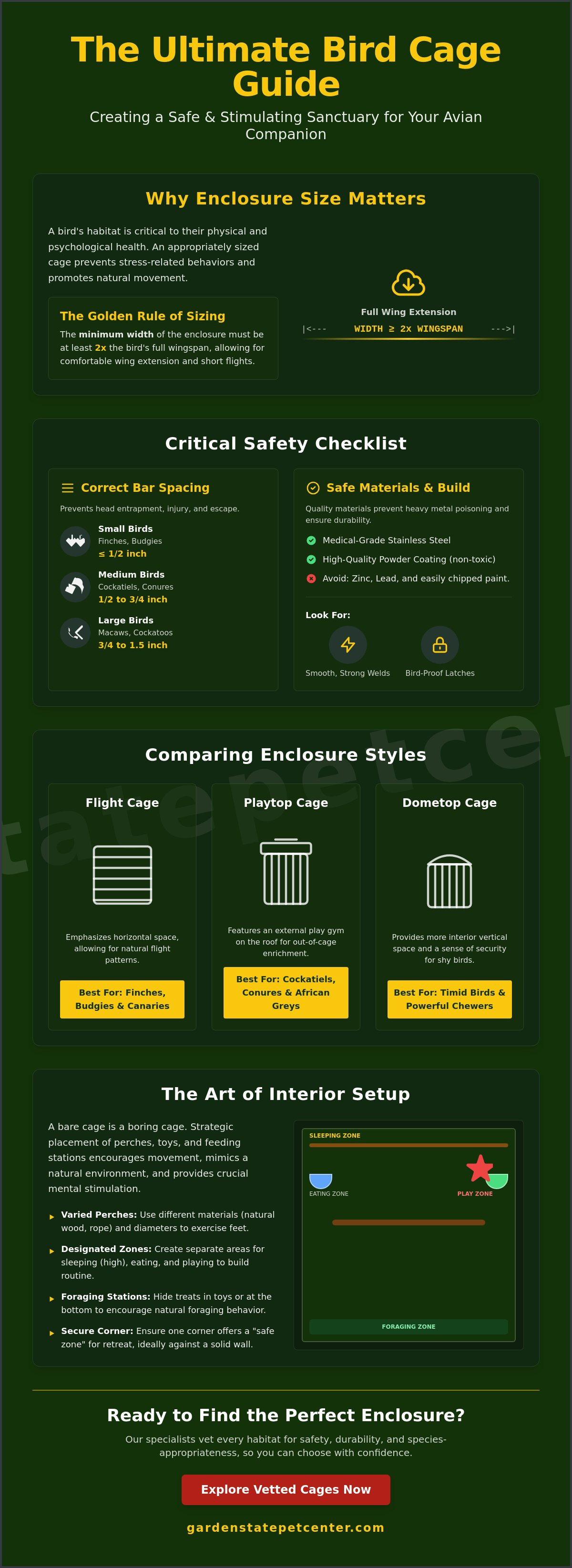
To ensure your bird feels secure, follow the wing-span rule: the minimum width of any enclosure must be at least twice the bird's full wingspan.
To better understand how these spaces function in a real-world setting, watch this helpful video review and setup guide:
Psychological distress often stems from environmental confinement. Birds kept in cramped quarters frequently develop self-destructive behaviors, such as feather plucking or excessive screaming, as a response to chronic boredom and physical restriction. You can mitigate these issues by implementing 'zoning' within the habitat. Designate specific areas for sleeping, eating, and playing to create a predictable routine that reduces anxiety. Explore our curated selection of bird supplies and habitats to find options that support this healthy, organized layout.
Understanding Horizontal vs. Vertical Flight Patterns
Different species interact with their environment in unique ways. Small, high-energy birds like finches and budgies require long horizontal flight cages to maintain their cardiovascular health through constant movement. Conversely, larger climbing species like Cockatoos and African Greys utilize vertical space to scale the bars and exercise their powerful beaks and feet. Providing the right orientation in Bird Cages and Enclosures ensures your pet can engage in their natural locomotive behaviors every day.
The Role of Privacy and Security in Enclosure Design
Security is a fundamental psychological need for prey animals. Ensure your bird's home has at least one solid corner or a designated 'safe zone' where they can retreat if they feel threatened. The placement of the enclosure in your home matters too; tucking it against a wall rather than in the center of a room provides a sense of protection. Dometop enclosures are particularly effective for shy birds, as the curved roof offers a greater sense of shelter and overhead coverage compared to open-top designs that leave them feeling exposed.
Technical Specifications: Bar Spacing, Materials, and Safety Standards
Engineering a safe environment requires more than just picking an attractive design. When you evaluate Bird Cages and Enclosures, technical specifications determine whether a habitat protects your pet or poses a hidden threat. The most fundamental safety feature is bar spacing. If bars are too wide, a bird can get its head stuck or escape; if they're too narrow, they might trap a toe or wing. Beyond spacing, you must consider the sheer strength of the build. Large parrots possess enough beak pressure to snap thin wires, so 'bird-safe' doesn't always mean it's 'parrot-proof' for a determined Macaw or Cockatoo.
Examine the structural integrity of any potential home before bringing it into your living space. High-quality enclosures feature smooth, rounded welds and heavy-duty latches that resist clever beaks. If you're unsure which specifications suit your species, you can consult with our specialists to find a vetted solution that matches your bird's size and strength.
Bar Spacing Guide by Bird Size
Correct spacing is non-negotiable for physical safety. Small birds like Finches and Canaries require spacing between 1/4 and 1/2 inch to prevent them from slipping through. Medium species, including Conures and Cockatiels, thrive with 1/2 to 3/4 inch standards. For large birds like Macaws and Cockatoos, spacing should range from 3/4 to 1.5 inches. Using larger spacing for big birds isn't just about containment; it's about preventing beak injury when they climb the cage walls.
The Hidden Dangers of Heavy Metal Toxicity
Materials matter because birds use their beaks as a third hand to navigate their environment. Cheap galvanized metals often contain zinc or lead, which pose severe risks of heavy metal poisoning if ingested. Medical-grade 304 stainless steel remains the gold standard for longevity and chemical safety because it's rust-resistant and contains no toxic coatings. If you choose a colored enclosure, ensure it uses a non-toxic, high-heat powder coating. You can test for safety by running a fingernail over the bars; if the coating flakes or feels brittle, it's a significant ingestion hazard for a curious bird.
Watch for warning signs of low-quality manufacturing. Flaking paint, sharp metal burrs at the weld points, and flimsy spring-loaded latches are red flags. A durable enclosure should last your bird's entire lifetime, making it a vital investment in their long-term health and your peace of mind. By prioritizing high-end materials and precise spacing, you create a foundation for a stress-free life together.
Comparing Enclosure Styles: Flight Cages, Playtops, and Dometops
Selecting the right silhouette for your bird's home is just as vital as the material it's built from. The market for Bird Cages and Enclosures has expanded to offer specialized shapes that cater to different species' activity levels and social needs. While a flight cage might be perfect for a high-energy budgie, a large Macaw requires the structural reinforcement of a heavy-duty dometop. Understanding the pros and cons of each style allows you to provide a habitat that fits both your bird's personality and your home's floor plan.
-
Flight Cages: These are designed with a primary focus on width. They're the best option for active, small-to-medium species like finches, canaries, and budgies. These birds need horizontal space to fly and maintain cardiovascular health; height is secondary to their exercise requirements.
-
Playtop Cages: These feature an integrated gym on the roof. They're ideal for birds that spend significant time out of their cage. The playtop provides a designated area for social interaction and foraging without taking up extra floor space in your living room.
-
Dometop Cages: By utilizing a curved roof, these maximize internal volume. They provide extra height for perching and hanging large toys, making them a favorite for climbing species. The extra room at the top allows for a more spacious, airy feel inside the enclosure.
-
Corner Cages: These are excellent space-saving solutions for smaller homes. They utilize the often-wasted space in a room's corner while still providing significant interior volume for the bird.
Which Style Suits Your Bird's Personality?
Your bird's temperament should dictate the final choice. Social birds like Amazons often thrive in playtop enclosures because they love being at the center of the household action. Nervous or independent birds often prefer the "roofed" feel of a dometop, which provides a greater sense of overhead shelter. For multi-bird households or high-energy species that require maximum room to roam, a full-scale aviary is the ultimate solution. Matching the style to the bird's social habits ensures they feel safe rather than exposed.
Functional Features to Look For
Daily maintenance becomes much easier when you choose an enclosure with the right functional details. Look for "breeder doors," which are small side doors that allow you to change food and water bowls without reaching deep into the bird's territory. This reduces stress for both you and your pet. Seed guards with a 45-degree angle and pull-out trays are essential for keeping your floors clean by catching debris before it hits the ground. Finally, prioritize high-quality locking mechanisms. Clever birds can easily manipulate simple spring latches, so "parrot-proof" deadbolts are a must for any escape artist. You can find these advanced security features in our comprehensive bird collection, where we prioritize safety and ease of use.
Strategic Setup: Turning a Metal Enclosure into a Stimulating Home
Transforming a standard metal structure into a vibrant sanctuary requires a strategic approach to internal architecture. Once you've selected from the highest quality Bird Cages and Enclosures, your focus must shift to how that space is utilized. Position the habitat in a high-traffic area of your home where your bird feels like part of the family, but avoid the kitchen at all costs. Fumes from non-stick cookware (PTFE/Teflon) are lethal to avian respiratory systems. Ensure the location is free from drafts and direct, unshaded sunlight that could lead to overheating.
Transitioning your bird to a new habitat doesn't have to be a struggle. Introduce the new enclosure slowly by allowing your bird to explore the exterior first while their familiar cage remains nearby. Move their favorite "security toy" into the new space early on to establish a sense of continuity. This proactive approach builds confidence and prevents the "new cage phobia" often seen in sensitive species. To keep the interior functional, follow the Rule of Two-Thirds: ensure that toys, perches, and bowls occupy no more than two-thirds of the available volume. This leaves the remaining third as open airspace for wing flapping and lateral movement.
The Importance of Perch Diversity
Maintain your bird's foot health by offering a diverse mix of natural wood, rope, and platform perches. Uniform dowel perches are common in lower-end setups, but they force a bird's foot into the same position constantly, which often leads to bumblefoot or arthritis. Natural branch perches provide varied diameters that exercise different muscle groups and naturally wear down nails. Enhance your setup with items from our collection of bird toys and accessories to create a dynamic, multi-level environment that encourages climbing and foraging.
Lighting and Environmental Control
Control the "climate" of the enclosure to mirror a bird's natural habitat. Install full-spectrum UV lighting specifically designed for birds to facilitate Vitamin D3 synthesis and maintain vibrant feather health. For tropical species, use a room humidifier to prevent dry, itchy skin and respiratory issues. Finally, respect their circadian rhythm. Use a heavy blackout cover to guarantee a solid 10 to 12 hours of undisturbed sleep every night. This routine regulates hormones and significantly reduces the likelihood of screaming or feather-destructive behaviors. Browse our collection of premium bird habitats to find the perfect foundation for these essential environmental controls.
Finding the Perfect Enclosure at Garden State Pet Center
Choosing a habitat is a significant commitment that impacts your bird's quality of life for decades. At Garden State Pet Center, we move beyond the role of a standard retailer by acting as your dedicated partner in avian welfare. Every model in our selection of Bird Cages and Enclosures undergoes a strict vetting process to ensure it meets our high standards for material safety and structural integrity. We prioritize medical-grade metals and non-toxic finishes because we know your bird uses its beak to interact with every inch of its home. You can trust that the products we recommend are the same ones we use for our own feathered family members.
Navigating the technical specifications of bar spacing and interior volume can feel overwhelming. Our team provides expert consultations to help you match your bird's specific species, age, and personality to the right environment. Whether you need a massive flight cage for a colony of finches or a reinforced dometop for a powerful macaw, we guide you toward a solution that balances safety with psychological stimulation. For those outside our immediate area, we offer nationwide shipping on a curated selection of premium bird habitats, bringing our specialized expertise directly to your door.
Beyond the Cage: A Holistic Approach to Bird Care
A great enclosure is only the foundation of a healthy life. Maintaining that health requires ongoing attention to physical and behavioral needs. Regular maintenance, such as professional bird grooming, ensures your pet stays comfortable and agile within their new home. For new owners, utilizing avian DNA sexing provides vital insights into your bird's gender, which helps you better understand their specific hormonal and behavioral requirements. When life takes you away from home, our pet boarding services offer a safe, professional environment where your bird receives expert care while their large permanent enclosure stays behind.
Shop Our Curated Bird Collection
Ready to upgrade your avian companion's lifestyle? Browse our wide range of bird enclosures and supplies to find the perfect fit for your home. Beyond housing, we provide access to premium parrot food, specialized treats, and health-boosting supplements designed to complement a high-quality habitat. Our goal is to provide everything you need to create a thriving, long-term sanctuary. Contact our experts today to help you design the ultimate avian sanctuary and give your bird the safe, stimulating home they deserve.
Build a Thriving Sanctuary for Your Avian Companion
Your bird's home is the foundation of their entire world. By prioritizing species-appropriate sizing and rigorous safety standards, you protect them from physical injury and psychological stress. Remember that a stimulating habitat requires more than just high-quality materials; it needs a strategic layout of varied perches and foraging zones to encourage natural instincts. Investing in premium Bird Cages and Enclosures ensures your pet enjoys a durable, safe space that lasts a lifetime.
Since 1990, Garden State Pet Center has provided specialized care for exotic birds with a deep commitment to welfare and safety. Our on-site certified pet nutritionist and decades of avian expertise mean every product we offer is vetted for excellence. We're here to help you navigate the complexities of bird care with confidence and ease. Shop our expert-vetted selection of Bird Cages and Enclosures today to find the perfect match for your bird's unique personality. We look forward to helping you create a beautiful, healthy environment where your feathered friend can truly flourish.
Frequently Asked Questions
What is the best bar spacing for a Cockatiel cage?
Cockatiels require bar spacing between 1/2 inch and 5/8 inch to ensure their safety. Spacing wider than this poses a significant risk of head entrapment, while narrower spacing can trap toes or wings. Always verify the manufacturer's measurements before purchase to prevent accidental escapes or injuries during your bird's active climbing sessions.
Are round bird cages safe for parrots?
No, round cages are generally unsafe and psychologically stressful for parrots. Birds naturally seek out corners to feel secure and protected from perceived threats in their environment. Additionally, the bars in round cages often taper at the top, creating narrow V-shaped gaps that can easily trap and break a bird's toes, beaks, or flight feathers.
How often should I clean my bird's enclosure?
Clean the tray liners and food bowls every single day to maintain basic hygiene. You should perform a comprehensive deep scrub of the entire habitat once a week using bird-safe disinfectants. Consistent cleaning prevents the buildup of dangerous bacteria and mold that can compromise your avian companion's sensitive respiratory system and overall health.
Can I use a second-hand bird cage if I disinfect it?
Yes, you can use a second-hand cage, but you must exercise extreme caution. Scrub the entire structure with a bird-safe disinfectant and inspect it thoroughly for any signs of rust or flaking paint. Be aware that hidden pathogens from previous inhabitants can linger, so ensure the material is non-porous and the structural integrity remains perfectly intact.
What materials are toxic to birds in cages?
Zinc and lead are the most dangerous toxins found in low-quality Bird Cages and Enclosures. Avoid any galvanized metals that haven't been specifically vetted for avian safety. Curious birds often ingest these heavy metals while using their beaks to climb or chew on the bars, which can lead to rapid and fatal heavy metal poisoning.
Where is the best place in the house to put a bird cage?
Place the habitat in a social area like the living room where your bird can feel like part of the family. Position the enclosure against at least one solid wall to provide a sense of security and shelter. Ensure the location is far from the kitchen to avoid lethal fumes from non-stick cookware and away from drafty windows.
How do I know if my bird's cage is too small?
Your bird's cage is too small if they cannot fully extend and flap their wings without touching the bars or accessories. Watch for physical signs like frayed tail feathers or behavioral cues such as lethargy and repetitive pacing. If your pet cannot hop between perches or perform short flight bursts, they need a more spacious environment.
Is it better to have a tall cage or a wide cage for a parrot?
Wide cages are almost always better because birds fly horizontally rather than vertically. A wide Bird Cages and Enclosures setup provides the lateral distance necessary for essential cardiovascular exercise. While tall cages offer climbing opportunities, they don't replace the need for width, which is the most critical dimension for a bird's physical and mental health.

Article by
Victor Santucci
Victor Santucci is the owner of Garden State Pet Center in Audubon, NJ, where he specializes in premium pet nutrition, exotic animals, and expert-level care. With years of hands-on experience and a passion for helping pets thrive, Victor is dedicated to educating pet owners on proper nutrition, enrichment, and species-specific care. His mission is simple: provide every pet with the highest quality products and every customer with honest, knowledgeable guidance.
Share this post
- 0 comment
- Tags: Avian Enclosures, Avian Health, Bird Cages, Bird Cages and Enclosures, Bird Care, Bird Enrichment, Bird Habitat, Cage Setup, Pet Safety