

Best Parrot Toys: 2026 Enrichment & Safety Guide


Enrichment isn't a luxury for your parrot; it's a vital medical tool for preventing cognitive decline and behavioral disorders. You likely spend hours searching for the best toys for parrots, only to worry about toxic chemicals or watch a new purchase get destroyed in mere minutes. It's exhausting to balance your bird's need for stimulation with the fear of choking hazards, especially given the strict new safety standards and recalls we've seen throughout 2026.
We agree that your bird deserves a stimulating environment that doesn't compromise their health or your peace of mind. This guide reveals the most engaging, safe, and expert-recommended toys designed to keep your feathered friend mentally sharp and physically active. We will explore durable foraging tools, the latest in non-toxic materials, and professional strategies for toy rotation that ensure your parrot remains happy and non-destructive for years to come.
Key Takeaways
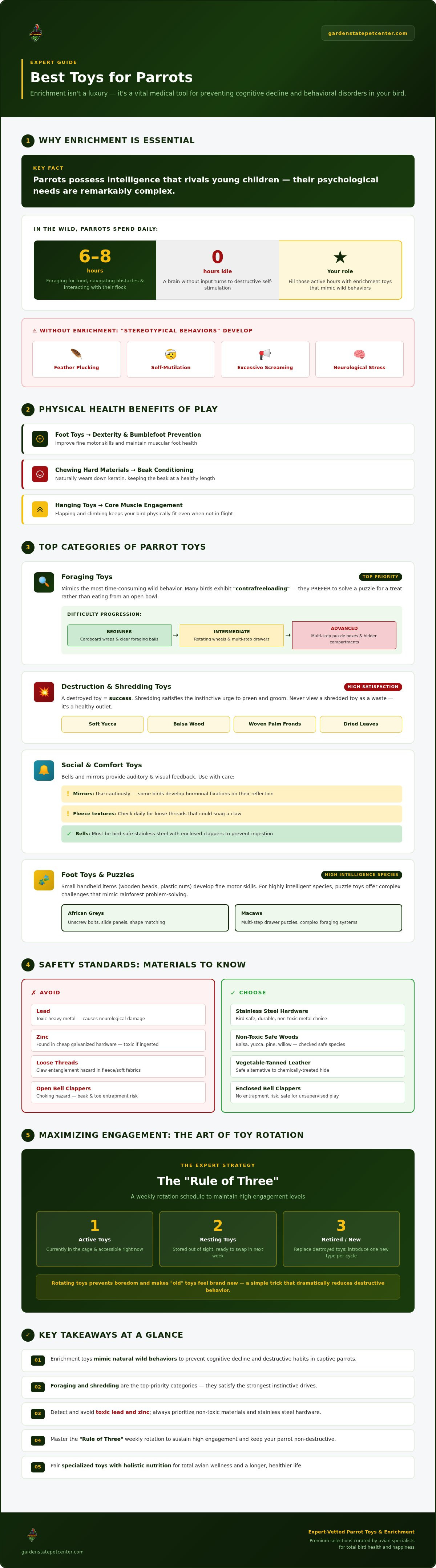
- Understand how enrichment toys mimic natural wild behaviors to prevent cognitive decline and destructive habits.
- Identify the best toys for parrots by prioritizing foraging and shredding categories that satisfy instinctive preening urges.
- Learn to detect toxic materials like lead and zinc while following a checklist of safe woods for your bird's health.
- Master the "Rule of Three" to implement a weekly rotation schedule that maintains high levels of engagement.
- Benefit from expert-vetted selections that pair specialized toys with holistic nutrition for total avian wellness.
Why Enrichment is Essential: The Psychology of Parrot Play
Parrots possess a level of intelligence that rivals young children, meaning their psychological needs are remarkably complex. Enrichment isn't just about providing entertainment; it's the practice of stimulating natural wild behaviors within a captive setting. In their native habitats, parrots spend between six and eight hours every day foraging for food, navigating obstacles, and interacting with their flock. When these birds live in our homes, we must find ways to fill those active hours to keep their minds sharp and their bodies engaged.
The best toys for parrots serve as essential substitutes for these wild activities. Choosing the best toys for parrots involves more than just picking something colorful; it requires understanding the unique psychological profile of your specific bird species. Without a constructive outlet for their energy, parrots often develop "stereotypical behaviors." These include distressing habits like feather plucking, self-mutilation, and excessive screaming. By providing cognitive challenges, you're investing in your bird's longevity. This is especially true for large psittacines, where mental engagement is directly linked to a longer, healthier life.
Preventing Boredom and Behavioral Disorders
A bored parrot isn't just quiet; they're often under significant neurological stress. When the brain lacks input, it begins to seek stimulation in destructive ways. You shouldn't view a shredded toy as a waste of money. Instead, see it as a successful outlet for energy that might otherwise be directed at your furniture or their own feathers. High-quality bird toys help reduce anxiety during your absence, giving your pet a sense of purpose and accomplishment throughout the day.
The Role of Toys in Physical Avian Health
Play also serves as a vital form of physical therapy. Foot toys are excellent for improving dexterity and maintaining the muscular health of the feet, which helps prevent conditions like bumblefoot. Chewing on hard materials provides necessary beak conditioning, naturally wearing down the keratin to keep the beak at a healthy length. Additionally, hanging toys encourage flapping and climbing, which engages core muscles and keeps your bird physically fit even when they aren't in flight.
Top Categories of Parrot Toys for Mental Stimulation
Selecting the best toys for parrots requires a strategic approach that matches your bird's specific developmental stage and personality. Rather than filling a cage with random items, consider how each category addresses a different facet of avian life. A well-rounded toy chest should include a mix of items that challenge the mind, satisfy physical urges, and provide emotional comfort.
Foraging Toys: Mimicking Wild Behaviors
In the wild, parrots are hardwired to work for their sustenance. This drive is so strong that many birds exhibit "contrafreeloading," a phenomenon where they prefer to solve a puzzle for a treat rather than eating from an open bowl. For beginners, start with simple cardboard wraps or clear foraging balls that show the reward inside. As your bird gains confidence, move to advanced rotating wheels or multi-step drawer puzzles. You can find a wide variety of these engagement-focused bird toys and accessories to get your pet started on a healthier routine.
Destruction and Shredding Toys
Many owners feel frustrated when a toy is reduced to splinters in minutes. However, in the world of avian enrichment, "killing" a toy is the ultimate sign of success. Shredding satisfies the instinctive urge to preen and groom. Materials like soft yucca, balsa wood, and woven palm fronds are perfect for this. Providing varied textures, from crunchy dried leaves to soft vegetable-tanned leather, offers sensory enrichment that keeps their interest high. Finding the best toys for parrots means looking for materials that are meant to be destroyed.
Social and comfort toys, such as bells and mirrors, provide auditory and visual feedback. Use mirrors with caution, as some birds may develop hormonal fixations on their reflection. Soft, fleece-like textures can offer comfort for snuggling, provided they are checked daily for loose threads that could snag a claw. Bells should always be made of bird-safe stainless steel with enclosed clappers to prevent accidental ingestion.
Foot toys and puzzles round out a complete enrichment plan. Foot toys are small, handheld items like plastic nuts or wooden beads that develop fine motor skills. For highly intelligent species like African Greys or Macaws, puzzle toys offer high-level challenges. These require the bird to unscrew bolts, slide panels, or match shapes, which mimics the complex problem-solving they do in their natural rainforest habitats. If you're looking for expert-vetted options, our team at Garden State Pet Center carefully curates our bird toy collection to ensure every item supports these vital behaviors.
Safety Standards: Choosing the Best Materials for Your Bird
Selecting the best toys for parrots involves more than finding a fun design. It requires a clinical eye for material safety. Many mass-produced items available through general retailers contain hidden hazards that pose life-threatening risks. As an exotic bird specialist since 1990, we've seen how the wrong hardware choice can lead to tragedy. You must prioritize the structural integrity and chemical composition of every item that enters the cage.
Heavy metal poisoning remains a top concern for avian owners. Lead and zinc are frequently used in inexpensive toy components like bells, wires, and weights. These metals are highly toxic if ingested. Even small amounts can cause neurological damage or organ failure. Always examine the hardware on any new purchase. The best toys for parrots utilize 304 or 316-grade stainless steel, which is 100% non-toxic and resists the corrosive power of avian droppings or cleaning agents.
Size compatibility is another critical safety pillar. Never give a toy designed for a Macaw to a Budgie. The large gaps can trap a small bird's head or wings. Conversely, a large parrot will easily shatter toys meant for smaller species, creating sharp plastic shards or exposing dangerous internal wires. Match the toy's structural integrity to your bird's beak strength to prevent accidental ingestion of broken pieces.
Identifying Non-Toxic Metals and Plastics
Stainless steel is your safest bet for all metal components. Avoid galvanized metals, as the coating is primarily zinc. Look for "quick links" or C-clamps rather than spring-loaded clips that can catch a tongue or toe. When choosing plastic toys, prioritize BPA-free, high-impact polymers. These materials are designed for heavy chewers and won't splinter into needle-like pieces under pressure. These standards align with the stricter 2026 safety regulations that now ban endocrine disruptors and bisphenols in high-end pet products.
Safe Natural Materials and Dyes
Natural materials provide excellent sensory feedback, but you must be selective. Stick to verified safe woods such as Manzanita, Dragonwood, and Java wood. These are dense enough to provide a challenge without being toxic.
- Avoid toxic woods: Stay away from pressure-treated lumber, cedar, and redwood. These contain chemicals or natural oils that irritate the avian respiratory system.
- Dyes: Only purchase toys colored with vegetable-based dyes or food-grade coloring. If a toy bleeds a bright color when wet, it is typically a sign of a safe, water-based dye.
- Ropes: Replace cotton ropes with 100% natural sisal or hemp. Cotton fibers don't break down if swallowed, often leading to dangerous crop impactions.
Our team at Garden State Pet Center vets every item in our bird collection to ensure they meet these rigorous safety standards before they ever reach your home.
Maximizing Engagement: The Art of Toy Rotation
Even the most expensive, high-quality items can become boring if they never move. To keep your bird engaged, you must master the art of rotation. Parrots are highly observant and can experience "toy fatigue" when their environment remains static for too long. If you've invested in the best toys for parrots but find your bird ignoring them, it's likely time for a change in scenery rather than a new shopping trip.
We recommend the "Rule of Three" as a foundational strategy for cage management. Maintain at least three distinct types of toys in the cage at all times: one for foraging, one for destruction, and one for physical activity or comfort. Every week, remove one or two items and replace them with something from your storage bin. A toy that has been out of sight for a month will often be greeted with the same enthusiasm as a brand-new purchase when it finally reappears. Choosing the best toys for parrots is only half the battle; how you present them determines their long-term value.
Observing your bird's current mood is equally important. Some months, your parrot might be obsessed with shredding balsa wood; other times, they may prefer the cognitive challenge of a puzzle. If you notice "neophobia," or a fear of new objects, don't force the interaction. Start by placing the new toy across the room, then move it closer to the cage over several days until your bird shows curiosity rather than fear. This patient approach builds trust and ensures your bird feels safe in their home.
Creating a Dynamic Cage Environment
Strategic placement can transform a standard enclosure into a playground. Place high-energy items like swings or climbing ropes in open areas to encourage movement and core engagement. Reserve quiet corners for preening or comfort toys where your bird rests. You can also use individual toy parts to refresh old setups, which saves money while providing a fresh experience. For more tips on setting up an engaging space, read our guide on Safe Foraging: Choosing Bird Toys and Accessories.
Monitoring Interaction and Wear
Perform daily safety checks to ensure play remains risk-free. Trim any loose threads from sisal ropes and remove sharp plastic shards from heavy-duty chew toys. If a large wooden toy is mostly destroyed but still has intact blocks, repurpose those pieces onto a new stainless steel skewer. Cleaning is also vital for avian health. Plastic and stainless steel items can be scrubbed with bird-safe disinfectant, while porous wood toys should be replaced if they become heavily soiled. To find a curated selection of durable replacements, visit our bird supply shop today.
Discover Premium Parrot Toys at Garden State Pet Center
Garden State Pet Center has specialized in exotic birds since 1990. We don't just stock shelves; we curate a collection that prioritizes safety and mental health above all else. Every item in our inventory is vetted by bird enthusiasts who understand the destructive power of a Macaw and the delicate needs of a Budgie. This expertise ensures you get the best toys for parrots without the guesswork often found at generic marketplaces. Our commitment to avian welfare means we only offer products that meet the highest 2026 safety standards.
Play requires energy. We believe that physical activity and cognitive challenge must be supported by a superior diet. Our on-site certified pet nutritionist ensures that our bird food and supplements complement an active lifestyle. When your bird is fueled by holistic nutrition, they have the stamina to engage with their environment and tackle complex puzzles. We bridge the gap between retail and clinical care, offering a partnership in your bird's long-term health.
Expert-Curated Selection for Every Species
Our inventory caters to the entire spectrum of psittacines. We offer specialized starter kits for small birds that focus on fine motor skills and safe textures. For larger species, we provide heavy-duty, Macaw-proof destruction toys that can withstand significant beak pressure. Our selection process is influenced by our nutritional expertise, ensuring that even shreddable items are made from materials that won't interfere with your bird's health. Browse our full range of premium parrot toys and food online to see the difference that expert curation makes.
Holistic Care and Support
True enrichment goes beyond the cage. Regular professional grooming is essential for safe play, as overgrown nails can snag on toys and cause injury. We also provide specialized services like avian DNA sexing and disease screening to give you a complete picture of your pet's wellness. Understanding your bird's gender and health status helps you tailor their enrichment and social interactions more effectively. Knowing their health status gives you the confidence to introduce new challenges.
We bring this expert-level care to your doorstep with nationwide shipping on all our specialty supplies. Whether you're a new owner or a seasoned hobbyist, we invite you to consult with us to design the perfect enrichment setup for your feathered companion. Reach out today to ensure your parrot has the best toys for parrots and the professional support they need to thrive.
Elevate Your Parrot's Quality of Life Today
Providing a stimulating environment is the most significant gift you can give your feathered companion. By prioritizing non-toxic materials like stainless steel and mastering the "Rule of Three" for rotation, you ensure your bird remains mentally sharp and physically vibrant. It's clear that the best toys for parrots are those that challenge their unique instincts while keeping them safe from hidden hazards like heavy metal poisoning or rope impactions.
Garden State Pet Center is here to support your journey with specialized exotic bird care since 1990. Our on-staff certified pet nutritionist carefully vets every product to ensure it supports total avian wellness through active play. We offer nationwide shipping on all premium bird supplies, making it easier than ever to access professional-grade enrichment from anywhere in the country. Your parrot's happiness is a direct reflection of the care you put into their daily environment.
Take the first step toward a more active, non-destructive pet. Shop Our Expert-Vetted Parrot Toy Collection and discover the difference that expert curation makes for your bird's health. We look forward to helping your feathered friend thrive.
Frequently Asked Questions
What toys are safe for parrots to chew on?
Safe chewing options include natural, untreated woods like Manzanita, Dragonwood, and Java wood. You can also provide shredding materials such as palm fronds, yucca, and plain cardboard. These items satisfy the instinctive urge to forage and groom. When selecting the best toys for parrots, always ensure the wood hasn't been treated with pesticides or chemical preservatives that could harm your bird's respiratory system.
How often should I change my parrot’s toys?
Rotate your parrot's toys every seven to ten days to keep their environment fresh and engaging. You don't need to purchase new items constantly. Instead, maintain a storage bin and swap out two or three toys at a time. This simple rotation prevents "toy fatigue" and ensures your bird remains mentally active. A toy that has been out of sight for a month often feels brand new to them.
Can I give my parrot baby toys?
You can give your parrot baby toys as long as they are made of high-impact, BPA-free plastics and lack small detachable parts. However, keep in mind that human baby toys aren't designed for the crushing power of a parrot's beak. Always inspect these items for potential pinch points or holes where a toe or tongue could get trapped. Professional bird toys are generally a more reliable choice for long-term durability.
Why does my parrot ignore new toys?
Parrots are often neophobic, meaning they have a natural fear of unfamiliar objects in their territory. Your bird might see a new toy as a predator rather than a plaything. To help them adjust, place the new item across the room or on the outside of the cage for a few days. Once they show curiosity rather than fear, you can safely move it into their living space to encourage interaction.
Are mirrors bad for parrots?
Mirrors aren't inherently bad, but they can trigger hormonal issues or social confusion in certain species. Some birds may become fixated on their reflection, believing it is a mate or a rival. This often leads to aggression or chronic stress. If you choose to use a mirror, monitor your bird's behavior closely. Remove the item immediately if you notice obsessive preening or defensive posturing toward the glass.
What materials should I avoid in bird toys?
Avoid any toys containing lead, zinc, or galvanized metals, as these are primary causes of heavy metal poisoning. You should also stay away from cotton ropes, which don't break down if swallowed and can cause life-threatening crop impactions. When searching for the best toys for parrots, stick to stainless steel hardware and natural fibers like sisal or hemp. Our team has vetted these materials for safety since 1990.
How do I clean wooden bird toys?
Clean wooden toys by scraping off any waste and wiping them down with a bird-safe disinfectant or a diluted vinegar solution. Since wood is highly porous, it's vital that you never soak these toys in water. Excessive moisture can lead to internal mold growth that is dangerous for your bird. Always allow the wood to air dry completely in a well-ventilated area before returning it to the cage for play.
Is it okay if my parrot eats the wood from their toy?
It's perfectly normal for parrots to shred and splinter wood, but they shouldn't actually be ingesting it. Most birds enjoy the tactile experience of destruction and will drop the pieces after chewing. If you suspect your bird is swallowing large amounts of wood, it could indicate a nutritional deficiency. Consult with our on-site pet nutritionist or an avian specialist to ensure your bird's diet is meeting all their physical needs.

Article by
Victor Santucci
Victor Santucci is the owner of Garden State Pet Center in Audubon, NJ, where he specializes in premium pet nutrition, exotic animals, and expert-level care. With years of hands-on experience and a passion for helping pets thrive, Victor is dedicated to educating pet owners on proper nutrition, enrichment, and species-specific care. His mission is simple: provide every pet with the highest quality products and every customer with honest, knowledgeable guidance.
Share this post
- 0 comment
- Tags: avian wellness, best toys for parrots, bird enrichment, foraging toys, non-toxic pet products, parrot behavior, parrot care, parrot toys, pet bird health, safe bird toys