

African Grey Parrot for Sale: The Expert Guide to Finding a Healthy Companion


Did you know that an African Grey Parrot can live for over 60 years, meaning your new companion might actually outlast your mortgage? It's a startling reality for anyone searching for an african grey parrot for sale, as this isn't just a pet purchase; it's a lifetime partnership. You likely already know that these birds are incredibly intelligent, but the high price points and the fear of hidden health issues can make the buying process feel daunting. At Garden State Pet Center, we believe you deserve total clarity before making such a significant investment.
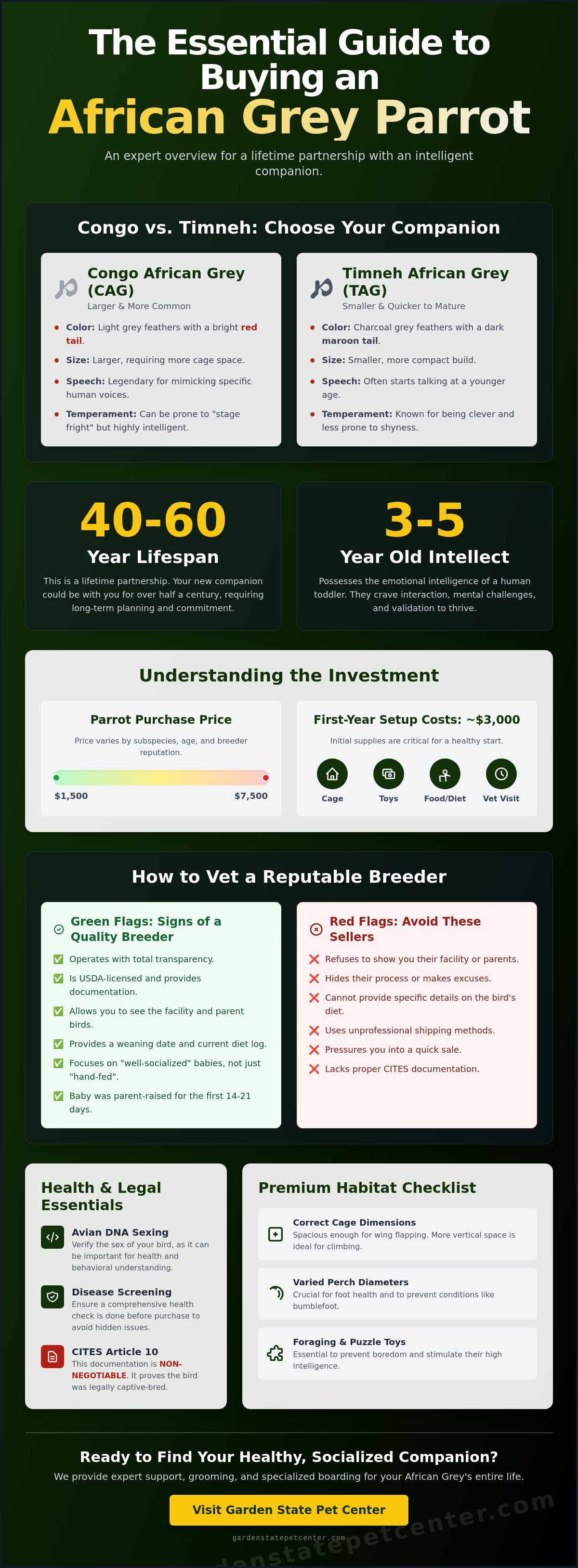
This expert guide will show you how to identify reputable, USDA-licensed breeders and evaluate the health of a potential bird. We'll break down the $6,500 to $7,500 price range, explain why CITES Article 10 documentation is non-negotiable, and help you choose between the Congo and Timneh subspecies. You'll walk away with a complete understanding of the $3,000 first-year setup costs and the supplies needed to welcome your new family member home. Discover how to find a socialized, healthy companion that will thrive in your care for decades to come.
Key Takeaways
- Differentiate between the larger Congo and the smaller Timneh subspecies to find the perfect match for your home environment and lifestyle.
- Identify critical red flags when searching for an african grey parrot for sale and learn why well-socialized babies are superior to those that are merely hand-fed.
- Ensure your bird's long-term wellness by verifying health through Avian DNA Sexing and comprehensive disease screening before completing your purchase.
- Prepare a premium habitat with the correct cage dimensions and varied perch diameters to prevent common health complications like bumblefoot.
- Plan for a lifetime of success by utilizing expert bird grooming and specialized boarding services tailored for intelligent, socialized parrots.
Table of Contents
Understanding African Grey Parrot Species for Sale
Choosing to bring an African Grey into your home is a decision that reshapes your daily life for decades. These "Old World" parrots hail from the dense rainforests of Central and Western Africa, where they live in complex, highly social flocks. When you begin your search for an african grey parrot for sale, you aren't just looking for a pet; you're looking for a highly sentient being with cognitive abilities that rival some primates. Understanding the African Grey Parrot requires recognizing their deep emotional sensitivity and their need for a stable, engaging environment.
While the market price of these birds can vary based on subspecies and age, a bird's ultimate temperament is rarely dictated by its price tag. Instead, early socialization and the environment provided by the breeder play the most significant roles. A well-adjusted bird is the result of careful "hand-raising" that goes beyond just feeding, including exposure to different people, sounds, and experiences during their formative weeks.
To better understand the financial and emotional reality of this journey, watch this helpful video:
Congo vs. Timneh: Which is Right for You?
The Congo African Grey (CAG) is the larger and more common of the two subspecies. They are famous for their light grey feathers and striking, bright red tails. Because of their size, they require larger bird cages and more vertical space to move. The Timneh African Grey (TAG) is smaller, charcoal grey, and features a darker maroon tail. Timnehs are often praised for maturing faster and being less prone to the "stage fright" that sometimes affects the larger Congo variant.
There is a common myth that African Greys are "one-person birds," but this is often a result of poor socialization rather than biology. If you introduce your bird to all family members early on, they can become social companions for the entire household. While Congos are legendary for mimicking specific human voices, Timnehs are known for their cleverness and often start talking at a younger age.
The Reality of the 50-Year Commitment
An African Grey possesses the emotional intelligence of a human toddler, roughly equivalent to a three to five year old child. This means they don't just want food and water; they crave interaction, validation, and mental challenges. Providing a variety of foraging toys is essential to prevent boredom and the behavioral issues that come with it. Many owners find that mastering Cockatiel Bird Care provides a basic foundation for avian husbandry, but an African Grey represents a much higher level of intellectual demand. Finding an african grey parrot for sale is the start of a 40 to 60 year relationship that requires your time, patience, and a commitment to lifelong learning.
How to Vet a Reputable African Grey Breeder
Finding an african grey parrot for sale online is simple, but finding a healthy, well-adjusted bird requires a critical eye and a bit of detective work. Reputable breeders operate with total transparency. If a seller refuses to show you their facility or makes excuses about why you cannot see the parent birds, walk away immediately. These birds are highly sensitive to their early environment. A breeder who hides their process is likely cutting corners on hygiene or socialization, which leads to health and behavioral issues later.
Shipping also requires specific professional protocols. Trusted breeders use specialized, ventilated carriers and climate-controlled airline services to minimize stress and ensure safety. Always demand a weaning date and a current diet log. If you are looking for an african grey parrot for sale from a distance, these documents are your best proof of quality care. A breeder who cannot tell you exactly what the bird ate for breakfast yesterday is not providing the expert attention these parrots require.
Essential Questions to Ask Before Buying
Ask if the baby was parent-raised for the first 14 to 21 days. This initial period with the parents provides vital gut flora and immune support that formula alone cannot replicate. Inquire about the specific Premium Pet Food they are currently eating to ensure a smooth transition once they arrive at your home. A knowledgeable breeder should also confirm the bird has been exposed to normal household noises, like vacuums or televisions, and has met various people to build its confidence.
The Importance of Hand-Feeding and Weaning
Never buy an unweaned African Grey. Some sellers try to save time by selling "hand-feeding" babies to inexperienced owners, but the risks are extreme. Without professional training, you risk causing fatal crop burns or aspiration pneumonia. A reputable source will only release a bird once it is fully weaned onto a solid, holistic diet. For additional expert advice on diet and housing, consult resources that prioritize long-term avian wellness. Ensuring your bird is fully weaned is the first step in a successful 50-year partnership. If you are ready to start your journey, you can shop for the right starter supplies to prepare your home for a new companion.
Verifying Health: DNA Sexing and Disease Screening
Finding an african grey parrot for sale is only the beginning of your journey. To ensure your new companion is truly healthy, you must look beyond the surface. These birds are masters at hiding illness, a survival instinct from the wild. Unlike many other pets, African Greys are monomorphic, meaning males and females look identical to the naked eye. Relying on a breeder's "best guess" isn't enough; you need scientific proof to manage their long-term wellness effectively.
The American Federation of Aviculture emphasizes the importance of disease screening to protect both your new bird and any existing flock members. Every bird should be screened for the "Big Four" avian diseases: Psittacine Beak and Feather Disease (PBFD), Psittacosis, Polyomavirus, and PDD. These conditions can be fatal and often show no symptoms until they've reached an advanced stage. A reputable seller will provide documentation of these tests or allow you to have them performed by a certified avian veterinarian before the sale is finalized. It's a proactive step that distinguishes a trusted breeder from a casual seller.
Schedule a "New Bird Exam" within 48 to 72 hours of bringing your parrot home. This visit isn't just a formality. It's a vital opportunity to establish a baseline for your bird's health and to ensure no hidden issues were missed during the initial screening process. Your vet will check their weight, respiratory health, and overall condition to give you peace of mind.
Why Gender Identification Matters
Knowing the sex of your bird is vital for long-term health management. Males and females often display different hormonal behaviors as they reach maturity, which can impact how you interact with them. For females, the risk of egg-binding is a serious concern. This life-threatening condition occurs when a bird cannot pass an egg, often due to nutritional deficiencies or lack of calcium. Understanding your bird's gender allows you to tailor their diet and environment to prevent such crises. For a deeper look at this process, read our guide on Avian DNA Sexing.
Physical Signs of a Healthy African Grey
While lab tests are essential, you should also perform a visual check when looking for an african grey parrot for sale. A healthy African Grey should have clear, bright eyes and clean, dry nares. Their feathers should be smooth and well-groomed, not frayed or dull. Pay close attention to the bird's posture. If a bird appears "fluffed up" for extended periods or sits at the bottom of the cage, it's a major warning sign of illness. A healthy juvenile will be alert, curious, and show a "brightness" in their personality. They should react to their surroundings with interest rather than lethargy.
Preparing for Your African Grey: Diet and Housing
Once you find a healthy african grey parrot for sale, your focus must shift to creating a sanctuary that supports their complex needs. A cage is more than just a place to sleep; it is your bird's primary environment. Choose an enclosure that allows for full wing extension and significant vertical movement. These parrots are active climbers. A cramped space leads to muscle atrophy and psychological distress. You should also provide perches of varied diameters and textures. Using only uniform dowel perches often leads to bumblefoot, a painful inflammatory condition that can become chronic without intervention. Natural wood branches are the best choice for foot health.
Safety within your home is equally vital. African Greys have highly sensitive respiratory systems. Common household items like Teflon-coated pans (PTFE), scented candles, and certain indoor plants can be fatal within minutes. Before your bird arrives, audit your kitchen and living spaces to remove these silent killers. Creating a bird-safe zone ensures your new companion starts their journey in a secure, non-toxic environment.
The Holistic Nutrition Foundation
Holistic nutrition is the cornerstone of your bird's long-term vitality. A seed-only diet is a recipe for disaster, often leading to fatty liver disease and severe vitamin deficiencies. Instead, build a diet around high-quality pellets and fresh foods. We recommend exploring Premium Pet Food options that provide balanced vitamins and minerals. Introduce "chop" daily, which is a finely minced mix of fresh vegetables, sprouts, and raw toppers. This variety keeps their digestive system healthy and provides essential antioxidants that pellets alone might lack.
Mental Enrichment and Foraging
An African Grey's mind is always working. Without proper stimulation, they may develop destructive habits like feather plucking. You need a rotating selection of Pet Toys and Accessories to keep them engaged. Provide soft wood toys for chewing and complex acrylic puzzles to challenge their logic. Foraging is a natural behavior; hide treats inside toys to encourage them to work for their food. Don't forget that mental health is tied to rest. These birds require 10 to 12 hours of uninterrupted, dark sleep every night to regulate their hormones and maintain a stable temperament. Explore our curated collection of avian supplies to find everything you need for a successful setup.
Expert Support for Your African Grey Journey
Bringing your bird home is a significant milestone, but the true success of your partnership depends on the support system you build around your new companion. Your search for an african grey parrot for sale was the first step in a relationship that will last for decades. We don't just see ourselves as a provider of supplies; we are your dedicated partner in your bird's lifelong care. From nutritional adjustments as they age to social support during your vacations, having access to specialized expertise ensures your parrot remains a vibrant member of your family.
Consulting with a certified pet nutritionist can be a game-changer for avian health. As your African Grey matures, their metabolic needs change. A professional can help you fine-tune their "chop" recipes and pellet ratios to prevent obesity and hormonal triggers. This proactive approach to wellness is what separates a thriving bird from one that's merely surviving.
Maintaining Health Through Professional Grooming
Routine maintenance is essential for your bird's comfort and safety. Overgrown nails can get caught in toys or fabric, leading to broken legs or torn wings. Beak maintenance is equally critical, as an improperly worn beak can make eating difficult. These tasks require a steady, experienced hand to avoid causing stress or injury. Professional Bird Grooming ensures these procedures are handled with precision in a controlled environment. While the decision to clip wings is a personal one based on your home's safety, our experts can help you weigh the pros and cons. For more details, check out The Essential Guide to Professional Bird Grooming.
Safe Boarding for Your African Grey
Traveling can be stressful for parrot owners, as standard boarding facilities are often too loud or ill-equipped for exotic needs. African Greys are highly social and sensitive to changes in their routine. Specialized Pet Boarding provides a quiet, bird-focused atmosphere where your companion receives the mental stimulation they crave. This keeps them socialized and prevents the depression that can occur when they're left alone. If you're still looking for an african grey parrot for sale, knowing you have a trusted facility for future travel provides immense peace of mind. Discover our Expert Bird Care Services to see how we support your journey every step of the way.
Start Your Lifelong Adventure with Confidence
Bringing an African Grey into your life is a profound decision that requires more than just finding an african grey parrot for sale. It's about committing to the health, intelligence, and emotional well-being of a creature that will be by your side for decades. By prioritizing reputable breeders, insisting on DNA sexing, and creating a habitat focused on holistic nutrition, you're setting the stage for a successful and rewarding partnership. Remember that the initial purchase is only the first chapter of a 50 year story.
At Garden State Pet Center, we've been a trusted resource for avian enthusiasts since 1990. With over 30 years of specialized experience and a Certified Pet Nutritionist on our staff, we provide the expert guidance you need to navigate every stage of bird ownership. Whether you need specialized boarding or top quality toys, we offer nationwide shipping on all our premium supplies to ensure your companion has the best care possible. Shop Premium Bird Supplies and Consult with Our Avian Experts today. We're excited to help you and your new companion thrive together.
Frequently Asked Questions
How much does an African Grey parrot cost in 2026?
As of May 2026, the price for an african grey parrot for sale typically ranges from $6,500 to $7,500. This wide range depends on the bird's age, subspecies, and how well they've been socialized by the breeder. Beyond the purchase price, you should budget for initial setup costs between $1,500 and $3,000, with monthly expenses for food and toys averaging $150 to $350.
Can African Grey parrots talk, and when do they start?
Yes, African Greys are world-class mimics and often begin talking between six months and one year of age. While every bird is an individual, many start by mimicking common household sounds before moving on to human speech. Their ability to understand the context of words is what truly sets them apart from other parrots, making them incredible intellectual companions for an engaged owner.
What is the difference between a Congo and a Timneh African Grey?
The Congo African Grey is the larger variant, featuring a light grey body and a signature bright red tail. In contrast, the Timneh African Grey is smaller and darker with a maroon tail. While both are highly intelligent, many owners find that Timnehs are slightly more adaptable and less prone to the anxious behaviors sometimes seen in the larger Congo subspecies during environmental changes.
Is an African Grey a good pet for a first-time bird owner?
These parrots are rarely suggested for first-time owners because they require a sophisticated level of care and mental stimulation. Their intelligence is comparable to a five year old child, which can be overwhelming for someone new to avian husbandry. If you're looking for an african grey parrot for sale as your first bird, we recommend spending time with experienced owners to understand the daily time commitment.
How long do African Grey parrots live in captivity?
African Grey parrots typically live between 40 and 60 years in a captive environment when provided with a premium diet and regular care. Some healthy individuals have even been known to exceed the 60 year mark. This longevity makes them a multi-generational commitment, so it's vital to have a long-term plan for their future care and social needs before bringing one into your home.
What is the best diet for an African Grey parrot?
The best diet consists of a high-quality formulated pellet as the base, supplemented by a variety of fresh vegetables, sprouts, and grains. Avoid seed-only diets, as they lack essential vitamins and lead to fatty liver disease. Incorporating raw toppers and healthy "chop" provides the antioxidants and minerals your bird needs to maintain vibrant feathers and a strong immune system over their long life.
Do African Grey parrots need a lot of attention?
Yes, these birds require a significant amount of daily social interaction and mental engagement to remain healthy. Without at least two to four hours of out-of-cage time and direct engagement, they can develop behavioral issues like feather plucking. They thrive on being part of the family dynamic and need plenty of foraging toys to keep their active, curious minds busy throughout the day.
How big of a cage does an African Grey need?
You should provide a cage that is at least 36 inches wide, 24 inches deep, and 48 inches tall. However, these are minimums, and a larger enclosure is always preferable to allow for full wing extension and multiple perches. Ensure the bar spacing is between 3/4 inch and 1 inch to keep your bird safe while providing enough room for vertical movement and climbing.