

Choosing Your First Reptile: The Ultimate 2026 Buying Guide for New Owners


Did you know that Gen Z now accounts for 33% of all reptile owners, marking a massive 27% increase since late 2023 according to APPA Research? It's exciting to join this growing community, yet many new owners worry that a simple mistake in lighting or heating might harm their animal. You want to ensure your first reptile doesn't just survive, but truly thrives in a habitat that mirrors its natural home.
We understand that the technical side of herpetology can feel overwhelming. This guide is designed to turn that uncertainty into expertise, helping you master the essentials of care so you can choose your first species with total confidence. You'll gain a clear understanding of the professional grade equipment and premium supplies required for a healthy pet.
We've compiled everything you need to succeed in 2026, from a detailed shopping list to a breakdown of essential costs like the $164.99 Leopard Gecko habitat kits. We also preview the latest permit regulations in states like Florida and Louisiana to ensure you're a responsible, trusted owner from the very first day.
Key Takeaways
- Learn why a reptile is a unique, low-allergen companion and how to prepare for the rewarding 20-year commitment some species require.
- Discover how to master the three pillars of habitat success by creating precise thermal gradients that allow your pet to regulate its body temperature.
- Identify the top beginner-friendly species for 2026 that match your daily schedule; find out if a diurnal or nocturnal pet fits your lifestyle.
- Understand the critical safety decisions behind choosing substrates to prevent impaction while exploring the benefits of modern bioactive enclosures.
- Shop with confidence by accessing a curated list of premium supplies from trusted brands like Zoo Med and Zilla to ensure your new habitat is built for long-term health.
Understanding Reptiles as Pets: Is a Cold-Blooded Companion Right for You?
Choosing a reptile as a companion moves you beyond the traditional world of fur and feathers. These animals offer a premium, low-allergen alternative for families who struggle with pet dander, making them accessible companions for almost any household. Unlike dogs or cats, these pets don't demand constant social interaction or emotional validation. Instead, they provide a fascinating window into prehistoric behaviors and specialized biology. You'll find that their unique traits, from the way they track scents to their intricate shedding cycles, offer a meditative and rewarding experience for any dedicated hobbyist.
To better understand which species might suit your home, watch this helpful video:
Successful Herpetoculture relies on understanding that these animals have distinct environmental needs rather than social ones. While a dog might live 12 years, many popular beginner species like the Ball Python or Leopard Gecko can reach 20 or even 30 years with expert care. This longevity requires a stable, long-term commitment to habitat maintenance. As your "Knowledgeable Local Guardian," we want to ensure you're prepared for a partnership that lasts decades. It's about providing a consistent, high-quality environment where your pet can thrive for its entire life cycle.
The Benefits of Reptile Ownership
- Minimal Space: Most beginner species live comfortably in a 20 to 40 gallon terrarium, making them perfect for apartment dwellers.
- Predictable Nature: These pets are quiet and don't suffer from separation anxiety, fitting easily into a busy professional's schedule.
- Educational Value: Families can observe natural history in real time, learning about ecosystem balance and specialized adaptations.
Common Misconceptions About Reptile Care
Don't fall for the "low maintenance" myth. While they don't need walks, they require clinical precision. You must monitor heat gradients and UV levels daily to ensure they can digest food properly. Neglect is never an option for a healthy animal. Additionally, many newcomers fear aggression, yet most captive-bred species are remarkably docile when handled with patience. Starting your journey at a trusted reptile store ensures you receive an animal that has been properly socialized and screened for health issues from day one.
The Three Pillars of Habitat Success: Heat, Light, and Humidity
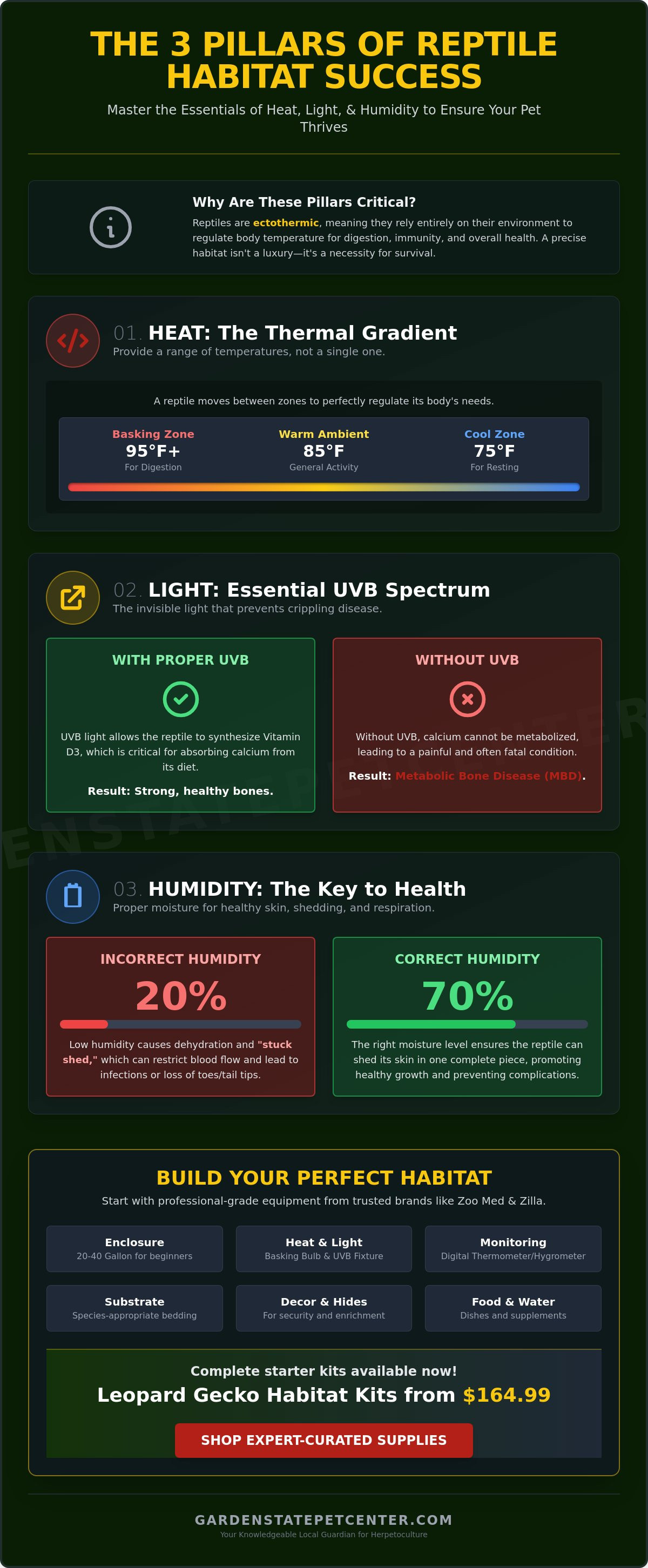
Every reptile relies on its environment to survive because they are ectothermic. This means they cannot produce internal body heat like humans do. Instead, they move between different temperature zones to regulate their metabolism, digestion, and immune system. If their enclosure is the same temperature throughout, the animal's health will eventually fail. For those seeking expert guidance on selecting a pet reptile, understanding these biological requirements is the first step toward responsible ownership.
Creating a "thermal gradient" is the secret to success. You must set up a distinct hot zone for basking and a cooler area for resting. This allows your pet to choose exactly what it needs at any given moment. Along with heat, you must provide high-quality UVB lighting. This invisible light is essential for calcium metabolism. Without it, many species develop metabolic bone disease, a painful and preventable condition. Humidity is the final pillar. It keeps their respiratory systems clear and ensures they can shed their skin in one healthy piece. Low humidity often leads to "stuck shed," which can restrict blood flow to toes and tails.
Heating and Lighting Essentials
Choose your equipment based on your pet's specific needs. Basking bulbs provide both light and heat, making them perfect for daytime use. If your species requires nighttime warmth without light, ceramic heat emitters are a superior choice. For desert-dwelling species like Bearded Dragons, we recommend the Fluker’s Sun Glow Coil Bulb 10.0 UVB to mimic intense natural sunlight. Always house these high-output bulbs in a Deep Dome Clamp Lamp. These domes are designed to handle high temperatures and focus the light exactly where it's needed most. Discover our full range of specialized reptile habitats and monitoring tools to get started correctly.
Monitoring the Environment
Precision is everything in herpetology. You cannot accurately judge temperature by touching the glass or glancing at a cheap analog sticker. Guessing leads to stress and illness. Invest in a Digital Combo Thermometer Humidity Gauge that features independent remote probes. Place one probe in the basking spot and the other in the cool zone. This setup gives you real-time data from both ends of the enclosure simultaneously. It's the only way to ensure your habitat remains within the safe parameters required for a thriving pet. By maintaining these three pillars, you transform a simple glass box into a professional-grade sanctuary.
Choosing Your Species: Top Beginner Reptiles for 2026
Selecting the right reptile involves more than picking a cool-looking animal. You must choose a species that aligns with your daily rhythm and level of commitment. If you're a night owl, a nocturnal species fits your lifestyle perfectly. If you want to see your pet active while the sun is up, look for a diurnal species. We recommend starting with animals that have high tolerance levels for the occasional environmental fluctuation. For more in-depth profiles, industry experts at Reptiles Magazine offer a great list of Good Beginner Reptiles that we frequently reference when helping new owners in our shop.
While we specialize in herpetology, we also provide premium supplies and expert care for exotic birds and small animals at our center. Whether you choose a lizard or a parakeet, the goal remains the same: a healthy, thriving pet that brings joy to your home for years to come.
Lizards: Geckos and Bearded Dragons
Leopard Geckos are the gold standard for first-time keepers. They stay relatively small, have a calm temperament, and are generally very hardy. In early 2026, prices for these geckos typically range between $26.24 and $34.99. To eliminate the guesswork of buying separate components, we suggest the Zoo Med 20 Gallon ReptiHabitat Leopard Gecko Kit. This all-in-one solution provides a solid foundation for your animal's health. If you prefer an animal that is active during the day, Bearded Dragons are a popular choice, though they require more space and specialized lighting. These "beardies" often retail between $59.99 and $100.00 depending on their morph. For those who want a tropical, vertical environment, Crested Geckos provide a stunning display and thrive in humid enclosures filled with foliage.
Turtles and Tortoises
These animals have very distinct dietary needs that you must respect for long-term health. Land-dwelling species like Russian Tortoises require high-fiber vegetation, while aquatic turtles need a protein-heavy diet to support their active swimming. For land dwellers, Zilla Fortified Land Turtle & Tortoise Food offers a reliable way to ensure they get the vitamins they need for shell integrity. If you're setting up an aquarium for an aquatic turtle, ReptoMin Floating Food Sticks are a breeder-favorite that won't cloud your water like many generic alternatives. Success with these species often comes down to consistency in their feeding schedule and habitat cleanliness.
Building the Habitat: Substrates, Decor, and Feeding Tools
Every reptile needs a foundation that supports its natural behaviors while keeping it safe from health risks. One of the most common mistakes new owners make is choosing a substrate based solely on looks. If an animal accidentally swallows loose bedding while hunting, it can lead to impaction. This is a dangerous blockage in the digestive tract that often requires medical intervention. Choosing the right material isn't just about aesthetics; it's a critical safety decision that affects your pet's long-term health.
Beyond the floor of the enclosure, you must consider the psychological well-being of your pet. Hides are not optional decor. They are essential tools for reducing stress and anxiety. Without a dark, secure place to retreat, your pet will remain in a state of high alert. This constant stress suppresses their immune system and often leads to them refusing food. A well-designed habitat provides multiple hiding spots at different temperature points so the animal feels safe regardless of where it is in the thermal gradient.
You'll also need to decide between a sterile environment and a bioactive setup. Sterile environments are easier to deep-clean and monitor, which is often helpful for absolute beginners. Bioactive habitats, however, use live plants and "clean-up crews" like isopods to create a self-sustaining ecosystem. These setups offer a more naturalistic experience for the animal and a beautiful, living display for your home. Both methods are valid, but they require different supplies to maintain correctly.
Substrate and Bedding Options
For desert-dwelling species like Bearded Dragons, use Excavator Clay Burrowing Substrate. It allows them to mimic natural tunnels that hold their shape, providing enrichment through digging. In tropical enclosures, New Zealand Sphagnum Moss is the gold standard for maintaining high humidity levels without mold growth. If you're building a bioactive vivarium, start with Hydroballs as a base layer. These clay stones create an underground water table that prevents the soil from becoming stagnant, ensuring your plants and beneficial insects stay healthy.
Enclosure Decor and Feeding
Java Wood Reptile Branches add natural aesthetics and provide durable, textured climbing surfaces for arboreal species. To complete a naturalistic look, integrate Komodo Dried Oak Leaf Litter. This leaf litter provides organic nutrients to the soil and offers hiding spots for the "clean-up crew" in bioactive tanks. When it's time to eat, safety and hygiene are paramount. Angled Stainless Steel Feeding Tongs are essential tools. They keep your fingers away from the "strike zone" and prevent your hands from transferring oils or bacteria to your pet's food. Shop our full selection of professional habitat supplies to build a sanctuary your new pet will love.
Shop Expert-Curated Reptile Supplies at Garden State Pet Center
Welcome to Garden State Pet Center. We've built our reputation as a trusted leader in the specialty pet community by focusing on the highly specific needs of exotic animals. When you're searching for your first reptile, you deserve more than a generic aisle of supplies. You need products vetted by experts who actually understand the biological demands of these unique creatures. We carry a deep inventory of premium brands like Zoo Med, Zilla, and Fluker’s to ensure your setup is professional-grade from the very first day. Our goal is to act as your knowledgeable local guardian, providing the same high-quality care and advice we'd give to our own families.
If you're not local to us, don't worry. We offer convenient nationwide shipping for all your habitat essentials. This means you can access our curated selection of 280+ products regardless of where you live in the country. Beyond just selling supplies, we're here for the long-term well-being of your pet. If you're planning a trip or need a safe place for your pet to stay during a home renovation, take advantage of our expert pet boarding services. We provide a safe, monitored environment for exotic companions, ensuring they receive their exact light and heat requirements while you're away.
Standout Products for Your New Reptile
Selecting the right gear is much easier when you start with high-performance equipment that has a proven track record. The Zoo Med Small Naturalistic Terrarium is a top choice for new owners. Its front-opening glass door allows for easy maintenance and significantly reduces the stress on your animal during handling. For nutrition, we recommend Zoo Med Crested Gecko Food. It's an animal nutritionist-formulated diet that supports all life stages with balanced vitamins and minerals. Don't forget the importance of "gut-loading" your live feeders before they reach your pet. Using Fluker’s High-Calcium Dubia Roach Diet ensures that the insects you feed are packed with the calcium necessary for strong bone health and preventing metabolic issues.
Start Your Reptile Journey Today
Every product in our store is chosen with a strict commitment to animal welfare and clinical precision. We don't just sell items; we provide the tools you need to become a confident, successful herpetology hobbyist. Whether you're looking for a specific T5 UVB bulb or a new piece of textured Java wood, our team is ready to guide your selection. Discover why thousands of owners rely on us for their specialty pet needs and expert-guided shopping. Explore our full Reptile Collection for habitat and nutrition essentials and give your new pet the premium start it deserves.
Begin Your Herpetology Journey with Confidence
You now have the blueprint for success. By focusing on the three pillars of environmental control and selecting a species that aligns with your daily rhythm, you've moved past the uncertainty many new owners face. Success in this hobby comes down to replicating nature with clinical precision. Your commitment to these details ensures a healthy, thriving life for your new companion.
Since 1990, Garden State Pet Center has been a trusted leader in specialized animal care. We offer an expert-curated selection of over 280 products to provide everything your reptile requires. If you need to travel, our professional boarding services for exotic pets offer the peace of mind you deserve. We're ready to partner with you to ensure your pet enjoys the highest quality of life.
Shop Premium Reptile Food, Habitats, and Lighting
Welcome to a community of passionate keepers. We're excited to help you start this journey and support your pet's well-being for years to come.
Frequently Asked Questions
What is the best reptile for a beginner?
Leopard Geckos and Corn Snakes are the most recommended species for those starting their journey. These animals are famous for their calm temperaments and don't require the massive, complex enclosures that larger monitors or pythons demand. Since they tolerate minor environmental shifts better than sensitive tropical species, they provide a forgiving learning curve for anyone new to the hobby.
Do all reptiles need UVB lighting to survive?
No, not every species requires UVB for basic survival, but almost all of them benefit from it for long term health. Diurnal lizards like Bearded Dragons must have high output UVB to synthesize Vitamin D3 and process calcium. While nocturnal geckos or many snakes can survive without it, providing low level lighting often improves their immune system and natural activity levels.
How much does it cost to set up a reptile habitat?
Expect to invest between $94.99 for a basic 10-gallon kit and $249.99 for a comprehensive juvenile bearded dragon habitat. These 2026 verified prices cover the initial enclosure and basic heating elements. You'll also need to account for the cost of the animal itself and ongoing monthly expenses for premium food to ensure your reptile stays healthy and active.
What do pet reptiles eat?
Their diet depends on the species and can include live insects, fresh vegetation, or frozen-thawed rodents. Insectivores thrive on a variety of crickets and dubia roaches, while herbivores require a daily rotation of calcium-rich leafy greens. We offer a selection of over 280 products to help you find the exact nutritional balance required for your specific pet's life stage.
How often do I need to clean a reptile terrarium?
You should perform spot cleaning every single day to remove waste and uneaten food from the enclosure. This simple habit prevents harmful bacteria from building up and keeps the environment smelling fresh. Once every 30 days, you'll need to conduct a deep clean by replacing the substrate and disinfecting all decor to maintain a clinical level of hygiene for your pet.
Can I keep two reptiles in the same enclosure?
Keeping multiple animals in one enclosure is generally discouraged because most species are strictly solitary in the wild. Cohabitation often triggers territorial aggression and intense competition for the basking spot, which leads to chronic stress and suppressed immune systems. It's much safer to provide each reptile with its own dedicated sanctuary to avoid injuries and ensure they can thrive.
How do I know if my reptile is sick?
Common signs of illness include sudden lethargy, a refusal to eat for multiple feedings, or visible changes in their breathing. Watch for any unusual discharge from the nose or mouth, which can indicate a respiratory infection. If your pet's behavior shifts or they struggle with a difficult shed, consult an expert immediately to address the issue before it becomes a serious health crisis.