

Avian DNA Sexing: The Complete Guide to Bird Gender and Health Testing


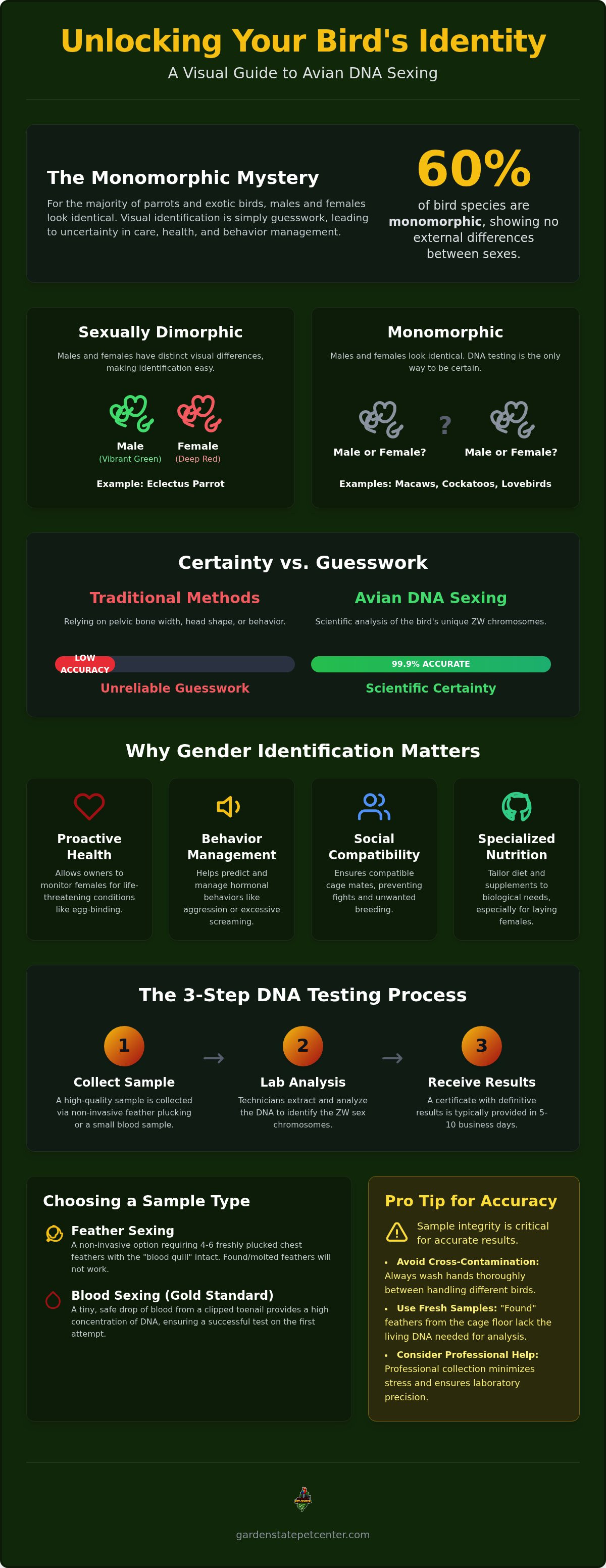
Did you know that approximately 60% of bird species are monomorphic? This means that for the majority of parrots and exotic birds, there's no physical way to distinguish a male from a female just by looking at them. Relying on behavioral cues or outdated physical exams often leads to years of uncertainty and missed health milestones. This is why avian DNA sexing has become the gold standard for responsible owners. It replaces guesswork with molecular precision, allowing you to move forward with total confidence in your bird's identity.
It's completely natural to feel a bit of anxiety about the testing process. You might worry about the stress of sample collection or feel uneasy about the threat of hidden viruses like PBFD. We're here to help you navigate these concerns with professional expertise and care. In this guide, you'll discover the most accurate methods for determining your bird’s gender and how DNA testing can safeguard their long-term health and well-being. We'll explore the safety of professional collection, the vital role of disease screening, and how a clear bill of health helps you meet your pet's specific social and nutritional needs.
Key Takeaways
- Learn why visual identification is unreliable for monomorphic species and how molecular science provides definitive certainty for your bird's gender.
- Compare the benefits of different sample types to select the most reliable avian DNA sexing approach for your specific bird species.
- Identify "silent carriers" of common viruses by combining gender testing with comprehensive disease screening to protect your entire flock.
- Discover why professional sample collection is the safest way to ensure laboratory precision while minimizing stress for your feathered companion.
- Use your bird's confirmed biological profile to create a more effective, specialized plan for their social needs and nutritional requirements.
Understanding Avian DNA Sexing: Why Gender Identification Matters
Avian DNA sexing is a sophisticated scientific process that uses molecular biology to identify a bird's gender by analyzing its unique chromosomal makeup. Unlike mammals, where males carry XY chromosomes and females carry XX, birds operate on the ZW sex-determination system. In this genetic framework, the female is the heterogametic sex (ZW), while the male is homogametic (ZZ). Because these differences exist at the cellular level, DNA testing provides a definitive answer where visual observation often fails. It's the most reliable way to understand your bird's biology without invasive procedures.
Understanding your bird's gender is about much more than picking a name. It's a critical component of proactive health management. For example, knowing a bird is female allows owners to watch for signs of egg-binding. This is a life-threatening condition where an egg becomes stuck in the reproductive tract. Without knowing the bird's sex, symptoms like lethargy or abdominal swelling might be misdiagnosed until it's too late. Accurate identification helps you stay ahead of potential crises.
Monomorphic vs. Dimorphic Species
In the world of exotic birds, some species are sexually dimorphic, meaning you can tell them apart by their feathers. A classic example is the Eclectus Parrot, where males are vibrant green and females are deep red. However, many of our favorite companions are monomorphic species where external physical characteristics do not reveal biological sex. Popular birds like Cockatoos, Macaws, Sun Conures, and Lovebirds look identical regardless of gender. For these species, avian DNA sexing is the only way to achieve 100% certainty. Relying on the width of the pelvic bones or the shape of the head is simply guesswork.
Behavioral and Social Implications
Gender plays a massive role in how birds interact with their world and their owners. Hormonal shifts can trigger seasonal aggression, territoriality, or excessive screaming. If you don't know your bird's sex, you can't accurately predict or manage these behaviors through environmental enrichment. Choosing compatible cage mates is also vital. Pairing two males might lead to intense fighting over territory, while an accidental male-female pair can result in unwanted breeding and the physical toll of egg production. Accurate testing lets you tailor their diet and habitat to their specific biological needs, ensuring a more peaceful home environment.
The DNA Testing Process: Sample Types and Accuracy
Modern laboratory techniques have made identifying your bird's gender simpler and more reliable than ever before. Through avian DNA sexing, technicians extract genetic material from blood, freshly plucked feathers, or even hatched eggshells. This molecular approach offers an accuracy rate exceeding 99.9%, providing the certainty you need for breeding or long-term health planning. Once the lab receives your sample, the process moves quickly. Most results are processed within 5 to 10 business days, though express services can sometimes provide answers in as little as 24 to 72 hours. This timeline ensures you aren't left waiting long to start tailoring your bird's care plan.
Feather vs. Blood Samples
Choosing the right sample type depends on your bird's temperament and your comfort level. Feather sexing is a popular, non-invasive choice. It requires plucking 4 to 6 medium sized feathers from the bird's chest. You must ensure the "blood quill," which is the living base of the feather, is intact. This is where the DNA resides. Blood sexing is often considered the gold standard for reliability. By taking a tiny drop of blood from a slightly clipped toenail, you provide a high concentration of DNA that rarely fails to produce a result. While blood collection might seem more stressful, it often ensures a successful test on the first attempt without the need for a re-test.
Ensuring Sample Integrity
Accuracy depends entirely on the quality of the sample you provide. Cross-contamination is a significant risk, especially in homes with multiple birds. Always wash your hands thoroughly between handling different birds to avoid mixing genetic material. It's also vital to understand that "found" feathers from the cage floor are useless for testing. These molted feathers lack the living DNA needed for analysis. For those who want to ensure the highest standards of safety and precision, our team provides professional sample collection during grooming appointments to minimize your bird's stress and ensure a clean sample.
Once collected, samples must be handled with care. Place feathers or blood cards in clean paper envelopes rather than plastic bags. Plastic can trap moisture, leading to fungal growth that destroys the DNA. Label every envelope clearly with the bird's name and species before moving to the next bird. Following these strict protocols ensures your laboratory partner can deliver a clear, undisputed result that helps you understand your pet's unique needs.
DNA Testing vs. Traditional Sexing Methods
Choosing the right identification method is a vital step in responsible bird ownership. Historically, owners had to choose between a risky surgery or a game of wait-and-see. Today, avian DNA sexing has become the gold standard because it offers a perfect balance of safety, accuracy, and affordability. Unlike older methods, molecular testing doesn't require a veterinarian to guess based on physical traits that can change with age or diet. It provides a definitive biological answer that stays with your bird for life.
The Risks of Surgical Sexing
Surgical sexing was once the only way to be 100% sure of a bird's gender. This invasive procedure involves endoscopy, where a veterinarian makes a small incision in the bird's side to physically view the ovaries or testes. Because this requires general anesthesia, it poses a significant threat to small exotic species. Small birds have high metabolic rates and delicate respiratory systems, making anesthesia a high-risk event. Recovery times can be long, and the risk of infection at the incision site is always present. Most modern avian experts have moved away from this method in favor of the non-invasive nature of DNA analysis.
The Fallacy of Visual and Behavioral Guessing
Many hobbyists still rely on anecdotal evidence like pelvic bone width, head shape, or even the intensity of feather colors. These visual cues are often misleading. A bird's pelvic structure can vary based on individual anatomy rather than sex. Behavioral traits are equally confusing. We've seen many instances where a "male" bird displays nesting behaviors or becomes unexpectedly territorial, only to surprise their owner by laying an egg years later. This "surprise egg" scenario can lead to health crises like calcium depletion if the owner hasn't prepared the bird's diet for female reproductive needs. Relying on behavioral guessing is a gamble that often fails when your bird's health is on the line.
Establishing a permanent, certified record for your bird's medical file is a key benefit of scientific testing. Having a laboratory certificate ensures that any future caregiver or veterinarian has immediate access to accurate biological data. It removes the guesswork from emergency medical situations and helps you provide a more stable, informed environment for your feathered companion. This level of certainty allows you to focus on what matters most: building a strong bond with your pet based on their actual needs.
Protecting Your Flock: The Link Between Sexing and Disease Screening
Protecting your feathered family requires more than just a clean cage and premium food. When you request avian DNA sexing, you have a unique opportunity to screen for underlying health issues at the same time. Many serious avian viruses don't show external symptoms until the disease has progressed significantly. These "silent carriers" can inadvertently introduce pathogens into your home, putting your established birds at risk. By bundling sexing with a comprehensive disease panel, you create a robust health profile that ensures your new companion is as healthy as they look. It's a proactive step that moves beyond basic identification into true preventative medicine.
Common Avian Diseases Screened via DNA
Several high-priority diseases are easily detected through molecular testing. Psittacine Beak and Feather Disease (PBFD) is a primary concern for parrot owners. It spreads through feather dust and droppings, attacking the immune system and causing permanent feather loss or beak deformities. Avian Polyomavirus (APV) is another major threat, particularly for young birds, where it can cause organ failure and sudden death without warning. Finally, Chlamydiosis, also known as Psittacosis, is a zoonotic disease. This means it can pass from birds to humans, causing severe flu-like symptoms. Identifying these risks early protects both your flock and your family from unnecessary illness.
Quarantine and New Bird Protocols
Introducing a new bird to your home should always follow a strict 30 to 90 day quarantine period. This time allows you to observe their behavior and wait for laboratory clearance. Using DNA results to verify a bird is disease-free before they leave quarantine is the only way to guarantee the safety of your existing pets. This is especially important for birds that have been in national transit, where exposure to other animals in staging areas is much higher. If you're preparing to welcome a new feathered friend, schedule a professional screening to ensure a safe and healthy transition into your home.
Regular screening supports the overall well-being of the exotic bird community. When owners prioritize these tests, they help reduce the prevalence of these viruses in the pet population. It's a small investment that provides immense peace of mind. By the time your bird finishes their quarantine, you'll have a clean bill of health and a definitive gender record, allowing you to focus on socialization and bonding without the shadow of health anxiety.
Professional Avian Testing Services: Accuracy Meets Care
While DIY kits are marketed as a simple home solution, they often cause unnecessary stress for both the bird and the owner. Professional avian DNA sexing performed by experienced handlers ensures the process is quick, clinical, and compassionate. Experts understand avian anatomy and restraint techniques, which prevents accidental injury during the collection of blood or feathers. This level of care is essential for maintaining the bond of trust you've built with your pet. Relying on a professional partner means you aren't just getting a laboratory result; you're getting peace of mind that your bird was handled with the highest standards of safety.
The Advantage of Professional Collection
Many owners choose to schedule their testing alongside routine grooming appointments. This approach is highly efficient and reduces the number of stressful events for the bird. A professional can collect a blood sample during a standard nail trim or pluck feathers with a single, practiced motion that minimizes discomfort. DIY attempts often lead to "inconclusive" results because the sample was contaminated by human DNA or was insufficient for analysis. By relying on an expert, you ensure the laboratory receives a high-quality sample the first time, avoiding the trauma and cost of a re-test.
Holistic Care After the Test
Once you receive your results, you can begin the real work of specialized husbandry. Knowing your bird's gender allows you to consult with a certified pet nutritionist to create a diet tailored to their life stage and biological sex. For instance, a female bird may require specific calcium and mineral adjustments to support her reproductive health. You can then select the most appropriate premium bird food to support their unique metabolic needs.
Behavioral health is equally important to their long-term well-being. Gender often dictates how a bird interacts with their environment and their cage mates. Use your test results to choose specific bird toys and accessories that encourage natural behaviors while managing hormonal triggers. This holistic approach ensures your bird doesn't just have a label; they have a comprehensive care plan designed for their specific biology.
To prepare for your testing appointment, follow these simple steps:
- Schedule your visit during a time when your bird is typically calm and alert.
- Ensure your travel carrier is secure and lined with a comfortable, familiar perch.
- Bring any previous health records to help our team build a complete file.
- Keep the car environment quiet and temperature-controlled during transit.
- List any behavioral or dietary questions you'd like to discuss with our specialists.
Empower Your Bird's Future with Scientific Certainty
Understanding your bird's biological identity is the first step toward providing truly specialized care. We've explored how avian DNA sexing removes the guesswork from monomorphic species identification and why professional collection is the safest choice for your pet's well-being. By integrating gender results with comprehensive disease screening, you protect your entire flock from hidden health risks. This proactive approach ensures your bird's social and nutritional plans are built on facts rather than assumptions.
Since 1990, we've served as a trusted partner for breeders and pet owners, offering expert handling for all exotic bird species. Our team is ready to help you build a complete health profile that supports your bird's unique needs through every life stage. Take the next step in your pet's wellness journey and ensure they receive the high-end service they deserve. We take pride in helping you foster a safe, happy environment for your feathered family members.
Book a Professional Avian DNA Testing Appointment Today to gain total clarity on your bird's gender and health status. We look forward to welcoming you and your feathered companion into our community.
Frequently Asked Questions
Is avian DNA sexing painful for my bird?
Avian DNA sexing is a minimally invasive procedure that doesn't cause long-term pain. While your bird might experience a brief moment of discomfort during a toenail clip or feather plucking, the sensation is very short-lived. Professional handlers use specialized techniques to keep the bird calm and secure throughout the process. This expert approach ensures the sample is taken quickly, reducing the stress response and allowing your bird to return to normal activity immediately.
How long does it take to get DNA sexing results back?
Most laboratory results are available within 5 to 10 business days after the sample arrives at the facility. If you require a faster answer, some labs offer express processing that delivers results in as little as 24 to 72 hours. We always recommend confirming current turnaround times with your testing partner before scheduling. Once processed, you'll receive a formal certificate that serves as a permanent biological record for your bird's health file.
What is the most accurate method for bird sexing?
DNA testing using a blood sample is widely regarded as the most accurate method, often exceeding a 99.9% success rate. While feather samples are also highly reliable, blood provides a higher concentration of genetic material, which reduces the chance of an inconclusive result. This molecular approach is far superior to traditional physical exams or behavioral observations, which are frequently inaccurate for monomorphic species like Macaws or African Greys.
Can I use a shed feather for DNA testing?
You cannot use feathers found on the cage floor or molted feathers for testing. These samples lack the living cells found in the "blood quill" at the base of a freshly plucked feather. To ensure a successful test, you must pluck 4 to 6 medium sized feathers directly from the bird's chest or side. This ensures the laboratory has enough viable DNA to provide a definitive and accurate gender identification for your pet.
Why should I test for diseases at the same time as gender?
Screening for diseases like PBFD, Polyomavirus, and Psittacosis while performing avian DNA sexing is a best practice for flock safety. Many birds are silent carriers that appear healthy while harboring dangerous viruses. Testing at the same time is more efficient and provides a holistic view of your pet's health. This proactive step prevents the accidental spread of infection to other birds in your home and protects your family from zoonotic risks.
What happens if the DNA test is inconclusive?
An inconclusive result usually happens if the sample was contaminated or lacked enough genetic material for analysis. In these cases, the laboratory will require a new sample to be submitted for a re-test. To avoid this frustration, ensure you wash your hands between handling different birds and use clean paper envelopes for storage. Professional collection significantly lowers the risk of inconclusive results by ensuring the sample is sufficient and untainted.
Is DNA testing necessary if I don’t plan on breeding my bird?
Yes, knowing your bird's gender is vital for non-breeders because it dictates specific health and nutritional requirements. For example, female birds are at risk for egg-binding, a life-threatening condition that requires immediate medical attention. Understanding their biological sex also helps you manage hormonal behaviors and select compatible cage mates. This information allows you to tailor their environment and diet to support their long-term well-being and social stability throughout their life.
Can DNA testing determine the age of my bird?
DNA testing cannot determine the chronological age of your bird. Current molecular testing focuses specifically on identifying the Z and W chromosomes to determine gender or screening for specific viral pathogens. If you've adopted a bird with an unknown history, a veterinarian can sometimes estimate age based on physical markers like eye color, beak wear, or leg scales. However, there is currently no DNA-based test available to provide an exact birth date.

Article by
Victor Santucci
Victor Santucci is the owner of Garden State Pet Center in Audubon, NJ, where he specializes in premium pet nutrition, exotic animals, and expert-level care. With years of hands-on experience and a passion for helping pets thrive, Victor is dedicated to educating pet owners on proper nutrition, enrichment, and species-specific care. His mission is simple: provide every pet with the highest quality products and every customer with honest, knowledgeable guidance.
Share this post
- 0 comment
- Tags: avian DNA sexing, bird care, bird gender test, exotic birds, monomorphic birds, parrot care, PBFD, pet health