

Best Cat Food for Urinary Health: Holistic Nutrition Guide


What if the dry "prescription" kibble your cat refuses to eat is actually working against their natural biological need for moisture? It's a terrifying moment for any pet parent when you notice your cat straining or realize they're facing the fear of recurring urinary blockages. You want to protect them, but the confusing labels and conflicting advice about mineral levels often leave you feeling like you're guessing with your cat's health. Finding the best cat food for urinary health doesn't have to mean sacrificing ingredient quality for clinical necessity.
We know how much you care about providing a life of comfort for your feline companion, and we agree that species-appropriate nutrition is the foundation of that care. This guide will show you how moisture-rich, mineral-balanced holistic diets can effectively manage crystals and support long-term wellness. You'll learn how to accurately read labels for magnesium and phosphorus levels, why hydration is your cat's strongest defense, and how to select premium foods that your cat will actually be excited to eat.
Key Takeaways
- Identify the differences between common urinary issues like struvite crystals and calcium oxalate stones to better understand your cat's specific needs.
- Learn why maintaining a moisture-rich diet of at least 75% hydration is the most critical factor in preventing future urinary blockages.
- Discover how high-quality animal proteins naturally regulate urine pH levels to create an environment where crystals are less likely to form.
- Select the best cat food for urinary health by prioritizing controlled mineral levels and premium, filler-free ingredients over mass-market clinical options.
- Master a slow and steady transition method to move your cat from dry kibble to a more beneficial wet or raw food diet without causing stress.
Understanding Feline Lower Urinary Tract Disease (FLUTD)
Understanding Feline Lower Urinary Tract Disease (FLUTD) starts with recognizing it isn't a single illness. It's a collective term for various conditions that irritate a cat's bladder and urethra. To truly help your pet, you have to look back at their biological history. Cats evolved as desert dwellers. Their bodies are designed to extract moisture from prey rather than a water bowl. Because of this, they have a naturally low thirst drive. When they consume a dry diet, their urine becomes dangerously concentrated. This concentrated "sludge" leads to painful inflammation and provides the perfect environment for crystals to precipitate.
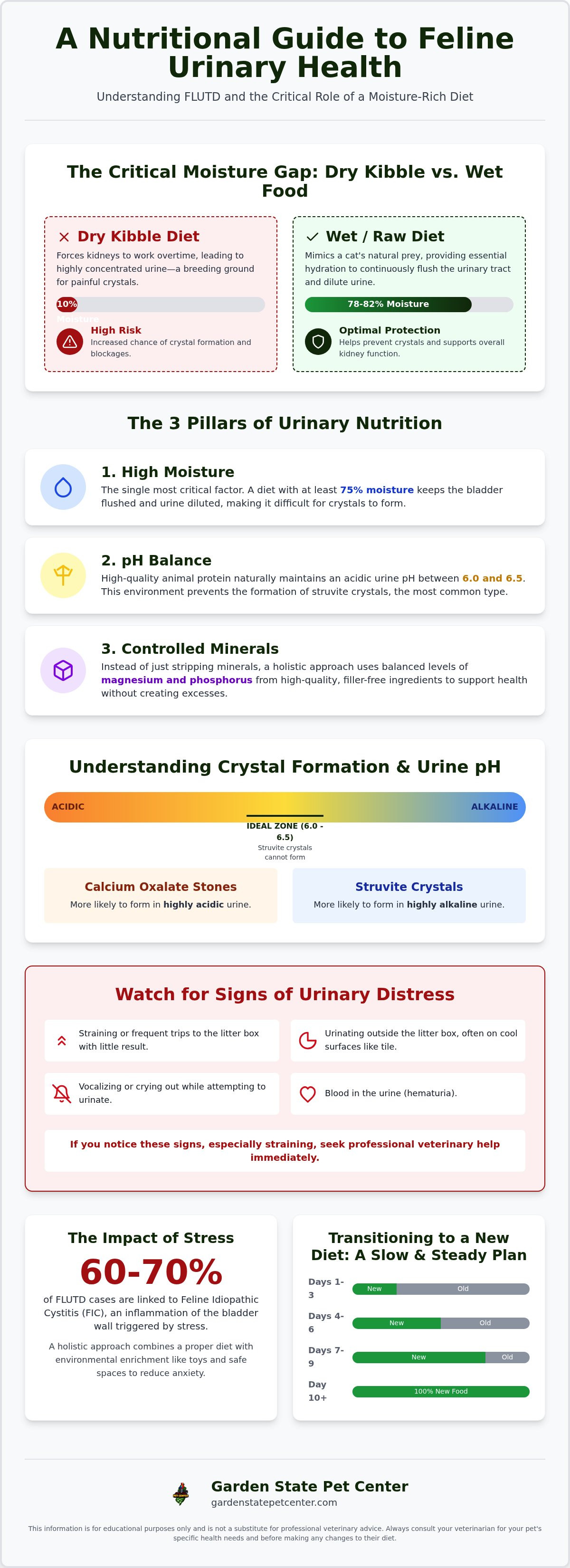
There are two primary types of crystals that pet parents should monitor. Struvite crystals typically form when urine is too alkaline, while calcium oxalate stones are more likely to develop in highly acidic environments. This delicate balance is why the best cat food for urinary health focuses on stabilizing pH through high-quality animal proteins rather than just stripping away essential minerals. When urine stays too concentrated for too long, it doesn't just form stones; it causes chronic physical pain and potentially life-threatening blockages, especially in male cats.
Common Symptoms of Urinary Distress
Your cat's behavior in the litter box is their most important way of communicating pain. Watch for straining or frequent, tiny trips that result in very little urine. Many owners mistake this for constipation, but it's often a sign of a blocked or irritated urethra. You might also find your cat urinating on cool surfaces like tile or laundry. They do this because they associate the litter box with discomfort. If you see blood in the urine or hear your cat vocalizing while they try to go, seek professional help immediately.
The Role of Stress in Urinary Health
Diet is only one part of a successful health plan. Feline Idiopathic Cystitis (FIC) accounts for 60% to 70% of FLUTD cases, and it's essentially a stress-induced inflammation of the bladder wall. When a cat feels anxious, their body releases chemicals that can actually break down the protective lining of the bladder. A holistic approach means looking at their environment alongside their bowl. By browsing our curated cat collection, you can find both the moisture-rich foods and the enrichment toys needed to keep their stress levels low and their urinary tract functioning properly.
The Three Pillars of Urinary Nutrition: Moisture, pH, and Minerals
Managing feline health requires looking beyond the "urinary" label on the front of a bag. The Cornell University on FLUTD research highlights that diet is a primary tool for both treatment and prevention. To find the best cat food for urinary health, you must focus on three non-negotiable pillars: high moisture, an acidic pH, and controlled mineral levels. These factors work together to keep the bladder environment hostile to crystal formation and comfortable for your cat.
Most mass-market diets focus solely on mineral restriction, but they often ignore the "Moisture Gap." Cats are biologically designed to get their water from their food. When their diet is dry, their urine becomes sludge-like and concentrated. By maintaining a urine pH between 6.0 and 6.5 through high-quality animal protein, you create an environment where struvite crystals simply cannot survive. This natural acidification is far superior to using chemical additives that can irritate the stomach.
Why Wet Food is the Gold Standard
The difference between kibble and canned food is staggering. Standard dry kibble contains only about 10% moisture, forcing your cat's kidneys to work overtime just to stay hydrated. In contrast, premium wet foods offer 78% to 82% moisture, providing the hydration needed to "flush" the bladder daily. Increased water intake directly lowers urine specific gravity, making it much harder for crystals to precipitate and form painful stones. This constant flushing prevents the stagnant conditions where inflammation and bacteria thrive.
Balancing the Mineral Load
Many owners worry about "ash" content, but this is an outdated term that refers to the total mineral residue. What matters is the quality and specific levels of Magnesium and Phosphorus. Excess Magnesium is a known building block for struvite crystals. Meanwhile, keeping Phosphorus in check protects both the urinary tract and long-term kidney function. Premium brands achieve this balance naturally by using high-quality muscle meats rather than cheap bone meals or synthetic acidifiers. This ensures your cat receives essential nutrition without the risk of mineral precipitation.
If you're feeling overwhelmed by mineral percentages or ingredient labels, our expertly curated cat collection features brands that prioritize these exact nutritional standards. You don't have to choose between a healthy bladder and high-quality ingredients.
Holistic vs. Prescription: Evaluating Your Options
Many pet owners assume that the "prescription" label on a bag of cat food means it contains medicinal drugs. In reality, this is a regulatory and marketing term used to indicate that the food should be fed under veterinary supervision. While these diets are formulated with specific mineral targets, they often rely on synthetic additives and low-quality ingredients to achieve those numbers. Understanding the AVMA on feline urinary health guidelines helps clarify that while dietary management is essential, the source of those nutrients matters just as much as the levels themselves. For those seeking the best cat food for urinary health, it's vital to look past the label and scrutinize the actual ingredient list.
The Downside of Traditional Clinical Diets
Traditional clinical diets frequently utilize high-carbohydrate fillers like corn gluten meal, brewers rice, and soy. These ingredients are often used to keep costs down while meeting basic caloric needs, but they can be counterproductive for a carnivore's urinary system. Plant-based proteins tend to make the urine more alkaline, which is a direct risk factor for struvite crystal formation. Some cats managed on long-term prescription kibble may even develop secondary issues, such as weight gain or a dull coat, because the food lacks the biological complexity of whole animal tissues. This reliance on fillers often explains why some cats simply refuse to eat these dry formulas.
The Holistic Advantage
Holistic nutrition takes a different path by using species-appropriate, whole-meat proteins to manage urinary health naturally. High-quality animal tissue provides the amino acids necessary to maintain a healthy, acidic urine pH without the need for harsh synthetic acidifiers. When you browse our premium cat food collection, you'll find brands like Weruva, Farmina, and Open Farm that prioritize human-grade ingredients and total transparency. These foods provide the moisture and mineral balance discussed in previous sections while offering superior overall nourishment through real muscle meat rather than processed by-products.
At Garden State Pet Center, we believe every cat's needs are unique. That's why we have an on-site certified pet nutritionist to help you navigate these choices. If your cat is struggling with recurring issues or refusing their current clinical diet, a customized feeding plan can make all the difference. We select our brands based on strict nutritional integrity, ensuring that your cat receives the specialized care they deserve without compromising on the quality of their protein sources. This professional guidance ensures you aren't just buying food, but investing in a long-term wellness strategy.
Best Cat Food for Urinary Health: Top Premium Picks
Selecting the best cat food for urinary health requires a shift in focus from simple mineral restriction to total biological support. While mass-market clinical diets often rely on cheap fillers, our curated selection prioritizes high moisture, low carbohydrate levels, and controlled minerals. We look for brands that use real muscle meat to maintain a natural urinary pH. This approach supports the bladder without depriving your cat of the high-quality protein they need to thrive. Brands like Rawz and Farmina lead the way by focusing on minimal processing and species-appropriate ingredients.
Best Wet Foods for Maximum Hydration
Weruva stands out as a hydration powerhouse in the feline world. Their shredded recipes, particularly the pouch options, often exceed 82% moisture, which is essential for flushing the urinary tract daily. For picky eaters who have historically refused prescription kibble, the Weruva TruLuxe line offers premium ingredients that entice even the most stubborn cats. If your pet has a sensitive stomach alongside urinary concerns, FirstMate’s limited ingredient cans provide a clean, simple protein source that reduces the risk of systemic inflammation.
Raw and Freeze-Dried Alternatives
Vital Essentials Freeze-Dried offers the benefits of a species-appropriate raw diet in a highly convenient format. To provide maximum urinary support, you must properly rehydrate these nuggets with warm water or salt-free bone broth before serving. This mimics the moisture content of natural prey and ensures the kidneys aren't stressed. SmallBatch is another excellent preventative tool, providing raw nutrition that keeps the bladder environment stable. These diets are naturally low in carbohydrates, which helps prevent the alkaline urine shifts that lead to struvite crystal precipitation.
Best Dry Options (If You Must)
If your lifestyle requires a dry food component, Farmina N&D Quinoa Urinary is a functional diet that uses natural nutraceuticals rather than harsh synthetic acidifiers. It's a low-glycemic, high-protein kibble designed specifically to support the urinary tract while maintaining overall metabolic health. We generally recommend using dry food primarily as a high-value treat or a small supplement rather than the main meal. Explore our curated cat food collection to find the right balance for your pet’s specific requirements.
Don't settle for low-quality fillers when your cat's long-term comfort is on the line. Stop by Garden State Pet Center today to browse our full range of premium urinary-friendly cat foods and speak with our on-site nutritionist about a customized plan.
Transitioning and Long-Term Urinary Management
Switching your cat to a moisture-rich diet is a journey that requires patience and a proactive strategy. Even the best cat food for urinary health won't provide benefits if your cat refuses to touch the bowl. We recommend the "Slow and Steady" method to avoid digestive upset and the stress that often triggers inflammatory flare-ups. Start by introducing just a teaspoon of the new wet or raw food alongside their familiar meal. Over the course of 10 to 14 days, gradually increase the new food while decreasing the old, allowing their system to adjust to the higher moisture and protein levels.
How to Transition a 'Kibble Addict'
Many cats become "addicted" to the crunchy texture and flavor coatings of dry food. If your cat is resistant, try mixing different textures to bridge the gap. You can crush a small amount of their favorite dry food and sprinkle it over the new wet food as a "seasoning." Using high-quality toppers like Green Juju or warm, salt-free bone broth can also significantly increase palatability. If you notice soft stool during the process, simply slow down the transition and maintain the current ratio for a few extra days until their digestion stabilizes. This gradual approach ensures long-term success without causing mealtime anxiety.
Beyond the Bowl: Lifestyle Support
Bladder health extends beyond the ingredients in the bowl. Because cats are sensitive to the freshness and movement of water, installing a fountain with filtered water can encourage them to drink more frequently. Place multiple water stations throughout your home, especially in quiet areas where your cat feels safe. Environmental enrichment, such as vertical perches and interactive toys, also plays a critical role in reducing Feline Idiopathic Cystitis (FIC) by keeping stress levels low. A calm cat is a healthy cat, and a stimulating environment is just as vital as a species-appropriate diet.
Consistent monitoring is your best tool for long-term success. Keep a close eye on litter box habits; larger, more frequent clumps are a positive sign that the increased moisture is working. We also recommend regular veterinary check-ups and routine urinalysis to catch any subtle changes in pH or mineral concentration before they become emergencies. If you're struggling to find the right balance, our on-site certified pet nutritionist is available to help refine your cat's plan. Visit our premium cat collection to find the tools you need for a lifetime of urinary wellness.
Take Control of Your Cat's Urinary Wellness
Managing your cat's urinary health doesn't require a compromise on ingredient quality. By prioritizing moisture-rich wet foods and species-appropriate proteins, you address the root causes of crystal formation while supporting their overall vitality. Hydration is the foundation of a healthy bladder. Choosing the best cat food for urinary health means looking for low-carbohydrate, mineral-balanced recipes that your cat actually enjoys eating. You can move beyond the frustration of dry prescription kibble and embrace a holistic approach that works with your cat's biology.
At Garden State Pet Center, our on-site certified pet nutritionist is ready to help you navigate these choices with confidence. We've curated a selection of premium brands that meet the highest standards of safety and nutrition. Take advantage of our free local delivery within 10 miles or our convenient nationwide shipping options. Shop Our Expert-Selected Urinary Health Cat Foods today to find the perfect fit for your pet. You have the power to transform your cat's health through their bowl, and we're here to be your knowledgeable partner every step of the way.
Frequently Asked Questions
Can I give my cat urinary health food if they don't have problems?
You can certainly feed a urinary-supportive diet to a healthy cat as a preventative measure. Most high-quality holistic foods naturally support the bladder by providing high moisture and balanced minerals without the need for synthetic additives. Our on-site certified pet nutritionist often recommends these diets for multi-cat households where one cat has a history of issues. It ensures all your pets receive premium nutrition while maintaining a stable, slightly acidic urine pH.
Is wet food better than dry food for urinary crystals?
Wet food is significantly better than dry food because it addresses the critical moisture gap that leads to concentrated urine. While dry kibble only contains about 10% moisture, premium canned options like Weruva provide over 80% hydration. This high water content helps flush the bladder and prevent crystals from precipitating. For many owners, the best cat food for urinary health is a moisture-rich wet or raw diet that mirrors a cat's natural biological needs.
How long does it take for urinary cat food to work?
You will typically see improvements in urine pH and volume within two to four weeks of a consistent diet change. While some clinical conditions require immediate veterinary intervention, switching to a high-moisture holistic diet starts hydrating the bladder wall immediately. Larger, more frequent clumps in the litter box are a great early indicator of success. We recommend monitoring your cat’s habits closely during the first month to ensure the new plan is effectively supporting their wellness.
What ingredients should I avoid in cat food for urinary health?
Avoid high-carbohydrate fillers like corn gluten meal, brewers rice, and soy, as these can raise urine pH and promote crystal growth. You should also steer clear of foods with excessive bone meal, which can lead to high levels of magnesium and phosphorus. Instead, look for whole-meat proteins that provide a natural source of amino acids. Our curated selection at Garden State Pet Center focuses on clean, transparent labels that prioritize muscle meat over processed by-products.
Can high-protein diets cause urinary stones in cats?
High-protein diets don't cause urinary stones; in fact, high-quality animal protein is essential for maintaining an optimal, slightly acidic urine pH. The real culprits are typically chronic dehydration and imbalanced mineral levels, specifically magnesium and phosphorus. Cats are obligate carnivores designed to process animal tissue. By choosing a high-protein, moisture-rich diet, you are providing the biological tools your cat needs to keep their urinary tract clear and functioning properly.
Do I need a prescription to buy urinary health cat food?
You don't need a prescription to purchase premium holistic or raw diets that support urinary wellness. While "prescription" is a regulatory term for foods sold through clinics, many high-end brands offer the same mineral-balanced and moisture-rich benefits without the requirement of a vet's script. We specialize in these high-quality alternatives, providing access to professional nutritional consultations to help you select the best cat food for urinary health based on your pet's specific requirements.
How much water should a cat with urinary issues drink daily?
A cat should ideally consume about 4 to 5 ounces of water per 5 pounds of body weight daily. Since cats have a low thirst drive, reaching this goal through a water bowl alone is difficult. This is why feeding a diet that is at least 75% moisture is so important. Using water fountains and adding bone broth toppers can further encourage drinking, ensuring their urine stays diluted enough to prevent the formation of painful crystals.
Are there natural supplements to support a cat's bladder health?
Natural supplements like Green Juju or unsalted bone broth are excellent for increasing hydration and providing anti-inflammatory support. Glucosamine and chondroitin can also help maintain the protective lining of the bladder wall, which is especially helpful for cats prone to stress-induced cystitis. We offer a variety of cat vitamins and supplements designed to work alongside a holistic diet. These additions help refine your cat's long-term management plan and provide an extra layer of urinary protection.

Article by
Victor Santucci
Victor Santucci is the owner of Garden State Pet Center in Audubon, NJ, where he specializes in premium pet nutrition, exotic animals, and expert-level care. With years of hands-on experience and a passion for helping pets thrive, Victor is dedicated to educating pet owners on proper nutrition, enrichment, and species-specific care. His mission is simple: provide every pet with the highest quality products and every customer with honest, knowledgeable guidance.
Share this post
- 0 comment
- Tags: best cat food for urinary health, cat food, cat hydration, cat nutrition, cat urinary health, feline health, struvite crystals, wet cat food