

Dog allergy testing kit Best Practices and Expert Advice


What if the secret to ending your dog's relentless scratching isn't another expensive prescription, but a simple dog allergy testing kit used in your own living room? It's heartbreaking to watch your pet suffer through chronic skin inflammation while you struggle to distinguish between a seasonal pollen flare-up and a hidden ingredient in their dinner bowl. You've likely spent hundreds on inconclusive vet visits and feel overwhelmed by the conflicting advice found online. We understand that you want nothing more than to see your companion comfortable, happy, and thriving again.
Using these diagnostic tools is a proactive step toward reclaiming your pet's health and vitality. You deserve a clear list of triggers to avoid and a straightforward path to recovery. In this guide, we'll explain exactly how these kits work and how to interpret the data they provide. You'll also discover how to transition your pet to a life-changing holistic diet. By combining specialized care with professional nutritional insights, you can move past the guesswork and provide the high-quality care your pet deserves. Let's look at how to turn those test results into a simple, effective dietary plan that works for your household.
Key Takeaways
- Recognize the telltale signs of chronic sensitivities, such as obsessive paw licking and hot spots, to determine when your pet requires specialized diagnostic support.
- Understand how a dog allergy testing kit utilizes non-invasive hair or saliva samples to identify specific environmental and nutritional triggers.
- Learn the critical difference between immediate immune responses and cumulative intolerances to provide more accurate care for your pet's unique needs.
- Implement a successful "Clean Slate" elimination diet using novel proteins like venison or kangaroo to systematically remove inflammatory triggers.
- Gain professional insights on why a certified pet nutritionist is your best partner for transitioning your pet to a life-changing holistic or raw food regimen.
Understanding Dog Allergies and Chronic Sensitivities
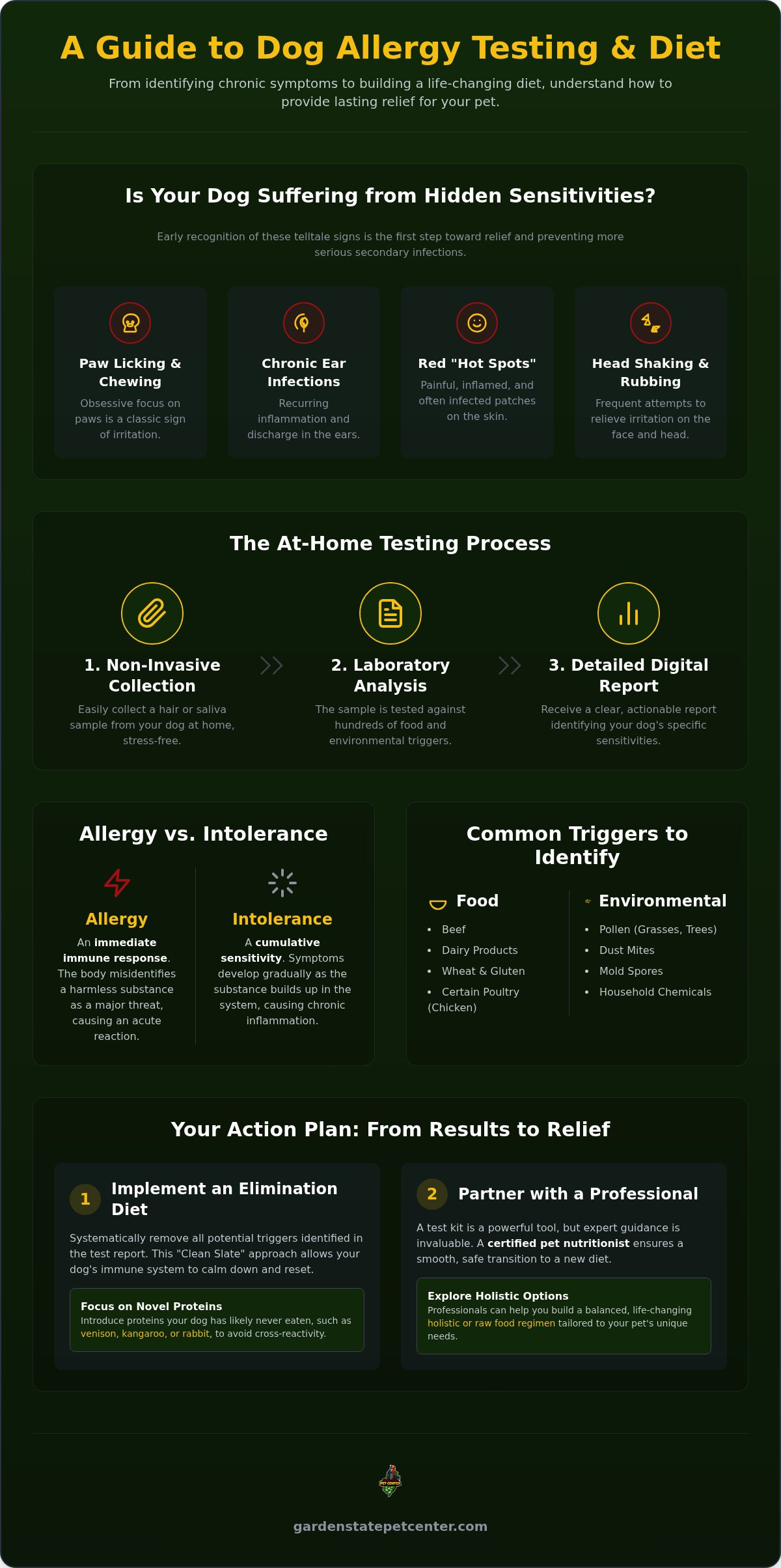
A dog allergy is fundamentally an overreaction of the immune system. When your pet encounters specific proteins or environmental factors, their body misidentifies these harmless substances as dangerous invaders. For a comprehensive overview of dog allergies, it helps to realize that these reactions aren't just localized itches; they are systemic immune responses. Recognizing these signs early is the first step toward relief. Many owners find that investing in a dog allergy testing kit provides the clarity needed to stop guessing and start healing.
Watch for these common symptoms in your pet:
- Obsessive paw licking or chewing.
- Chronic, recurring ear infections.
- Red, inflamed "hot spots" on the skin.
- Frequent head shaking or face rubbing.
Identifying these triggers early prevents permanent skin thickening and secondary bacterial infections. While some triggers are seasonal environmental factors, others are year-round food sensitivities that require a different management approach. Don't wait for the symptoms to escalate. Proactive identification is the key to maintaining your pet's long-term welfare and comfort.
Common Food vs. Environmental Triggers
Food sensitivities often stem from common proteins like beef, dairy, wheat, and certain poultry. These usually manifest as year-round discomfort and digestive upset. In contrast, environmental triggers include pollen, dust mites, mold spores, and even household cleaning chemicals. These often fluctuate with the seasons or specific locations. A complicating factor is "cross-reactivity," where the immune system confuses one protein for another. This confusion makes it difficult for owners to find the root cause through observation alone. Utilizing a dog allergy testing kit helps isolate these specific irritants so you can curate a safer, more stable environment for your companion.
The Toll of Unmanaged Sensitivities
Chronic irritation takes a heavy toll on your dog’s quality of life and behavior. You might notice increased irritability, lethargy, or a sudden lack of interest in play. The "itch-scratch cycle" is particularly damaging; as the dog scratches to find relief, they break the skin barrier. This opening allows bacteria and yeast to take hold, leading to painful, systemic infections. Beyond the physical pain, there is a significant financial burden to consider. Treating recurring symptoms with temporary fixes is far more expensive than identifying and removing the underlying cause. Focus on specialized care now to save your pet from future distress and avoid the cycle of costly, symptomatic treatments.
How At-Home Dog Allergy Testing Kits Work
Modern pet care has evolved to offer diagnostic insights from the comfort of your living room. An at-home dog allergy testing kit typically utilizes one of two primary collection methods: hair sample analysis or saliva swabs. These methods are designed to be non-invasive, sparing your pet the stress of clinical skin scrapes or needle-based blood draws. While clinical tests often focus on immediate, acute reactions, at-home kits provide a broader look at sensitivities that might be simmering under the surface of your dog's health.
Hair-based kits frequently employ bio-resonance technology. This process analyzes the energetic frequencies or imbalances within a hair sample to identify how a dog's system reacts to various environmental and food-based items. Saliva-based kits, on the other hand, often look for IgE or IgA antibodies. These antibodies are the immune system's way of flagging specific proteins as threats, providing a snapshot of the pet's current immune activity. Both methods offer a convenient starting point for owners who want to understand why their pet is constantly itching.
The Testing Process: From Sample to Report
Collecting a sample is a straightforward process that you can complete in minutes. Follow these steps to ensure the best results:
- Collection: Use the provided sterile swab for saliva or snip a small amount of clean hair from the nape of the neck.
- Securement: Place the sample in the designated collection bag, ensuring it remains free from household contaminants like dust or human hair.
- Laboratory Analysis: Once you mail the kit, scientists analyze the samples against hundreds of potential triggers, ranging from chicken and beef to specific grass pollens.
The timeline for receiving your digital report varies by brand. Some laboratories provide results in as little as 48 hours, while more comprehensive panels might take up to 3 weeks. Once your report arrives, you'll have a detailed map of what might be bothering your pet.
Accuracy and Limitations of At-Home Kits
It's vital to view these kits as a valuable screening tool rather than a definitive medical diagnosis. There is an ongoing scientific debate regarding the reliability of hair analysis compared to gold-standard blood-based IgE testing performed by veterinarians. While hair testing can identify imbalances, factors like recent steroid medications or the young age of a puppy can sometimes skew the data. Use these results as a guide to start a conversation with a professional. If you're feeling overwhelmed by the data in your report, consulting with a pet nutritionist can help you translate those findings into a practical, everyday meal plan that actually works for your dog.
Interpreting Results: Allergy vs. Intolerance
Once you receive the data from your dog allergy testing kit, the first step is distinguishing between a true allergy and a sensitivity. An "Allergy" is an immediate, potentially dangerous immune response mediated by IgE antibodies. This is the body's alarm system reacting instantly to a perceived threat, often resulting in hives or respiratory distress. In contrast, an "Intolerance" is a cumulative digestive issue that builds over time. It results from the body's inability to process a specific ingredient properly, leading to chronic inflammation, gas, or skin issues rather than an instant reaction.
Most reports use a clear, color-coded system to help you prioritize changes. Red indicators signify high sensitivity, meaning these items should be removed from your pet's environment or diet immediately. Yellow markers denote mild sensitivities that might be tolerated in small amounts but are better avoided during the initial healing phase. You might notice results for proteins your dog hasn't eaten yet. These aren't necessarily errors; they identify a biological predisposition to react, helping you avoid future triggers before they ever touch your pet's bowl.
Navigating the Actionable Report
Focus your attention on the "Food to Avoid" list, but use the "Safe to Feed" section as a foundation to build a new, clean meal plan. Identifying hidden ingredients is crucial for success. For example, a chicken sensitivity often requires avoiding products containing generic "animal fat" or "natural flavors," as these are frequently sourced from poultry. For environmental results, look at the scores for specific plants or grasses. You can mitigate contact by wiping your dog's paws after walks or using air purifiers to reduce indoor dust and mold spores. If you're ready to start fresh, exploring a curated selection of premium dog food allows you to select formulas that strictly exclude your pet's specific triggers.
Why "Everything" Seems to Show Up
It's common to feel overwhelmed when a report shows dozens of triggers. This often points toward "Leaky Gut Syndrome," a condition where the intestinal lining becomes overly permeable, allowing undigested food particles into the bloodstream. When this occurs, the immune system begins flagging almost everything the dog eats as an enemy. Implementing rotation diets helps prevent new sensitivities from developing by ensuring no single protein is overused. Remember the "threshold effect," where multiple small triggers like a dusty room and a specific grain lead to one massive, visible flare-up once the dog's cumulative limit is reached.
Next Steps: Using Results to Build a Better Diet
Armed with the data from your dog allergy testing kit, you can finally move from reactive treatments to proactive healing. The "Clean Slate" approach is the most effective way to reset your pet's system. This protocol involves a strict elimination diet lasting 8 to 12 weeks. During this window, you remove all potential inflammatory triggers to allow the immune system to calm down and the gut to repair itself. You'll switch to a novel protein that your dog has likely never encountered, such as rabbit, venison, or kangaroo. These proteins are less likely to provoke a response because the body hasn't been sensitized to them through previous exposure.
Healing isn't just about what you remove; it's about what you add to the bowl. High-quality Omega-3 fatty acids help reduce systemic skin inflammation and restore the coat's natural shine. Simultaneously, probiotics support a healthy gut microbiome, which is essential for dogs recovering from the sensitivities discussed in previous sections. Maintain a detailed food diary to track daily changes in itching, redness, and stool quality. This record becomes an invaluable tool for identifying subtle improvements or pinpointing unexpected reactions as you move forward.
The Elimination Diet Protocol
Follow these three steps to ensure a successful transition for your pet:
- Step 1: Remove all current food, treats, and even flavored medications or dental chews that might contain hidden proteins.
- Step 2: Introduce a single-source protein and a single-source carbohydrate based on your specific test results.
- Step 3: Once symptoms subside, gradually reintroduce "safe" items one by one to verify long-term tolerance and expand the diet.
Transitioning to High-Bioavailability Nutrition
Choosing the right delivery method for these ingredients is vital for long-term success. Selecting a premium dog food with a limited ingredient list significantly reduces the risk of accidental flare-ups. While high-quality dry food options provide convenience, many owners of sensitive dogs find better success with raw or freeze-dried alternatives. These options often retain more natural enzymes and nutrients that support a healthy immune system. For dogs with severe digestive intolerances, gently cooked diets offer the benefits of fresh food with a texture that is much easier on a compromised digestive tract. If you're ready to move beyond the guesswork, consult with our certified pet nutritionist to build a customized dietary plan that targets your dog's specific needs.
Expert Nutrition: Beyond the Testing Kit
A dog allergy testing kit provides a vital roadmap, yet the data alone doesn't fix a compromised immune system. Interpreting complex results requires more than just avoiding "red" list items; it demands a strategic shift toward bioavailable, anti-inflammatory nutrition. This is where a certified pet nutritionist becomes your most valuable partner. They help you bridge the gap between knowing what's wrong and implementing a sustainable, balanced lifestyle. By focusing on specialized care rather than generic retail solutions, you ensure your pet receives the clinical precision they need to heal from the inside out. We believe in providing reliable resources that empower you to make the best decisions for your companion's long-term welfare.
The Holistic Advantage for Sensitive Dogs
Raw and freeze-dried diets offer a distinct holistic advantage for dogs struggling with systemic inflammation. These foods provide natural enzymes that aid in the efficient breakdown of proteins, which reduces the likelihood of undigested particles triggering an immune response. Unlike many commercial options, premium holistic brands prioritize transparency and quality. We recommend exploring specialized options like SmallBatch, Vital Essentials, and OC Raw, as these are formulated specifically to support pets with sensitive systems. These brands exclude the synthetic fillers and preservatives that often exacerbate skin issues. For a deeper look at these options, read our Pillar Article on Premium Pet Food to understand how specialized nutrition transforms pet health.
Personalized Consultations for Long-Term Health
Professional consultations go beyond a simple list of triggers by looking at the whole dog. A nutritionist considers your pet's age, activity level, and the severity of their symptoms to create a plan that evolves as the gut heals. This is particularly important during elimination diets. It's easy to accidentally create nutritional deficiencies while trying to avoid allergens if you don't have professional oversight. High-quality, limited-ingredient treats are also a critical part of this journey. Using a single-protein treat ensures you won't accidentally reset weeks of progress with a hidden filler or common allergen. Investing in expert guidance provides the reassurance that your pet's path to recovery is both safe and nutritionally complete. Our goal is to be your knowledgeable partner, ensuring your pet feels at home in their own skin again.
Empowering Your Pet’s Path to Wellness
You now have the essential tools to move beyond the frustration of chronic scratching and inflammation. A dog allergy testing kit serves as a powerful starting point, but the true transformation happens when you apply those results to a targeted, holistic diet. By distinguishing between immediate immune responses and cumulative intolerances, you can finally build a meal plan that supports your pet’s unique biology. This proactive approach prevents long term skin damage and restores your dog’s quality of life.
Since 1990, we've specialized in raw and holistic diets to help sensitive pets thrive. Our curated selection of limited-ingredient premium foods provides the specialized nutrition your pet needs to heal from the inside out. Don't feel you have to manage the complexities of elimination diets alone. Consult with our Certified Pet Nutritionist to create a custom plan for your sensitive dog. Your companion deserves to live a life free from discomfort. With the right data and professional support, a happier and more energetic future is well within reach for your household.
Frequently Asked Questions
Are at-home dog allergy testing kits as accurate as blood tests?
At-home kits and clinical blood tests measure different biological markers. While a veterinarian administered blood test identifies immediate IgE immune responses, a dog allergy testing kit using hair or saliva often focuses on cumulative sensitivities and intolerances. These kits serve as excellent screening tools for identifying triggers that cause chronic itching. For a complete health picture, use these results to guide your nutritional choices and consult with a specialist to interpret the data effectively.
How long does it take to see results after changing my dog’s diet?
Expect to see initial improvements in your pet's comfort within two to four weeks, but a full system reset typically takes 8 to 12 weeks. Skin cells and the digestive lining need time to regenerate after inflammatory triggers are removed. Consistency is vital during this period. If you don't see progress after three months, it's time to re-evaluate for hidden ingredients or environmental factors that might still be present in the home.
Can a dog allergy testing kit identify environmental triggers like mold?
Yes, most comprehensive testing panels include environmental factors such as mold spores, dust mites, and various grass pollens. Identifying these triggers allows you to manage your pet's surroundings more effectively. You might find that wiping your dog's paws after walks or using high-quality air purifiers indoors significantly reduces their overall "itch load." Combining environmental management with a clean, holistic diet provides the best chance for long term relief from chronic inflammation.
What is the difference between a food allergy and a food intolerance?
A food allergy is an immediate immune system reaction that can be life-threatening, while a food intolerance is a cumulative digestive issue. Intolerances often build up over time as the body struggles to process specific proteins or synthetic fillers. While an allergy might cause hives or swelling, an intolerance usually manifests as chronic skin irritation, ear infections, or digestive upset. Understanding this distinction helps you choose the right specialized care and premium food for your pet.
Should I stop giving my dog treats while waiting for test results?
Pausing all current treats is a proactive step while you wait for your dog allergy testing kit results. Many commercial treats contain hidden fillers, artificial colors, or mixed proteins that can skew your observations. If you want to reward your pet, switch to single-ingredient snacks like freeze-dried liver or plain vegetables. This ensures you aren't accidentally introducing new irritants while you work to identify the root cause of your dog's current sensitivities.
Can puppy food cause allergies to develop later in life?
Puppy food itself doesn't cause allergies, but long term exposure to the same low-quality proteins or synthetic binders can sensitize a growing immune system. Feeding a single type of food for years without variety can lead to the "leaky gut" issues mentioned earlier in this guide. We recommend a rotation diet featuring high-quality, bioavailable proteins to help build a resilient immune system. Starting with premium, holistic nutrition early in life is the best way to prevent chronic sensitivities.
Is a raw diet better for a dog with multiple food sensitivities?
A raw diet is often superior for sensitive dogs because it eliminates the synthetic binders, preservatives, and high-starch fillers found in processed kibbles. Brands like SmallBatch and OC Raw provide natural enzymes that aid in protein breakdown, reducing the strain on the digestive system. By using limited-ingredient raw or freeze-dried options, you gain total control over what enters your dog's system. This transparency is essential for managing pets with complex, multi-protein sensitivities and systemic inflammation.
How often should I re-test my dog for allergies?
Re-testing is generally recommended once a year or if new symptoms emerge after a period of stability. A dog's immune system is dynamic, and sensitivities can shift as they age or move to a new environment. Regular testing ensures your custom nutritional plan remains accurate and effective. If you notice a sudden flare-up despite a stable diet, a fresh test can help identify if a new environmental trigger, such as seasonal pollen, has become an issue.

Article by
Victor Santucci
Victor Santucci is the owner of Garden State Pet Center in Audubon, NJ, where he specializes in premium pet nutrition, exotic animals, and expert-level care. With years of hands-on experience and a passion for helping pets thrive, Victor is dedicated to educating pet owners on proper nutrition, enrichment, and species-specific care. His mission is simple: provide every pet with the highest quality products and every customer with honest, knowledgeable guidance.
Share this post
- 0 comment
- Tags: allergy testing, dog allergies, dog allergy testing kit, dog care, dog skin problems, elimination diet, food intolerance, pet health