

Cat Skin and Coat Supplements: How to Choose Wisely in 2026


Before choosing cat skin and coat supplements, pause to consider what your cat needs. Dry, flaky skin or a dull coat can have more than one cause, so a supplement isn’t always the first or best step. Supplements may support a targeted nutrition plan, but they shouldn’t replace finding out why your cat’s skin or coat has changed.
It’s understandable to feel unsure when labels promise a shinier coat, list unfamiliar ingredients, or offer powders, oils, and chews. If your cat already eats a complete and balanced diet, extra nutrients may not be necessary. More isn’t automatically better, especially when supplements overlap with food or other products.
This guide explains nutrients commonly used for skin and coat support, how to compare labels and formats, and what to consider before adding a supplement to your cat’s diet. You’ll also learn when to involve a veterinarian, particularly if skin or coat changes are new or persistent. For help connecting supplement choices with your cat’s current food, an on-site certified pet nutritionist can offer practical nutritional guidance.
Key Takeaways
- Understand how cat skin and coat supplements may complement a diet, and why they can’t replace investigating persistent changes.
- Learn why omega-3 fatty acids such as EPA and DHA commonly appear in skin and coat formulas, and what to look for on labels.
- Compare ingredients, listed amounts, serving directions, and format instead of relying on broad benefit claims.
- Look for overlapping nutrients across food, treats, and supplements, and know when to consult a veterinarian before adding a product.
- Connect your cat’s concern and current diet with informed supplement questions, including through a pet nutrition consultation.
Cat Skin and Coat Supplements: What They Can, and Cannot, Do
A dull coat or dry-looking skin can prompt a search for cat skin and coat supplements, but an appearance change doesn’t automatically mean your cat needs an added nutrient. These supplements add nutritional support to a cat’s diet. They can’t identify or treat the reason a cat’s skin or coat has changed, and they aren’t a substitute for veterinary assessment.
A skin and coat supplement adds nutrients to a cat’s diet; it does not diagnose or medically treat a skin problem. Coat condition can reflect nutrition, grooming habits, the home environment, or a health concern. A cat’s overall nutritional needs matter too: the Cat Nutrition overview discusses essential nutrients, including fatty acids, vitamins, and minerals. Since cats get nutrients from regular food as well as treats and supplements, review the whole diet before adding another source. You can explore cat food options as part of that review.
When might a cat owner consider a supplement?
A coat that looks less glossy than usual, dry-looking skin, or a change in how fur feels during petting or grooming can be a reason to review your cat’s routine and nutrition. These observations can’t confirm a deficiency, however. Similar signs may have different explanations, so avoid choosing a supplement based on appearance alone.
Start with a list of everything your cat eats across the day: main food, treats, toppers, and supplements. Check whether the food is intended to provide complete and balanced nutrition, then note the ingredients and nutrients listed on each product. This gives you a clearer picture of possible overlap and useful questions for a veterinarian or pet nutrition consultation. An on-site certified pet nutritionist can help organize food and supplement questions as part of a broader nutrition discussion, without diagnosing a skin condition.
When is a skin change a veterinary concern?
Seek veterinary advice if your cat has persistent itching, sores, sudden hair loss, or worsening irritation. These signs deserve attention rather than a trial-and-error supplement approach. A photograph may help you track how a change looks over time, but it can’t establish the cause or replace an examination.
Don’t let a new supplement delay veterinary assessment when a change is persistent or concerning. A veterinarian can advise whether further evaluation is needed and whether a nutritional adjustment belongs in the plan. If a supplement is appropriate, its role should fit that guidance and your cat’s existing diet. The aim is thoughtful support, not a promised visible result.
Which Nutrients Commonly Appear in Cat Skin and Coat Supplements?
Ingredient lists show what a formula is designed to provide, but an ingredient’s presence doesn’t prove that a cat needs it or will show a visible change. Many cat skin and coat supplements feature omega-3 fatty acids; some also include vitamins, minerals, or other ingredients. Focus on how each nutrient fits with your cat’s complete diet, not on how many ingredients appear on the label.
Omega-3 fatty acids, EPA, and DHA
Omega-3 fatty acids are a group of fats. EPA, or eicosapentaenoic acid, and DHA, or docosahexaenoic acid, are two specific omega-3 fatty acids that may be named in a formula. A front-label phrase such as “skin and coat support” is a marketing summary; it doesn’t tell you how much EPA or DHA a serving provides. Look for the named fatty acids, their amounts, and the stated source in the product information.
Compare like with like. A label may list the amount of an oil or ingredient without stating how much EPA and DHA a serving provides. Those figures aren’t interchangeable. Note the serving directions, too, and don’t calculate or change a dose based on a general label claim. The appropriate amount and relevance depend on the individual cat and should be reviewed with a veterinarian.
- Check the source: See whether the label identifies the oil or other ingredient providing the fatty acids.
- Find the amounts: Look for EPA and DHA quantities, not only a total oil amount or broad benefit statement.
- Read the directions: Note the serving guidance and ask a veterinarian to review suitability and dosage.
An ingredient’s nutritional role describes what it contributes to the diet; it doesn’t establish a proven result for an individual cat. Claims about source-specific benefits, effectiveness, dosage, or safety deserve careful veterinary review rather than assumptions based on a headline.
Vitamins, minerals, and other formula ingredients
Some formulas also contain vitamins, minerals, or other ingredients for a specific nutritional purpose. Cats already get nutrients from their food, so adding more may be unnecessary or inappropriate. Consider the combined intake from meals, treats, toppers, and supplements rather than judging a product in isolation.
Read the full ingredient panel and serving directions, including any guidance for a cat’s size or life stage. Check whether the label gives measurable amounts for key ingredients, and note which ingredients also appear in your cat’s other products. A longer list doesn’t automatically make a formula a better fit, and one nutrient or blend isn’t right for every cat.
To put ingredient questions in the context of your cat’s regular food, explore cat nutrition options and consider discussing the overall plan with a pet nutritionist. This can help organize your questions; a veterinarian should guide decisions involving dosage, safety, or a specific health concern.
How to Compare Cat Skin and Coat Supplement Labels
Compare details you can verify, not the confidence of the front-label promise. A consistent review helps you see what a serving provides, how it’s meant to be given, and whether it may duplicate nutrients in your cat’s existing food or other supplements. More ingredients, or a higher listed amount, doesn’t automatically make a formula the better choice.
What should you check on the supplement label?
Start with the full label. Confirm that the product is intended for cats, then look for named ingredients, measurable amounts where provided, serving directions, and any guidance for size or life stage. If the label mentions a nutrient but doesn’t make its amount clear, you may not have enough information to compare it meaningfully with another option. Raise that question with a veterinarian or during a pet nutrition consultation instead of guessing.
Separate measurable facts from broad benefit language. “Contains” followed by an ingredient and amount is more specific than a promise of a shiny coat or allergy support. Be cautious about claims that sound like a diagnosis, prevention, or treatment of disease. Marketing language alone doesn’t establish that a supplement is suitable for your cat or will produce a particular result.
Ingredient: What active ingredients are named? Do they overlap with nutrients in food, treats, or another supplement?
Amount: Are amounts stated for the relevant ingredients, or does the label give only a broad blend or total?
Directions: What serving does the label recommend, and does it include guidance related to your cat’s size or life stage?
Format and species: Is it made for cats, and can it fit your cat’s feeding routine?
Use the same checklist for each option, then compare those details with your cat’s food, treats, toppers, and other supplements. A longer ingredient list may simply add more items to account for. A larger amount isn’t automatically a better fit either; suitability depends on the whole diet and your cat’s needs.
Which supplement format fits your cat?
Powders, liquids, chews, and capsules are delivery formats, not quality rankings. A powder may be practical if your cat accepts it mixed with food; a liquid may suit a routine where measured additions are manageable. Some cats readily take a chew, while others refuse unfamiliar textures or tastes. Consider your cat’s habits and follow the product’s directions rather than changing how it’s given.
In practice, a format your cat reliably accepts is easier to incorporate than one that disrupts meals. Consider how it fits alongside regular food and review the full nutrition picture before adding it. Explore cat food options as part of that comparison, or bring the labels and your cat’s feeding routine to a pet nutrition consultation. A nutritionist can help organize questions, while a veterinarian should guide concerns about safety or dosage.
Are Cat Skin and Coat Supplements Safe? Risks and Veterinary Guidance
A supplement isn’t automatically safe for every cat just because it’s sold for pets or marketed for skin and coat support. Whether it’s appropriate depends on the individual cat, the product’s ingredients and directions, and what else the cat eats or takes. This review matters especially for cats with health conditions or those receiving ongoing medication. A veterinarian can assess the full picture and advise on suitability.
Before adding a supplement, review your cat’s complete diet and the product’s full label with a veterinarian; don’t assume that combining products is safe. Nutrients may already come from regular food, treats, toppers, or another supplement. Adding a second source can create overlap, and a front-label claim won’t tell you whether the product fits your cat’s needs or how it affects total intake.
What should you do before starting a supplement?
Prepare a clear snapshot of your cat’s routine before introducing anything new. Write down what prompted you to consider a supplement, then gather the information a veterinarian needs to give individualized guidance:
- Your cat’s regular food, treats, and toppers, including how they’re served.
- Every supplement and medication your cat currently receives.
- The complete label for the product you’re considering, including ingredients and serving directions.
- When the skin or coat change began and whether it’s staying the same or worsening.
Bring or share the label rather than relying on the product name or a summary claim. Follow the label directions, but don’t treat them as a substitute for veterinary advice about whether the product suits your cat. Avoid stacking formulas or combining products until a veterinarian has reviewed their ingredients and your cat’s full routine. If your cat has a health condition or takes medication, get veterinary guidance before starting.
Which symptoms should not be managed with supplements alone?
Worsening irritation, open sores, marked hair loss, or clear discomfort call for prompt veterinary advice. Skin signs can have causes beyond nutrition, and a supplement can’t establish what’s behind them. Don’t rely on a product trial or a photograph to decide whether a persistent or worsening change needs assessment.
If your cat is already receiving veterinary care, don’t stop prescribed care or replace it with a supplement. Ask the veterinarian whether a nutritional product has a place alongside the existing plan. Keep notes about changes you observe and share them during follow-up, rather than increasing a serving or adding another product on your own.
For help connecting your cat’s food routine with supplement questions, explore cat food and supplement options. A pet nutrition consultation can help organize the nutrition side of the discussion; veterinary guidance remains the right step for symptoms, medication, or safety concerns.
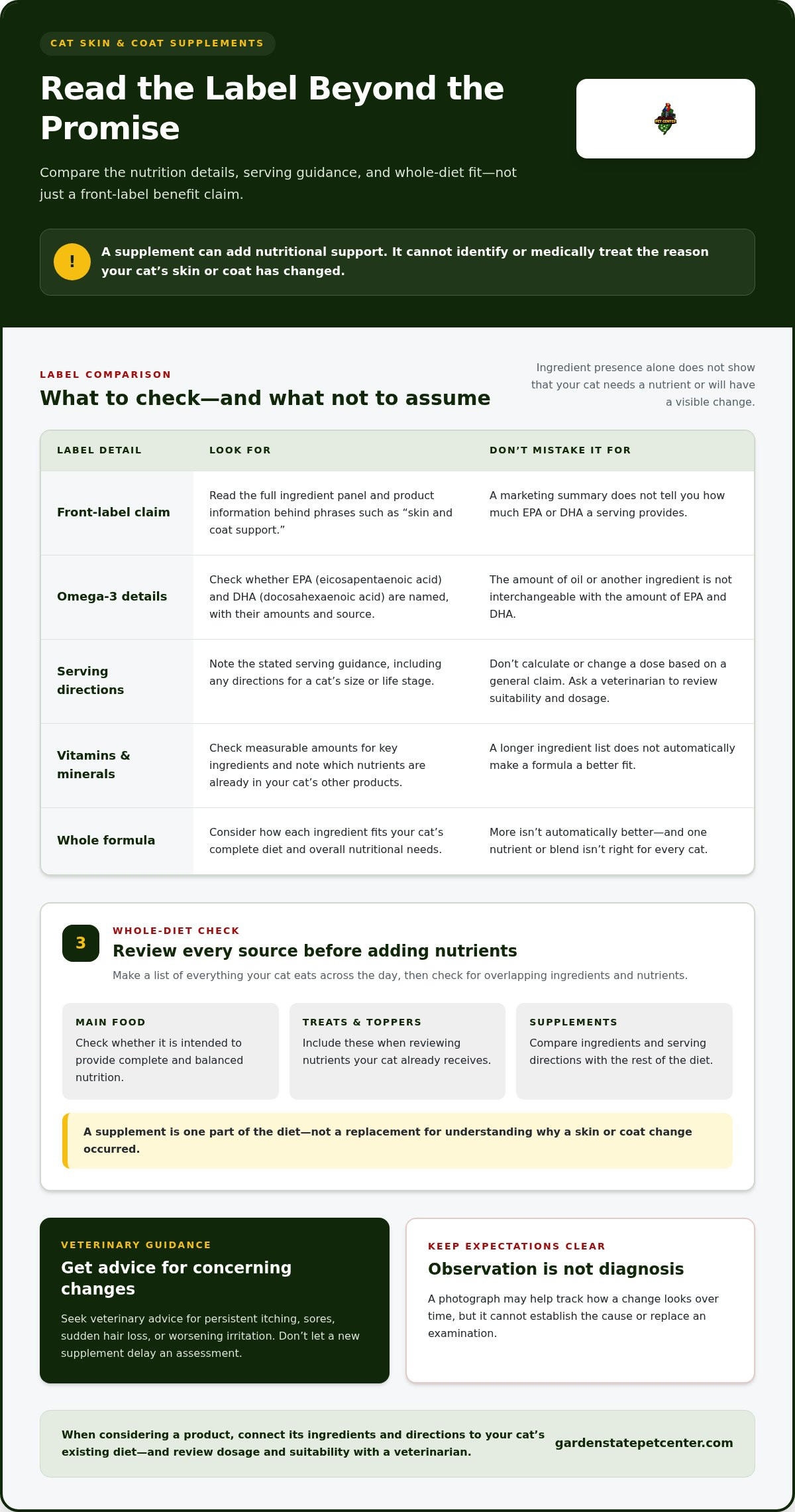
Choose a Cat Skin and Coat Supplement That Fits the Whole Diet
Make the choice in context, not from a coat claim alone. Connect what you’ve noticed with your cat’s current food, nutrients already being provided, and guidance suited to your cat. These four steps can help you decide whether a supplement is worth discussing and what information to bring to that conversation.
A practical four-step decision process
- Identify the concern. Write down what has changed, such as coat texture or skin appearance, and when you first noticed it. Note whether it’s stable, improving, or getting worse. If the change is persistent or concerning, start with a veterinarian rather than trying to manage it with a supplement.
- Review the whole diet. List your cat’s regular food, treats, toppers, current supplements, and medications. Include feeding details that may clarify what nutrients are already part of the routine. This is a more useful starting point than looking at a potential supplement by itself.
- Compare the label. Look at the intended species, named ingredients, amounts, format, and serving directions. Consider whether the product duplicates ingredients in your cat’s existing food or other supplements. Don’t choose a formula simply because it lists more ingredients or makes a broader promise.
- Seek appropriate guidance. Share your notes and the complete product label with your cat’s veterinarian, particularly if your cat has a health condition, takes medication, or has a worsening skin change. Follow veterinary advice on whether a supplement belongs in the plan and how to use it safely.
How nutrition support can help you compare options
A pet nutrition consultation can help you organize questions about how food and supplements fit together. Bring the labels for your cat’s current food and any supplement you’re considering, along with your feeding notes. An on-site certified pet nutritionist can help you discuss the broader nutrition picture and compare options without diagnosing illness or replacing veterinary guidance.
Keep the whole diet in view. Cat vitamins and supplements are one part of a wider nutrition conversation, alongside regular meals and treats. Food format and feeding routine matter too, so review what your cat already eats before adding something new. For example, a cat eating raw, gently cooked, freeze-dried, or holistic food has an overall routine to consider when you review a supplement label.
Take the next step with clear information: explore cat nutrition options and bring your food and supplement questions to a pet nutrition consultation. A thoughtful plan starts with your cat’s complete diet and the right guidance, not a one-size-fits-all formula.
Make Your Cat’s Next Nutrition Step a Thoughtful One
Make your next move a clearer conversation about what belongs in your cat’s routine, rather than adding a supplement simply because it promises a visible change. A focused nutrition review can bring together your observations, your cat’s current food, and the questions you want answered. Keep your veterinarian involved if skin changes are persistent or concerning.
At Garden State Pet Center, an on-site certified pet nutritionist can help you consider how cat vitamins and supplements fit alongside different cat food formats, including raw, gently cooked, freeze-dried, and holistic options. This guidance supports nutrition planning, not diagnosis or treatment. With a considered approach to cat skin and coat supplements, you can make your next decision with greater confidence and your cat’s overall diet in view.
Explore cat nutrition options and get knowledgeable guidance, then take the next step at a pace that feels right for you and your cat.
Frequently Asked Questions
Is a skin and coat supplement necessary for every cat?
No, a supplement isn’t a routine requirement for every cat. A cat eating a complete diet may already receive relevant nutrients, while another cat’s needs depend on its food and circumstances. Before adding anything, note the specific change you’re responding to and review the whole feeding routine. If the change persists, or you’re unsure whether extra nutrients fit your cat’s needs, ask your veterinarian for individualized advice.
Can I give my cat human fish oil or a human supplement?
Don’t assume a human fish oil or supplement is suitable for a cat. Human products may differ in ingredients, concentration, and serving directions, so estimating a cat-sized amount from a human label can be unsafe. Check the complete product label with your veterinarian before giving it. This is especially important if your cat takes medication or already gets supplements, since the full combination needs to be considered.
How long does it take for a cat skin and coat supplement to work?
There’s no guaranteed timeline or visible result. What happens depends on why the coat changed and whether the product is appropriate for your cat. If a veterinarian agrees that a supplement is suitable, follow its directions and note changes in your cat’s coat or skin without increasing the serving. If the concern continues or worsens, arrange veterinary assessment instead of waiting for a supplement to resolve it.
What ingredients should I look for in cat skin and coat supplements?
Omega-3 fatty acids, including EPA and DHA, are commonly discussed for nutritional support. Check whether the label identifies these ingredients, gives relevant amounts, and explains serving directions. A named ingredient alone doesn’t establish that a product suits your cat or will produce a particular result. Review the label alongside your cat’s regular food and health needs, and ask a veterinarian to help assess suitability.
Can cat skin and coat supplements cause side effects?
Yes, a cat may respond differently depending on the product and how it’s used. An unsuitable formula, serving, or combination with another supplement can raise concerns, so follow label directions and avoid stacking products with overlapping ingredients unless a veterinarian advises otherwise. If you notice a concerning reaction after starting a supplement, stop giving it and contact your veterinarian for guidance. Keep the product label available for discussion.
Should I change my cat’s food before trying a skin and coat supplement?
Not automatically. First consider your cat’s current food, treats, and supplements, along with the reason you’re thinking about a change. Switching food and adding a supplement at the same time can make it harder to tell what may be affecting your cat. For persistent symptoms, suspected food reactions, or a major diet change, consult your veterinarian before changing the feeding plan.
Can kittens take skin and coat supplements?
Possibly, but a product intended for adult cats may not suit a kitten. Kittens have different nutritional needs, and labels may specify which life stages a product is intended for. Check that information, then discuss the product and serving with your veterinarian before starting it. Keep a complete, kitten-appropriate diet as the foundation, and don’t add a supplement just because a kitten’s coat looks different from an adult cat’s.

Article by
Victor Santucci
Victor Santucci Jr. is the owner of Garden State Pet Center and a Certified Clinical Pet Nutritionist specializing in premium pet nutrition, raw and fresh feeding, holistic pet wellness, birds and exotic animals. Through years of hands-on retail and animal-care experience, Victor helps pet parents make informed decisions about nutrition, enrichment and species-appropriate care.
Share this post
- 0 comment
- Tags: cat care, cat health, cat nutrition, cat skin and coat supplements, feline wellness, omega-3 for pets, pet supplements, skin and coat supplements