

Choosing the Right Reptile Store: What Every New Owner Needs to Know


On June 12, 2023, a first-time keeper named Sarah brought home her first leopard gecko from a generic retail chain, only to realize within 48 hours that the animal suffered from metabolic bone disease. It's a heartbreaking situation that illustrates why your choice of a reptile store is the most important decision you'll make for your new companion. You deserve the peace of mind that comes from knowing your pet started its life in a healthy, expert-managed environment. We agree that the confusion surrounding complex habitat requirements and the fear of buying a sick animal can be overwhelming for any new hobbyist.
Discover how to identify a high-quality shop that prioritizes animal health, expert husbandry, and long-term support for your exotic pet. You'll learn exactly what to look for in a trusted local partner, from the cleanliness of the enclosures to the depth of the staff's specialized knowledge. We'll preview the essential red flags to avoid. We will also show you how to join a local community of experts who care about your animal's well-being as much as you do.
Key Takeaways
- Learn how to identify a premium reptile store by evaluating their commitment to biosecurity, cleanliness, and expert husbandry standards.
- Discover the essential physical signs of a healthy exotic pet and the critical red flags to avoid when choosing your first companion.
- Understand why visiting a local expert in person provides a safer, more reliable experience than the risks associated with online "blind buying."
- Master the fundamentals of habitat setup, from selecting the right enclosure size to creating a life-sustaining heat gradient for your new pet.
- Explore how specialized local support and loyalty programs can help you transition from a first-time owner to a confident reptile keeper.
Beyond the Tank: Defining a Quality Reptile Store in 2026
Finding a premium reptile store that prioritizes animal health over quick sales is the most important step for any new keeper. A professional operation in 2026 acts as a hub for biosecurity and expert education rather than just a retail outlet. You'll recognize a quality shop the moment you walk through the door. Clean glass, fresh water, and organized displays show a commitment to husbandry that transcends basic business. These visual cues signal that the staff treats every animal with the same care you'll provide at home.
A trusted shop functions as a "Knowledgeable Local Guardian" for the exotic pet community. This means they focus on the long-term success of the animal, not just the initial transaction. They maintain high standards for enclosure maintenance and ensure every species is housed in a way that mirrors its natural environment. To see how a top-tier operation manages hundreds of animals while maintaining these standards, watch this video:
The Importance of Specialized Knowledge
Generalist pet stores often lack the specific expertise needed for exotic species. A trusted reptile store provides staff who are enthusiasts first and retail clerks second. They understand how New Jersey's 30% winter indoor humidity levels can lead to respiratory issues if habitats aren't adjusted properly. You'll know you've found a reliable source when an expert is willing to say "no" to a sale. If a buyer isn't prepared for the 20 year commitment of a tortoise, a responsible store will prioritize the animal's welfare. Understanding Herpetoculture basics is a collaborative effort between the shop and the owner.
Biosecurity and Animal Welfare Standards
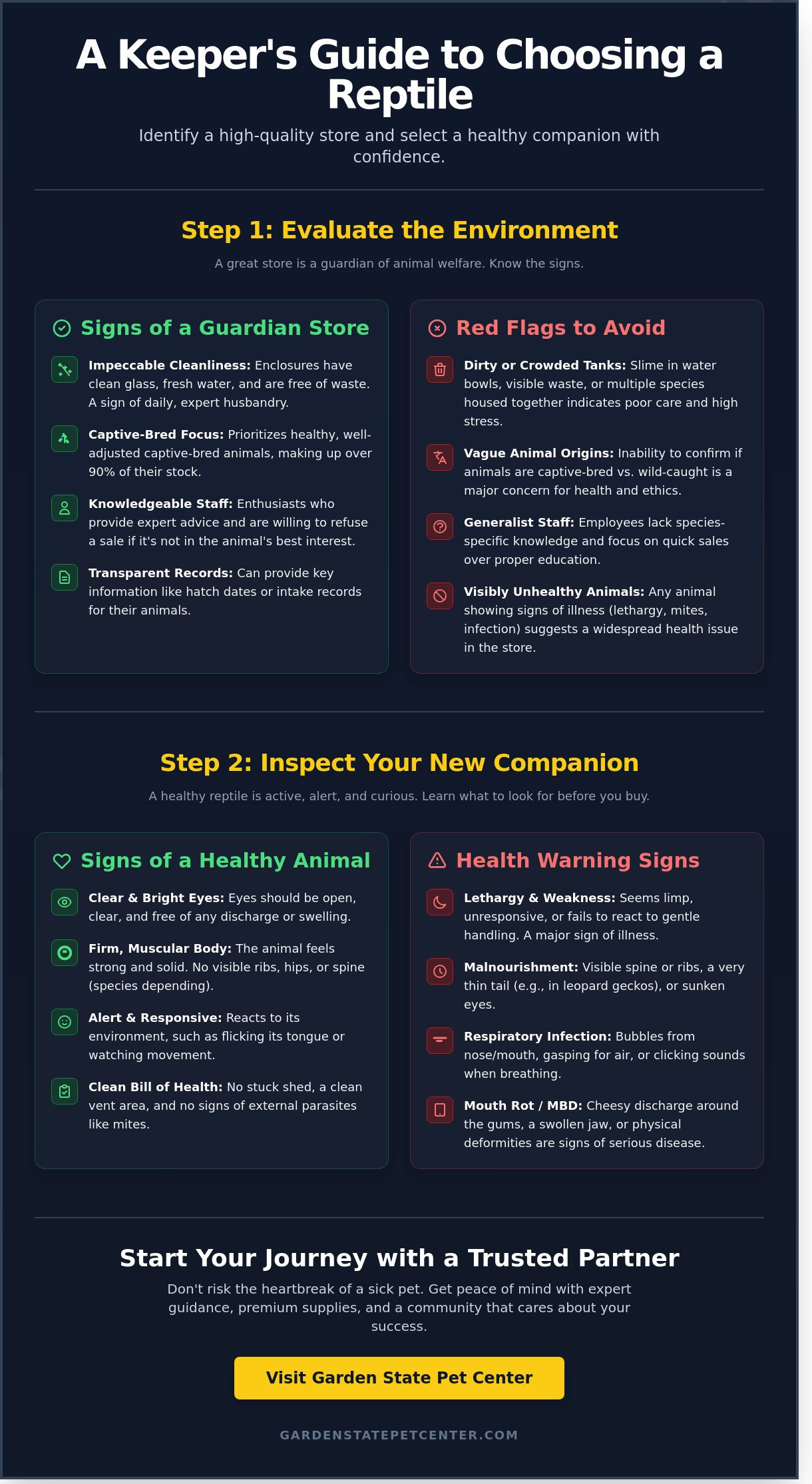
Health standards are non-negotiable in a professional setting. Reputable stores implement strict quarantine and cleaning protocols to prevent the spread of mites and respiratory infections. When you browse a reptile store, look for these specific indicators of quality:
- Captive-Bred Focus: High-quality shops prioritize captive-bred stock, which typically makes up 90% of their inventory to ensure better health and temperament.
- Water Cleanliness: Bowls must be free of slime, substrate, or waste.
- Enclosure Maintenance: Spot cleaning should be evident, and animals should appear alert with clear eyes.
- Documentation: Experts can provide specific hatch dates or intake records for their animals.
By choosing a store that values clinical precision and specialty care, you're setting yourself up for success. These professionals don't just sell you a pet; they provide the premium supplies and expert guidance needed to help your new reptile thrive in its new home.
Selecting Your First Reptile: Health Indicators and Red Flags
Walking into a reptile store requires a keen eye for detail. You want an animal that is thriving, not just surviving. Look for clear, bright eyes and a flicking tongue that indicates curiosity and sensory engagement. A healthy reptile should feel firm and muscular to the touch; visible ribs or a sunken tail base often signal malnutrition. Check for clean vent areas, as fecal staining can indicate internal parasites or digestive distress.
Watch out for red flags that indicate underlying illness. Lethargy is a major concern; while some species are naturally slow, a reptile that doesn't react to movement or handling might be sick. Check for "mouth rot," which appears as cheesy, yellowish discharge around the gums. Bubbles at the nose or gasping for air suggest respiratory infections. Responsible reptile ownership begins with selecting an animal from a source that provides documented health history and origin. Always ask for a feeding demonstration before you buy. If a reptile won't eat in the store, it's unlikely to eat during the stress of a move. Captive-bred animals are 100% preferred over wild-caught specimens to ensure better health and easier acclimation.
Beginner-Friendly Species for Audubon Owners
Choosing the right species simplifies your entry into the hobby. Leopard Geckos remain the gold standard because they stay small and have manageable heating needs. They are incredibly hardy and tolerate occasional handling well. Corn Snakes are famous for their docile temperaments and rarely miss a meal, making them ideal for those who want a predictable feeding schedule. For those interested in lush, bioactive setups, Crested Geckos are the perfect choice since they thrive in vertical spaces and don't require supplemental feeder insects as their primary diet; they eat specialized fruit-based pastes instead.
Managing "Anxious Pets" During Transition
Moving is stressful for any animal. A professional store prepares its animals by maintaining strict humidity and temperature protocols until the moment of sale. Once you arrive home, follow the 48-hour rule: set up the enclosure, release the pet, and do not handle them for at least two full days. This allows their cortisol levels to drop and prevents digestive shutdown. Expert-led shops provide ongoing support for these behavioral concerns to ensure your new companion settles in perfectly. If you're ready to start your journey, you can explore our premium reptile selection to find a healthy, well-started pet.
Local Expertise vs. Online Warehouses: The Audubon Advantage
Buying a pet through a screen feels convenient, but it carries hidden dangers for the animal. Shipping reptiles involves extreme risks. Fluctuations in temperature during transit cause significant physiological stress. Industry reports from 2022 indicate that nearly 15% of live-shipped reptiles arrive with some form of dehydration or stress-related illness. When you visit a local reptile store, you eliminate these variables. You see the animal's temperament firsthand. You verify their health by checking for clear eyes and alert responses before you commit to a purchase.
Local stores provide immediate access to emergency supplies. If a heat bulb burns out on a 20-degree January night in New Jersey, you can't wait for a two-day delivery. Garden State Pet Center offers local NJ delivery and stocks essential survival gear for every species we carry. Building a relationship with us means you have a partner for the life of your pet. This includes expert boarding and grooming services that online warehouses simply cannot provide. We act as a safety net for your exotic companion.
The Problem with Big-Box Retailers
Chain stores often rely on "cookie-cutter" habitats. These setups fail because they don't account for the micro-climates specific species require. A juvenile Bearded Dragon has different hydration needs than an adult, yet big-box employees frequently lack the specialized training to explain these nuances. We take a "Knowledgeable Local Guardian" approach. We provide specialized nutrition advice and husbandry tips that ensure your pet thrives. You get expert guidance tailored to your specific animal's history and health profile rather than a generic sales pitch.
Why Proximity Matters for Exotic Care
Living near a trusted reptile store simplifies the technical side of pet ownership. We handle the difficult tasks like nail trimming or specialized grooming that might be intimidating for a new owner. This proximity fosters a genuine community of NJ hobbyists who share tips and successes. You also get immediate access to our premium reptile collections without the anxiety of shipping delays or transit accidents. Staying local ensures your exotic pet receives consistent, high-quality care from experts who recognize your face and your pet's needs.
- Immediate Support: Access to emergency heat sources and specialized food.
- Health Verification: Physical inspections prevent the heartbreak of a sick arrival.
- Professional Services: Specialized boarding and grooming for exotic species.
- Community Connection: Networking with local NJ keepers and experts.
Creating the Perfect Habitat: Nutrition and Environment
Setting up a habitat requires more than just a glass box and a water bowl. When you visit a reptile store, it's easy to get overwhelmed by the rows of equipment, but successful keeping starts with a commitment to long term growth. You're building an ecosystem that must support your pet from its juvenile stage through its full adult life.
Start with the enclosure size. Many new owners buy a tank that fits the animal today, but a hatchling bearded dragon or blue tongue skink will outgrow a 20 gallon tank in less than six months. Aim for the adult requirement immediately. For many medium sized lizards, this means a 120 gallon (4x2x2 feet) enclosure. Investing in the final habitat size now prevents the stress of repeated relocations and saves you money on upgraded lighting and heating fixtures later.
Thermal regulation is the next priority. Reptiles are ectothermic, meaning they rely on their environment to control body temperature. You must create a heat gradient where one side of the tank is significantly warmer than the other. For a tropical species, this might mean a 95 degree basking spot transitioning to a 75 degree cool zone. This allows your pet to move back and forth to digest food or cool down as needed. Use high quality digital thermometers to monitor both ends; analog dial gauges are often off by as much as 10 degrees.
Don't overlook UVB lighting. For most diurnal reptiles, UVB is a non-negotiable requirement for synthesizing Vitamin D3 and absorbing calcium. Without a T5 HO (High Output) linear bulb, your pet can develop Metabolic Bone Disease (MBD) within months. This condition causes painful bone deformities and is often irreversible. Replace these bulbs every 6 to 12 months, even if they still look bright, as the UVB output decays over time.
Safe bedding is your final structural step. Substrate choice depends entirely on the species. While desert dwellers might thrive on specialized sand mixes, avoid "calcium sand" which can cause fatal impaction if swallowed. For species requiring high humidity, coconut husk or cypress mulch helps maintain moisture levels without molding. Always prioritize safety over aesthetics to ensure your pet remains healthy and active.
Advanced Nutrition from Certified Experts
Proper feeding involves more than just dropping a few crickets into a cage. Expert guidance can help you develop a schedule that balances protein, leafy greens, and essential minerals. Gut-loading is a vital part of this process. Feed your Dubia roaches or mealworms high quality vegetables for at least 24 hours before offering them to your reptile. This ensures the insects are packed with nutrients. Use Calcium and Vitamin D3 powders to dust your feeders, but follow a strict schedule; over-supplementation can be just as harmful as a deficiency.
Supplies for Every Small Animal
Creating a stimulating environment is essential for the mental health of your pet. Use various heights with climbing branches, cork bark hides, and silk foliage to provide security. If you have a multi-pet household, you can find small animal essentials that help you organize your care routines for different species. Holistic care principles apply across the board, ensuring that every creature in your home receives premium nutrition and enrichment. High quality decor doesn't just look good; it encourages natural behaviors like basking, hiding, and foraging.
Ready to build a world-class home for your new companion? Shop our premium reptile supplies to find the expert-tested equipment your pet deserves.
The Garden State Pet Center Experience: Your Trusted NJ Partner
Finding a reliable reptile store shouldn't feel like a gamble. Since 1990, Garden State Pet Center has served the Audubon community by providing specialized care and premium supplies for exotic pets. Our legacy is built on thirty-four years of hands-on experience, ensuring that every animal in our care receives the highest standard of attention. We act as your knowledgeable local guardian, offering the expertise you need to help your new pet thrive from day one.
We believe in building long-term relationships with our community. Our Astro Rewards program specifically values our loyal reptile and bird keepers by offering tangible benefits for your continued trust. Whether you're stocking up on substrate or picking up specialized lighting, this program ensures you get the best value while maintaining your pet's health. It's our way of saying thank you for choosing us as your partner in exotic pet ownership.
Expert Services for Exotic Owners
Our commitment to animal welfare goes beyond retail. We provide comprehensive laboratory testing services to ensure your new companion is disease-free before they even enter your home. By covering laboratory testing fees for common pathogens, we eliminate the guesswork and protect your existing collection. For those who need help with maintenance, our professional grooming services for reptiles and small mammals focus on a low-stress environment. We handle everything from nail trims to shell cleaning with professional precision.
Travel with peace of mind by utilizing our professional boarding services. We understand that finding a sitter for a bearded dragon or a python is difficult. Our facility offers the safest choice for your pet while you're away, providing species-specific heating, lighting, and diet protocols. We also offer DNA sexing for birds and reptiles, a vital service for owners who want to understand their pet's biology or potential breeding needs.
Visit Us in Audubon
Stop by our physical location to experience our curated selection of exotic birds and reptiles in person. Seeing these animals in a clean, professional environment helps you understand the quality of care we provide. If you live within a 10-mile radius of Audubon, take advantage of our free local delivery service for your supplies and equipment. This ensures you never run out of essentials even during a busy week.
Stay connected with our community by joining our newsletter. You'll receive the latest tips on Premium Pet Food and specialized exotic care directly in your inbox. When you choose our reptile store, you aren't just buying a pet; you're joining a family of experts dedicated to the life-long health of your exotic companions.
Start Your Reptile Journey with Confidence
Finding the perfect scaly companion is a big step that requires more than just picking a pet from a screen. You need to look for clear health indicators like bright eyes and active movement while avoiding the red flags of online warehouses. Your pet's health starts with the right partner. A quality reptile store provides the specialized nutrition and environmental setup your new pet needs to thrive for years to come. Since 1990, Garden State Pet Center has served the NJ community as a trusted resource for exotic care. Our team includes a Certified Pet Nutritionist on-site to ensure your animal gets the best fuel possible.
We specialize in handling "Anxious Pets" and provide the patient, expert guidance that big-box retailers simply can't match. Whether you're setting up your first 40-gallon breeder tank or seeking premium supplies for a rare species, you'll find the support you deserve right here in Audubon. We've spent over three decades perfecting our approach to animal welfare so you can focus on the joy of your new pet. Visit Garden State Pet Center in Audubon for Expert Reptile Care!
Frequently Asked Questions
What is the best reptile for a beginner to buy at a reptile store?
Bearded dragons and Leopard geckos are the top choices for beginners at a reptile store. They're docile and easier to handle than most exotic species. A 2023 survey by the American Pet Products Association shows that reptile ownership has grown to 6 million households, with these two species leading the way. They adapt well to captive environments and have straightforward dietary needs that don't require massive enclosures immediately.
How can I tell if a reptile store takes good care of its animals?
Look for clean enclosures, fresh water, and active animals with clear eyes and alert postures. Expert keepers recommend checking for stuck shed on toes or tails, which indicates poor humidity management. A premium reptile store maintains specific temperature gradients for every species. If you see 100 percent of the animals looking well-fed and alert, it's a sign of high-quality husbandry and professional care.
Is it better to buy a reptile from a local store or online?
Buying from a local reptile store is generally better because you can inspect the animal's health and temperament in person. Shipping live animals involves risks like temperature fluctuations or transit delays. FedEx and UPS reports indicate that seasonal weather can impact 20 percent of live animal shipments. When you shop locally, you build a relationship with a trusted expert who can provide ongoing support and immediate assistance.
What basic supplies do I need before bringing a reptile home?
You need a secure enclosure, species-specific lighting, a heat source, substrate, and at least two hiding spots. Proper UVB lighting is essential for 90 percent of diurnal reptiles to prevent Metabolic Bone Disease. Pick up a digital thermometer and hygrometer to monitor the environment accurately. Don't forget a water dish and the appropriate food for your new pet's first week. Having everything set up 24 hours before arrival ensures a smooth transition.
Do reptile stores offer health guarantees for their animals?
Most trusted reptile shops offer a health guarantee ranging from 7 to 14 days after purchase. This period allows you to monitor the animal for any underlying issues that weren't visible at the shop. Always keep your receipt and follow the specific care instructions provided to keep the guarantee valid. These policies demonstrate the shop's confidence in their breeding and husbandry standards. Be sure to ask for the specific terms before you finalize your purchase.
Can I find specialized food like Dubia roaches at a local reptile store?
You can find specialized live feeders like Dubia roaches at a dedicated reptile store. Dubia roaches are a top quality choice because they contain approximately 36 percent protein and are easier to digest than crickets. Many local shops receive fresh shipments weekly to ensure you have access to various sizes. Using these premium feeders helps your reptile maintain optimal growth and health. Check if the store offers loyalty rewards for frequent food purchases.
Do I need to see a vet after buying a pet from a reptile store?
Schedule a wellness exam with an exotic animal veterinarian within 30 days of bringing your pet home. The Association of Reptile and Amphibian Veterinarians (ARAV) recommends an initial fecal exam to check for parasites. Even if your pet looks healthy, a professional can confirm its baseline health status. This visit establishes a medical record for your pet and gives you a chance to ask expert questions about long-term care and nutrition.
How do I transport a new reptile home safely in NJ weather?
Use an insulated carrier and a heat pack to transport your reptile safely when New Jersey temperatures drop below 50 degrees. In winter months, NJ often sees lows under 32 degrees, which is life-threatening for tropical species. Place the heat pack outside the reptile's container to prevent burns. For summer travel, ensure the car is pre-cooled and never leave the animal in a parked vehicle. A quick, direct trip home is the best way to minimize stress.
Share this post
- 0 comment
- Tags: reptile store