

How to Set Up the Perfect Bearded Dragon Enclosure: A Comprehensive Guide


Did you know that nearly 75% of reptile health issues reported to veterinarians are caused by preventable husbandry errors? It's stressful to sift through conflicting advice about substrates or worry that a slight drop in temperature might lead to metabolic bone disease. You want the best for your pet, but the "right" way to build a bearded dragon enclosure often feels like a moving target. We understand that anxiety because we see it every day at Garden State Pet Center.
We agree that your pet deserves a habitat that mimics their natural environment without becoming a chore for you to maintain. You'll master the science of bearded dragon husbandry with our expert guide to choosing, sizing, and equipping a habitat that promotes long-term health. This guide walks you through the precise heat gradients and easy-to-clean setups that turn an average tank into a thriving desert oasis. Discover how to build a space that fosters confidence in your skills and ensures your dragon stays active and healthy for years to come.
Key Takeaways
- Learn why the 120-gallon standard is the essential foundation for simulating a healthy and natural Australian arid-scrubland microclimate.
- Compare the thermal dynamics of PVC, wood, and glass to ensure your habitat maintains a stable and precise temperature gradient.
- Discover how to balance hygiene and natural instincts by choosing safe substrates and creating enriching vertical climbing spaces.
- Follow a professional step-by-step sequence to assemble your bearded dragon enclosure and calibrate hardware for maximum safety.
- Establish a trusted maintenance routine and learn the critical timing for replacing UVB bulbs to ensure your pet's long-term wellness.
Understanding the Foundations of a Bearded Dragon Enclosure
Creating a bearded dragon enclosure is about more than just buying a glass box; it's about engineering a precise microclimate that mimics the Australian arid-scrubland. This environment must provide the specific heat gradients and UV levels these reptiles need to thrive. Husbandry is the intersection of environment and nutrition. Without a solid foundation in the physical space, even the best diet won't prevent health issues like Metabolic Bone Disease or chronic stress.
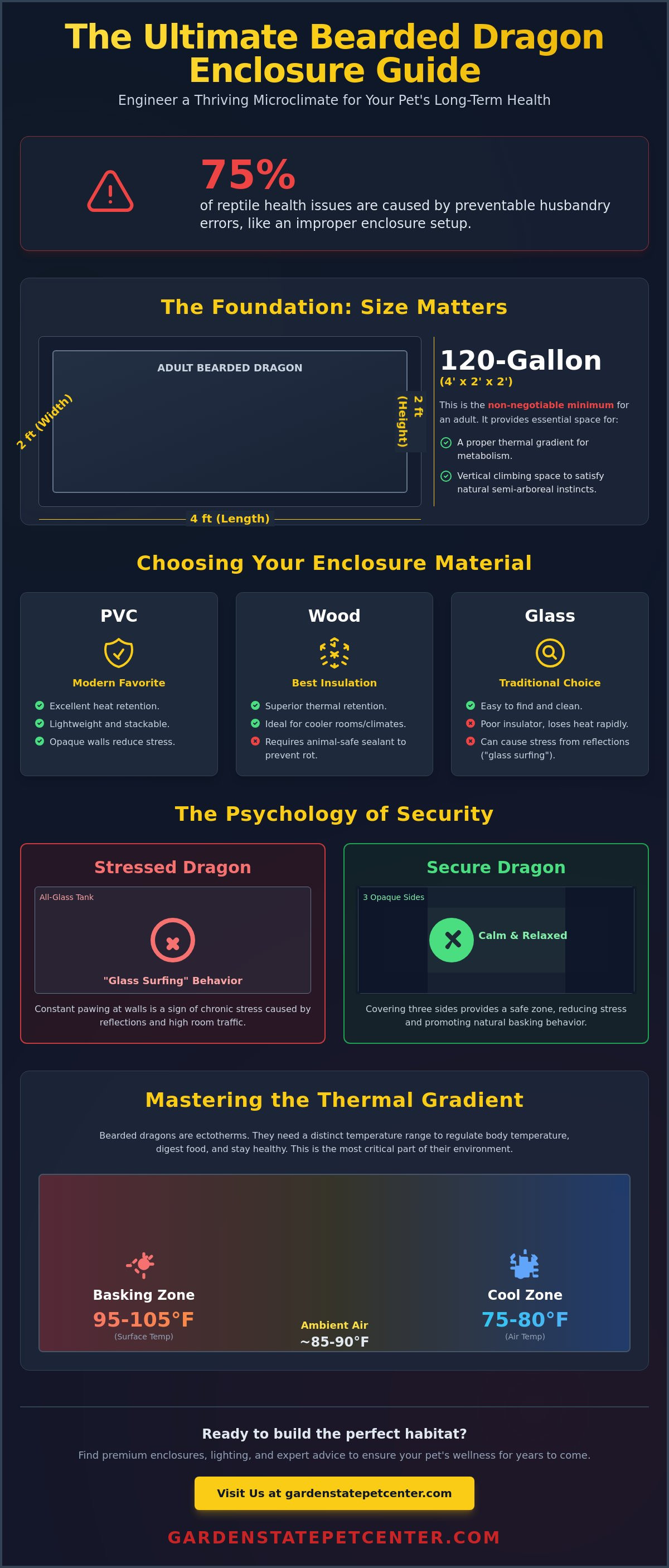
For an adult dragon, a 120-gallon tank measuring 4x2x2 feet is the non-negotiable minimum. While many owners prioritize floor space for roaming, these lizards are semi-arboreal. They naturally spend time climbing low branches and rock outcrops to bask or survey their territory. A 24-inch height allows you to provide essential climbing structures while maintaining a safe distance from high-output heat and UVB lamps. Visit our reptile collection to explore premium habitats that meet these specific structural requirements.
Size Matters: Age-Appropriate Habitats
New keepers often start with a 40-gallon breeder tank, but this is a common and costly mistake. A hatchling grows rapidly, often reaching 16 to 24 inches in length within their first year. You'll find yourself replacing the habitat in less than eight months, which doubles your equipment costs. We recommend the "forever home" approach. Starting with a 120-gallon bearded dragon enclosure saves money and provides the animal with consistent territory. If you're worried about a small juvenile feeling lost in a large space, simply add more clutter and hiding spots to help them feel secure while they grow into the footprint.
The Psychology of Space and Security
The design of the walls affects your pet's mental health. All-glass vivariums often lead to "glass surfing," where a dragon constantly paws at the walls. This behavior is a sign of chronic stress or a lack of understanding of boundaries. Dragons are territorial and can become agitated by their own reflections or high-traffic movement in your home. Use opaque side panels or custom backgrounds to block three sides of the tank. This simple adjustment provides a sense of security and privacy. You'll notice a calmer dragon that spends more time basking and less time frantically trying to escape. Balancing your visibility as an owner with the reptile's need for a "safe zone" is the hallmark of expert care.
Materials and Thermal Dynamics: Creating a Stable Environment
Building a successful habitat begins with choosing the right shell. Your bearded dragon enclosure acts as a micro-ecosystem that must resist external temperature swings while maintaining internal stability. A standard 120-gallon tank measuring 4x2x2 feet is the industry benchmark for adult dragons, but the material you choose dictates how hard your heating equipment has to work. PVC outperforms glass in bioactive setups because its non-porous surfaces retain the 50 to 60 percent humidity required for soil health without allowing for mold growth or heat loss through the walls.
Choosing the Right Enclosure Material
- PVC: This is the modern favorite for a reason. It is lightweight, stackable, and offers excellent thermal retention. Because the walls are opaque, it also reduces stress by preventing the dragon from seeing its reflection or high-traffic room activity.
- Wood: Often used in custom builds, wood provides the best insulation. It is ideal for keepers in northern climates or those keeping pets in rooms that drop below 65 degrees Fahrenheit at night. You must seal it with animal-safe polyurethane to prevent rot from occasional spills.
- Glass: While traditional and easy to clean, glass is a poor insulator. It loses heat rapidly and can be heavy to move. If you use glass, you may need higher-wattage bulbs to maintain target temperatures.
Placement of the habitat is just as vital as the material itself. Avoid placing the tank directly in front of windows. Solar gain through the glass can cause internal temperatures to spike by 10 to 15 degrees in less than 30 minutes, which is potentially fatal. Keep the setup away from air conditioning vents and drafty entryways to prevent sudden chills that disrupt digestion.
Mastering Heat and Light Placement
Bearded dragons are ectotherms, meaning they rely on their environment to regulate their body temperature. You must create a distinct thermal gradient. The basking zone should reach between 95 and 105 degrees Fahrenheit, while the cool side should sit between 75 and 80 degrees. This allows your dragon to move back and forth to manage its metabolism. Discover our selection of premium reptile supplies to find the precise digital thermometers needed to monitor these zones.
For heat, halogen lamps are superior to ceramic heat emitters for daytime use. Halogens produce IR-A and IR-B radiation, which mimics natural sunlight and penetrates deep into the dragon's muscle tissue. Deep Heat Projectors are a solid secondary option because they don't emit light, making them perfect for supplemental nighttime warmth if your home drops below 65 degrees.
Lighting isn't just about heat; it's about survival. A T5 HO UVB tube is a mandatory requirement. This high-output bulb must span at least half the length of the bearded dragon enclosure to ensure the pet synthesizes Vitamin D3. Without this specific 10 to 12 percent UV output, dragons cannot absorb calcium, leading to Metabolic Bone Disease, a condition that affects a large portion of improperly housed reptiles.
Substrate and Interior Design: Balancing Hygiene and Instinct
Choosing the right floor for your bearded dragon enclosure is a critical decision that impacts your pet's long-term health and joint mobility. You must balance the animal's natural instinct to burrow with your need for a sanitary, easy-to-clean environment. A poorly chosen substrate can lead to bacterial growth or life-threatening impaction, while a sterile, flat environment can cause lethargy and stress. Trusted keepers prioritize materials that support natural behaviors without compromising safety.
Evaluating Substrate Options
For beginners, solid substrates offer the highest level of safety and hygiene. Slate tile or textured ceramic tiles are premium choices because they naturally file down sharp claws and retain heat effectively. Avoid reptile carpet, as it frequently snags tiny toes and harbors harmful bacteria. If you choose a loose setup, avoid calcium sand. Instead, use a 70/30 mix of organic topsoil and washed play sand to mimic their natural Australian scrubland. Advanced hobbyists often transition to bioactive setups, utilizing a "clean-up crew" of isopods and springtails to manage organic waste and maintain soil health.
Essential Interior Accessories
Mental stimulation is vital for a thriving reptile. Bearded dragons are semi-arboreal, so you'll want to maximize the vertical space within your bearded dragon enclosure. Incorporate sandblasted driftwood, sturdy branches, and specialized reptile hammocks to encourage climbing. We recommend rotating enrichment items every 30 days to keep your pet engaged and curious. Every setup requires specific functional zones to ensure the animal feels secure:
- Dual Hides: Provide at least two completely dark retreats. One should stay in the cool zone and one in the warm zone. Discover high-quality options in our Reptile Collection to find the perfect fit for your dragon's size.
- Basking Platforms: Use natural slate or rock for basking. These materials absorb heat from overhead lamps far better than plastic, providing essential "belly heat" for digestion.
- Feeding Stations: Place shallow, heavy bowls in the cool corner. This prevents water from evaporating too quickly, which helps maintain humidity levels between 30% and 40%.
Expert interior design transforms a glass box into a functional habitat. By prioritizing high-quality materials and varied textures, you provide your dragon with the security they need to display their full range of unique personalities. Focus on creating a landscape that challenges their muscles and satisfies their curiosity every day.
Step-by-Step: Assembling Your Bearded Dragon Habitat
Building a functional bearded dragon enclosure is a rewarding process that requires a methodical approach. You aren't just putting a pet in a box; you're engineering a life-support system. Our team at Garden State Pet Center recommends following a logical sequence to ensure every component works in harmony before your reptile arrives. This proactive strategy prevents common setup errors that could stress your new companion.
Assembly and Equipment Installation
Step 1: Place your enclosure on a sturdy, specialized reptile stand. A standard 120-gallon habitat can weigh over 150 lbs once you add substrate and heavy decor. Leveling the surface is vital to prevent structural stress and glass fractures over time. Ensure the stand is located away from drafty windows or direct sunlight, which can cause unpredictable temperature spikes.
Step 2: Determine your lighting placement. If your mesh lid blocks more than 30 percent of UV output, install T5 HO UVB fixtures internally using heavy-duty zip ties or mounting brackets. External fixtures are safer for heat lamps to prevent accidental burns, provided they are secured against tipping. Always tuck loose wires away from the reach of your pet to prevent entanglement.
Step 3: Lay your substrate and position heavy hardscape items. Place large rocks or branches directly on the floor of the enclosure before adding loose substrate. This prevents your dragon from tunneling under a heavy rock and causing a collapse. Check every piece of decor for stability; if it wobbles when you push it, it's a safety hazard that needs adjustment.
Calibration and Testing
Precision is the difference between a healthy pet and a costly trip to the vet. Avoid analog dial thermometers because they are frequently inaccurate by 10 degrees or more. Instead, use a high-quality infrared temperature gun to measure surface heat and digital probes for ambient air monitoring. This dual-point check ensures your basking spot reaches a consistent 105 degrees Fahrenheit while the cool side stays near 75 degrees.
Adjust the height of your basking platform or the wattage of your bulb to hit these specific targets. Once the hardware is set, program your digital timers to maintain a strict 12-hour day and night cycle. This regularity supports your pet's circadian rhythm and overall immune health. You must run the fully assembled bearded dragon enclosure for a full 24-hour test period to confirm temperatures remain stable before introducing your pet to their new home.
Ready to build the ultimate reptile retreat? Shop our collection of premium reptile supplies to find the expert-tested gear you need for a successful setup.
Long-Term Maintenance and Expert Support
Setting up your bearded dragon enclosure is just the beginning of a rewarding journey. To keep your dragon thriving, you need a consistent maintenance routine that mirrors their natural environment. A clean habitat directly impacts your pet's immune system and overall longevity. Neglecting these tasks can lead to respiratory infections or skin issues, so staying proactive is the best way to be a responsible keeper.
Cleaning and Hygiene Protocols
Daily attention prevents the buildup of harmful bacteria. You should remove waste and any uneaten fresh salads within 24 hours to prevent mold and odors. Weekly, take out the basking rocks and branches to scrub them with hot water. Every 30 days, perform a deep clean of the entire bearded dragon enclosure using reptile-safe disinfectants. For glass or PVC surfaces, avoid harsh household chemicals that leave toxic fumes. Instead, use veterinary-grade cleaners or a mild vinegar solution that won't irritate your pet's sensitive lungs.
Hygiene also extends to the diet you provide. If you are maintaining a healthy feeder insect population inside the tank, don't let them roam indefinitely. Uneaten crickets or dubia roaches can actually bite and stress your dragon while it sleeps. Remove any loose insects after 15 minutes of feeding time to ensure the enclosure remains a sanctuary, not a hunting ground for pests. This practice keeps the environment sanitary and ensures your dragon stays the apex predator of its domain.
Why a Trusted Partner Matters
Lighting is the most critical component of long-term care. Most T5 UVB bulbs lose their effective output every 6 to 12 months. Even if the bulb still looks bright to your eyes, the invisible UV rays necessary for calcium metabolism have likely faded. Without this specific light frequency, your dragon will lose its appetite and eventually develop metabolic bone disease. We recommend marking your calendar to replace these bulbs twice a year to maintain peak health and keep your pet's metabolism running fast.
A perfect setup is only as good as the support system behind it. At Garden State Pet Center, we serve as your knowledgeable local guardian, providing access to top-tier heating and lighting brands that general retailers often overlook. Our team understands that every reptile has unique needs, especially when they show signs of lethargy or picky eating. We provide the expertise you need to troubleshoot habitat issues before they become medical emergencies. Shop our expert-vetted reptile supplies today to ensure your pet has everything it needs for a long, healthy life.
Give Your Reptile the Home They Deserve
Creating a professional-grade bearded dragon enclosure is a rewarding investment in your pet's long-term health. You now have the blueprint for managing complex thermal dynamics and selecting substrates that prioritize hygiene without sacrificing natural instincts. Since 1990, Garden State Pet Center has served as a trusted resource for exotic pet enthusiasts across the country. Our team includes a Certified Pet Nutritionist to help you balance environmental care with proper fueling for your reptile. We've spent over 30 years refining our selection to ensure every product meets the highest standards of safety and durability. Don't settle for generic setups when you can access specialized equipment backed by decades of hands-on experience. We provide nationwide shipping on all our premium supplies; it's easier than ever to build a thriving habitat from the comfort of your home. Your bearded dragon relies on you to get these details right, and we're here to support you every step of the way.
Browse Our Expert-Curated Reptile Enclosures and Supplies
It's time to turn your vision into a reality and watch your dragon explore their new world with confidence.
Frequently Asked Questions
What is the absolute minimum size for a bearded dragon enclosure?
An adult bearded dragon requires a minimum enclosure size of 120 gallons, which measures 4 feet by 2 feet by 2 feet. This specific 48 inch length is vital because it allows for a proper thermal gradient across the habitat. While a juvenile can start in a 40 gallon tank, they typically outgrow that space in less than 10 months. Providing 8 square feet of floor space ensures your pet can move and hunt naturally.
Can I use a fish tank as a bearded dragon enclosure?
You should avoid using standard fish tanks because they often lack the width and ventilation necessary for a healthy bearded dragon enclosure. Most 55 gallon fish aquariums are only 12 inches wide, which prevents an adult dragon from turning around without hitting the walls. Additionally, glass tanks with mesh tops struggle to maintain the 105 degree Fahrenheit basking temperatures required for proper digestion without overheating the cool side of the tank.
Do bearded dragons need a front-opening enclosure?
Front-opening enclosures are the premium choice for keepers because they allow you to approach your pet from the side. Reaching in from the top mimics the movement of aerial predators, which triggers a stress response in 90 percent of reptiles. These models also simplify your daily routine. You can quickly swap water bowls or spot clean without the hassle of moving heavy heat lamps and screen lids every time you open the habitat.
How often should I clean my bearded dragon enclosure?
You must perform spot cleaning every single day to remove waste, uric acid, and uneaten insects. A comprehensive deep clean should occur every 30 days to maintain a sterile environment. During this monthly maintenance, use a reptile-safe disinfectant to scrub all surfaces and decor. Consistent cleaning is the best way to prevent the growth of harmful bacteria like Salmonella, which can impact both your pet and your household.
What is the best material for a bearded dragon tank?
PVC is the top quality material for these habitats because it provides excellent heat retention and is entirely moisture resistant. Unlike wood, PVC panels won't rot or harbor parasites over time. Many expert keepers prefer PVC because the opaque walls help an anxious pet feel secure. This material is also significantly lighter than glass, making it easier to move a large 120 gallon setup when you need to rearrange your room.
Do I need to turn off the lights in the enclosure at night?
Turn off all lights in the tank at night to provide a natural 12 hour cycle of darkness. Bearded dragons have a parietal eye on the top of their heads that is highly sensitive to light, so even red or blue "night lights" will disrupt their sleep. If your home temperature stays above 65 degrees Fahrenheit, your pet doesn't need supplemental heat. For colder homes, use a ceramic heat emitter that produces no visible light.
How do I stop my bearded dragon from glass surfing?
Stop glass surfing by covering the back and sides of the tank with non-reflective backgrounds to eliminate confusing reflections. This behavior often signals that the lizard is stressed by its environment or that the tank is too small. Check your basking temperatures with a digital probe to ensure they haven't climbed above 107 degrees. Adding 2 or 3 new climbing branches can also provide the mental stimulation needed to stop this repetitive behavior.
Should I use a heat mat for my bearded dragon enclosure?
You should not use heat mats because these lizards have evolved to absorb heat from the sun through their backs. Bearded dragons lack the heat receptors on their bellies to tell them if a surface is too hot, which leads to severe thermal burns in many cases. Stick to overhead heat lamps or halogen bulbs to create a safe basking zone. These trusted methods provide the deep infrared heat your pet needs to stay active and healthy.