

Raw Food Diet for Parrots: 2026 Avian Nutrition Guide


What if the secret to ending your bird’s hormonal mood swings and dull plumage isn't a new supplement, but a return to bio-available, enzyme-rich nutrition? You want the absolute best for your feathered companion, yet the conflicting advice from breeders and veterinarians often leaves you feeling stuck. It's natural to worry about bacterial risks or the fear of a Vitamin A deficiency when you consider moving away from traditional processed pellets. Transitioning to a raw food diet for parrots requires precision, but the rewards of seeing your bird’s true colors shine through are worth the effort.
We believe that every owner deserves to feel like a knowledgeable partner in their bird's care. This 2026 guide will help you master the science and safety of raw nutrition to unlock vibrant health, superior feather quality, and long-term longevity. You'll learn how to navigate the latest USDA avian welfare standards and balance essential nutrients without the guesswork. We'll explore the specific benefits of enzyme-rich forage, strategies to reduce hormonal behaviors, and the exact steps to ensure every meal is both safe and nutritionally complete for your unique bird.
Key Takeaways
- Understand how raw nutrition preserves live enzymes and phytonutrients that are typically destroyed during the high-heat extrusion process of standard pellets.
- Learn the professional techniques for transitioning to a raw food diet for parrots to enhance feather color and stabilize hormonal behaviors.
- Discover why traditional seed mixes often lack essential vitamins and how to use premium pellets as a nutritional safety net rather than a sole food source.
- Master the "chop" preparation method to create safe, variety-rich meals that simplify your daily feeding routine while ensuring a balanced nutrient intake.
- Identify when to consult with a certified pet nutritionist to create a customized feeding plan tailored to your bird's specific species and health profile.
Defining Raw: What a Natural Diet Looks Like for Psittacines
A raw food diet for parrots is often misunderstood as a simple side dish of vegetables. In reality, a true raw foundation means providing uncooked, unprocessed whole foods as the primary source of nutrition. This approach moves away from the static nature of dry pellets and seeds. It focuses instead on the vibrant, enzyme-rich ingredients that fuel a bird's biological systems. Unlike raw diets for carnivorous pets, you won't find meat on an avian plate. Parrots are primarily herbivores and frugivores. Their digestive tracts are specifically designed to break down complex plant fibers and extract nutrients from vegetation.
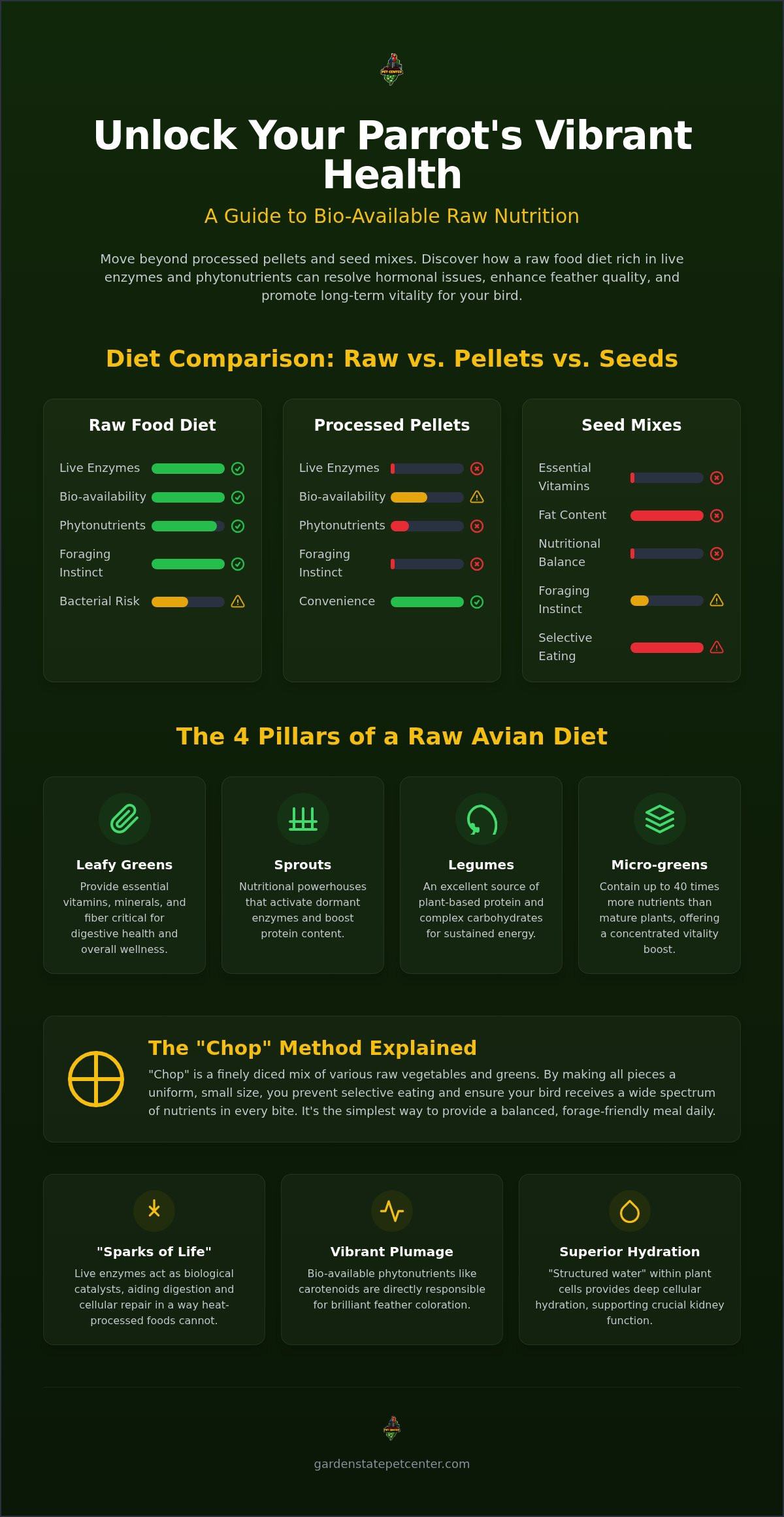
Transitioning to this lifestyle involves more than just adding a few apple slices. A raw foundation consists of four core pillars: leafy greens, sprouts, legumes, and micro-greens. These components provide the essential vitamins, minerals, and live enzymes that processed foods often lack. When you offer these foods in their natural state, you're giving your bird the building blocks for superior health. It's a proactive way to manage your bird's welfare through clinical precision and specialized care.
The Wild Mimicry Concept
In their native habitats, the natural diet of parrots rarely includes the dry, shelf-stable seeds found in grocery stores. Wild birds forage for germinated seeds and unripe fruits that are often bitter and low in sugar. This constant search for food provides vital mental stimulation and encourages natural foraging behaviors. Seasonal variation also plays a huge role; birds eat what is available at different times of the year. By mimicking these shifts at home, you keep your bird engaged and prevent the boredom that leads to feather plucking or screaming. It's about creating a dynamic environment that respects their wild heritage.
Key Components of a Raw Avian Plate
The most effective way to serve these nutrients is through the "Chop" method. This involves finely dicing a variety of vegetables and greens into a uniform mix. Because the pieces are so small, your bird can't pick out only their favorites, which prevents selective eating and nutritional gaps. You can find excellent tools for enrichment in a specialized bird collection to help facilitate these healthy habits. Other essential elements include:
- The Power of Sprouts: Germinated seeds are nutritional powerhouses. Sprouting activates dormant enzymes and increases protein content, making them far superior to dry seeds.
- Low-Glycemic Fruits: Avoid high-sugar hybrid fruits. Stick to wild-type options like berries, pomegranate, and papaya, which offer antioxidants without the sugar spike.
- Micro-greens: These young plants are packed with up to 40 times more nutrients than their mature counterparts, providing a concentrated boost of vitality.
The Science of Vitality: Why Live Enzymes and Phytonutrients Matter
Most commercial pellets are produced through a process called extrusion. This method uses high heat and intense pressure to create shelf-stable kibble. While convenient, this extreme heat effectively kills live enzymes. These enzymes are the biological catalysts that facilitate every metabolic function, from digestion to cellular repair. When you commit to a raw food diet for parrots, you provide these "sparks of life" in their active state. This allows your bird's digestive system to work with the food rather than struggling to process dead matter. It's a proactive approach that supports long-term organ health and vitality.
Vibrant plumage is another direct result of raw nutrition. Phytonutrients, such as carotenoids found in peppers and leafy greens, are responsible for the brilliant reds, yellows, and oranges in a parrot's feathers. These nutrients do more than just look pretty; they act as powerful antioxidants that protect the body from oxidative stress. Additionally, raw foods provide "structured water." This is the moisture found naturally within plant cells. Unlike drinking from a bowl, consuming structured water ensures deep cellular hydration. This is particularly beneficial for kidney health, as it helps flush toxins more efficiently than dry diets ever could.
Bio-availability vs. Synthetic Fortification
Bio-availability refers to the proportion of a nutrient that is absorbed and utilized by the body's metabolic pathways. Whole foods offer nutrients in complex packages that include the co-factors necessary for absorption. Synthetic vitamins added back into pellets often lack these partners, making them harder for the avian body to use. For example, the body regulates the conversion of Beta-carotene from raw vegetables into Vitamin A, which prevents the risk of toxicity. If you're feeling overwhelmed by these technical details, consulting with a certified pet nutritionist can help you design a balanced, bio-available plan tailored to your specific bird.
Combating Common Deficiencies
Chronic health issues in captive birds often stem from Hypovitaminosis A. This deficiency weakens the immune system and leads to respiratory infections and poor skin quality. Raw leafy greens and orange vegetables are the ultimate defense against this condition. When building your bird's plate, referencing a professional Parrot food pyramid ensures you're providing the right balance of these life-saving nutrients. A raw food diet for parrots also helps manage obesity and fatty liver disease. The high-fiber, low-calorie nature of raw vegetables keeps birds satiated without the excess fats and simple carbohydrates found in traditional seed mixes or low-quality pellets. It's about using food as medicine to ensure a long, energetic life for your companion.
Comparing the Options: Raw Food vs. Pellets vs. Seed Mixes
Choosing the right fuel for your avian companion often feels like a complex balancing act between convenience and clinical nutrition. Most bird owners start with traditional seed mixes, but high-energy seeds are worlds apart from the high-nutrient profile of a raw food diet for parrots. While seeds provide the fats necessary for short bursts of energy, they lack the essential vitamins and minerals required for long-term health. For busy owners who cannot commit to daily food preparation, freeze-dried options serve as a reliable middle ground. These products undergo a specialized process that removes moisture while preserving the biological integrity of the ingredients. Explore our curated selection of these premium, nutrient-dense alternatives within the Garden State Pet Center’s bird collection to find the perfect fit for your lifestyle.
The Seed Myth: Why "Standard" Mixes Fail
Many birds develop what experts call a "sunflower seed addiction." These seeds are essentially avian junk food; they are packed with fats but dangerously low in calcium and Vitamin A. Over-reliance on these mixes often leads to brittle feathers, flaky skin, and lethargy. Limit seed intake to high-value rewards during training sessions or reserved for specific species, such as certain Macaws, that require higher fat levels. Keep in mind that a bird's internal health directly influences their external resilience. Maintaining a robust nutritional foundation makes essential maintenance, such as Safe Wing Clipping and Nail Trimming, a much smoother experience for both you and your feathered partner.
The Role of Pellets in a Raw Diet
View premium pellets as a sophisticated "multivitamin" safety net rather than a sole source of sustenance. A balanced approach to a raw food diet for parrots typically follows a 60/40 ratio: 60% fresh raw "chop" and 40% high-quality pellets. This ensures your bird receives consistent baseline nutrition while still benefiting from the live enzymes found in raw foods. Prioritize the following when selecting a pellet brand:
- Avoid Artificial Additives: Steer clear of brands that rely on neon dyes, soy fillers, or refined sugars to appeal to the bird's palate.
- Select Cold-Pressed Options: Look for holistic pellets that use cold-pressing techniques. This specialized method avoids the high temperatures of standard extrusion, protecting heat-sensitive vitamins.
- Monitor Intake: Watch your bird's preferences. Some birds may try to pick out pellets and ignore the raw food, so consistency in serving is key to maintaining the 60/40 balance.
This combination provides the clinical precision your bird needs to thrive throughout every life stage. By mixing these high-quality processed foods with raw ingredients, you create a diet that is both manageable for you and optimal for your bird's welfare.
How to Safely Prepare Parrot "Chop" and Sprouted Legumes
Transitioning to a raw food diet for parrots requires a disciplined approach to food safety. Because raw ingredients haven't been sterilized by high-heat processing, your preparation methods must serve as the primary defense against pathogens. Always wash all produce thoroughly under cold running water to remove residual pesticides, fertilizers, and wax coatings. Use a dedicated cutting board for your bird's meals to prevent cross-contamination. Prepare a large batch of "chop" once a week by finely dicing a variety of vegetables into a uniform mix. This method ensures your bird receives a consistent nutrient profile in every bite and makes daily serving as simple as scooping a portion into their bowl.
Safe sprouting requires maintaining a consistent room temperature and high airflow to prevent the accumulation of moisture and pathogens. Unlike dry seeds, sprouted grains are living foods that are highly susceptible to mold if handled incorrectly. Follow these professional safety standards to ensure every meal is a benefit, not a risk, to your bird's health.
The Sprouting Framework: From Seed to Superfood
Sprouting transforms a dormant seed into a nutritional powerhouse. This process reduces fat content while significantly increasing protein and vitamin levels. Follow these three essential steps:
- Step 1: Rinsing and Soaking: Place your seeds in a clean glass jar and soak them for an 8 to 12 hour window. This initial soak triggers the germination process by breaking down enzyme inhibitors.
- Step 2: The Rinse Cycle: Rinse the seeds at least three times daily with fresh water. Add a few drops of Grapefruit Seed Extract or organic apple cider vinegar to the rinse water to act as a natural antimicrobial agent. This prevents the bacterial growth that often plagues poorly managed sprouts.
- Step 3: Identifying the "Tail": Harvest the sprouts as soon as you see a tiny white "tail" emerging. This is the point where nutrient density is at its absolute peak.
Chop Recipes: The Golden Ratio of Ingredients
A balanced raw plate should follow a specific ratio to prevent vitamin deficiencies and manage energy levels. Use this "Golden Ratio" as your foundation for every batch of chop:
- 40% Leafy Greens and Orange Veggies: Focus on kale, dandelion greens, and sweet potatoes to provide essential Vitamin A.
- 30% Sprouted Grains and Legumes: Use sprouted mung beans, chickpeas, and quinoa for high-quality protein and fiber.
- 20% "Crunch": Include bell peppers, broccoli, and squash to provide texture and encourage beak health.
- 10% Fruit and Healthy Fats: Add small amounts of berries or hemp seeds for antioxidants and omega fatty acids.
If you're looking for specialized tools or high-quality ingredients to start your journey, browse our premium bird food and accessories for expert-approved solutions.
Professional Nutrition: How Garden State Pet Center Supports Your Bird
Empower your bird's journey toward wellness with clinical precision and specialized care. Since 1990, we've focused on the complex needs of exotic birds, moving beyond the role of a standard vendor to become your knowledgeable partner in avian health. Transitioning to a raw food diet for parrots is a significant commitment that benefits from professional oversight. Our on-site certified pet nutritionist is available to help you design a feeding plan that balances bio-available nutrients with your bird's specific metabolic requirements. This expert guidance ensures you avoid common pitfalls like mineral imbalances while maximizing the benefits of live, enzyme-rich foods.
Before you overhaul your bird's bowl, it's vital to establish a health baseline. Monitoring your bird's condition through professional testing allows you to track the positive impact of nutritional changes accurately. We recommend reviewing our Avian DNA Sexing guide to understand how gender and health testing provide a foundation for specialized care. Knowing your bird's biological profile helps our nutritionist tailor a raw food diet for parrots that supports their unique hormonal and physical needs.
Custom Nutritional Consultations
Every parrot is an individual with dietary preferences and requirements that change throughout their life. A professional review of your bird's current eating habits can identify hidden gaps that pellets alone might miss. Whether you're managing a weaning chick, a breeding pair, or a senior bird requiring joint support, a tailored plan makes all the difference. For a deeper look at high-end nutrition, explore our Premium Pet Food Guide. We'll help you adjust ratios and select specific ingredients that promote longevity and vibrant feather quality.
Sourcing Quality Ingredients Nationally
Sourcing your bird's food from a specialized exotic bird store is significantly safer than relying on generic grocery store produce. We curate a selection of premium raw and freeze-dried brands that meet rigorous safety standards. Our laboratory-tested bird supplements and vitamins provide the necessary support to ensure your "chop" is nutritionally complete. Don't let your location limit your bird's access to the best; we offer national shipping for our entire bird collection. This ensures that high-quality, specialized nutrition is always within reach for your feathered companion.
Ready to unlock your bird's full potential? Schedule a Nutritional Consultation today to optimize your parrot’s raw diet and see the difference that professional expertise makes in their daily vitality.
Building a Vibrant Future for Your Feathered Companion
Empowering your bird with a raw food diet for parrots is one of the most rewarding decisions you can make for their long-term welfare. By focusing on live enzymes, phytonutrients, and the "wild mimicry" of foraging, you're providing the biological foundation they need to thrive. You've learned how to safely master the "chop" method and the intricacies of sprouting to prevent common deficiencies like Hypovitaminosis A. These proactive steps lead to more than just better health; they result in a more engaged, energetic, and colorful companion.
Since 1990, we've remained dedicated to providing specialized care for exotic birds through clinical precision and hospitality. Our on-site certified pet nutritionist is ready to help you refine your bird's unique feeding plan to ensure every meal is balanced. With our nationwide shipping, premium avian supplies and supplements are always accessible, no matter where you're located. Take the next step in your bird's nutritional journey today. Browse Our Curated Selection of Premium Parrot Foods and discover how high-quality ingredients can unlock your bird’s true potential. Your commitment to excellence starts in the bowl.
Frequently Asked Questions
Is a raw diet safe for all parrot species?
Yes, a raw diet is generally safe for all psittacines, but the specific ratios must match the bird's natural history. For example, high-energy species like Macaws require more raw fats from walnuts or hemp seeds, whereas Amazons need a higher percentage of low-calorie leafy greens to prevent obesity. We recommend consulting with our on-site certified pet nutritionist to create a tailored plan that respects your bird's unique metabolic requirements and life stage.
Can I feed my parrot raw beans and legumes?
You should only offer certain small legumes in a raw, sprouted state. Mung beans, lentils, and chickpeas are safe and highly nutritious once germinated. However, you must never feed raw large beans, such as kidney, navy, or lima beans. These contain lectins that are toxic to birds unless they are thoroughly boiled. Sprouting is the preferred method for smaller legumes as it increases protein bio-availability and neutralizes most anti-nutrients.
How do I prevent bacteria and mold in sprouted seeds?
Preventing pathogens starts with frequent rinsing and high-quality airflow. Rinse your seeds at least three times daily using fresh, cold water mixed with a natural antimicrobial like grapefruit seed extract or organic apple cider vinegar. Use a dedicated sprouting jar with a mesh screen to ensure stagnant moisture doesn't lead to mold. If the sprouts smell sour or look slimy, discard them immediately to protect your bird from bacterial infections.
What is "parrot chop" and how long does it last?
Parrot chop is a uniform blend of finely diced vegetables, sprouts, and grains. This preparation method is essential because it prevents your bird from picking out only high-fat items. Fresh chop stays safe in the refrigerator for approximately three days. For better efficiency, you can freeze individual portions in silicone molds or airtight bags. This allows you to provide a variety-rich meal every morning without the need for daily kitchen labor.
My parrot only eats seeds; how do I switch them to raw food?
Switching a seed-addicted bird requires a gradual, persistent strategy. Begin by dicing your raw ingredients very small and mixing them directly into their current seed bowl. This forces the bird to taste the new flavors while they forage for seeds. Over several weeks, slowly decrease the seed volume and increase the raw portion. Introducing a raw food diet for parrots during the morning hours, when their hunger is highest, typically speeds up the acceptance process.
Should I still feed pellets if I am feeding a raw diet?
We suggest using premium, cold-pressed pellets as a nutritional safety net alongside fresh foods. While a raw diet provides essential live enzymes, pellets ensure your bird receives a consistent baseline of minerals and vitamins. A standard professional recommendation is a 60/40 ratio, with 60% consisting of fresh raw chop and 40% high-quality pellets. This holistic approach offers the best of both worlds, combining natural vitality with clinical nutritional precision.
What are the most toxic raw foods to avoid for birds?
Several common household foods are highly toxic to parrots and must be strictly avoided. These include avocado, chocolate, caffeine, onions, garlic, and the pits or seeds of most fruits. Avocado contains persin, which is often fatal to birds. You should also avoid giving your bird any foods high in salt, sugar, or artificial preservatives. Stick to the "Golden Ratio" of safe greens, sprouts, and vegetables to ensure your bird's long-term safety.
Can a raw diet help with parrot feather plucking?
A raw food diet for parrots can help alleviate feather plucking if the root cause is nutritional or dermatological. The live enzymes and essential fatty acids found in raw foods promote better skin hydration and feather follicle health. While plucking is often a complex behavioral issue, removing the physical irritation caused by dry, itchy skin is a vital first step. A nutrient-dense diet ensures your bird feels their best from the inside out.

Article by
Victor Santucci
Victor Santucci is the owner of Garden State Pet Center in Audubon, NJ, where he specializes in premium pet nutrition, exotic animals, and expert-level care. With years of hands-on experience and a passion for helping pets thrive, Victor is dedicated to educating pet owners on proper nutrition, enrichment, and species-specific care. His mission is simple: provide every pet with the highest quality products and every customer with honest, knowledgeable guidance.
Share this post
- 0 comment
- Tags: Avian Nutrition, Bird Health, Hormonal Parrots, Parrot Care, Parrot Chop, Pet Birds, Raw Food Diet, raw food diet for parrots