

What to Feed a Guinea Pig: 2026 Premium Nutrition Guide


That bag of colorful "gourmet" muesli in the pet store might look like a feast, but it's often the quickest path to dental issues and nutritional imbalances for your small companion. It's completely normal to feel overwhelmed when deciding exactly what to feed a guinea pig, especially with the constant worry about Vitamin C deficiency or accidentally offering a toxic vegetable. You want the best for your pet, yet the conflicting advice found online often leaves owners feeling more confused than confident. We understand that your guinea pig is a member of the family who deserves a diet rooted in clinical precision rather than marketing gimmicks.
At Garden State Pet Center, our certified pet nutritionists believe that specialized care starts with high-quality, holistic standards. This 2026 premium nutrition guide provides the clarity you've been looking for by outlining the essential 80-10-5-5 dietary ratio required for longevity. You'll discover a professional feeding schedule that prioritizes high-fiber forage and bioavailable vitamins over processed fillers. We're going to explore the specific daily requirements for hay, pellets, and fresh greens to ensure your guinea pig maintains a healthy weight and perfect teeth for years to come.
Key Takeaways
- Master the 80% rule for high-quality grass hay to ensure proper dental wear and essential digestive health.
- Learn how to identify and prevent Vitamin C deficiency by incorporating bioavailable sources into your pet's daily routine.
- Gain confidence in what to feed a guinea pig by identifying the "gourmet trap" of unhealthy mixes and choosing uniform, nutrient-dense pellets.
- Identify toxic household hazards and high-sugar commercial treats that can compromise your guinea pig's long-term wellness.
- Establish a professional morning and evening feeding schedule that balances fresh water, measured pellets, and a rotation of leafy greens.
The Foundation of Guinea Pig Nutrition: Why Hay is Essential
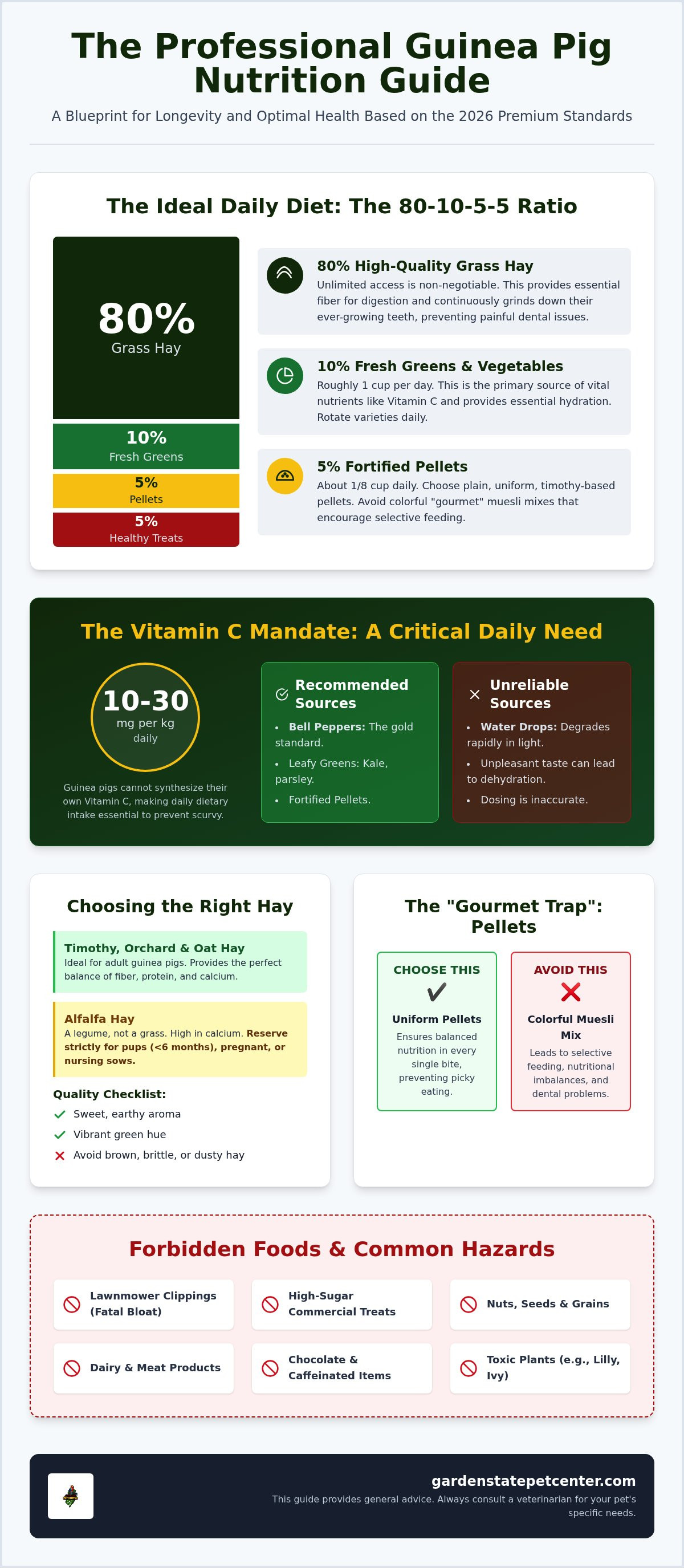
High-quality grass hay isn't just a side dish; it's the absolute bedrock of your pet's health. For anyone wondering what to feed a guinea pig, the answer starts with ensuring that at least 80% of their daily intake consists of unlimited forage. This constant chewing serves a critical dual purpose. It provides the necessary fiber for digestion and physically grinds down their open-rooted teeth, which grow continuously throughout their lives. Without this abrasive action, guinea pigs can develop painful dental spurs that prevent them from eating entirely. You can find a comprehensive overview of guinea pig diet requirements to see how these animals evolved as specialized foragers.
To better understand how this foundation fits into a daily routine, watch this helpful video:
Fiber is the primary engine that drives the guinea pig's unique digestive tract. They rely on a "caecotrophic" process where fiber moves through the gut to produce nutrient-rich cecotropes. These are specialized droppings that the animal re-ingests to absorb vital B vitamins and protein. This process requires a steady stream of long-strand fiber to keep the cecum functioning correctly. Never offer lawnmower clippings or fermented grass. These materials ferment rapidly and can cause fatal bloat or introduce toxic chemicals and parasites into their sensitive systems.
Choosing the Right Hay Variety
Timothy hay remains the gold standard for adult guinea pigs due to its ideal balance of fiber, protein, and calcium. If you or your pet find Timothy hay too dusty, orchard grass and oat hay are fantastic alternatives that provide excellent nutritional variety. Alfalfa hay is the exception to the rule. Because it is a legume rather than a grass, it contains high levels of calcium and protein. It is strictly reserved for growing pups under six months of age or pregnant and nursing sows who require the extra caloric boost.
Storage and Quality Control
Freshness is non-negotiable for specialized care. High-quality hay should have a sweet, earthy aroma and a vibrant green hue rather than looking brown or brittle. To maintain this nutritional density, store your hay in a cool, dry environment with adequate airflow to prevent mold growth. When choosing your supply, remember that first cut hay is harvested early and contains more stems and seed heads for maximum fiber, while second cut hay is leafier and softer, making it a favorite for many adult cavies. Browse our curated small animal collection to find premium forage that meets these professional standards.
The Vitamin C Mandate: Preventing Scurvy in Small Mammals
Unlike most mammals, guinea pigs lack the enzyme L-gulonolactone oxidase. This means they can't synthesize their own Vitamin C from glucose. If you're researching what to feed a guinea pig, this biological quirk is your most important consideration. Without a consistent daily intake, your pet can develop scurvy in as little as two weeks. This condition manifests as painful joint swelling, extreme lethargy, and a dull, rough coat. In advanced stages, you might notice dental issues or spontaneous bleeding from the gums, which often leads to a refusal to eat.
A healthy adult typically requires 10 to 30 mg of Vitamin C per kilogram of body weight every single day. While many retail stores sell liquid additives for water bottles, we strongly advise against them. Vitamin C is highly unstable and degrades rapidly when exposed to light and air; it loses nearly 50% of its potency within 24 hours of being added to a clear water bottle. Additionally, many cavies find the medicinal taste off-putting and may stop drinking altogether, leading to dangerous dehydration. Providing nutrients through fresh foods and stabilized supplements is a much more reliable approach.
Whole Food Vitamin C Sources
Bell peppers are the gold standard for daily feeding. They are low in calcium and sugar but packed with ascorbic acid. According to veterinary guidance on guinea pig nutrition, providing a variety of fresh vegetables ensures a broad spectrum of nutrients. Dark leafy greens like parsley, kale, and spinach are excellent but should be fed in moderation due to high oxalate levels. Occasional treats like guava or strawberries can provide a massive Vitamin C boost, though these should be used sparingly to avoid obesity and digestive upset.
Supplementation Strategies
For senior pets or those recovering from illness, a whole-food diet might not be enough to meet their elevated needs. We recommend using stabilized Vitamin C tablets that are offered directly as a treat. This ensures the animal receives the full dose without the degradation issues found in water or mixed pellets. Our curated selection of Small Animal Vitamins & Supplements provides reliable options for owners who want to ensure their pets thrive. If you're unsure about your pet's specific requirements, our on-site certified pet nutritionist can help you design a customized plan. You can browse our premium small animal care products to find the right balance for your home.
Pellets and Fresh Greens: Quality Over Quantity
The "Gourmet Trap" is a marketing tactic that often confuses well-meaning owners. Many commercial mixes are filled with sunflower seeds, dried corn, and colorful dyed bits that look appealing to humans but are biologically inappropriate for cavies. These ingredients are high in fat and sugar, which can quickly lead to obesity and fatty liver disease. More importantly, these mixes encourage selective feeding. A guinea pig will pick out the high-sugar pieces and leave the nutrient-dense pellets behind. This behavior creates significant nutritional gaps over time. Uniform, plain pellets ensure your pet receives every vitamin and mineral in every bite. When you're deciding what to feed a guinea pig, simplicity is often the most professional choice.
Portion control is vital for maintaining a healthy weight. Limit pellet intake to 1/8 or 1/4 cup per day for an adult. Overfeeding pellets can lead to heart issues and put unnecessary strain on the kidneys. According to the NC State University Veterinary Hospital, pellets should only supplement the diet, not lead it. By strictly measuring this portion, you encourage your pet to consume more hay, which is essential for the dental health we discussed in the first section.
Holistic Pellet Selection
Check the label for Timothy meal as the primary ingredient. Many lower-quality brands rely on soy-based fillers or molasses to bind the pellets together. While these make the food palatable, they contribute to unhealthy weight gain and dental decay. Choosing a diet from our Premium Small Animal Food collection ensures your pet gets the fortified nutrition they need without the hidden sugars. Look for pellets that are stabilized with Vitamin C to support their immune system effectively.
The Daily Salad Bowl
Fresh vegetables should account for approximately 10% of your pet's daily intake, which translates to roughly one cup of greens per day. Focus on safe staples like Romaine lettuce, green leaf lettuce, and cilantro. These provide essential hydration and fiber without excessive minerals. You must be cautious with calcium-rich options like kale, spinach, or dandelion greens. While they are packed with vitamins, they require a strict rotation schedule to prevent the formation of painful bladder stones. Understanding what to feed a guinea pig also means knowing what to exclude. Avoid "gas producers" like broccoli, cabbage, and cauliflower. These can cause painful, and sometimes fatal, bloating in a guinea pig's sensitive digestive system.
Forbidden Foods and Common Feeding Mistakes
Understanding what to feed a guinea pig is just as much about knowing what to avoid as it is about knowing what to provide. Many owners inadvertently offer items that are marketed as treats but are actually detrimental to a cavy's health. High-sugar fruits and commercial "honey sticks" are common culprits. These items lead to rapid weight gain and can disrupt the delicate balance of gut flora. Starchy human foods like bread, crackers, and potatoes are strictly prohibited. These complex carbohydrates are difficult for their specialized digestive systems to process, often leading to painful gas or serious metabolic issues.
Don't be fooled by the "Iceberg Illusion." While iceberg lettuce looks like a safe green, it's essentially nutrient-void water. It often causes severe diarrhea and provides none of the fiber or vitamins your pet needs to thrive. Similarly, avoid raw beans and legumes. These contain hemagglutinins that are toxic to small mammals and can cause severe digestive distress. Safety in specialized care means being proactive about every ingredient that enters the enclosure.
The "Never Feed" List
Guinea pigs are obligate herbivores. This means dairy, chocolate, and caffeine are completely toxic to their systems. Avoid all seeds and nuts; they are significant choking hazards and contain high fat levels that contribute to fatty liver disease. Members of the allium family, including onions, garlic, and leeks, are particularly dangerous. These plants contain compounds that can cause hemolytic anemia, a condition that destroys a guinea pig's red blood cells and requires immediate professional intervention.
Mistakes in Feeding Mechanics
A common error is overfeeding pellets at the expense of hay. As established in our earlier discussion on forage, pellets should never replace the 80% fiber requirement. Sudden dietary shifts are another major risk. Introducing a new vegetable too quickly can trigger gastrointestinal stasis, which is a life-threatening emergency where the digestive tract stops moving. Always transition to new foods over a period of 7 to 10 days to allow the gut bacteria to adjust. Finally, don't neglect water hygiene. Biofilm and bacteria build up quickly in plastic bottles, so daily scrubbing is essential to prevent infections. To ensure you have the safest tools for the job, shop our safety-tested small animal supplies and consult with our on-site experts about what to feed a guinea pig for long-term wellness.
Creating a Professional Guinea Pig Feeding Schedule
Consistency is the secret to a thriving cavy. Establishing a predictable rhythm helps reduce stress and allows you to monitor their appetite with clinical precision. When you're managing what to feed a guinea pig, a split schedule ensures they receive fresh nutrients throughout the day without the risk of produce wilting in the enclosure. This routine also provides a natural opportunity to check their behavior and ensure they're active and engaged.
Start your morning by refreshing their water supply. Scrub the bottle to remove any biofilm and fill it with fresh, cool water. Replenish their hay manager with high-quality Timothy hay and offer the first half of their daily vegetables, focusing on Vitamin C staples like bell peppers. In the evening, provide the measured portion of uniform pellets. This is also the ideal time to introduce a secondary rotation of leafy greens. Weight monitoring is your most reliable health indicator; use a digital scale to weigh your pet weekly. A sudden loss of even two ounces can signal an underlying dental or digestive issue before physical symptoms appear.
Mental enrichment is just as vital as physical nutrition. Don't just place food in a bowl; integrate foraging toys to stimulate their natural instincts. The ideal foraging environment mimics a natural meadow by hiding hay and greens in cardboard tubes or woven grass balls to encourage active exploration and problem-solving.
A Sample Daily Menu
A balanced daily menu for a healthy adult cavy should follow these specific measurements:
- Unlimited Timothy Hay (available 24/7)
- 1 cup of varied leafy greens (Romaine, green leaf, or cilantro)
- 1/4 slice of a large bell pepper (any color)
- 1/8 cup of premium, uniform pellets
Expert Support for Your Pet
Every pet is unique, and specialized requirements often arise as they age. If you're caring for a senior cavy or a pet with chronic health issues, our Pet Nutritional Consultations provide tailored guidance to meet their changing needs. Transitioning to a holistic diet should always be a gradual process to protect their sensitive gut flora. We offer nationwide shipping for all our professional-grade supplies, ensuring you have access to the highest quality forage and fortified diets regardless of your location. Our team has specialized in exotic small mammals since 1990, and we're ready to help you master what to feed a guinea pig for a lifetime of health. Shop our curated selection of holistic small animal diets today.
Elevating Your Guinea Pig's Long-Term Wellness
By prioritizing high-fiber Timothy hay and ensuring a stable daily source of Vitamin C through fresh bell peppers, you've taken the most significant steps toward preventing scurvy and dental spurs. Remember that avoiding colorful, seed-filled mixes is vital for preventing selective feeding and maintaining a healthy weight. Mastering what to feed a guinea pig is a commitment to specialized care that ensures your companion thrives for years to come. Consistency in your feeding schedule and regular weight monitoring will help you identify potential health issues before they become emergencies.
Since 1990, Garden State Pet Center has provided family-owned expertise and a curated selection of holistic diets. Our on-site certified pet nutritionist guides our product selection to ensure every bag meets professional standards. We're proud to offer nationwide shipping on all premium pet supplies, making it easy for you to access the hard-to-find nutrition your pet deserves. Browse Our Certified Nutritionist-Approved Small Animal Food today and join a community dedicated to excellence in exotic pet care. Your guinea pig's health is a reflection of the specialized attention you provide every single morning.
Frequently Asked Questions
Can guinea pigs eat fruit every day?
No, fruit should only be offered as an occasional treat once or twice a week. While fruits like strawberries and apples are rich in vitamins, their high sugar content can quickly lead to obesity and dental decay in small mammals. When deciding what to feed a guinea pig for daily health, prioritize leafy greens over sugary fruits. Excessive fruit intake can also disrupt the delicate balance of their gut bacteria, potentially causing painful digestive upset.
How much water does a guinea pig need?
Your guinea pig requires unlimited access to fresh, clean water 24 hours a day. On average, a healthy cavy drinks about 100ml of water per kilogram of body weight, though this varies based on temperature and their intake of succulent vegetables. Use a high-quality drip bottle and scrub it daily to prevent the buildup of harmful bacteria or biofilm. Always monitor the water level closely to ensure the bottle's nozzle hasn't become clogged with hay or debris.
Is it okay to feed my guinea pig rabbit food?
You should never feed rabbit food to a guinea pig because it lacks the essential Vitamin C they require to survive. Rabbits can synthesize their own Vitamin C, so their pellets aren't fortified with it. Feeding rabbit food will quickly lead to scurvy and other serious nutritional deficiencies. Always choose specialized pellets from our small animal food collection that are specifically formulated with stabilized Vitamin C to meet their unique biological needs.
Why is my guinea pig stopped eating hay?
If your pet stops eating hay, it's often a sign of a serious medical emergency like dental spurs or gastrointestinal stasis. Guinea pigs must forage constantly to keep their digestive systems moving and their teeth ground down. If you notice a decrease in hay consumption, check for signs of lethargy or drooling. Since their health can decline rapidly, consult a professional immediately if they haven't eaten for more than 12 hours to prevent fatal complications.
What are the best treats for guinea pigs?
The best treats are natural, low-sugar options like fresh herbs, forage mixes, and high-quality pea flakes in moderation. Cilantro, parsley, and dill provide excellent mental enrichment and vitamins without the risks associated with commercial "honey sticks." You can also use specialized small animal treats that are free from artificial dyes and seeds. These rewards should always be used sparingly to ensure your pet continues to eat their essential hay and pellets.
How do I know if my guinea pig is overweight?
You can determine if your pet is overweight by using a digital kitchen scale for weekly weigh-ins and performing a physical check. A healthy cavy should have a distinct "waist" when viewed from above, and you should be able to feel their ribs under a thin layer of fat. If their belly drags on the ground or they have a large dewlap under their chin, they may be obese. Managing what to feed a guinea pig with strict portion control is the best way to maintain a healthy weight.
Can guinea pigs eat grass from my backyard?
Fresh grass from your backyard is safe only if you can guarantee it hasn't been treated with pesticides, fertilizers, or herbicides. You must also ensure that no dogs, cats, or wild animals have soiled the area, as this can introduce dangerous parasites. Introduce fresh grass slowly to avoid upsetting their sensitive digestive tracts. While it is a great source of fiber and Vitamin C, it should supplement their diet rather than replacing their unlimited supply of high-quality Timothy hay.
Should I give my guinea pig a salt lick or mineral block?
No, you should avoid giving your guinea pig salt licks or mineral blocks. High-quality pellets and hay already provide all the necessary minerals for their health. Adding extra salt or calcium to their diet significantly increases the risk of developing painful bladder or kidney stones. These stones often require surgical intervention and can be life-threatening. Stick to a balanced diet of forage and fresh vegetables to ensure they receive the correct nutritional ratios without the risk of mineral overload.

Article by
Victor Santucci
Victor Santucci is the owner of Garden State Pet Center in Audubon, NJ, where he specializes in premium pet nutrition, exotic animals, and expert-level care. With years of hands-on experience and a passion for helping pets thrive, Victor is dedicated to educating pet owners on proper nutrition, enrichment, and species-specific care. His mission is simple: provide every pet with the highest quality products and every customer with honest, knowledgeable guidance.
Share this post
- 0 comment
- Tags: animal wellness, guinea pig care, guinea pig diet, guinea pig food, hay, pet nutrition, small pets, vitamin c, what to feed a guinea pig