

Reptile supplies and food NJ: Everything You Need to Know


What if the secret to your reptile's long term health isn't just the size of the tank, but the precision of their microscopic gut health and specific light wavelengths? Finding the right reptile supplies and food NJ requires more than a trip to a generalist shop; it demands an understanding of specialized nutrition and advanced environmental engineering. We know how frustrating it is to deal with inconsistent feeder quality or the confusing maze of New Jersey's $10 hobby permit regulations and prohibited species lists. You deserve a reliable partner who prioritizes animal welfare over simple retail transactions.
This article will help you master the complexities of reptile husbandry with expert guidance on specialized nutrition, environmental controls, and habitat design. You'll learn how to move beyond basic survival by creating a visually stunning and functionally perfect habitat. We're diving into the latest 2026 trends like bioactive enclosures and expert-vetted nutritional products to ensure your exotic companion enjoys a vibrant, healthy life.
Key Takeaways
- Understand why dietary variety and the science of gut-loading are essential for maximizing nutrient transfer in your reptile's diet.
- Master the biological necessity of the thermal gradient by comparing specialized heating elements like Deep Heat Projectors and Halogen lamps.
- Compare the maintenance and enrichment benefits of bioactive ecosystems versus traditional sterile setups to choose the best environment for your pet.
- Discover how to source expert-vetted reptile supplies and food NJ that surpass generic big-box standards for specialized exotic species.
- Learn to replicate wild ecosystems through precision environmental engineering, ensuring your reptile thrives rather than just survives.
Defining the Standard for Reptile Supplies and Food (NJ Expert Criteria)
Excellence in reptile care isn't just about keeping an animal alive; it's about helping them thrive. When you search for the best reptile supplies and food NJ has to offer, you're looking for tools to recreate a complex, living ecosystem. This holistic approach treats biology and environment as a single, inseparable unit. Modern Herpetoculture has evolved far beyond the simple glass tanks of the past. It now requires a deep understanding of UV gradients, humidity cycles, and bio-available nutrition to ensure long term health.
Generic big-box supplies often fail specialized exotic species because they prioritize mass appeal and low margins over specific biological needs. These products might offer a one-size-fits-all solution that ignores the nuanced requirements of a tropical gecko versus a desert-dwelling skink. We believe in a higher standard. Every item in our inventory is selected with the input of expert perspectives on safety and efficacy. This means verifying that all materials are non-toxic and every electrical component meets rigorous safety standards to prevent habitat accidents. Our baseline for safety is absolute because your pet's life depends on the reliability of their life-support systems.
To see how expert curation makes a difference in your setup, watch this helpful guide:
The Importance of Specialized Sourcing
Manufacturing standards for reptile terrariums and lighting vary wildly across the industry. Some brands focus on aesthetic appeal while cutting corners on the durability of heat-resistant plastics or the accuracy of thermostats. Identifying high-quality brands that prioritize animal welfare over profit margins is a critical step for any keeper. Professional-grade supplies are a smart investment. They provide a stable environment that reduces stress for your pet, which directly lowers long-term veterinary costs and prevents health crises.
The Role of Nutrition in Reptile Longevity
Nutrition is the cornerstone of a long, vibrant life. We've moved past the era of maintenance diets that only provide the bare minimum for survival. A thriving nutritional profile includes a variety of high-quality proteins and essential vitamins that impact everything from scale color to energy levels and reproductive health. Holistic reptile nutrition is a balance of bio-available minerals and species-appropriate proteins. By focusing on expert-vetted products and pet nutritional consultations, you can ensure your companion receives the fuel they need for every stage of their life.
Advanced Reptile Nutrition: Moving Beyond Basic Feeders
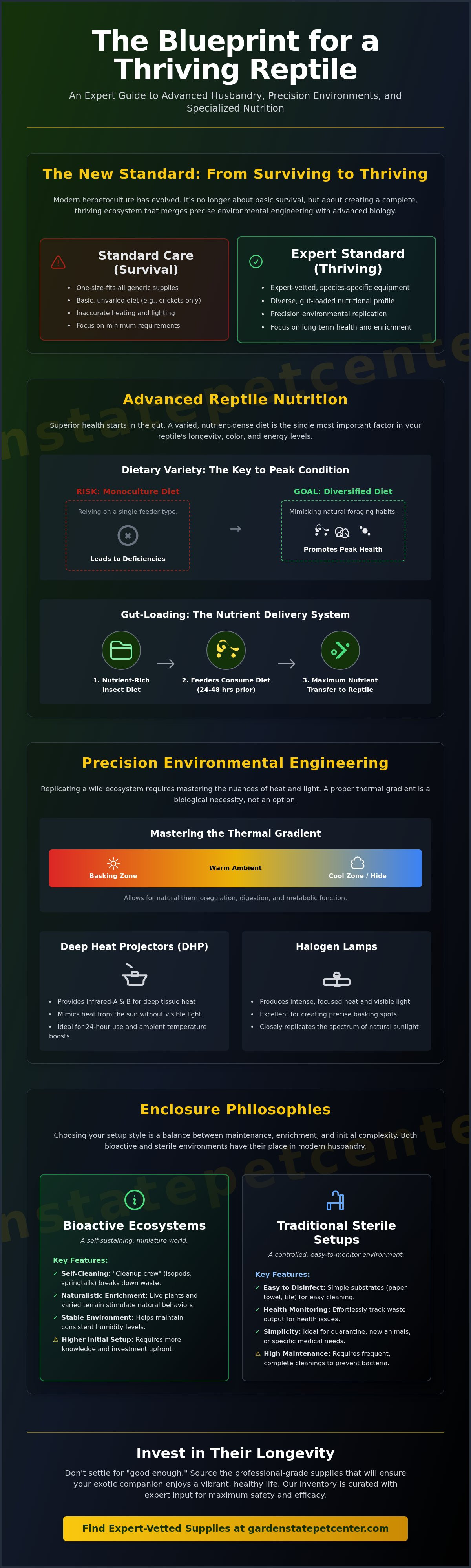
Superior health starts in the gut. When you are sourcing reptile supplies and food NJ, the most common mistake is relying on a single feeder type. This over-reliance often leads to nutritional deficiencies and a lack of mental enrichment. A bearded dragon or leopard gecko needs a varied menu to mimic their natural foraging habits. You should avoid the trap of "cricket-only" diets. Instead, mix in different proteins, greens, and specialized holistic diets to provide a complete spectrum of vitamins. This variety is essential for both insectivores and herbivores to maintain peak physical condition.
Gut-loading is the scientific practice of feeding your insects a high-nutrient diet 24 to 48 hours before they become a meal. This turns the feeder into a biological "nutrient delivery vehicle" for your pet. According to the AVMA reptile selection guide, proper nutrition is one of the most critical factors in preventing common captive diseases. By using professional-grade insect diets for your feeder colonies, you ensure maximum nutrient transfer. We also suggest incorporating freeze-dried or raw components into specialized diets to provide bio-available minerals that standard pellets might lack.
Live Feeders and Nutrient Density
Different life stages require different fat and protein ratios. Dubia roaches offer high protein and low chitin, making them an excellent staple for growing juveniles. Hornworms provide essential hydration and calcium, while mealworms are better suited as occasional treats due to their higher fat content. You can easily maintain a feeder colony at home using high-quality insect diets to keep your supply fresh and nutritious. For a deeper look at specific dietary requirements for popular species, explore our bearded dragon food guide.
Supplements: The Essential Micro-Nutrient Framework
Calcium with D3 is non-negotiable for most indoor reptiles. Without proper supplementation, your pet cannot process minerals, which often leads to the development of Metabolic Bone Disease. Use pure mineral powders for daily dusting and multivitamins approximately once a week, depending on the species. If you have a picky eater, try the "shake and bake" method in a small, sealed container to ensure even coverage on live feeders. If you're unsure about the right balance for your specific pet, consider scheduling one of our pet nutritional consultations to create a custom plan.
Precision Environmental Supplies: Mastering Heat and Light
Reptiles don't just want warmth; they require a precise thermal gradient to survive. Because these animals are ectothermic, they rely on their environment to regulate every internal process from digestion to immune response. When you are looking for reptile supplies and food NJ, your priority should be high-quality heating and lighting tools that mimic the sun's complex output. Creating a hot basking zone on one side of the enclosure and a cooler retreat on the other allows your pet to move between temperatures as their biology demands. Without this gradient, a reptile's metabolism can stall, leading to lethargy and chronic illness.
Selecting the right heating element depends on your species' specific needs. Halogen flood lamps are the gold standard for daytime basking because they emit Infrared-A and Infrared-B, which penetrate deep into muscle tissue. Deep Heat Projectors provide similar benefits without emitting visible light, making them ideal for supplemental nighttime warmth. In contrast, Ceramic Heat Emitters only provide surface-level heat. These are best used for boosting ambient air temperatures rather than as a primary basking source. To keep these systems safe, always use a high-quality thermostat. This tool prevents habitat overheating and significantly reduces fire risks by cutting power if temperatures spike.
UVB Lighting: The Sun in a Tube
UVB lighting is a biological necessity, not an optional accessory. Many keepers make the mistake of using small coil bulbs, but these often provide an inconsistent and insufficient UV footprint for high-demand species. We recommend linear T5 high-output tubes to ensure your pet receives proper exposure across their entire body. You must also understand the Ferguson Zone for your specific animal to calculate the optimal distance between the bulb and the basking site. Remember that UVB output decays long before the bulb actually stops glowing. Most experts recommend replacing these tubes every six to twelve months to maintain safe levels of Vitamin D3 synthesis.
Monitoring Tools: Hygrometers and Thermometers
Precision requires accurate data. Analog "sticker" gauges are notoriously inaccurate and can be off by as much as ten degrees or twenty percent humidity. Relying on these can lead to accidental respiratory infections or dehydration. Use digital probes for constant monitoring and an infrared temperature gun for instant spot-checking of basking surfaces. These tools help you create a reliable baseline for humidity control, whether you are managing a damp tropical environment or a dry, arid setup. If you need help choosing the right tech for your habitat, browse our curated selection of reptile terrariums and environmental accessories.
Bioactive vs. Traditional Enclosures: Choosing Your Setup
Choosing the right home for your pet is a foundational decision in herpetoculture. While traditional setups have been the standard for decades, the bioactive movement is rapidly gaining popularity among serious hobbyists. Bioactive enclosures are self-sustaining ecosystems. They utilize live plants and microfauna to manage waste and replicate natural cycles. This approach provides significant psychological benefits for your reptile. It encourages natural behaviors like digging, foraging, and climbing. When you invest in high-quality reptile supplies and food NJ, you're not just buying products; you're building a sanctuary. This shift in care moves beyond basic survival to create an environment where reptiles truly thrive.
A successful bioactive habitat relies on a "Clean Up Crew" of Isopods and Springtails. These tiny invertebrates break down organic matter and waste. They keep the environment healthy and reduce the need for manual substrate changes. While the initial setup effort is higher, the long-term maintenance is significantly lower than sterile setups. You won't need to perform total substrate replacements as frequently because the microfauna handle the heavy lifting. This naturalistic approach is becoming the new standard for modern keepers who value enrichment and biological accuracy.
The Sterile Setup: When and Why
Sterile habitats remain essential in specific scenarios. If your pet is in quarantine, recovering from a medical issue, or part of a breeding program, a minimalist environment is often safer. These setups allow you to monitor health and waste with clinical precision. Choosing the right substrate is vital to prevent accidental impaction, especially for juveniles or clumsy eaters. Options like slate tile, paper towels, or specialized non-particulate liners are reliable choices. You can explore a variety of housing options in our reptile collection to find the right fit for these specialized needs.
Building a Bioactive Foundation
Constructing a bioactive habitat requires a "layer cake" approach. Start with a drainage layer, such as expanded clay pebbles, followed by a mesh barrier to prevent soil from clogging the drainage. On top, add a specialized soil blend rich in organic matter. You'll also need to select reptile-safe plants like Pothos, Sansevieria, or Dracaena that can withstand the specific heat and humidity of your species. This balanced ecosystem minimizes manual cleaning while providing a visually stunning display. Ready to start your naturalistic journey? Visit our shop to browse our premium reptile terrariums and bioactive essentials today.
Sourcing Premium Reptile Supplies for Long-Term Health
Expert curation is the bridge between a surviving pet and a thriving one. While big-box retailers rely on automated algorithms to stock their shelves, those systems don't understand the physiological needs of a bioactive ecosystem or the specific calcium-to-phosphorus ratios required for growth. Choosing the right reptile supplies and food NJ means consulting with professionals who treat your animal's welfare as their own. Prioritizing high-quality materials and nutritionally dense food might involve a higher initial cost, but it significantly reduces the risk of expensive health complications later. You aren't just buying a light bulb; you're securing a stable future for your exotic companion.
Why Expertise Matters in Retail
Retail staff in generic stores often function as cashiers rather than knowledgeable resources. At Garden State Pet Center, you work with professionals who provide the level of insight you would expect from a certified pet nutritionist. We vet every brand for safety and efficacy before it ever reaches our shelves. This rigorous standard ensures that every product, from substrate to vitamins, meets our foundational criteria for reliability. We take the guesswork out of husbandry so you can focus on the joy of pet ownership. Learn more about choosing the right reptile store to ensure you get the technical support you deserve.
Nationwide Access to Specialized Care
Specialized care shouldn't be limited by geography. We offer nationwide shipping so you can access premium reptile supplies and food NJ regardless of where you live. This convenience allows you to maintain a consistent diet and environment for your pet without settling for subpar local options. Beyond physical products, you can access our pet nutritional consultations to address unique health concerns or life-stage requirements. Our team is ready to serve as your partner in advanced herpetoculture. Take the next step in your husbandry journey and explore our curated reptile supplies and food today.
Elevate Your Reptile's Quality of Life
Mastering herpetoculture is a journey of continuous improvement. You've learned that superior care requires a precise thermal gradient and a deep understanding of bio-available nutrition. Moving beyond basic survival means embracing advanced concepts like gut-loading and bioactive ecosystems. When you choose your reptile supplies and food NJ, prioritize expert curation over generic retail options. Our family-owned business has specialized in exotic welfare since 1990, and our staff includes a Certified Pet Nutritionist to guide your selections. We vet every product to ensure it meets our high standards for safety and biological accuracy.
Your pet deserves a habitat that mirrors the complexity of the wild. By focusing on holistic diets and precision environmental controls, you're investing in their long-term health and vitality. Shop Our Expert-Vetted Reptile Supplies & Food Collection to find everything you need for a stunning and functional setup. We're here to support your passion for these incredible animals. Let's work together to create an environment where your reptile can truly thrive for years to come.
Frequently Asked Questions
What are the most essential reptile supplies for a beginner?
Beginners must start with a properly sized enclosure, a reliable heat source, and a high-quality thermostat to ensure safety. You also need species-specific linear UVB lighting and digital tools to monitor temperature and humidity levels accurately. Don't forget to include safe substrate and a variety of nutritional items. Starting with expert-vetted reptile supplies and food NJ provides the necessary foundation for your pet to live a long and healthy life.
How often should I replace my reptile’s UVB lighting?
Replace your linear UVB bulbs every six to twelve months to maintain safe levels of UV radiation. Even if the bulb still produces visible light, the internal gases decay over time and stop providing the wavelengths needed for Vitamin D3 synthesis. Using a specialized UVI meter is the only way to confirm the exact output of your lamps. Regular replacements are a proactive way to prevent metabolic bone disease before physical symptoms appear.
Can I feed my reptile insects from my garden?
Avoid feeding your pet any insects caught in your garden or around your home. Wild insects often carry internal parasites and may have been exposed to toxic pesticides, herbicides, or fertilizers that are fatal to reptiles. It is much safer to use commercially raised feeders that have been gut-loaded with professional-grade nutrition. This ensures your animal receives a clean, consistent, and safe food source without the risk of accidental poisoning.
What is the best substrate for a leopard gecko to prevent impaction?
Use solid surfaces like slate tile, paper towels, or specialized non-particulate liners to eliminate the risk of impaction in leopard geckos. Avoid loose substrates such as sand, wood chips, or crushed walnut shells because geckos often ingest these materials while hunting. If you prefer a natural look, choose an arid soil blend designed specifically for reptiles that won't clump in the digestive tract. These safe options provide excellent traction and are much easier to keep clean.
Why is a thermostat necessary for my reptile’s heating pad?
A thermostat is a non-negotiable safety tool that prevents heating pads from reaching temperatures that cause thermal burns or fire hazards. Unregulated heat mats can easily spike to dangerous levels, potentially cracking glass terrariums or harming your pet's sensitive underside. The thermostat probe constantly monitors the heat and cuts power once your target temperature is reached. This creates a stable environment and gives you peace of mind regarding your pet's safety.
Is a bioactive enclosure harder to maintain than a standard tank?
Bioactive enclosures require more effort during the initial setup but are significantly easier to maintain over the long term. Once your "Clean Up Crew" of isopods and springtails is established, they process organic waste and keep the soil healthy naturally. You won't need to perform frequent, labor-intensive substrate changes like you would in a traditional sterile tank. While you still need to monitor the plants, the self-sustaining nature of the ecosystem reduces your daily cleaning chores.
How do I know if my reptile needs a calcium supplement?
Most indoor reptiles require regular calcium supplementation because they lack access to natural, unfiltered sunlight for Vitamin D3 production. Watch for early warning signs like muscle tremors, a soft jawbone, or unusual lethargy, which often indicate a deficiency. You should proactively dust your live feeders with high-quality calcium powder during most feedings. Consult with our staff about your specific species to determine if you need calcium with or without added D3.
Do you offer nationwide shipping for live feeders and heavy terrariums?
We provide nationwide shipping for a wide selection of our premium items, including specialized reptile supplies and food NJ. Our team takes great care in packaging equipment and nutritional products to ensure they arrive in perfect condition at your doorstep. For specific inquiries regarding live feeders or oversized terrariums, please check our current shipping policies during the checkout process. We aim to make professional-grade husbandry tools accessible to dedicated keepers across the entire country.

Article by
Victor Santucci
Victor Santucci is the owner of Garden State Pet Center in Audubon, NJ, where he specializes in premium pet nutrition, exotic animals, and expert-level care. With years of hands-on experience and a passion for helping pets thrive, Victor is dedicated to educating pet owners on proper nutrition, enrichment, and species-specific care. His mission is simple: provide every pet with the highest quality products and every customer with honest, knowledgeable guidance.
Share this post
- 0 comment
- Tags: Bioactive Enclosures, Exotic Pets, New Jersey, Reptile Care, Reptile Heating, Reptile Husbandry, Reptile Nutrition, Reptile Supplies, reptile supplies and food NJ