

The Ultimate Bioactive Terrarium Setup Guide: Creating a Self-Sustaining Habitat


What if your pet's enclosure could actually clean itself while providing a lush slice of the tropical rainforest or a rugged arid landscape right in your living room? It sounds like a dream for any reptile or amphibian keeper, but many people hesitate because they fear a bioactive terrarium setup will lead to a moldy mess or cost a fortune in specialized kits. You might worry about "bad" bugs invading your home or feel confused by the endless recipes for soil mixtures found online.
We understand those concerns, but we also know that a properly designed ecosystem is the gold standard for animal welfare. It's not just a decoration; it's a living biological filter that mimics nature to provide superior health for your pets. In this guide, we'll provide the expert guidance you need to design, build, and maintain a thriving habitat. You'll learn how to balance substrate layers, choose the right plants, and select a "clean-up crew" of isopods and springtails to handle the waste for you. By the end, you'll have the confidence to create a beautiful, self-sustaining display that reduces your long-term maintenance and lets your pet's natural personality truly shine.
Key Takeaways
- Master the three essential pillars of a successful bioactive terrarium setup by balancing specialized substrate, live plants, and microfauna.
- Protect your habitat from root rot and stagnant water by correctly installing a professional drainage layer and substrate barrier.
- Deploy a specialized "clean-up crew" of isopods and springtails to act as a natural biological filter for animal waste.
- Ensure the safety of your reptiles and amphibians by learning how to properly quarantine and clean live plants before introduction.
- Navigate the critical initial "break-in" period and learn how to monitor soil health for a beautiful, low-maintenance display.
What is a Bioactive Terrarium Setup and Why Does it Matter?
Imagine a miniature world inside your home where nature does the heavy lifting. What is a Bioactive Terrarium Setup? Simply put, it's a self-sustaining ecosystem that uses live plants and microfauna to process waste. Unlike a traditional enclosure, this method creates a biological cycle where the inhabitants and the environment support each other. It's a specialized approach to animal care that prioritizes welfare and mimics the complex interactions found in the wild.
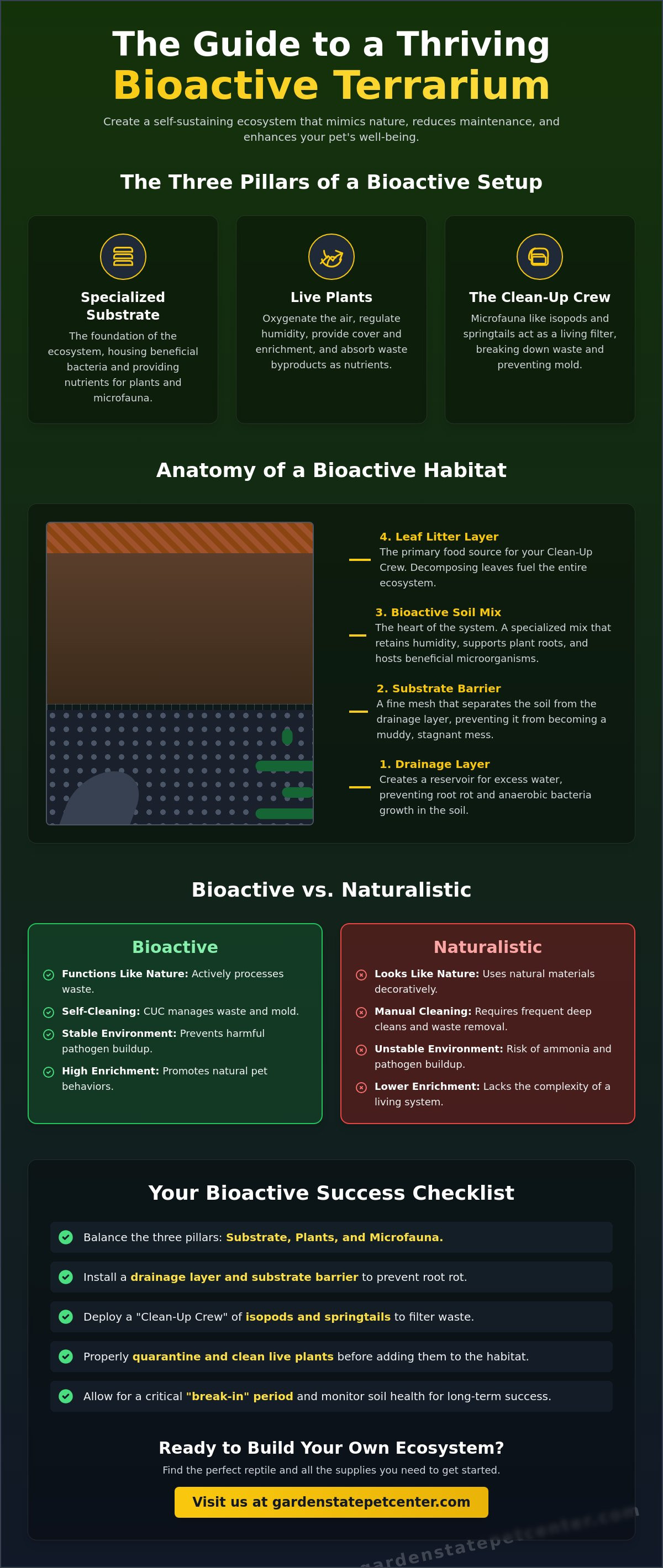
Achieving a successful bioactive terrarium setup relies on three foundational pillars: specialized substrate, live plants, and the "Clean-Up Crew" (CUC). The substrate acts as the heart of the system, providing a home for beneficial bacteria and nutrients for your flora. The plants oxygenate the air and provide cover, while the CUC, consisting of tiny organisms like isopods and springtails, breaks down organic matter. Together, they form a living filter that keeps the environment fresh and healthy.
To better understand how these components work together to create a thriving environment, watch this helpful video guide:
The benefits are profound for both the animal and the keeper. For your pet, a bioactive habitat provides natural humidity regulation and mental enrichment through varied textures and scents. It encourages natural behaviors like burrowing or foraging. For you, it means a breathtaking living display and significantly reduced manual cleaning. Instead of scooping waste every day, you're managing a garden. It's a rewarding shift from being a janitor to being an ecosystem manager.
Bioactive vs. Naturalistic: Understanding the Difference
Many hobbyists confuse naturalistic setups with bioactive ones. A naturalistic enclosure uses real wood, rocks, and perhaps silk plants to look like nature, but it still requires frequent deep cleans and manual waste removal. A bioactive setup functions like nature. It actively processes nitrogen and organic waste, turning debris into plant food. This makes it a superior long-term investment in your pet's health, as it creates a more stable environment that prevents the buildup of harmful pathogens.
Is Your Pet a Candidate for Bioactive?
Most tropical species, such as Crested Geckos, Dart Frogs, and Garter Snakes, are perfect candidates. Even arid species can thrive in a specialized dry bioactive terrarium setup if you use the right soil and drought-tolerant plants. However, heavy-bodied reptiles like large monitors or adult pythons present challenges. Their weight can easily crush delicate plants, so you'll need to choose robust species or use strategic hardscaping to protect the roots. If you're looking for the right inhabitant for your new project, explore our reptiles and amphibians to find the perfect match for your home ecosystem.
The Anatomy of a Bioactive Habitat: Layer by Layer
Building a successful bioactive terrarium setup requires more than just pouring soil into a glass tank. It requires a strategic, layered approach to ensure long-term stability and animal health. Think of this process as constructing a miniature house. If the foundation is weak or poorly planned, the entire ecosystem will eventually fail. Each layer serves a specific biological purpose, from managing moisture to providing the energy source for your microfauna.
The bottom layer is the drainage zone. Its primary job is to prevent water from pooling around plant roots, which causes rot and the growth of anaerobic bacteria. According to research on The Anatomy of a Bioactive Habitat: Layer by Layer, this separation is vital for maintaining the oxygen levels needed for a healthy ecosystem. On top of this, you'll place a substrate barrier, typically a fine mesh. This prevents the soil from falling into the water reservoir, which would otherwise create a muddy, stagnant mess.
Next comes the bioactive soil mix, the heart of the system where the biology happens. This is followed by the leaf litter layer, which is often overlooked but absolutely essential. Decaying leaves act as the primary "fuel" for your clean-up crew, providing both a food source and vital hiding spots for your isopods and springtails. If you're ready to choose the right enclosure for these layers, explore our high-quality reptile terrariums to find the perfect foundation for your project.
Choosing the Right Drainage Media
LECA (Lightweight Expanded Clay Aggregate) is a favorite among professional keepers because it's porous and incredibly light. Specialized drainage stones are also effective, though they add significant weight to the enclosure. For a truly professional touch, install a small PVC "siphon tube" in one corner that reaches down into the drainage layer. This allows you to pump out excess water easily without disturbing the substrate. In tropical vivariums, a drainage layer is non-negotiable to prevent the setup from becoming a swamp.
Substrate Science: Tropical vs. Arid Mixes
Tropical mixes focus on moisture retention. Use components like coco coir, sphagnum moss, and tree fern fiber to maintain high humidity. However, many guides fail to address arid bioactive needs. Desert species require a mix that prioritizes drainage and structural integrity. Use a blend of sand, clay, and organic matter that allows for natural burrowing behavior without the tunnels collapsing. Never use standard potting soils. These often contain chemical fertilizers or perlite, both of which can be harmful if ingested by your pet. Stick to specialized, organic ingredients to ensure a safe and reliable environment.
Meet the Clean-Up Crew: The Engine of Your Ecosystem
A successful bioactive terrarium setup relies on more than just soil and plants; it requires a living, breathing engine to process waste. This biological engine is composed of microfauna known as the Clean-Up Crew (CUC). These tiny invertebrates work around the clock to maintain the hygiene of your ecosystem by consuming shed skin, animal waste, and decaying plant matter. According to industry experts at Zoo Med in their guide on Meet the Clean-Up Crew: The Engine of Your Ecosystem, these organisms are the secret to a truly self-sustaining habitat that requires minimal human intervention.
Establishing this colony is a process that requires patience. We recommend seeding your enclosure with microfauna at least two to four weeks before introducing your reptile or amphibian. This "cycling" period allows the CUC to find their territories and begin reproducing without the pressure of a predator. During this break-in phase, you must provide supplemental feeding. Small amounts of brewer's yeast, specialized CUC diets, or even a few grains of raw rice will keep your crew active until your pet begins producing natural waste. If you are still selecting the right inhabitant for your new world, browse our healthy reptiles and amphibians to see who will benefit most from your hard work.
Springtails: The Essential Fungal Control
Springtails are the microscopic heroes of the nitrogen cycle. These tiny, hexapod invertebrates specialize in eating mold and fungus, which prevents the "sour" smell often associated with damp enclosures. Introduce your springtail cultures by gently pouring the charcoal or clay media directly onto the moist substrate. You'll know you have a healthy population when you see tiny white specks congregating under pieces of cork bark or near the water bowl. They act as a vital safety net, ensuring that fungal outbreaks don't overwhelm your plants or irritate your pet's respiratory system.
Selecting the Right Isopods for Your Climate
Isopods are the heavy lifters that process larger organic debris. Choosing the right species is critical for a long-lasting bioactive terrarium setup. For high-humidity tropical tanks, Dwarf White or Powder Blue isopods are excellent choices because they stay small and reproduce quickly. If you are building an arid habitat, look for Giant Canyon or specific Porcellio species that can tolerate drier conditions. Always remember that the interstate movement of terrestrial isopods is regulated by the USDA's Animal and Plant Health Inspection Service (APHIS). This means reputable sellers must have a PPQ 526 permit to ship across state lines. Never release non-native isopods into your local environment; they are highly efficient and could disrupt your local ecosystem if they escape.
Designing with Purpose: Plants and Hardscapes
Design in a bioactive terrarium setup isn't just about making it look pretty for your home. It's about creating a functional, three-dimensional environment that encourages your pet to climb, hide, and explore. Every branch and leaf should serve a purpose, providing visual barriers and microclimates that mimic the animal's natural range. By thinking vertically, you effectively double the usable area of your enclosure, giving your reptile or amphibian more room to thrive.
Safety is paramount when selecting your flora. Only use species that are non-toxic to your specific reptile or amphibian. Even "safe" plants from a local nursery can be dangerous because they're often treated with systemic pesticides or chemical fertilizers. Always quarantine new plants for at least two weeks before adding them to your bioactive terrarium setup. During this time, wash the leaves with a mild dish soap solution and completely remove the original soil. Rinse the roots thoroughly to ensure no residue remains before repotting them into your organic bioactive mix.
Match light and water needs to the specific microclimates in your tank. Place light-loving succulents directly under your high-output LED bar, while keeping moisture-loving ferns in the damp, shaded corners. This strategic placement ensures your plants thrive without competing for resources or rotting in the wrong conditions. Proper placement also creates gradients of humidity and light that allow your pet to self-regulate its needs throughout the day.
Top 5 Beginner-Friendly Bioactive Plants
- Pothos and Heartleaf Philodendron: These are practically indestructible climbers that grow quickly and provide excellent cover.
- Sansevieria (Snake Plant): Perfect for arid setups or enclosures with heavy climbers, as its rigid leaves support significant weight.
- Bromeliads: Essential for tropical frogs and geckos; their central cups hold water to create natural drinking spots.
- Boston Ferns: These love high humidity and provide a lush, soft floor cover for tropical species.
Hardscaping for Enrichment and Stability
Use natural wood like cork bark and manzanita to create "hot" and "cool" zones. When installing heavy hardscape items, make sure they touch the glass bottom of the tank. Do not let them sit on top of the substrate. If your pet burrows, a heavy rock could shift and cause an injury. For a professional look, use expanding foam and silicone to build custom backgrounds, allowing you to mount plants vertically and maximize space.
Ready to start your build? Shop our professional reptile terrariums and décor to find the perfect foundation for your new ecosystem.
Long-Term Maintenance and Troubleshooting
Your bioactive terrarium setup is a living, breathing entity that requires a period of stabilization known as the "break-in" period. During the first 3 to 6 months, the ecosystem is finding its equilibrium. You might notice sudden blooms of white mold or small fungal patches appearing on wood or substrate. Don't panic. These are perfectly normal signs of a cycling system and provide a feast for your springtails. As the microfauna population grows, these blooms will naturally vanish, leaving behind a cleaner environment for your pet.
Managing the water cycle is your most frequent task. While misting provides the necessary humidity for your reptile and plants, you must monitor the drainage reservoir levels. If you see water rising above the substrate barrier, use your siphon tube to remove the excess. Stagnant water sitting in the soil will drown your clean-up crew and cause root rot. Check the moisture of the soil by feel; it should be damp like a wrung-out sponge, never soaking wet. If you encounter fungus gnats, simply reduce your misting frequency and allow the top inch of substrate to dry out slightly to disrupt their life cycle.
Feeding the Ecosystem, Not Just the Pet
A common mistake is assuming the clean-up crew (CUC) only eats pet waste. To keep your biological filter strong, you must replenish the leaf litter layer every few months. Decaying leaves are the primary energy source for your isopods. We also recommend adding a small amount of calcium powder or crushed eggshells to the substrate, as isopods require calcium to maintain their protective shells. The success of your habitat depends on maintaining a stable bio-load balance where the clean-up crew's processing speed matches the volume of waste produced by your pet.
Common Bioactive Myths Debunked
Many newcomers believe the myth that a bioactive tank never needs cleaning. While you won't be doing full substrate changes, you still need to wipe the glass with a reptile-safe cleaner and scrub the water bowl regularly. Another frequent fear is that the "bugs" will infest your home. In reality, the specialized species used in a bioactive terrarium setup, like tropical springtails, cannot survive in the dry air of a typical household. Finally, using beneficial bacteria additives can significantly reduce your initial cycling time. These inoculants provide a concentrated "seed" of microbes that help establish the nitrogen cycle much faster than waiting for nature to take its course. If you need help selecting the right supplies for your ongoing care, explore our reptile and amphibian resources for expert-approved solutions.
Bring Your Miniature Ecosystem to Life Today
Building a bioactive terrarium setup is a rewarding transition from simply keeping a pet to managing a thriving, living world. You've learned how to layer your habitat for optimal drainage, select a robust clean-up crew to act as a biological filter, and design with non-toxic plants for maximum enrichment. These efforts create a stable environment that mirrors nature and promotes your animal's long-term health. While the initial break-in period requires a bit of patience, the result is a beautiful display that significantly reduces your daily maintenance chores.
We are here to support your project with professional expertise. Our team is specialized in exotic reptile and amphibian care and includes a certified pet nutritionist on-site to assist with your pet's specific wellness needs. We also provide nationwide shipping on all bioactive components to ensure you have access to high-quality supplies no matter where you're located. Explore our professional selection of reptile habitats and supplies to find everything you need for your build. We can't wait to help you create a lush, self-sustaining home for your pet.
Frequently Asked Questions
Can I use standard garden soil for a bioactive setup?
No, you should never use standard garden soil because it often contains harmful pesticides, chemical fertilizers, or local parasites that can endanger your pet. A successful bioactive terrarium setup requires a specialized, organic mix of components like coco coir, sphagnum moss, and orchid bark. These ingredients provide the specific drainage and aeration needed for microfauna to thrive. Using garden soil can also introduce invasive bugs that disrupt the delicate balance of your ecosystem.
How many isopods and springtails do I need to start a 20-gallon tank?
We recommend starting with at least 10 to 15 isopods and one standard 8oz culture of springtails for a 20-gallon enclosure. This initial population provides enough individuals to establish a breeding colony before you introduce your reptile or amphibian. If you add your pet too early, they may consume the clean-up crew before the bugs have a chance to reproduce. Always give your microfauna a few weeks to settle into their new home first.
Do bioactive terrariums smell bad?
A healthy bioactive habitat should never smell bad; instead, it should have a pleasant, earthy aroma similar to a forest floor after rain. If you notice a sour or rotten odor, it usually indicates a drainage problem or a lack of oxygen in the substrate. Check your drainage layer for standing water and ensure your clean-up crew is active. A well-balanced system processes waste efficiently, keeping the air fresh and the environment hygienic for your pet.
Will my reptile eat the clean-up crew?
Some reptiles, especially smaller insectivores, may occasionally snack on an isopod, but this is actually a great form of natural enrichment. Most clean-up crew species are nocturnal and spend their time hiding under leaf litter or wood, making them difficult for your pet to find. As long as you have a healthy, breeding population, the occasional loss won't hurt the ecosystem. It provides your pet with a safe, calcium-rich snack that encourages natural hunting behaviors.
How often do I need to change the substrate in a bioactive tank?
You theoretically never need to change the substrate in a truly balanced bioactive terrarium setup. The microfauna and beneficial bacteria work together to recycle waste into nutrients for your plants, creating a closed-loop system. Your main task is to top off the environment by adding fresh leaf litter and biodegradables every few months. This ensures your clean-up crew has a constant food source to keep the biological filter running smoothly for years.
Is a drainage layer really necessary for a desert setup?
A drainage layer is generally not necessary for an arid or desert setup because these environments require much less water than tropical ones. In a desert tank, you want to create a moisture gradient within the substrate itself rather than keeping a reservoir of water at the bottom. However, you must be careful not to overwater, as stagnant moisture in a sand-based mix can quickly lead to bacterial growth and harm your pet's respiratory health.
What happens if I see mold in my new bioactive terrarium?
Seeing mold in a new enclosure is a perfectly normal part of the initial cycling process, especially during the first few months. This usually happens as the wood and leaf litter begin to break down and the ecosystem finds its balance. Your springtails will quickly find these mold patches and consume them. Avoid using chemicals to kill the mold, as this will harm your beneficial microfauna. Simply let the clean-up crew do their job.
Can I mix different species of isopods in one tank?
Mixing different isopod species in one enclosure is generally not recommended for beginners. Over time, the more aggressive or faster-breeding species will typically outcompete the other for food and space, eventually leading to the extinction of one colony. To maintain a stable and reliable biological filter, it's best to choose one species that is perfectly suited to your tank's specific temperature and humidity levels. This ensures a consistent and effective waste management team.

Article by
Victor Santucci
Victor Santucci is the owner of Garden State Pet Center in Audubon, NJ, where he specializes in premium pet nutrition, exotic animals, and expert-level care. With years of hands-on experience and a passion for helping pets thrive, Victor is dedicated to educating pet owners on proper nutrition, enrichment, and species-specific care. His mission is simple: provide every pet with the highest quality products and every customer with honest, knowledgeable guidance.
Share this post
- 0 comment
- Tags: bioactive terrarium, bioactive terrarium setup, clean up crew, herpetoculture, isopods, reptile care, self-sustaining habitat, springtails, terrarium plants, vivarium setup