

The Ultimate Checklist for Buying Talking Birds for Sale: What Every Owner Needs to Know


What if your new companion doesn't just mimic your "hello," but actually reshapes your entire lifestyle for the next 50 years? Bringing home a talking bird is a massive commitment that starts long before you browse current talking birds for sale listings. According to the 2023-2024 APPA National Pet Owners Survey, 6.1 million U.S. households now share their homes with birds, yet many first-time owners struggle with the transition to specialized avian care. We understand the confusion of selecting a species that fits your home and the fear of bringing home an unhealthy or poorly socialized animal.
You probably already realize that these intelligent animals need deep social bonds and expert-level maintenance to thrive. It's natural to feel some pressure when choosing between a chatty African Grey or a vibrant Amazon, especially when you want to ensure your new friend is healthy. We promise to help you master every essential readiness step using our expert-vetted checklist for health, habitat, and nutrition. This guide provides a clear roadmap for your ownership journey, giving you the confidence to choose a trusted source and support your bird's speech and long-term well-being.
Key Takeaways
-
Learn how to choose your perfect companion by prioritizing temperament and cognitive speech ability over simple mimicry.
-
Discover how to create a premium home environment by mastering the "Flight and Foot" rule and identifying invisible household hazards.
-
Explore our expert-vetted tips for evaluating talking birds for sale, ensuring you can look beyond physical appearances to verify health and genetic status.
-
Move past the "seed myth" and learn how to fuel your bird’s intelligence with a holistic nutritional foundation of high-quality pellets and fresh foods.
-
Master essential bonding techniques, including target training and proper acclimation, to build a trusted relationship with your new feathered friend.
Table of Contents
-
The Talking Bird Species Checklist: Finding Your Perfect Match
-
The Health and Genetics Checklist: Verifying Your Bird’s Status
-
Socialization and Speech Training Checklist: Building the Bond
The Talking Bird Species Checklist: Finding Your Perfect Match
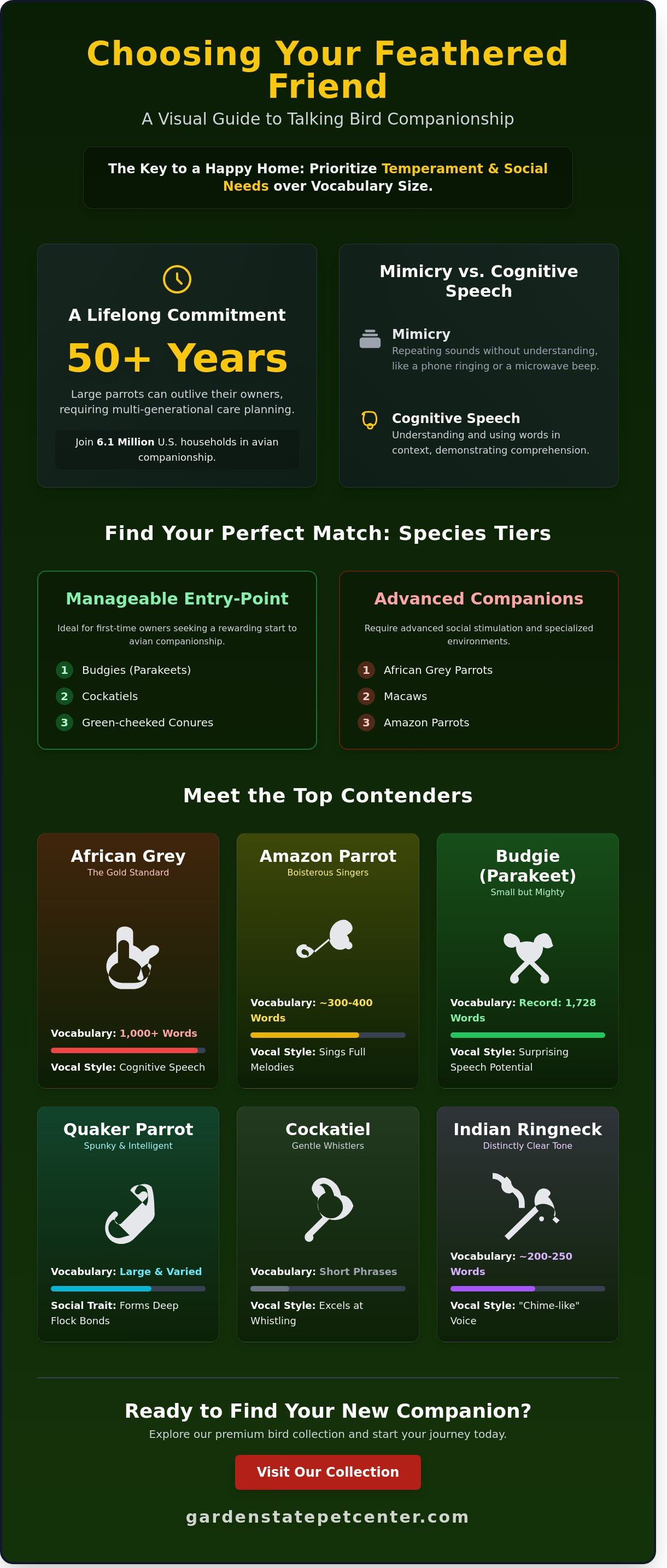
Discovering the right avian companion starts with understanding the difference between simple mimicry and cognitive speech. While mimicry involves repeating sounds like a phone ringing or a microwave beep, cognitive speech implies the bird understands the context of the words used. When families search for talking birds for sale, they often prioritize vocabulary size, yet temperament and social needs are far more critical for a successful long-term relationship. A bird that speaks 500 words but lacks a bond with its owner creates a stressful environment for both parties. Expert keepers suggest focusing on a bird's personality first, as speech is never guaranteed, even in the most talkative species.
Prospective owners must also account for the significant commitment required by these intelligent animals. Large parrots often have a lifespan exceeding 50 years, meaning they require a plan for multi-generational care. For those beginning their journey, species like Budgies, Cockatiels, and Green-cheeked Conures offer a manageable entry point. Experienced enthusiasts may look toward African Greys, Macaws, or Amazons, which require advanced social stimulation and specialized environments. You can consult a comprehensive list of talking bird species to compare specific vocal traits and social requirements before making a decision.
To better understand which species might fit your lifestyle, watch this helpful video:
Top Mimicry Species to Consider
African Grey Parrots remain the trusted gold standard for cognitive speech. Research indicates they can master over 1,000 words and apply them to specific situations. Amazon Parrots bring a boisterous energy to the home; they're famous for their ability to sing full melodies with surprising pitch accuracy. If you prefer a distinct, clear tone, the Indian Ringneck Parakeet is a high-energy talkers that possesses a unique voice often described as "polite" or "chime-like." Visit our premium bird collection to discover these incredible species and find your new companion.
Small but Chatty: Budget and Space-Friendly Options
-
Budgies (Parakeets): Don't let their size fool you. A Budgie named Puck holds a record for 1,728 words. They provide surprising speech potential in a small, apartment-friendly package.
-
Quaker Parrots: These spunky birds are incredibly intelligent and thrive on social interaction. They're known for building large vocabularies and forming deep bonds with their "flock."
-
Cockatiels: While they aren't the most prolific talkers, they excel at whistling and short phrases. They're a top choice for owners who want a gentle, affectionate pet that communicates through song.
Choosing from the available talking birds for sale is just the first step. Ensuring your new pet remains healthy enough to keep chatting requires a proactive approach to wellness. Whether you select a tiny Budgie or a majestic African Grey, regular health screenings and laboratory testing are essential to monitor their internal health and vitality.
Home Environment Readiness Checklist: Safe Habitat Setup
Bringing a feathered companion into your home starts with more than just finding the right talking birds for sale. It requires a proactive approach to habitat design that prioritizes long term health. Before your new bird arrives, you must ensure the environment doesn't harbor hidden threats that could lead to emergency laboratory testing later. Following established guidelines for selecting a pet bird ensures you're prepared for the specific needs of your new companion from day one.
The "Flight and Foot" rule is your first priority. A cage isn't just a container; it's a gym and a sanctuary. For most species, the minimum cage width should be at least 2 to 3 times the bird's full wingspan. This allows for natural flight movements and prevents muscle atrophy. Foot health is equally vital. If a bird only stands on uniform, dowel-style perches, they're at a 40 percent higher risk for developing bumblefoot or arthritis. Mix textures and diameters to keep their feet agile and strong.
Invisible killers often hide in plain sight. Polytetrafluoroethylene (PTFE), commonly known as Teflon, is lethal to birds. When non-stick pans reach temperatures above 530 degrees Fahrenheit, they release colorless, odorless gases that cause immediate respiratory failure in parrots. Similarly, aerosols, scented candles, and plug-in air fresheners contain volatile organic compounds that irritate a bird's sensitive respiratory system. If you're browsing talking birds for sale, you must commit to a scent-free home to protect their delicate lungs.
Lighting and placement also dictate your bird's biological health. Birds require specialized UV-B lighting to synthesize Vitamin D3, which is essential for calcium absorption. Without 10 to 12 hours of regulated light and darkness, their circadian rhythms fail, leading to feather picking and hormonal aggression. Never place a cage in the kitchen. Between the rapid temperature shifts from ovens and the concentration of cooking fumes, it's the most hazardous room in the house. Instead, choose a quiet corner of a living area where the bird feels like part of the family but can still rest undisturbed.
Essential Cage Features and Accessories
Safety starts with bar spacing. For smaller birds like cockatiels, spacing must be 0.5 inches or less to prevent head entrapment. Larger parrots require reinforced bars that can't be bent by powerful beaks. Using natural wood perches like manzanita or dragonwood provides the necessary grip variety to maintain joint health. You can Discover Bird Cages and Enclosures that meet these rigorous safety standards to give your pet a premium start.
Safety-Proofing Your Living Space
Windows are a major collision risk for flighted birds. Apply UV decals or install blinds to break up reflections that look like open sky. Conduct a toxic plant audit immediately. Common house plants like Philodendrons, Lilies, and Poinsettias are toxic if ingested. To maintain high air quality, use a HEPA filter that captures 99.97 percent of particles as small as 0.3 microns. This keeps the air clean of dander and dust, benefiting both you and your bird. If you have questions about specific setups, consult our experts for personalized habitat advice.
The Health and Genetics Checklist: Verifying Your Bird’s Status
Birds are masters of disguise. In the wild, showing any sign of illness or lethargy makes a parrot a target for predators, so they evolved to hide symptoms until a condition is quite advanced. This masking instinct means a bird that appears vibrant and active might actually be harboring a hidden health issue. When you search for talking birds for sale, you must look past the feathers. A truly healthy bird requires laboratory verification to ensure its internal systems are as robust as its external appearance.
Red flags during a visit to a breeder or pet center are often subtle. Watch for "fluffed" feathers, which indicate a bird is trying to retain body heat. Look at the droppings; they should have distinct parts and not be watery or off-colored. If a facility has dirty enclosures or birds that seem disinterested in their surroundings, it is a sign that the animals are not receiving the expert care they deserve. Reliability and transparency are the hallmarks of a trusted provider.
Laboratory Testing and Why It Matters
DNA testing is a foundational step in responsible bird ownership. Because many parrot species are not sexually dimorphic, you cannot determine gender just by looking at them. Identifying the sex is crucial to prevent egg-binding in females, a life-threatening condition where an egg becomes stuck in the reproductive tract. It also helps you manage hormonal behaviors that might arise as the bird matures. Avian DNA Sexing serves as a vital tool for proactive health management by allowing owners to tailor nutrition and environmental care to a bird's specific biological needs.
Diagnostic screening protects your entire household. You should insist on testing for the "big three" contagious avian diseases: Psittacine Beak and Feather Disease (PBFD), Polyomavirus, and Chlamydia. PBFD is a circular virus that attacks the immune system, while Chlamydia is a zoonotic disease that can spread to humans. Ensuring your bird is not a carrier is a non-negotiable step for any serious hobbyist.
The "Trusted Source" Audit
A reputable source will always welcome your questions. Ask the breeder about their weaning process. Birds should be "abundance weaned," meaning they decide when they are ready for solid food rather than being forced on a strict 10-week schedule. Socialization is equally important. Inquire how much daily interaction the birds receive and if they have been exposed to different sights and sounds. To set proper expectations for your new pet, you can learn why parrots talk and how their social environment influences their ability to mimic speech.
Always demand a written health guarantee. Most high-quality centers provide a 48 to 72-hour window for you to have the bird examined by an independent avian veterinarian. Access to a certified pet nutritionist is another sign of a premium provider. They can help you transition your bird from a breeder diet to high-quality bird supplies and specialized pellets. This support ensures your bird remains healthy long after you leave the shop.
The Nutritional Foundation Checklist: Fueling Intelligence
Nutrition is the most significant factor in a bird's lifespan and cognitive performance. Many owners fall into the trap of the seed myth, believing that a bag of sunflower seeds mimics a natural diet. In reality, seeds are high in fat and lack essential vitamins like A and D3. Clinical data suggests that nearly 80% of avian veterinary visits are linked to malnutrition. A seed-only diet often leads to hepatic lipidosis, or fatty liver disease, which can shorten a bird's life by 15 years or more. To ensure your companion thrives, you must move toward a holistic, nutrient-dense strategy.
Foraging plays a vital role in this foundation. In the wild, parrots spend approximately 70% of their waking hours searching for food. When we provide a bowl of easy-to-eat seeds, we strip away their mental stimulation. This boredom often leads to feather plucking or screaming. By hiding food in specialized toys or cardboard structures, you force them to use their beaks and brains. This activity reduces stress and supports the immune system, making your bird a better candidate for long-term health.
Building the Daily Menu
Your bird's base diet should consist of 60% to 70% high-quality pellets. Transitioning a seed-addicted bird takes patience, but it's vital for their survival. You can supplement this with the "Chop" method, which involves finely dicing a variety of dark leafy greens, squash, and peppers. This ensures they can't pick out only the sweet fruits. Explore Premium Pet Food for specialized avian nutrition that provides a balanced vitamin profile without the filler found in grocery store brands.
Supplements and Special Care
Specific life stages require extra support. Calcium and Vitamin D3 are critical for bone density and preventing egg-binding in females. Since most indoor birds don't get direct sunlight, a D3 supplement is often necessary. Probiotics are another expert-recommended addition, especially for high-stress exotic species. These beneficial bacteria support gut health and strengthen the immune response against common pathogens.
Training is the best way to bond with your pet. If you are looking at talking birds for sale, remember that their ability to mimic speech depends on their focus and energy levels. Use healthy treats like tiny pieces of walnut or spray millet as rewards for new behaviors. This positive reinforcement encourages speech while keeping their caloric intake in check. High-quality nutrition isn't just about physical health; it is the fuel for the intelligence that makes these animals such incredible companions.
Take the next step in your bird's wellness journey: Shop our expert-curated bird nutrition collection today.
Socialization and Speech Training Checklist: Building the Bond
Bringing a new avian companion home is an exciting milestone, but the first few days require a structured approach to ensure long-term health and emotional stability. When people look for talking birds for sale, they often expect immediate interaction. However, the first 48 to 72 hours should be dedicated to the "Quiet Time" phase. This period allows your bird to acclimate to the unique acoustics and activity levels of your household. During this time, keep the cage in a visible area so they can observe your routine, but avoid forced handling. This proactive patience prevents the development of "Anxious Pet" behaviors that can lead to chronic stress and cage aggression.
Once your bird appears relaxed, you can begin target training. This is the foundation of all positive reinforcement. By using a small stick and a high-value treat, you guide your bird's movements without the need for physical contact. This method builds a trusted relationship and provides a clear communication channel between you and your pet. For exotic birds that show signs of fear, desensitization is vital. Spend 15 minutes twice daily sitting near the cage reading or talking softly. This teaches the bird that your presence is safe, consistent, and non-threatening.
How to Teach Your Bird to Talk
Success in speech training depends on repetition and high-energy delivery. Start with simple, two-syllable words and associate them with specific actions; for example, say "Apple" only when offering that specific treat. Consistency is your most powerful tool. Schedule three 5-minute training sessions daily rather than one long session to avoid overstimulation. Use social modeling by having another person "compete" for a reward by saying the target word. Research indicates that many parrots learn 40% faster when they see a social peer receive a positive reaction for vocalizing.
Long-Term Mental Stimulation
Mental health is directly linked to physical well-being. To prevent destructive habits like feather plucking or screaming, you must provide constant enrichment. We recommend rotating 25% of their toys every week to keep the environment stimulating. Boredom is a leading cause of behavioral issues in talking birds for sale that have transitioned into new environments. Beyond toys, your bird needs a minimum of 3 to 4 hours of supervised out-of-cage time daily. This allows for essential exercise and social bonding. Check out our Bird Toys and Accessories for enrichment ideas that will keep your feathered friend engaged and happy.
Start Your Journey With a Confident Companion
Bringing a feathered friend home is a major life event that requires more than just a cage. You've now mastered the essentials of verifying health through professional DNA sexing and preparing a habitat that prioritizes safety. Remember that a bird's intelligence relies on a solid nutritional foundation. Our on-site certified pet nutritionist provides the expert diet guidance necessary to keep your pet thriving for years to come. Since 1990, we've served as trusted experts in exotic bird care, helping families find the perfect match through our rigorous disease screening services.
Success comes down to the bond you build through patient socialization and speech training. When you are ready to find talking birds for sale, you don't have to navigate the process alone. Our team is here to ensure every detail of your checklist is met with professional precision and genuine care. We invite you to browse our selection of trusted exotic birds and premium supplies to begin this exciting new chapter. Your future companion is waiting to meet you, and we're ready to help you every step of the way.
Frequently Asked Questions
How much do talking birds for sale typically cost?
Prices for talking birds for sale range from $20 for small species like Budgies to over $30,000 for rare Hyacinth Macaws. According to data from the Spruce Pets, a popular African Grey typically costs between $6,000 and $7,500. You should also budget an additional $500 to $1,500 for initial setup costs like premium cages and toys. These figures reflect the bird's rarity and linguistic potential.
Which talking bird is the easiest for a beginner to own?
Budgerigars, often called parakeets, are the easiest talking birds for beginners to manage. They require less space than larger parrots and have a lower price point. While their voices are high pitched, 15 percent of Budgies develop impressive vocabularies. They're social creatures that bond quickly with their owners. This makes them a perfect choice for those new to avian care who want a companionable pet.
Do all parrots eventually learn how to talk?
Not every parrot will learn to mimic human speech; it depends on the individual bird's personality and species. While 90 percent of African Greys likely talk, some individuals never say a word. Factors like age, social interaction, and gender influence this ability. You'll find that even if a bird doesn't talk, they still communicate through whistles and body language. Focus on the bird's companionship rather than just its vocal skills.
How do I know if a bird breeder is reputable?
A reputable breeder provides a written health guarantee and proof of a veterinary exam within the last 30 days. They should allow you to see the bird's living conditions, which must be clean and spacious. Ask if they're members of organizations like the American Federation of Aviculture. Expert breeders will ask you questions to ensure the bird is going to a safe home. This vetting process protects both you and the animal.
Can I keep a talking bird if I have cats or dogs?
You can keep birds with other pets, but you must ensure they're never left unsupervised in the same room. Statistics from avian clinics suggest that a high number of bird injuries occur from interactions with cats or dogs. Use sturdy cages with locks that other pets can't open. Always provide a dedicated bird only zone in your house. This proactive approach keeps your feathered friend safe from predatory instincts.
What is the best age to buy a bird if I want it to talk?
The best age to purchase talking birds for sale is shortly after they've been fully weaned, typically between 3 and 6 months of age. Younger birds are more adaptable and have a higher capacity for learning new sounds. Their brains are in a developmental stage that mirrors the critical period in human language acquisition. Starting early allows you to build a strong bond during their peak learning years.
How much time daily do I need to spend with a talking bird?
You need to spend a minimum of 2 to 3 hours of direct interaction with your bird every day. Talking birds are highly social and can develop behavioral issues if they're left alone for more than 6 hours. This time includes training sessions, play, and simply hanging out. Consistent social engagement is the primary driver for speech development. If your schedule is too tight, your bird's mental health might suffer.
What should I do if my bird stops talking or becomes aggressive?
Sudden silence or aggression is often a sign of illness or pain, so your first step is booking a laboratory test. Research shows that 70 percent of behavioral changes in parrots are linked to underlying health issues like hormonal imbalances or infections. If the bird gets a clean bill of health, consult an avian behaviorist. Addressing the root cause quickly prevents these behaviors from becoming permanent habits.