

The Ultimate Guide to Hornworms: Nutrition, Care, and Feeder Tips (2026)


What if the most vibrant, lime-green insect in your reptile's bowl was actually a 46mg calcium-packed hydration bomb rather than just an occasional treat? You likely already know that keeping an exotic pet hydrated is a constant struggle, especially since standard feeders like crickets consist of nearly 70% chitin and lack the lush moisture your animal craves. It's frustrating to watch your pet refuse water or deal with the high mortality rates of low-quality feeder insects that don't last a week in your home. At Garden State Pet Center, we believe in providing only the most reliable, expert-backed advice for your unique companions. Discover why captive-bred hornworms are a nutritional powerhouse for your exotic pets and how to manage them effectively as a premium feeder insect. We'll help you distinguish safe, farm-raised options from toxic wild variants, share expert strategies to keep them alive for weeks, and identify which specific reptiles benefit most from this 85% moisture-rich diet. This guide ensures your pets receive the top quality care they deserve while making your feeder management simple and stress-free.
Key Takeaways
- Identify the essential differences between species to ensure you are providing the safest and most effective nutrition for your exotic pets.
- Discover why these larvae serve as a hydration powerhouse and how their unique calcium profile supports superior reptile health.
- Learn how to strategically integrate hornworms into a professional rotation diet to keep your pets healthy and engaged.
- Master expert storage techniques to effectively manage growth speed and maintain a clean, premium feeder environment at home.
- Find out how to select a trusted supplier and what specific quality markers to look for when sourcing live feeder insects.
What Are Hornworms? Understanding the Manduca Species
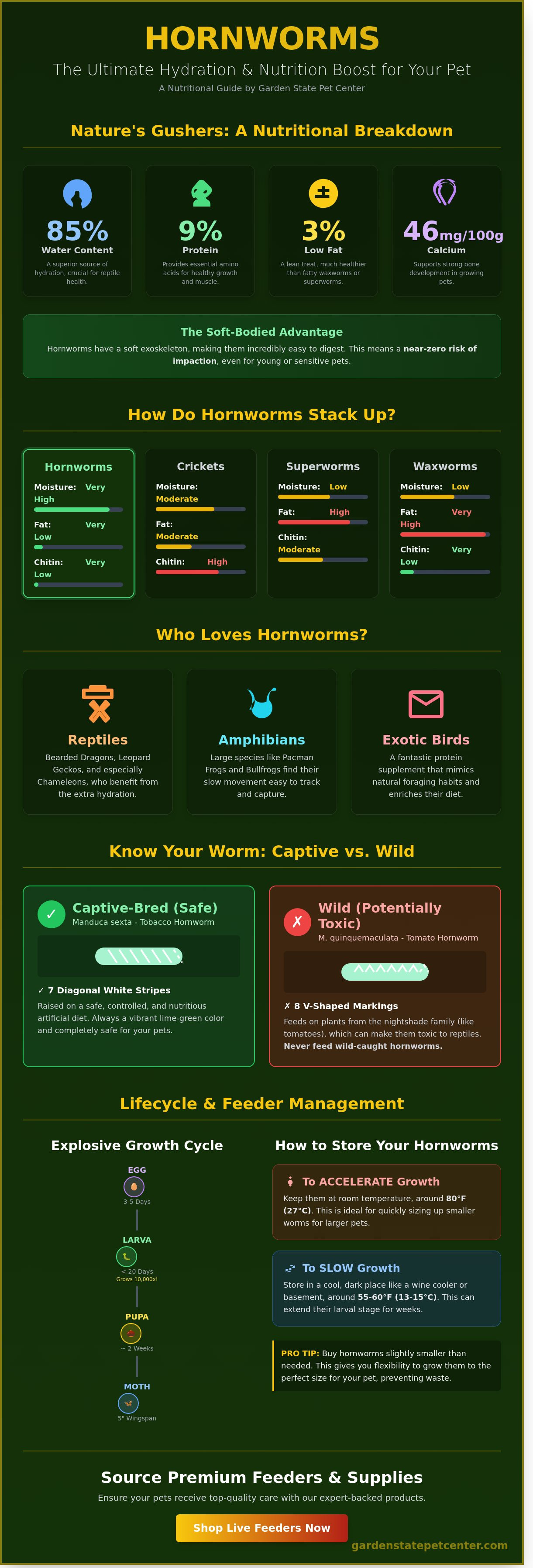
Welcome to Garden State Pet Center, your trusted resource for specialized reptile care. Hornworms are the larval stage of the Sphinx moth, which people often call the Hawk moth. These vibrant caterpillars have become a staple in the reptile community because they're packed with an 85% water content and offer a high calcium-to-phosphorus ratio. In the professional pet trade, the primary species you'll encounter is Manduca sexta, or the Tobacco Hornworm. While they look similar to the Tomato Hornworm (M. quinquemaculata), you can identify them by their markings. The Tobacco variety features seven diagonal white stripes, while the Tomato variety has eight V-shaped marks. Both species possess a signature, soft horn on their rear end that's completely harmless to your pets. To better understand how these insects grow and how to manage them, watch this helpful video:The Life Cycle of a Hornworm
The life of this insect starts as a small, pearl-green egg that hatches within 3 to 5 days. Once they emerge, the larvae enter a phase of explosive growth. If you maintain a temperature of 81 degrees Fahrenheit, these caterpillars can increase their body mass by 10,000 times in less than 20 days. They reach a maximum size of about 4 inches before they seek soil to burrow. During the pupation stage, they form a hard, brown shell for about 2 weeks. Finally, they emerge as nocturnal moths with a wingspan that can reach 5 inches.Wild vs. Captive-Bred Hornworms
Distinguishing between wild and captive-bred specimens is a critical safety step for every reptileThe Nutritional Benefits of Hornworms for Exotic Pets
Hydration is a critical factor for captive reptiles, and hornworms are an elite source of moisture. These vibrant larvae consist of approximately 85 percent water, providing a direct hydration boost that many dry feeders lack. For a pet recovering from illness or a stubborn shed, the high liquid content helps flush the system and maintain organ health. Beyond water, their nutritional profile is impressive. They contain roughly 9 percent protein and only 3 percent fat, making them a much leaner option than wax worms or superworms. You'll also find about 46mg of calcium per 100g, which supports strong bone development in growing animals.
The bright lime-green color of hornworms isn't just for show. This specific hue triggers a primitive hunting instinct in many insectivores. In the wild, green often signals a nutrient-rich, gut-loaded meal. If you have a picky eater that ignores dull-colored crickets, the visual "pop" of a hornworm often ends the hunger strike immediately. Because they lack a hard chitinous shell, they're incredibly easy to digest. This soft exoskeleton means there's a near-zero risk of impaction, even for younger pets or species with sensitive digestive tracts. They're essentially "nature's gushers," offering a burst of nutrients without the heavy crunch.
Which Pets Benefit Most from Hornworms?
Reptiles like bearded dragons, chameleons, and leopard geckos are the primary fans of these feeders. Chameleons, in particular, benefit from the moisture since they often struggle to stay hydrated from misting alone. Large amphibians like Pacman frogs and Bullfrogs find the slow movement of hornworms easy to track and strike. Don't overlook your feathered friends, either. Many exotic birds enjoy these larvae as a seasonal protein supplement that mimics their natural foraging habits. If you're looking to expand your pet's menu, you can browse our reptile supply collection to find the right tools for feeding time.
Addressing the Growth Rate
One unique challenge with hornworms is their incredible metabolism. They can double in size in as little as 3 or 4 days. If you buy a cup of small worms, they'll reach 3 or 4 inches in length within two weeks if kept at room temperature. To manage this, choose a size slightly smaller than what your pet currently needs. If they grow too large for your gecko, you've waited too long. Use these larvae as a high-value treat or a hydration supplement rather than a daily staple. Their low fat content is great, but their rapid growth means they're best used in a planned rotation with other insects to ensure a balanced diet.
Hornworms vs. Other Feeder Insects: A Comparative Roundup
Selecting the best feeder requires a look at the nutritional data. Hornworms provide a specific profile that fills gaps left by other common insects. While a standard cricket offers roughly 20% protein and 6% fat, a hornworm delivers about 9% protein and a low 3% fat. The most significant difference is moisture. Hornworms consist of 85% water, while crickets and roaches often hover around 60% to 70%. This makes them a vital tool for hydration. Reptiles that struggle to drink from bowls, such as chameleons or certain arboreal lizards, benefit from the high fluid content found in these bright green larvae.
Ease of handling is a major factor for many NJ pet owners. Crickets are fast, noisy, and often escape into the home. Hornworms are slow-moving and possess small legs that grip surfaces firmly. You won't have to chase them around the enclosure or worry about them biting your pet. From a cost perspective, a hornworm cup provides excellent value. These cups typically contain 12 to 20 larvae along with enough specialized chow to grow them to their full potential. You can choose to feed them off while they are small or wait five to seven days until they reach their maximum length of 4 inches.
Hornworms vs. Dubia Roaches
Many keepers rely on dubia roaches as a primary protein source. Roaches are hardy and offer a high meat-to-shell ratio. They're excellent for building mass, but they lack the succulent hydration of a hornworm. Offering both ensures your reptile gets a balanced intake. The roach provides the essential protein for muscle growth, while the hornworm provides the water needed for healthy shedding and kidney function. This variety also prevents "food boredom," where a pet stops eating because their diet lacks sensory diversity.
Hornworms vs. Mealworms and Waxworms
Weight management is a common concern for captive reptiles. Waxworms are often considered "reptile candy" because their fat content can exceed 20%. Overfeeding them leads to obesity and lethargy. Hornworms offer a soft, palatable texture similar to waxworms but with significantly less fat. Digestibility also sets them apart from mealworms. Mealworms have a hard outer shell made of chitin. This shell can be difficult for young reptiles or senior pets to break down, occasionally leading to digestive blockages. Hornworms are soft throughout, making them a safer, more digestible option for pets at any life stage.
How to Care for and Store Feeder Hornworms at Home
Hornworms are famous for their incredible growth rates, often doubling in size every 48 hours when kept at room temperature. To keep them at the ideal size for your leopard gecko or bearded dragon, you'll need to master their storage environment. Most larvae arrive in a plastic "pod" or cup pre-loaded with a specialized, nutrient-dense teal chow. This expert-formulated diet provides all the hydration and nutrition they need; you don't have to add water or extra greens, which could actually introduce harmful bacteria to the colony.
Always store the hornworm cup with the lid facing down and the food at the top. This clever positioning allows the larvae to climb up the internal mesh to eat while their "frass," or waste, falls away from the food source and onto the lid for easy cleaning. A healthy hornworm is firm to the touch and displays a vibrant, lime-green color. If you notice larvae turning dark brown, becoming mushy, or remaining motionless for over 6 hours at room temperature, remove them immediately. This proactive maintenance keeps the rest of your feeders in top condition for your pets.
Slowing Down the Growth Cycle
If your reptiles aren't ready for large feeders, you can slow their metabolism using the 55-60°F rule. Standard kitchen refrigerators usually stay between 35°F and 40°F, which is far too cold and will kill your hornworms within 20 minutes. Instead, use a dedicated wine cooler or a specialized incubator to maintain that precise 55-60°F range. To ensure they stay healthy, take the cup out for at least 60 minutes every day. This daily warm-up allows the larvae to wake up, consume the provided chow, and stay hydrated before they return to their dormant state.
Hygiene and Habitat Maintenance
Cleanliness is vital for preventing mold and bacterial outbreaks that can wipe out a batch. Open the lid once every 24 hours to dump out the accumulated frass. This simple step prevents moisture buildup and keeps the air fresh inside the container. Ensure the ventilation holes in the lid remain unobstructed to provide consistent airflow. When you need to move the larvae, use soft-tipped tweezers or gently nudge them onto a feeding dish. Human skin oils can sometimes irritate their delicate exterior, so minimal handling is the best approach. Keeping the mesh clean ensures they have a secure grip, which reduces stress and keeps them active.
Sourcing Premium Hornworms and Feeder Supplies
Finding a reliable source is the foundation of a healthy exotic pet lifestyle. When you choose a trusted reptile store, you ensure the insects haven't been exposed to harmful pesticides or poor husbandry. High-quality hornworms should arrive vibrant, hydrated, and active. Look for a live arrival guarantee that covers the first 24 hours after delivery. This protection shows the vendor's confidence in their shipping methods and the biological health of their stock. Reliable suppliers often use heat or cold packs depending on the season to maintain a stable internal temperature during transit, which is vital for delicate larvae.
Integrating fresh feeders into your overall reptile care routine requires more than just dropping them into a terrarium. Expert gut-loading is the key to maximum nutritional transfer. This involves feeding your insects nutrient-dense foods 24 hours before they reach your pet. Use high-calcium greens, squash, or specialized commercial formulas. This process ensures that the hornworms act as a vessel for the vitamins your reptile needs to thrive. It's a simple step that yields significant long-term health benefits for your animal's bone density and immune system.
- Check for clear, firm bodies and bright coloring in your feeders.
- Verify the supplier uses overnight or two-day shipping to minimize transit stress.
- Ensure the packaging includes adequate ventilation and a moisture source.
- Avoid sellers who don't offer clear communication or tracking information.
Expert Nutritional Consultations
Refine your exotic pet's diet with help from a certified pet nutritionist. Exotic animals have precise metabolic needs that shift as they age. For instance, a juvenile lizard may require a 70% protein diet, while an adult shifts toward 70% vegetation. Balancing live feeders with high-quality mineral supplements prevents common issues like metabolic bone disease. Garden State Pet Center remains committed to providing premium feeder quality that meets these rigorous standards. We help you select the right mix of insects and supplements to create a balanced, species-appropriate meal plan that supports longevity.
Nationwide Shipping and Local Quality
We prioritize the health of every insect that leaves our facility. Our shipping team uses climate-controlled packaging to ensure feeders arrive healthy at your door, regardless of the unpredictable New Jersey weather. You benefit from sourcing through specialized avian and reptile experts who understand the biological needs of your animals. We don't just sell supplies; we provide the expertise needed for your pet to flourish. Take the next step in your pet's nutritional journey by choosing a partner that values excellence and animal welfare above all else. Your pet's health starts with the quality of their food.
Elevate Your Reptile's Nutrition Today
Choosing the right feeders is a vital step in maintaining your pet's long term health. You now understand how hornworms provide superior hydration and essential calcium for growing reptiles. Proper storage at temperatures between 55 and 60 degrees Fahrenheit ensures these feeders remain viable for your specific feeding schedule. Since 1990, Garden State Pet Center has served as a trusted resource for exotic animal enthusiasts across the country. Our on-site certified pet nutritionist carefully evaluates our inventory to guarantee that your animals receive top quality sustenance. We combine over 30 years of specialized expertise with the convenience of nationwide shipping on all premium supplies. Whether you're a first time owner or a seasoned hobbyist, we're here to help you succeed. Take the next step in your pet care journey by choosing supplies backed by decades of professional experience. Your reptile's health starts with the high standards we've maintained for over three decades.
Shop Premium Reptile Feeders and Supplies
We're excited to help your exotic pets thrive in a healthy and happy environment.
Frequently Asked Questions
Are hornworms poisonous to bearded dragons?
Captive-bred hornworms are 100% safe and provide excellent hydration for your bearded dragon. Wild specimens consume plants from the Solanaceae family, like tomatoes or peppers, which contain solanine. This toxin accumulates in their bodies and can be fatal to reptiles. Always trust premium, lab-raised insects from a trusted source to ensure your pet stays healthy and avoids accidental poisoning.
How long do hornworms stay in the caterpillar stage?
Most hornworms remain in the larval or caterpillar stage for 21 to 28 days before they begin the pupation process. Their growth rate depends heavily on ambient temperature; keeping them at 82 degrees Fahrenheit accelerates development, while cooler settings slow it down. Once they reach about 4 inches in length, they'll typically burrow into the soil to transform into sphinx moths.
Can I feed my pet the hornworms I found in my garden?
You should never feed your pet hornworms found in your garden because they are likely toxic. Wild hornworms specifically seek out nightshade plants, which store alkaloids that are poisonous to reptiles. Additionally, 90% of garden pests have likely come into contact with fertilizers or chemical pesticides. Stick with expert-sourced feeders from Garden State Pet Center to guarantee your reptile receives a clean, safe meal.
Do hornworms bite or sting?
Hornworms don't bite or sting, making them one of the safest feeder insects for your reptiles. The horn on their rear is actually a soft, fleshy protrusion used to mimic a stinger and scare off predators in the wild. It's completely harmless to human skin and your pet's mouth. These gentle giants are easy for even novice keepers to handle during feeding sessions.
How do I stop my hornworms from growing so fast?
To slow down the growth of your hornworms, store them in a dedicated wine cooler or a cool basement kept at 55 to 60 degrees Fahrenheit. Temperatures in this range can extend the larval stage by 7 to 10 days without harming the insect. Avoid standard refrigerators, as temperatures below 45 degrees usually kill them within 24 hours. This method helps you manage your supply and reduces waste.
What do hornworms eat to stay healthy?
Healthy hornworms require a specialized, nutrient-rich diet typically made from wheat germ, soy flour, and essential vitamins. This bright green chow provides the 85% water content that makes them such a hydrating treat for NJ reptiles. Feeding them fresh greens from your kitchen isn't recommended, as it can cause digestive upset or introduce bacteria. High-quality commercial diets ensure they remain a premium food source for your pets.
Why is my hornworm turning black or dark blue?
A hornworm turning dark blue or black often indicates it's preparing to pupate or is suffering from environmental stress. If the worm is active and roughly 4 inches long, it's likely ready to enter the next stage of its life cycle. However, if it's limp, it may be a sign of bacterial infection or exposure to temperatures exceeding 90 degrees. Remove any discolored or dead insects immediately to maintain a clean habitat.
Can hornworms be a staple food for my reptile?
Hornworms shouldn't be a staple food because their high water content and specific calcium-to-phosphorus ratio can lead to nutritional imbalances if fed exclusively. While they offer a 9% protein boost, they lack the structural variety found in roaches or crickets. Use them as a supplemental treat 2 or 3 times per week. This variety ensures your reptile gets a balanced diet while enjoying the hydration benefits of these premium feeders.