

Best Raw Food for Puppies: 2026 Nutrition Guide


Feeding your puppy a raw diet isn't just about switching from kibble to fresh meat; it's a precision science where a single mineral imbalance can impact their skeletal health for life. Most puppy parents feel overwhelmed by conflicting advice regarding "complete and balanced" labels and the valid fear of harmful pathogens. You want the best for your new companion, but the stakes feel incredibly high during these critical growth months. Finding the best raw food for puppies requires looking past the marketing to find brands that meet rigorous nutritional standards for growing animals.
We're here to help you move past the confusion and feed with absolute confidence. This guide shares expert-vetted brands and science-backed strategies to help you provide a safe, nutrient-dense diet. You'll discover a curated list of puppy-specific raw options, a transition plan that protects sensitive stomachs, and the essential mineral ratios needed for sturdy bone development. We've simplified the complex data so you can focus on enjoying your puppy's energy and health while knowing their nutritional foundation is secure.
Key Takeaways
- Master the critical calcium-to-phosphorus ratios required for healthy bone and joint development in growing dogs.
- Identify the best raw food for puppies by selecting professional-grade brands that meet strict growth-stage requirements.
- Implement a safe, 7-day transition strategy using probiotics and digestive enzymes to maintain gut stability.
- Distinguish between frozen and freeze-dried raw formats to balance nutritional bioavailability with your family's convenience.
- Leverage expert guidance from a certified pet nutritionist to verify your puppy’s long-term health and safety.
Is Raw Food Safe for Puppies? Understanding the Benefits and Risks
Feeding a raw diet to a growing dog is a decision that requires moving beyond the "meat in a bowl" mentality. In 2026, more owners are choosing raw nutrition because of its biological appropriateness, which prioritizes ingredients that a canine's digestive system is evolutionarily designed to process. This approach focuses on high bioavailability, meaning your puppy can actually absorb and use the nutrients they consume. However, safety isn't a happy accident. It's the result of rigorous sourcing and clinical formulation. Finding the best raw food for puppies means looking for brands that treat nutrition as a precision science rather than a culinary trend.
Pathogen concerns, such as salmonella or listeria, are the most common reasons owners hesitate. While some traditional sources focus entirely on these risks, modern commercial raw food has evolved. Many high-integrity brands now utilize High Pressure Processing (HPP) or frequent batch testing to neutralize harmful bacteria without damaging vital enzymes. At Garden State Pet Center, we act as your safety filter. Our on-site certified pet nutritionist vets every brand we carry, ensuring that the safety protocols meet professional standards before a single bag reaches our shelves.
The Puppy Growth Window
The Puppy Growth Window is the period of peak skeletal development. During these first 12 months, your puppy’s body is laying the foundation for lifelong joint and organ health. Raw nutrition supports this by encouraging steady, controlled growth rather than the explosive "growth spurts" often triggered by high-carb fillers. By providing high-quality proteins and natural fats, you're giving your puppy the building blocks they need for a strong immune system and a resilient frame. This proactive care during the first year often leads to fewer metabolic issues later in life.
Commercial Raw vs. DIY Hazards
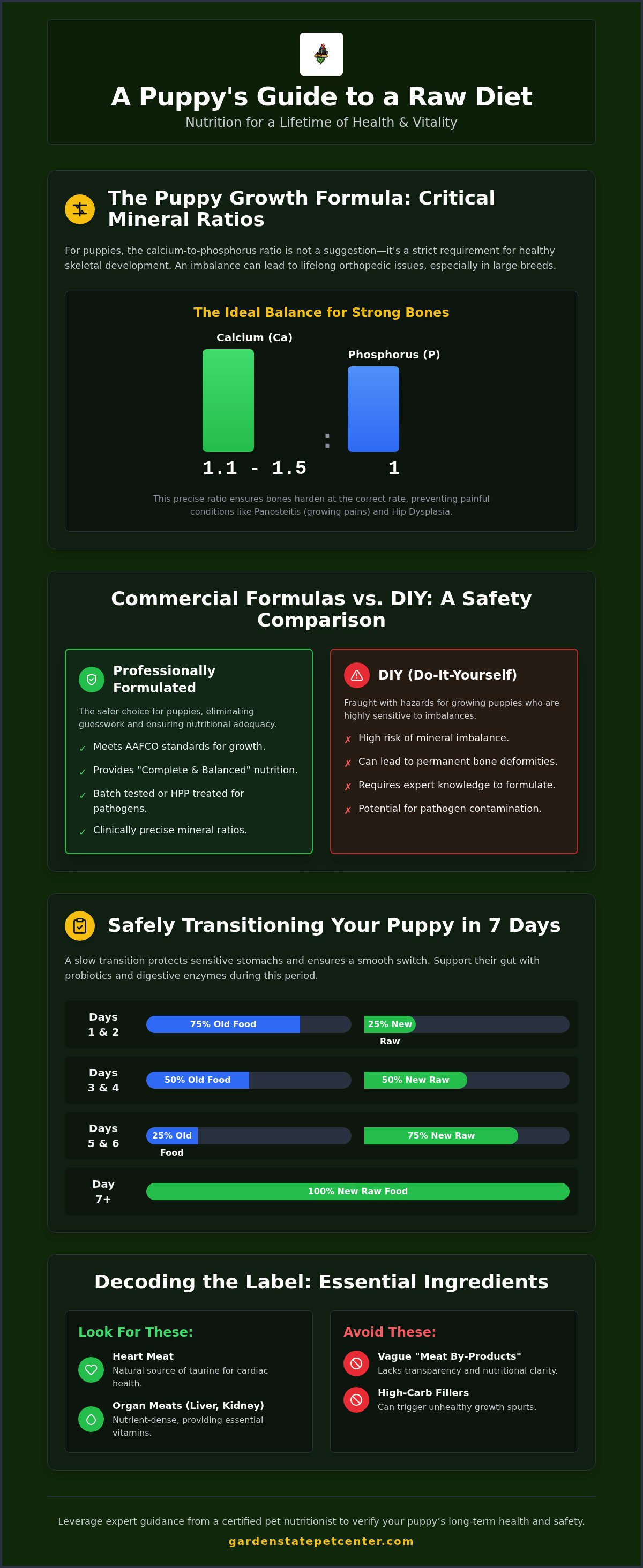
While the idea of "home-mixing" your puppy's meals might seem appealing, it's fraught with nutritional hazards. Puppies are incredibly sensitive to mineral imbalances, and a slight error in a DIY recipe can lead to permanent bone deformities. Commercial raw dog food is generally the safer choice for most families. These formulas are designed to meet AAFCO standards for growth and development, providing a "complete and balanced" meal in every serving. Using a clinical recipe from a trusted brand ensures your puppy receives the exact ratios of vitamins and minerals required for their specific life stage.
The Puppy Growth Formula: Balancing Calcium and Phosphorus
Precision feeding is the hallmark of a successful raw diet. While adult dogs can tolerate slight variations in their mineral intake, puppies require a strict calcium-to-phosphorus ratio between 1.1:1 and 1.5:1 to ensure their bones harden at the correct rate. If this balance shifts, the results can be devastating. Excess calcium is particularly dangerous for large breeds, as it can lead to painful orthopedic diseases by forcing the bones to grow faster than the supporting soft tissues. Conversely, a deficiency can cause rickets or weak, porous frames. To manage this absorption, Vitamin D acts as a biological regulator, ensuring these minerals reach the skeletal system effectively. High-integrity brands like Solutions Pet Food specialize in these exact calibrations, removing the guesswork for pet parents seeking the best raw food for puppies.
Large Breed vs. Small Breed Needs
Puppies expected to exceed 50 pounds at maturity face unique skeletal risks. Feeding an "all life stages" food is often insufficient for these giants because their growth window remains open longer. Controlled nutrition is your best tool for preventing conditions like Panosteitis, often called growing pains, and Hip Dysplasia. Focus on formulas specifically labeled for large breed growth to ensure the energy density doesn't outpace mineral deposition. You can explore our curated puppy-safe raw options to find a formula that matches your dog's expected adult weight and specific developmental timeline.
Protein Quality and Amino Acids
Beyond minerals, the best raw food for puppies must prioritize high-quality muscle and organ meats. Look for heart meat on the ingredient list; it's a natural source of taurine and carnitine, which are essential for cardiac health and cognitive function. Raw protein provides the amino acids necessary for rapid brain development during the first few months of life. When reviewing labels, identify specific organs like liver, kidney, or spleen rather than vague meat by-products. These nutrient-dense inclusions provide the vitamins and enzymes that synthetic supplements often struggle to replicate, ensuring your puppy's system remains efficient and energized.
Evaluating the Best Raw Options: Frozen, Freeze-Dried, and Gently Cooked
Choosing the best raw food for puppies requires a clear understanding of the different formats available. Frozen raw is often considered the gold standard because it maintains the highest levels of natural enzymes and moisture. This hydration is vital for a puppy's developing kidneys and digestive system. While freeze-dried raw offers incredible convenience for travel or training rewards, it's essential to remember that these meals must be fully rehydrated before serving. Feeding dry nuggets without adding water can tax a puppy's system, a detail often overlooked in general feeding guides. For puppies with exceptionally sensitive stomachs or those recovering from illness, gently cooked options provide a perfect bridge. These meals are cooked at low temperatures to reduce bacterial load while preserving the integrity of the vitamins and minerals.
Safety technology has advanced significantly, making High-Pressure Processing (HPP) a game-changer for modern pet parents. HPP uses cold water pressure to neutralize pathogens like salmonella and listeria without the use of heat. This process ensures the food remains raw and nutrient-dense while providing a level of safety comparable to cooked kibble. It allows you to feed your puppy with confidence, knowing the risk of cross-contamination in your kitchen is drastically reduced.
Top Recommended Brands for 2026
We've meticulously selected a range of premium dog foods that meet our strict nutritional and safety criteria. SmallBatch stands out for its commitment to local sourcing and the inclusion of organic produce, ensuring no pesticide residues interfere with your puppy's development. OC Raw is a leader in safety, utilizing HPP across their unique protein lines, which is ideal for puppies with specific allergies. For those following a prey-model approach, Vital Essentials offers whole-animal nutrition that mimics a canine's ancestral diet. These brands represent the pinnacle of quality in the current market.
Decoding the Label: What to Look For
Always check the "Statement of Nutritional Adequacy" on every bag you buy. For a growing dog, the label must explicitly state that the food is formulated for "growth" or "all life stages." Avoid any products labeled for "intermittent or supplemental feeding only," as these lack the precise mineral balances discussed in the previous section. You should also prioritize "Human-Grade" ingredients over "Feed-Grade" options. Human-grade labeling ensures the raw materials were handled and processed according to the same safety standards as food intended for people, offering an extra layer of reliability for your pet's foundation.
Step-by-Step: How to Safely Transition Your Puppy to Raw
Switching your pet to a fresh diet is a significant milestone for their lifelong health. While it's tempting to start immediately, your puppy's developing digestive tract needs time to adapt to new proteins and bacteria. Prepare the gut by introducing high-quality probiotics and digestive enzymes several days before the transition begins. These supplements help maintain a stable internal environment and support the beneficial bacteria needed to process raw ingredients. Choosing the best raw food for puppies ensures they have the right foundation, but the transition process is what secures their digestive comfort.
Most experts recommend the 7-day gradual mix method. Start by replacing 25% of the old meal with raw food for two days. Increase to 50% for the next two days, then 75% for another two, before reaching a full raw meal. If your puppy has a very sensitive stomach, consider the "one-meal-at-a-time" approach. Feed kibble for breakfast and raw for dinner to keep the different digestion rates separate. Monitoring stool consistency is your ultimate health indicator. A successful transition is measured in the consistency of the stool, not the speed of the switch.
Maintain strict hygiene in your household during this phase. Use stainless steel or ceramic bowls that are easier to sanitize than plastic. This is especially vital if you have children or immunocompromised family members. Always wash your hands and all surfaces with hot, soapy water after handling the best raw food for puppies. These simple steps keep the entire family safe while your puppy thrives on their new diet.
The First 48 Hours
Begin with a single, easily digestible protein source like chicken or turkey. This makes it easier to identify a genuine intolerance if an issue arises. You might notice slight changes in your puppy's energy or coat as their body adjusts. This is often part of a natural detox process. However, if you see persistent lethargy or liquid stools, slow the transition down or consult our certified pet nutritionist for guidance. Consistency is key during these first two days.
Long-term Feeding Schedules
Young puppies have small stomachs and high energy requirements. Plan to feed them 3-4 times a day during the first six months of life. As they grow, you can adjust portions based on their energy levels and visible body condition. Once their adult teeth begin to emerge, introduce raw meaty bones under supervision to support dental hygiene and mental stimulation. Shop our selection of transition-safe raw puppy foods to get started with the right protein sources today.
Expert Support for Your Puppy's Raw Journey
Invest in expert guidance to secure your puppy's developmental future. Consulting a certified pet nutritionist serves as the ultimate insurance policy against the mineral imbalances and skeletal risks discussed in previous sections. This partnership transforms the process of finding the best raw food for puppies from a trial-and-error experiment into a precise health strategy. Our on-site experts help you interpret subtle physical cues that your puppy's diet might need adjustment. Watch for persistent dry skin, fluctuating energy levels, or visible ribs; these often signal that caloric or fat intake needs a professional recalibration to match a growth spurt.
Building a long-term relationship with a specialized provider ensures you aren't just buying products; you're gaining a lifetime of clinical support. As your puppy transitions into adulthood, their nutritional requirements will shift significantly. A high-end provider helps you navigate these changes, ensuring that the high-integrity brands you trust continue to serve your pet's evolving biology. This proactive approach prevents metabolic issues before they start, keeping your companion in peak condition through every life stage.
Customized Nutritional Consultations
Request a tailored meal plan to address your puppy's specific breed requirements. Large breeds and toy varieties have vastly different metabolic rates and skeletal timelines that a generic bag of food cannot always address. Our consultations help you adjust fat and protein levels with precision as your puppy matures. For a deeper look at how specialized ingredients impact long-term health, explore our Premium Pet Food Guide for broader context on professional-grade nutrition.
Nationwide Access to Premium Brands
Access the world's most reliable raw brands regardless of your location. We provide nationwide shipping for SmallBatch, OC Raw, and other elite labels, ensuring you always have the best raw food for puppies delivered directly to your door. We take rigorous steps to maintain the cold chain during transit, using specialized packaging that keeps frozen and freeze-dried items at optimal temperatures. While raw is the focus, you can also browse our full dog food collection to find supplemental items or high-quality options for mixed-feeding strategies. Order with confidence knowing that every selection has been vetted by our internal safety standards.
Secure Your Puppy’s Health with Precision Nutrition
Building a lifelong foundation for your new companion requires more than just high-quality ingredients; it demands a clinical understanding of mineral ratios and pathogen safety. You now have the essential tools to balance calcium and phosphorus correctly while managing the transition to raw with total confidence. By selecting the best raw food for puppies from high-integrity brands that prioritize High-Pressure Processing (HPP), you're actively protecting your dog's skeletal development and immune resilience for years to come.
Our on-site certified pet nutritionist acts as your ultimate safety filter, meticulously vetting every formula to meet the highest professional standards. We proudly feature industry-leading brands like SmallBatch, OC Raw, and Solutions Pet Food to ensure your puppy receives specialized care from their very first meal. Shop expert-vetted raw puppy food and ship nationwide to begin this nutritional journey today. We look forward to seeing your puppy grow into a strong, vibrant adult with the support of our knowledgeable community and elite-level resources.
Frequently Asked Questions
Is it safe to feed a puppy raw meat from the grocery store?
Feeding grocery store meat is generally unsafe for a growing puppy because it lacks the precise mineral balance needed for skeletal health. These meats are intended for human consumption and assume a cooking process that kills surface bacteria. For a safe start, choose the best raw food for puppies from brands that use HPP technology and clinical formulations. This ensures your dog gets a complete meal without the risk of nutritional deficiencies or harmful pathogens.
How much raw food should I feed my puppy per day?
Puppies generally require between 2% and 10% of their current body weight in raw food each day. This percentage varies significantly based on their age, activity level, and breed. Younger puppies with high metabolic demands need more frequent, larger portions relative to their size. We recommend consulting our on-site certified pet nutritionist to calculate an exact daily amount that supports steady growth without causing unnecessary weight gain or developmental issues.
Can puppies eat raw bones, or are they a choking hazard?
Puppies can safely enjoy soft, raw meaty bones like chicken necks or wings once their adult teeth begin to emerge. These provide essential minerals and natural dental cleaning. However, you must always supervise your puppy during bone time to prevent choking. Avoid hard, weight-bearing bones from large animals, such as beef marrow bones; they can fracture fragile puppy teeth or cause digestive blockages if swallowed in large pieces.
What should I do if my puppy gets diarrhea after switching to raw?
Immediately slow down the transition and return to the last food ratio that resulted in firm stools. Diarrhea usually suggests that the puppy's digestive system hasn't yet adapted to the new protein or bacterial profile. You can add a spoonful of plain canned pumpkin or extra probiotics to help stabilize the gut. If the loose stools persist for more than 24 hours, contact a professional to ensure there isn't an underlying intolerance or infection.
Do I need to add supplements to a commercial raw puppy diet?
You generally don't need to add supplements if you are using a high-quality commercial diet labeled for growth. These formulas are already balanced with the correct vitamins and minerals. In fact, adding extra calcium or phosphorus can disrupt the delicate ratios mentioned earlier in this guide, leading to permanent joint issues. Stick to the base recipe unless a certified nutritionist specifically recommends a supplement for a diagnosed deficiency or unique health requirement.
Can I mix raw food with kibble in the same meal?
You can mix raw and kibble, but many puppies digest these foods at different rates. This can sometimes cause gas or minor stomach upset in sensitive individuals. If you notice any digestive discomfort, it's better to feed them as separate meals. For example, give kibble in the morning and the best raw food for puppies in the evening. This separation allows the stomach to process each food type more efficiently and reduces the risk of fermentation.
How do I know if the raw food is "complete and balanced" for growth?
Check the packaging for the AAFCO Statement of Nutritional Adequacy. This statement must explicitly confirm that the diet is formulated for "growth" or "all life stages," including the growth of large-breed puppies. If a label says "for intermittent or supplemental feeding only," it lacks the essential nutrients required for a developing dog. Always verify this statement before committing to a specific brand to ensure your puppy's long-term skeletal and organ health.
At what age can a puppy start eating a raw diet?
Puppies can start eating a raw diet as soon as they begin weaning, which usually happens between 4 and 6 weeks of age. We recommend starting with finely ground, soft proteins that are easy for their small digestive systems to handle. Ensure the formula is specifically designed for growth to support their rapid developmental needs. Starting early helps build a diverse and resilient microbiome, setting them up for a lifetime of better health and efficient digestion.

Article by
Victor Santucci
Victor Santucci is the owner of Garden State Pet Center in Audubon, NJ, where he specializes in premium pet nutrition, exotic animals, and expert-level care. With years of hands-on experience and a passion for helping pets thrive, Victor is dedicated to educating pet owners on proper nutrition, enrichment, and species-specific care. His mission is simple: provide every pet with the highest quality products and every customer with honest, knowledgeable guidance.
Share this post
- 0 comment
- Tags: BARF diet, best raw food for puppies, dog nutrition, puppy diet, puppy health, puppy nutrition, raw dog food, raw feeding