

Birds for Sale Near Me: The Ultimate Checklist for Finding a Healthy Companion


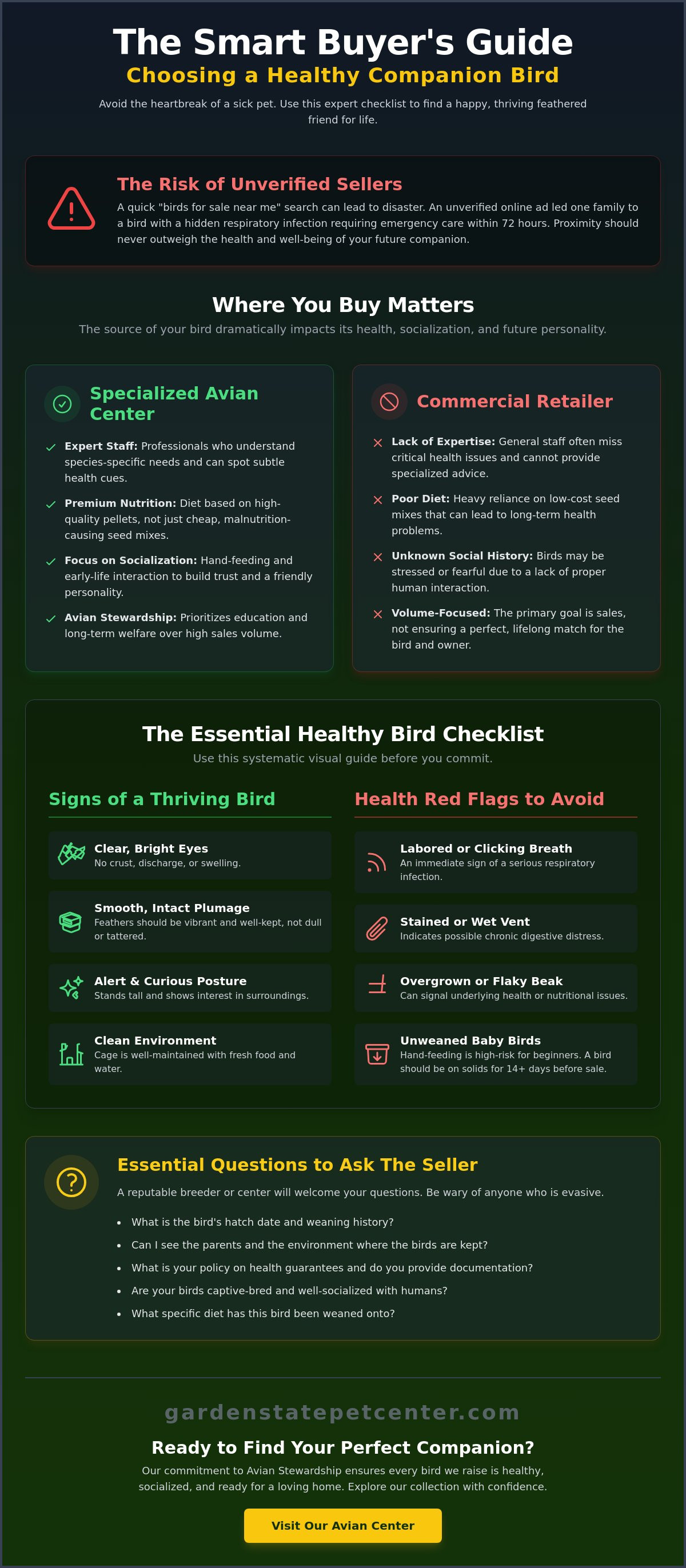
On a Tuesday in October, a local family purchased a parrot from an unverified online ad, only to discover within 72 hours that their new companion required immediate emergency care for a hidden respiratory infection. It's a heartbreaking situation that happens far too often when you search for birds for sale near me. You want a feathered friend that will be part of your family for the next 20 to 50 years, not a medical emergency. We agree that the search for a new pet should be filled with excitement, not anxiety over a bird's health or a seller's reputation.
This guide provides the expert framework you need to identify reputable sources and avoid the common pitfalls of the exotic bird market. You'll learn how to use our professional checklist to evaluate a bird's physical health and socialization levels before you commit. We'll walk you through the specific signs of a well-cared-for animal and the critical questions every trusted breeder should be able to answer. By the end of this article, you'll have the confidence to choose a companion that is healthy, happy, and ready to join your home.
Key Takeaways
- Discover why prioritizing quality over proximity is essential when searching for birds for sale near me to ensure you find a healthy, lifelong companion.
- Learn to identify critical visual health cues and environmental indicators that separate expert breeders from standard retail volume.
- Gain the confidence to ask essential vetting questions regarding captive-bred origins and health guarantees before making your commitment.
- Explore our framework for matching bird personalities to your specific lifestyle and space requirements for a perfect household fit.
- Follow our step-by-step guide to bird-proofing your home and selecting the ideal habitat to create a safe, welcoming environment.
What to Look for When Searching for Birds for Sale
Finding a feathered friend involves more than a quick search for birds for sale near me. While proximity is convenient, your priority must be the bird's long-term health and the seller's commitment to animal welfare. A reputable source prioritizes education and socialization over high sales volume. This philosophy, known as Avian Stewardship, ensures that every bird receives the specialized care needed to thrive in a home environment. Trusted sellers act as guardians rather than just vendors, focusing on the bird's welfare from hatch date to the moment they join your family. Owning a bird is a significant emotional and financial investment. Depending on the species, you may be committing to a companion for 20 to 80 years. This requires a partner who understands these complex needs and provides the resources you need for success. To better understand what your new friend requires, watch this helpful video:The Difference Between Commercial and Specialized Sellers
You'll find a distinct gap between big-box retailers and specialized avian centers. General pet stores often lack the expert staff required to understand the nuances of exotic species. Specialized centers employ professionals who can identify subtle health cues and provide species-specific guidance. Nutrition is another critical factor. While a large percentage of a bird's diet should consist of high-quality pellets, many commercial sellers rely on cheap seed mixes that lead to malnutrition. When you shop our bird collection, you're accessing a level of expertise that ensures your pet started life with premium nutrition and expert care.Why Socialization Matters in Young Birds
A bird's early life experiences dictate its personality for years. Hand-feeding by experienced caregivers creates a bond of trust between the animal and humans. A well-socialized Companion parrotThe Essential Healthy Bird Checklist for Buyers
Searching for birds for sale near me often leads you to a variety of local breeders and specialty shops. You need a systematic approach to ensure you're bringing home a thriving companion rather than a bird in distress. Start with a thorough visual scan. A healthy bird stands tall with an alert, curious posture. Its eyes should be clear, bright, and free of any crust or discharge. Feathers must appear smooth and fully intact, as tattered or dull plumage can signal nutritional deficiencies or stress.
The bird's environment tells a story about its upbringing. Expert guidance on selecting a pet bird highlights that the enclosure's cleanliness is a non-negotiable factor. Look for cages that are free of excessive waste buildup and check that the food provided is fresh. If you notice water bowls filled with debris or seed-only diets lacking variety, it may indicate a lack of specialized care. Behavioral cues are equally vital; a healthy bird should show interest in its surroundings or respond to your presence with vocalizations or movement.
Physical Health Red Flags to Avoid
Watch for labored breathing or a distinct clicking sound while the bird respires. These are immediate signs of respiratory infection. Check the vent, which is the area where waste is expelled; it must be clean and dry. A stained or wet vent often indicates chronic digestive distress. Ensure the beak is properly aligned and not flaky or overgrown. For many species, it's wise to confirm the bird's gender and health status through Avian DNA Sexing. This testing provides a 99.9% accuracy rate for gender identification, which is essential for managing long-term hormonal health and nutritional needs.
Verifying the Weaning Process
Beginners should avoid purchasing unweaned birds. Hand-feeding is a delicate, around-the-clock responsibility that carries a high risk of crop burn or aspiration if you aren't professionally trained. Ask the seller for a specific timeline of the bird's transition to solids. A bird is truly weaned when it has been eating a mix of high-quality pellets and fresh vegetables for at least 14 consecutive days without supplemental formula. Proper weaning is the foundation of future nutritional success and prevents the bird from regressing due to the stress of a new home.
Testing and Disease Screening
Request certified laboratory results for common avian diseases before finalizing your purchase. Psittacine Beak and Feather Disease (PBFD) and Chlamydia (Psittacosis) can be silent killers that spread quickly. Professional sellers typically provide a 48 to 72-hour health guarantee window. This allows you to have your own avian veterinarian perform a baseline exam. Testing protects any existing pets you have at home and ensures your new companion is hardy. You can explore our premium bird collection to see how we maintain these rigorous health and socialization standards for every bird in our care.
Species Comparison: Which Bird is Right for You?
Choosing the right companion requires an honest look at your daily routine and living environment. When you search for birds for sale near me, you'll encounter a variety of species with wildly different social needs and noise levels. A bird's personality should complement your lifestyle. If you work 10 hours a day, a demanding parrot will struggle. Conversely, if you want a "velcro bird" that stays by your side, a finch won't satisfy that need. Consider these three factors before making a choice:
- Space: Small birds need room to fly horizontally, while large parrots need vertical space and heavy-duty bars.
- Noise: Some species chirp softly, while others produce screams that reach 100 decibels.
- Time: High-intelligence birds require at least 3 to 4 hours of direct interaction every day.
If you realize a bird might not fit your current living situation, you can explore other options in our Small Animals Guide to find a pet that matches your pace.
Beginner-Friendly Birds: Parakeets and Cockatiels
Parakeets, or budgies, are the most popular choice for first-time owners. They are social, active, and stay manageable in size. They thrive in pairs but can bond closely with humans if handled frequently. Cockatiels are known for their gentle demeanor and impressive whistling abilities. They are less likely to bite than other species, making them great for families. Proper feeding is the foundation of their health. Many owners rely too heavily on seeds, which can lead to Nutritional Diseases of Pet Birds like hepatic lipidosis. Provide a balanced diet of pellets and fresh vegetables to ensure they live their full 15 to 20-year lifespan.
Mid-Sized Companions: Conures and Quakers
Green Cheek Conures are often called the "clowns" of the avian world. They love to play, hang upside down, and snuggle into their owner's hands. Quaker parrots are prized for their high intelligence and ability to build complex nests. These birds are vocal and require significant mental stimulation. You must provide a rotating variety of foraging toys to prevent boredom. Without a "job" to do, mid-sized parrots may develop feather-plucking habits or excessive screaming. Plan for a cage that is at least 24 inches wide and 24 inches deep to allow for plenty of movement.
Large Parrots: African Greys and Macaws
Large parrots are not just pets; they are lifelong commitments that often live 50 to 80 years. African Greys possess the cognitive ability of a 5-year-old human and can build massive vocabularies. Macaws are stunningly beautiful but require a dedicated room or a massive walk-in enclosure. These birds have specialized needs for grooming and beak maintenance. To keep them healthy and comfortable, many owners utilize Professional Bird Grooming Services for regular wing and nail trims. When looking for birds for sale near me in this category, ensure you are ready for a companion that may eventually be mentioned in your will.
Vetting the Seller: Questions Every Buyer Must Ask
When you start searching for birds for sale near me, you aren't just looking for a pet. You're looking for a professional partner who will support you throughout your bird's life. A bird is a long-term commitment, often living 20 to 60 years depending on the species. You need to ensure the person or business you buy from is as committed to the animal's health as you are.
Follow these four steps to vet any potential seller:
- Step 1: Ask about the bird's origin. Determine if the bird is captive-bred or from another source. Captive-bred birds are 100% safer for domestic life because they're accustomed to human environments. Ask for the specific hatch date and the location of the breeder.
- Step 2: Inquire about health guarantees. A reputable seller provides a clear health guarantee policy, typically lasting 48 to 72 hours. This window allows you to get an independent exam from an avian vet. If a seller refuses to offer a written guarantee, it's best to look elsewhere.
- Step 3: Evaluate post-purchase support. Ask what resources they provide for new owners. Data from 2021 suggests that owners who receive written care guides have a 40% higher success rate in the first six months of ownership.
- Step 4: Confirm specialized services. Check if the shop offers long-term care like professional grooming or boarding. A seller that provides these services demonstrates a deep, ongoing investment in the animals they sell.
The Importance of Captive-Bred Birds
Captive-bred birds are generally healthier and much better adjusted to living with people. They don't carry the extreme stress or the potential parasites associated with wild-caught birds. Choosing captive-bred animals is also the only ethical choice for conservation. Since the Wild Bird Conservation Act of 1992, the industry has shifted toward domestic breeding to protect global ecosystems. If a seller cannot tell you exactly where the bird was hatched, they aren't being transparent about their sources.
Evaluating the Store Environment
The physical environment tells you everything you need to know about a seller's standards. Look for cages that are clean and free of waste buildup. You should see fresh water and premium pelleted diets rather than just cheap seed mixes. Observe the staff. They should handle the animals with confidence and calm authority. A "full-line" store is your best bet, as they provide everything from appropriate housing to specialized bird vitamins to keep your new companion thriving. If the facility is disorganized or the animals look lethargic, it's a sign to continue your search for birds for sale near me at a more professional location.
Ready to meet your new feathered friend? Discover our selection of healthy birds and premium supplies today.
Preparing Your Home for Your New Bird
Bringing a feathered friend into your life is an exciting milestone. While you've likely spent hours searching for birds for sale near me to find the right species, your home's environment is what determines their long-term health. Bird-proofing is a non-negotiable step. Birds possess highly sensitive respiratory systems. You must eliminate the use of non-stick cookware containing PTFE or PFOA, as these coatings release odorless, toxic fumes when heated that can be fatal to avian pets within minutes. Scan your rooms for ceiling fans, which are a leading cause of physical injury. Ensure all windows have secure screens and remove toxic houseplants like lilies or philodendrons before your bird arrives.
Selecting the correct enclosure is your next priority. A cage isn't just a container; it's a sanctuary. The general rule is to buy the largest cage your living space can accommodate. For smaller species like parakeets, bar spacing must be 0.5 inches or less to prevent them from getting their heads stuck. Larger parrots require heavy-duty cages with 0.75 to 1-inch spacing. Place the cage in a high-traffic area where the bird feels like part of the family, but keep it away from direct kitchen fumes or drafty air conditioning vents.
Essential Supplies for Day One
Don't wait until you bring your bird home to gather the basics. You'll need a variety of perches with different textures and diameters. This variety mimics a natural environment and prevents bumblefoot, a painful condition caused by standing on uniform surfaces. Foraging toys are also vital. These items keep intelligent birds mentally stimulated, reducing the risk of feather plucking or screaming. Your bird's diet should consist of 70% high-quality pellets, supplemented by fresh vegetables like broccoli and leafy greens. You can browse the Bird Collection to find premium cages, specialized perches, and enrichment toys designed for your specific species.
Planning for Long-Term Care
Success with a new bird requires looking beyond the first week. Establish a grooming routine early to keep your companion comfortable. Regular nail and wing trims prevent painful snags on furniture and accidental escapes. It's also wise to plan for your own travel. Birds are creatures of habit and don't handle change well. Utilizing specialized boarding services ensures your pet remains under the care of experts who understand avian behavior, which significantly reduces travel-related stress for the animal.
Finding birds for sale near me is only the start of a rewarding journey. By preparing your environment and securing a trusted supply source, you set the stage for a lifetime of companionship. Visit a trusted partner like Garden State Pet Center today to find your perfect, healthy companion and all the expert supplies you need for a successful transition.
Start Your Avian Journey With Confidence
Finding a bird is a long-term commitment that starts with a healthy foundation. You've learned how to spot signs of vitality, from clear eyes to smooth plumage, and you know the right questions to ask to ensure your new pet comes from a reputable source. Searching for birds for sale near me can feel overwhelming, but focusing on specialized care makes all the difference in your bird's long-term well-being.
Since 1990, Garden State Pet Center has specialized in exotic birds, providing a level of expertise that general retailers can't match. We don't just sell pets; we support their entire lifecycle. With a certified pet nutritionist on-site and expert avian grooming and boarding services, your bird stays healthy long after you bring them home. Our team acts as your trusted partner in avian care, ensuring every transition is smooth for both you and your companion.
Discover Your New Companion at Garden State Pet Center
We're excited to help you start this rewarding journey with your new feathered friend.
Frequently Asked Questions
How do I know if a bird for sale is healthy?
You can identify a healthy bird by checking for clear eyes, smooth feathers, and a clean vent. A healthy companion is alert and active. According to the Association of Avian Veterinarians, signs of illness include fluffed feathers or discharge from the cere. Check the bird's droppings; they should show a clear distinction between feces and urates. Watch for steady breathing without clicking sounds or heavy tail bobbing.
What is the best bird for a first-time owner?
Cockatiels and budgies are the top species for beginners due to their social nature and manageable size. These birds typically live 10 to 15 years, making them a significant but rewarding commitment. They require about 1 hour of daily interaction to stay tame. When searching for birds for sale near me, look for these species as they adapt quickly to new environments and standard pellet diets.
Should I buy a bird from a pet store or a breeder?
You should buy from a specialized pet center or a reputable breeder that offers expert guidance and clean facilities. Specialized shops provide a wider range of premium supplies and ongoing support services. A study by the Pet Advocacy Network shows that 90 percent of successful pet transitions happen when the seller provides detailed care instructions. Ensure your source prioritizes animal welfare over high-volume sales.
What questions should I ask when buying a bird?
Ask the seller about the bird's age, its current diet, and its medical history before making a purchase. You should specifically inquire if the bird has been tested for Psittacosis or PBFD. Request a written record of its hatch date and any previous vet visits. Knowing if the bird eats a seed or pellet diet helps you transition them safely during the first 48 hours without causing digestive stress.
Is DNA testing necessary when buying a bird?
DNA testing is necessary if you need to determine the bird's gender for breeding or to prevent egg-binding issues in females. Over 70 percent of parrot species are monomorphic, meaning they look identical regardless of sex. A simple blood or feather test provides 99.9 percent accuracy. This information helps you tailor their long-term nutritional needs and understand future hormonal behavioral changes as the bird matures.
What supplies do I need before bringing a bird home?
You need a species-appropriate cage, premium pellets, and at least 3 different types of toys before bringing your bird home. The cage bars must be spaced correctly; for example, budgies need 0.5-inch spacing to prevent injury. Include 2 or 3 perches of varying textures to maintain foot health. Having these items ready ensures your new companion feels secure the moment they arrive at your house.
How can I tell if a bird was hand-raised?
You can tell a bird was hand-raised if it moves toward your hand rather than fluttering away in fear. These birds are fed by humans from a young age, often starting at 14 days old, which builds a strong bond. They're typically more vocal and comfortable with physical touch. When browsing birds for sale near me, ask the staff to demonstrate the bird's socialization and "step-up" command.
Do birds for sale come with a health guarantee?
Reputable avian specialists provide a limited health guarantee that usually lasts between 48 and 72 hours. This window allows you to take your new pet to an avian veterinarian for an initial wellness exam. If the vet finds a pre-existing condition within this timeframe, the seller typically offers a refund or replacement. Always read the written policy carefully to understand the specific terms and conditions of the agreement.