

How often to groom a poodle Best Practices and Expert Advice


Did you know that 86% of Poodle owners report that managing their dog's coat is their single biggest care challenge? It's a staggering number, but it makes sense when you're facing the constant battle against painful matting near the skin. You likely chose this breed for their intelligence and stunning, hypoallergenic curls, but the "shave down" heartbreak at the groomer is a reality many owners face when the maintenance gets overwhelming. We understand that you want a beautiful, healthy companion without the stress of a skyrocketing grooming bill or a coat that's gone too far.
Determining exactly how often to groom a poodle is the key to a happy dog and a manageable lifestyle. By establishing a consistent rhythm, you can prevent those deep mats that cause discomfort and ensure your Poodle always looks their best. In this guide, we provide expert advice on the ideal grooming frequency for every Poodle type. You'll learn how to maintain a professional finish at home and create a schedule that balances salon visits with simple, daily care. Let's transform your grooming routine from a chore into a rewarding bonding experience.
Key Takeaways
- Establish a reliable routine by understanding how often to groom a poodle, with most experts recommending a professional session every 4 to 6 weeks.
- Prevent painful matting and skin infections by committing to a daily 10-minute brushing ritual that reaches all the way to the skin.
- Customize your grooming frequency based on your dog’s specific lifestyle factors, such as high-energy outdoor activities or their current life stage.
- Master the use of specialized tools like slicker brushes and metal combs to maintain a beautiful, salon-quality finish between visits.
- Enhance coat resiliency and shine through targeted nutritional support, focusing on high-quality proteins and essential Omega fatty acids.
How Often to Groom a Poodle? The 4-to-6 Week Rule
Most owners wonder about the magic number for professional salon visits. The standard recommendation for most Poodles is a professional groom every 4 to 6 weeks. Unlike breeds that shed fur, the Poodle coat consists of hair that grows continuously. This means it doesn't stop at a certain length and fall out; it keeps lengthening until it's clipped or breaks. Because of this unique biology, the Poodle grooming cycle is defined by the steady, non-shedding growth of hair follicles that require mechanical removal to prevent painful matting and maintain skin health.
To better understand this concept, watch this helpful video:
Your choice of style heavily dictates your schedule. A fluffy "Teddy Bear" cut looks adorable, but it catches debris and tangles much faster than a short utility clip. If you prefer a high-maintenance, voluminous look, you'll be visiting the groomer more often than someone who keeps their dog in a "kennel cut." To support your dog's overall wellness between these visits, you can explore our dog care essentials to keep their skin and coat in peak condition.
Understanding the Poodle Hair Growth Cycle
Poodle hair is curly and dense, which makes it act like a net. It traps dead skin cells and dander rather than letting them fall to the ground. This buildup, combined with natural oils called sebum, creates a sticky environment that leads to odor and skin irritation. Regular bathing is essential to wash away this sebum before it binds the hair into mats. While the growth cycle is similar across the breed, hair thickness often varies between varieties. Standard Poodles typically have a coarser, more resilient texture. Toy and Miniature varieties often possess finer, softer hair that tangles with the slightest friction.
Determining Your Poodle's Ideal Frequency
Finding your specific sweet spot depends on your commitment to home care and your dog's activity level. Use these guidelines to plan your calendar:
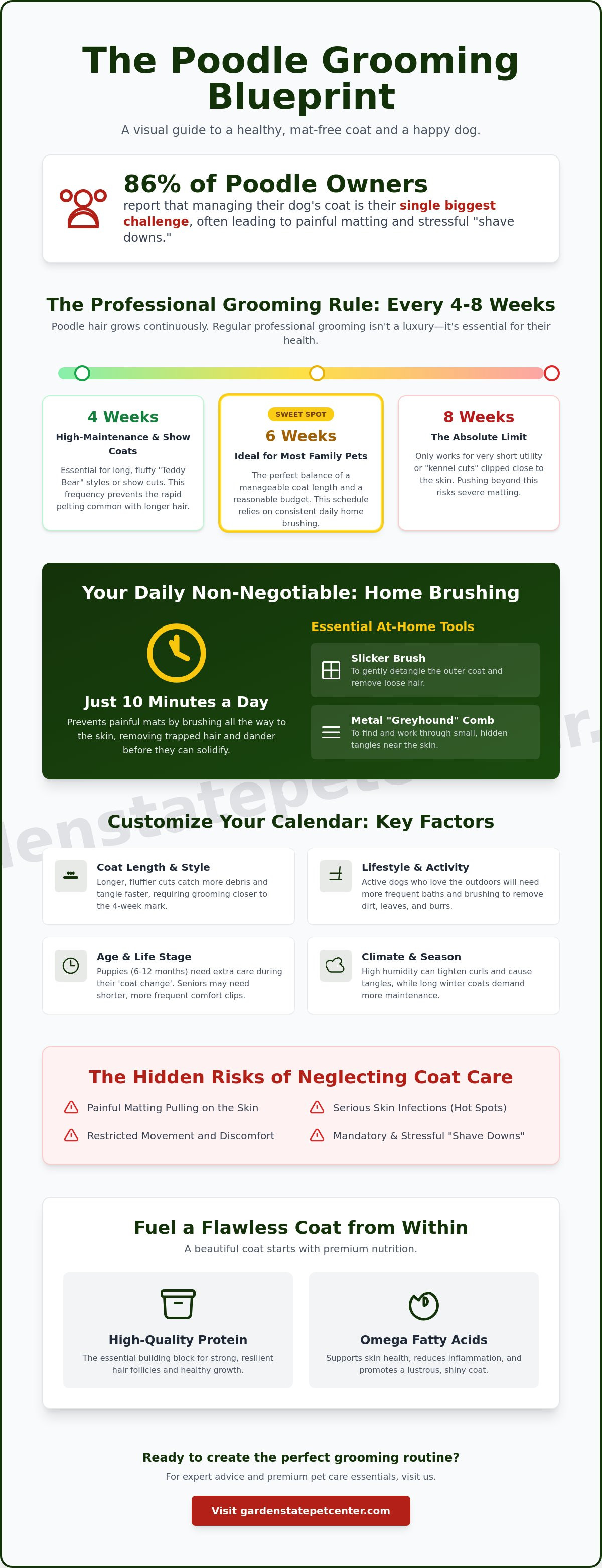
- 4 Weeks: Essential for show-style coats or long, fluffy designs. At this length, the hair is prone to "pelting" quickly without professional intervention.
- 6 Weeks: The sweet spot for most family pets. It balances a manageable length with a reasonable budget, provided you brush daily at home.
- 8 Weeks: The absolute limit for how often to groom a poodle. This only works for very short kennel cuts where the hair is clipped close to the skin.
Variables That Influence Your Poodle's Grooming Calendar
While the 4-to-6 week window serves as a reliable baseline, your dog's daily life significantly impacts the actual schedule. Understanding how often to groom a poodle requires looking beyond the calendar and into their specific environment. High humidity causes the hair shaft to swell and curls to tighten, which increases the likelihood of tangles. In drier climates, static can lead to flyaway hair that knots just as easily. Seasonal shifts also play a role. Many owners allow the coat to grow longer in winter for warmth, but this extra length demands more frequent professional attention to manage the increased surface area for mats.
Age is another primary driver of frequency. Seniors might need shorter, more frequent comfort clips to reduce the physical stress of long standing sessions. Conversely, puppies need a specialized approach to ensure they grow into well-behaved adults on the grooming table. Establishing a proactive routine early helps alleviate the anxiety many dogs feel during their maintenance sessions.
The 'Puppy Coat Change' Crisis
Between 6 and 12 months of age, your Poodle undergoes a dramatic physical shift. The soft, single-layered puppy hair begins to drop, and the coarse, curly adult coat starts growing through it. This creates a velcro effect where the shedding puppy hair gets trapped by the incoming adult curls. If you don't increase your maintenance during this window, the entire coat can turn into a solid pelt almost overnight. This transition is a critical factor when determining how often to groom a poodle during their first year. For those seeking expert grooming advice, remember that daily line-brushing is the only way to prevent a forced shave-down during this period.
Activity Levels and Environmental Impact
Active Poodles who frequent hiking trails or local parks act like natural magnets for burrs, twigs, and mud. These particles provide an anchor for mats to form deep within the curls. Frequent swimming also complicates the schedule. Chlorine or salt water can strip natural oils and disrupt the skin's pH, leading to a brittle texture that breaks and knots. Even your dog's wardrobe matters. Sweaters and harnesses create constant friction against the hair, often resulting in thick mats behind the ears and under the armpits. To manage these active lifestyle challenges, consider browsing our premium dog supplies to find the right maintenance tools. By adjusting your schedule to match these environmental factors, you ensure your Poodle remains comfortable and mat-free regardless of their adventures.
The Hidden Risks of Neglecting Poodle Coat Care
When you miss a scheduled visit, the consequences go far beyond a shaggy appearance. A small tangle behind the ear or under the leg can quickly tighten into a dense, skin-level mat. These mats act like a physical clamp on the skin, causing constant tension that leads to bruising and restricted movement. In extreme cases, severe matting acts as a non-breathable barrier that effectively seals the skin off from atmospheric oxygen, creating a warm, anaerobic environment where pathogens thrive. Understanding how often to groom a poodle is critical because 95% of these severe cases are entirely preventable with a consistent professional and home routine.
Maintaining Poodle coat health requires vigilance. If you notice your dog biting at their skin or a sudden sour smell, they may already have a hidden infection. Left unchecked, these issues can lead to expensive medical treatments and unnecessary pain for your pet. Our selection of specialized dog care products can help you monitor and maintain their skin between professional appointments.
Matting and Dermatological Health
Mats are notorious for trapping moisture, urine, and environmental debris against the skin. This creates a breeding ground for bacteria and yeast, often leading to painful hot spots or secondary skin infections. When a coat becomes too matted, a groomer has no choice but to perform a "shave down" very close to the skin. This process carries a high risk of clipper burn or accidental nicks because the skin is often pulled up into the mat itself. Always check for early signs of irritation, such as redness or flaky skin, by parting the hair down to the follicle during your daily brushing sessions.
Ear Health and Paw Maintenance
Home Maintenance: What to Do Between Professional Appointments
Establishing a daily ritual is the single most effective way to lower your grooming costs and prevent the "shave down" heartbreak. While the 4-to-6 week professional rule provides a structured framework, what you do in those intervening days matters most. Spending just 10 minutes every evening can save hours of painful dematting during a salon visit. Understanding how often to groom a poodle effectively means recognizing that the professional is there for the technical clip, while you are responsible for the daily mechanical care of the hair.
Line brushing is the gold standard technique for Poodle owners. Instead of simply dragging a brush over the top layer of curls, you must part the hair and brush from the skin outward. This ensures you reach the base of the hair shaft where mats typically begin. If you only brush the surface, you'll leave a layer of "pelted" hair hidden underneath a fluffy exterior. Focus on one small section at a time until the comb moves freely. Consistent home care allows your groomer to maintain the stylish "Teddy Bear" or "Lion" cuts you love rather than being forced to clip the coat short for the dog's comfort.
The Poodle Owner's Tool Kit
Choosing the right equipment is vital for success. A high-quality slicker brush with flexible pins allows you to penetrate the dense curls without scratching the skin. Follow this with the "Greyhound Comb" test. If a long-toothed metal comb cannot slide through the hair from skin to tip, a mat is forming. Use a safe detangling spray to provide "slip" to the hair, which reduces breakage and makes the process more comfortable for your dog. You can find these essential grooming tools and accessories in our curated collection to ensure you have everything needed for success.
A Weekly Schedule for Success
Consistency beats intensity when it comes to coat maintenance. Follow this simple framework to stay ahead of tangles:
- Monday to Friday: Perform quick "friction checks." Run your fingers through high-movement areas like the armpits, behind the ears, and where the collar or harness sits.
- Saturday: Dedicate 30 minutes to a full-body line-brushing session. This is the time to be thorough and check every inch of your dog's coat.
- Sunday: Focus on hygiene. Use a damp cloth to wipe away eye discharge and check the paw pads for trapped debris.
Safe sanitary trims and eye-area maintenance can be done at home with blunt-nosed safety shears, but always prioritize your dog's stillness and safety. If you are unsure about trimming sensitive areas, it's better to wait for your professional visit. By maintaining this weekly pulse, you ensure your Poodle remains comfortable and ready for their next salon appointment.
Optimizing Poodle Coat Health Through Premium Nutrition
External maintenance is only half the equation for a stunning Poodle. While you now understand how often to groom a poodle to maintain their shape, the actual quality of the hair depends on what goes into their bowl. A resilient, shiny coat starts with high-quality protein and amino acids, which provide the essential building blocks for keratin. Hair is composed of approximately 90% protein; if your dog's diet lacks these nutrients, the hair becomes brittle and prone to snapping. This breakage creates jagged ends that tangle more easily, making your daily brushing sessions much more difficult and potentially painful for your pet.
Omega-3 and Omega-6 fatty acids play a vital role in reducing skin dander and supporting a healthy lipid barrier. When the skin is well-nourished, it produces the right amount of sebum to keep the hair supple without becoming greasy or heavy. Supple hair is far easier to brush through than dry, parched curls. Hydration is equally important. Proper water intake maintains hair elasticity, allowing the curls to bounce back rather than knotting under tension. If you notice a dull, lifeless coat, it's often a primary symptom of a nutritional deficiency that no amount of external conditioner can fix. Addressing these needs proactively ensures your Poodle's coat remains a source of pride rather than a source of stress.
Key Nutrients for Poodle Hair and Skin
Biotin and Zinc are the foundational building blocks of strong hair shafts. These micronutrients help prevent thinning and support the skin's natural repair processes, ensuring the hair follicles remain productive and healthy. Many owners find that exploring the benefits of Raw Dog Food provides a significant boost in skin moisture and coat luster due to the bioavailable nutrients found in fresh, unprocessed ingredients. Holistic diets also help reduce the systemic inflammatory responses that lead to chronic scratching. When a dog scratches less, they are less likely to break the hair or create the tight tangles that lead to mats before your next grooming visit.
Selecting the Right Diet for Coat Support
Choosing Premium Dry Dog Food with skin-supportive ingredients like salmon, flaxseed, or chelated minerals can make a visible difference in coat manageability. For Poodles with sensitive skin or food intolerances, limited-ingredient diets are excellent for identifying and eliminating allergens that cause redness and irritation. If you're struggling to find the perfect balance for your dog's specific needs, consulting with a certified pet nutritionist can help you create a customized coat-health plan. By optimizing their internal health, you'll find that determining how often to groom a poodle becomes a much simpler task; a healthy coat is naturally more resistant to matting and far more enjoyable to maintain at home.
Mastering Your Poodle's Grooming Success
Managing your dog's unique hair is a long-term commitment that rewards you with a happy, comfortable companion. By adhering to the 4 to 6 week professional schedule and practicing diligent daily line brushing, you protect your pet from the physical pain of matting and skin infections. Remember that understanding how often to groom a poodle is only the first step. True coat resilience begins within the body, where high-quality proteins and essential fatty acids create the foundation for strong, shiny curls that resist tangling.
At Garden State Pet Center, our family-owned business has provided specialized expertise since 1990. We focus on high-end, holistic care and offer access to an on-site certified pet nutritionist to help you tailor your dog's diet for maximum wellness. Shop our curated selection of Premium Dog Food to support your Poodle's coat health from the inside out. We are here to partner with you in every stage of your pet's life, ensuring they look and feel their absolute best. Your Poodle deserves the finest care, and we are ready to help you achieve it.
Frequently Asked Questions
Can I wait 3 months between Poodle grooming appointments?
Waiting three months between professional appointments is typically too long for any Poodle variety. By the twelve-week mark, the hair has grown significantly and likely began to "pelt" or mat at the skin level. This often results in a mandatory shave-down for the dog's comfort. Stick to the four to six-week rule to maintain a manageable coat and avoid expensive dematting fees or skin health issues.
Is it okay to bathe my Poodle every week at home?
You can bathe your Poodle weekly as long as you use a high-quality, pH-balanced shampoo and brush them thoroughly before getting them wet. Water acts as a binding agent for existing tangles, tightening them into permanent mats. Always ensure you blow-dry the hair completely while brushing to keep the curls from clumping together. Frequent bathing without proper drying can lead to skin irritation and fungal growth.
Do Poodles really need their ear hair plucked?
Ear plucking requirements vary depending on your specific dog's ear health and your veterinarian's recommendation. Some Poodles produce excessive hair in the canal that traps moisture and leads to yeast infections. Others may experience irritation if the hair is plucked unnecessarily. Check your dog's ears weekly for redness or a sour odor to determine if intervention is needed. Always consult a professional before attempting this at home.
Why does my Poodle get mats even though I brush him every day?
Mats often form because owners brush only the top layer of hair rather than reaching down to the skin. This is the most common reason people ask how often to groom a poodle while still seeing tangles. Use the line-brushing technique to ensure every inch of hair is separated from the follicle to the tip. Pay close attention to high-friction areas like the armpits and behind the ears where mats hide.
How much does a professional Poodle groom typically cost in 2026?
National averages in 2026 show that professional grooming sessions typically range from $60 to $180. The specific price depends on your dog's size, with Standard Poodles costing more than Toy or Miniature varieties. Factors like your geographic location and the complexity of the chosen cut also influence the final bill. Owners in major metro areas should expect to pay on the higher end of this range for specialized care.
What is the best brush for a Miniature Poodle?
A high-quality slicker brush paired with a stainless steel "Greyhound" comb is the best combination for a Miniature Poodle. The slicker brush penetrates the dense curls to break up small tangles, while the metal comb acts as a diagnostic tool. If the comb cannot slide freely through the hair, you have found a mat that needs immediate attention. Using a detangling spray can also help reduce hair breakage during the process.
Does the color of a Poodle affect its coat texture or grooming needs?
Poodle coat texture can vary significantly based on color due to genetic factors. White and cream Poodles often have a softer, finer texture that mats more easily than the coarser hair found on many black or blue Poodles. Red and apricot varieties sometimes have a "cottony" feel that requires more frequent brushing to prevent the hair from collapsing into knots. Regardless of color, the fundamental need for regular maintenance remains the same.
How can I tell if my Poodle's matting is an emergency?
Matting becomes an emergency when it causes visible skin irritation, bruising, or restricted movement. If you notice your dog biting at a specific area or if the matted hair feels hot to the touch, the skin underneath may be developing a "hot spot" or infection. Tight mats can also cut off circulation to sensitive areas like the ears or tail. This requires urgent professional intervention to safely remove the hair and treat the skin.

Article by
Victor Santucci
Victor Santucci is the owner of Garden State Pet Center in Audubon, NJ, where he specializes in premium pet nutrition, exotic animals, and expert-level care. With years of hands-on experience and a passion for helping pets thrive, Victor is dedicated to educating pet owners on proper nutrition, enrichment, and species-specific care. His mission is simple: provide every pet with the highest quality products and every customer with honest, knowledgeable guidance.
Share this post
- 0 comment
- Tags: Coat Maintenance, Dog Grooming, Grooming Schedule, how often to groom a poodle, Poodle Care, Poodle Grooming, Poodles, Preventing Matting