

How to Choose Bird Cages for Sale in NJ: The 2026 Expert Guide


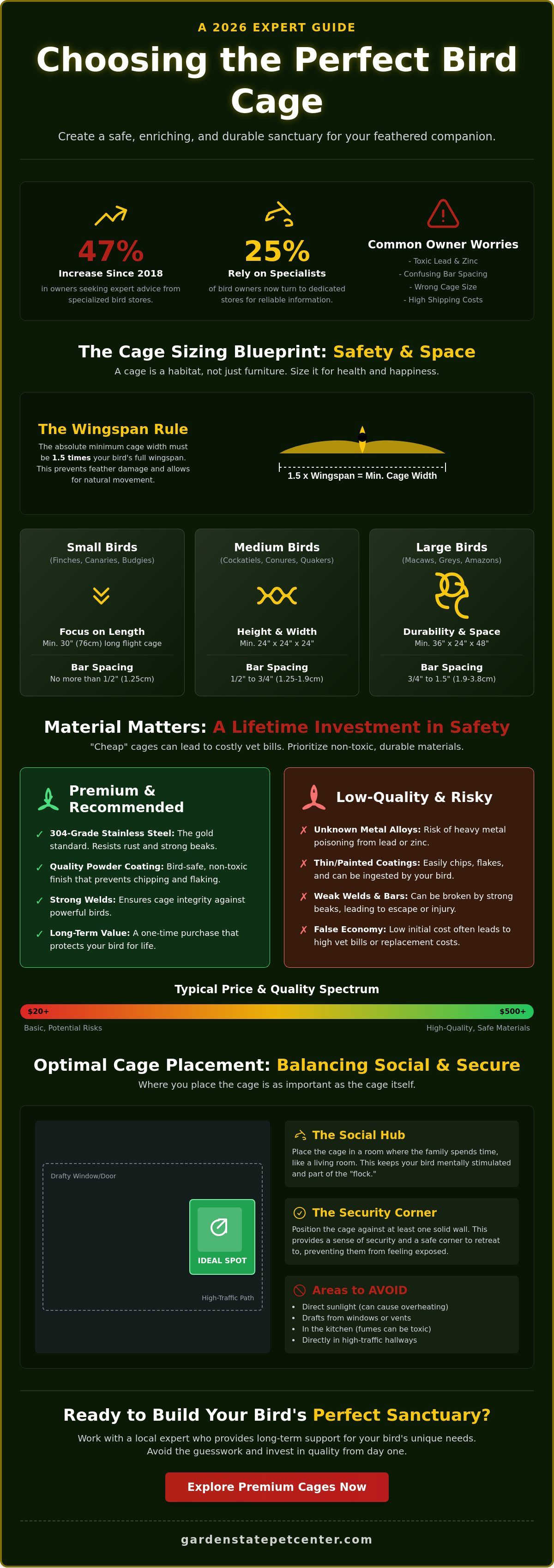
Did you know that 25% of bird owners now rely on specialized bird stores for expert information, representing a 47% increase since 2018? You want the absolute best for your feathered companion, but finding the right bird cages for sale often feels overwhelming when you're worried about toxic lead, zinc, or confusing bar spacing requirements. It's a high-stakes decision. A cage isn't just furniture; it's a complex habitat that must balance physical safety with psychological enrichment for your pet's long-term well-being.
At Garden State Pet Center, we believe you deserve a trusted partner to help you master the art of selecting a premium, durable enclosure. This 2026 expert guide will show you exactly how to choose a home that fits your space while ensuring your exotic bird's health and happiness. We'll explore current price ranges from $20 to over $1,000, address important regulatory considerations, and provide clear standards for bar spacing. Discover how to avoid bulky shipping costs and find a reliable supplier with the specialized knowledge your bird needs to thrive.
Key Takeaways
- Master the "wingspan rule" to select an enclosure size that promotes natural flight and prevents the dangers of head entrapment.
- Evaluate the pros and cons of medical-grade stainless steel versus specialized powder coatings to ensure a durable, non-toxic environment.
- Identify the ideal "social hub" placement in your home to keep your bird engaged while providing a "security corner" for their peace of mind.
- See why working with a local expert to browse bird cages for sale NJ creates a long-term care relationship that supports your bird’s unique nutritional and physical needs.
- Learn how to transform your pet’s living space into a secure sanctuary that prioritizes both physical security and mental enrichment.
Table of Contents
-
Finding the Perfect Bird Cages and Enclosures for Your Exotic Pet
-
Evaluating Cage Materials: Stainless Steel vs. Powder Coated
-
Why Sourcing Your Bird Enclosure from a Trusted Expert Matters
Finding the Perfect Bird Cages and Enclosures for Your Exotic Pet
Choosing a habitat for your feathered companion is one of the most critical decisions you'll make as a bird owner. While many people view a cage as a simple container, it's actually a sanctuary that provides security and a sense of "home territory." When you're searching for bird cages for sale NJ, you should focus on enclosures that allow for full wingspan extension and vertical movement. A well-designed space supports the natural instincts of your pet, whether they're a tiny finch or a majestic macaw. It's about creating a living environment that respects their biological needs rather than just fitting a piece of furniture into your living room.
Sourcing your enclosure from a specialized bird store ensures you receive species-specific advice that generalist big-box retailers often lack. These experts understand that a parakeet has vastly different housing needs than a Congo African Grey. Understanding the fundamentals of bird cage safety and design is the first step toward creating a thriving environment. By prioritizing safety and space, you're investing in your bird's long-term health from day one.
To better understand how different cage styles impact your bird's daily life, watch this helpful video:
The Role of an Enclosure in Avian Health
The physical environment directly impacts a bird's psychological state. Small, cramped quarters often lead to stress-related behaviors like feather plucking or repetitive pacing. Beyond mental health, a spacious bird enclosure encourages flight and climbing, which are essential for maintaining metabolic health and preventing obesity. Since birds spend a significant portion of their lives inside their habitat, the quality of that space shouldn't be compromised. For a companion bird, the minimum viable space is an enclosure that allows for full wingspan extension in every direction without the primary flight feathers touching the bars or perches.
Standard vs. Premium Enclosures
It's tempting to opt for the most affordable option, but "cheap" cages frequently lead to higher veterinary bills later. Premium enclosures feature high-quality welds that won't snap under the pressure of a strong beak and non-toxic finishes that prevent heavy metal poisoning. When browsing bird cages for sale NJ, look for 304-grade stainless steel or hospital-grade powder coatings. Trusted brands in the avian community use these materials because they don't flake or chip, which protects your bird from the hidden dangers of lead or zinc exposure. A premium cage is a one-time investment that ensures safety for the lifetime of your pet.
How to Determine the Correct Cage Size and Bar Spacing
Selecting the right dimensions for your pet's home is a matter of safety, not just aesthetics. When you browse bird cages for sale NJ, the most important metric to follow is the wingspan rule. This standard dictates that the minimum width of the enclosure must be at least 1.5 times the bird's full wingspan. This ensures they can flap their wings without hitting the sides, which prevents feather damage and muscle atrophy. For highly active species, doubling this width is even better. It's also vital to consider bar orientation. While vertical bars look sleek, hookbills like parrots rely on horizontal bars to climb and navigate their environment efficiently. According to expert advice on cage setup, providing a variety of perch heights within these dimensions is also necessary for foot health. You can explore size-specific examples in our bird collection to see how these dimensions translate to physical models.
Sizing Chart by Bird Group
-
Small Birds (Finches, Canaries): These species require length over height. A horizontal flight cage of at least 30 inches allows them to exercise their flight muscles properly.
-
Medium Birds (Cockatiels, Conures): These birds need a balance of height to protect their long tail feathers and width for foraging toys. Look for a minimum of 20x20 inches of floor space.
-
Large Birds (Macaws, Cockatoos): For these powerful pets, heavy-duty reinforced bars are a necessity. Enclosures should be at least 36 to 48 inches wide to accommodate their massive wingspans and strong activity levels.
The Dangers of Incorrect Bar Spacing
Bar spacing is the most critical safety feature of any enclosure. If the gaps are too wide, a bird can get its head stuck, leading to injury or even death. For small birds like parakeets, spacing should never exceed 1/2 inch. Medium birds typically require 1/2 inch to 3/4 inch spacing, while large parrots need 3/4 inch to 1.5 inches. You should also check bar thickness. A macaw can easily snap thin wires designed for a cockatiel. If you notice your bird trying to squeeze through the bars or if the wire bows when they climb, your current setup is dangerously inadequate. Our team can help you shop for the right enclosure to ensure your bird stays secure and happy.
Evaluating Cage Materials: Stainless Steel vs. Powder Coated
Metal choice determines how often you'll scrub, how safe your bird is from heavy metal toxicity, and how long the enclosure lasts. When searching for bird cages for sale NJ, you'll mostly encounter two options: stainless steel and powder-coated iron. Low-quality metal cages often hide dangerous levels of lead and zinc, which can cause chronic poisoning if your bird chews on the bars. Expert cage recommendations from bird rescue experts emphasize that materials must be non-reactive and durable enough to withstand the specific beak strength of your species. You can browse our curated selection of premium bird enclosures to see the difference in material quality firsthand.
Why Stainless Steel is the Gold Standard
Stainless steel is widely considered the ultimate investment for avian health. Medical-grade 304 stainless steel is completely rust-resistant, making it perfect for humid NJ summers or birds that love frequent misting. You can disinfect these surfaces with high heat or bird-safe cleaners without worrying about the finish chipping or flaking. This material doesn't have a coating to peel off, which eliminates the risk of your pet ingesting paint or metal shards. For powerful chewers like Macaws or Cockatoos, stainless steel provides a level of security that softer metals can't match. While the upfront cost is higher, the longevity often exceeds 20 years. This provides a superior return on investment compared to replacing cheaper models every few years.
Powder Coating: Quality Matters
If you prefer a variety of colors to match your home decor, high-quality powder coating is a reliable and popular alternative. "Parrot Safe" powder coating refers to a finish that is electrostatically applied and baked at high temperatures to create a hard, durable bond. You should avoid cages that look like they've been spray-painted; these finishes peel easily and pose an immediate ingestion risk. Look for a textured or hammertone finish, as these usually resist scratches better than smooth gloss. Keep an eye on high-traffic areas like door latches and food bowl holders. If the metal underneath becomes exposed or rust starts to form, it's time to consider a replacement to maintain a sanitary environment. Interestingly, darker colors like black or charcoal provide better visibility into the cage, as they don't reflect light as much as white or silver bars.
Step-by-Step Guide to Optimal Cage Placement and Setup
Once you've browsed the various bird cages for sale NJ and selected a premium enclosure, your focus shifts to where it lives. Location is a major factor in avian mental health. Most parrots are flock animals that thrive on interaction, so identify the "social hub" of your home, such as a family room or living area. Avoid isolated spare rooms where your pet might feel neglected. However, total exposure causes anxiety. Position the habitat so at least one side is against a solid wall. This creates a "security corner" where the bird can retreat and feel protected from perceived threats behind them.
Environmental Factors in New Jersey Homes
New Jersey's climate presents unique challenges for indoor pets. During the summer months, direct sunlight through a window can quickly overheat a bird. Position the cage several feet away from glass to prevent scorching temperatures. Similarly, avoid drafty windows or placement directly under HVAC vents during our cold winters. Rapid temperature fluctuations stress the immune system. You must also be vigilant about household toxins. Overheated non-stick cookware releases Teflon fumes that are instantly fatal to a bird's highly efficient respiratory system. Keeping your bird away from the kitchen is a non-negotiable safety rule.
Internal Habitat Setup
A well-organized interior is the difference between a cage and a home. Start by selecting a variety of bird toys and accessories that cater to different needs, like chewing, preening, and foraging. Strategic perch placement is essential; never place a perch directly over food or water bowls to prevent contamination from droppings. Create a "foraging station" in one corner to encourage natural searching behaviors. This mental stimulation mimics their wild instincts and prevents boredom. When hanging toys, keep them toward the sides of the enclosure. This leaves the center clear, maintaining open flight paths so your bird can move between perches without obstruction. If you need help designing the perfect interior layout, visit Garden State Pet Center to consult with our experts on the best configuration for your specific species.
When searching for bird cages for sale NJ, remember that the setup is just as important as the structure itself. By balancing social interaction with a sense of security, you provide the foundation for a happy, long-lived companion. Proper placement protects your bird from the environmental hazards found in many modern homes, ensuring their sanctuary remains a safe place to thrive.
Why Sourcing Your Bird Enclosure from a Trusted Expert Matters
Buying a habitat for your pet is more than a simple retail transaction. It's the beginning of a comprehensive care relationship. A May 2026 report from the American Veterinary Medical Association (AVMA) estimates that 2.1 million households in the U.S. own birds, yet many owners still struggle with finding reliable equipment. When you search for bird cages for sale NJ on peer-to-peer platforms, you're met with zero safety guarantees or professional oversight. This is why 25% of owners now rely on specialized bird stores for their information. Working with a specialized avian resource provides access to certified pet nutritionists and professionals who understand the intricate health needs of exotic species. These experts don't just sell you a box; they help you build a lifestyle that prevents common issues like behavioral stress or metabolic health decline.
The Garden State Pet Center Difference
Our team provides expert curation of the best bird cages for sale in NJ, ensuring every model meets our strict standards for weld strength and non-toxic materials. We don't believe in a one-size-fits-all approach. Instead, we assist in "matching" the enclosure to your bird’s unique personality. For example, a highly active Conure requires a setup with multiple flight paths, while an anxious, older rescue bird might benefit from a cage that allows for more "security corners" as discussed in our placement guide. Whether you need local expertise in our Audubon store or nationwide shipping, we provide the authority you can trust to keep your companion safe.
Beyond the Cage: Long-term Avian Support
A bird’s well-being extends far beyond the bars of their enclosure. We offer specialized services that integrate naturally with your new habitat to provide a complete health profile for your pet. Disease screening and DNA sexing are vital for understanding hormonal behaviors and specific nutritional requirements. Additionally, maintaining the physical condition of your bird is essential for their comfort inside a cage. Our bird grooming services ensure that nails and wings stay in top condition, which prevents painful snags on cage bars or toys. For times when you're away, our specialized pet boarding provides a safe, expert-monitored environment where your bird's routine remains uninterrupted. Our commitment to excellence ensures that you're never alone in your care journey.
Explore our premium bird cage collection today!
Build a Secure Sanctuary for Your Feathered Friend
Providing a safe and stimulating home is the most impactful choice you'll make for your bird's longevity. By applying the wingspan rule for sizing and prioritizing medical-grade materials like stainless steel, you eliminate the risks of physical injury and heavy metal toxicity. Remember that optimal placement in a social hub with a dedicated security corner is essential for preventing stress-related behaviors. When you browse bird cages for sale NJ, you aren't just buying equipment; you're investing in a complex habitat that supports your pet's natural instincts.
Garden State Pet Center has served as a trusted resource for avian enthusiasts since 1990. Our team includes an on-site certified pet nutritionist and experts who specialize in "Anxious Pets" and exotic care. We're here to help you match the perfect enclosure to your bird's unique personality and health requirements. Shop Our Expert-Curated Bird Cage Collection to find a premium home that ensures your companion thrives for years to come. Your bird's happiness starts with a secure environment, and we're excited to help you create it.
Frequently Asked Questions
How big should my bird cage be for a parrot?
Your parrot's cage must be at least 1.5 times their full wingspan in width, depth, and height. For a bird with a 20-inch wingspan, the enclosure should be at least 30 inches wide. This minimum allows for basic movement, but larger habitats are always preferred to encourage flight. A cramped space often leads to muscle atrophy and psychological distress in active exotic species.
What is the safest material for a bird cage?
Medical-grade 304 stainless steel is the gold standard for safety and longevity. It's completely non-toxic and lacks the lead or zinc found in some cheaper metal alloys. Because it doesn't have a painted coating, there's no risk of your bird ingesting flakes. While the initial cost is higher, its rust-proof nature means it often lasts for the bird's entire lifetime without needing replacement.
How do I choose the right bar spacing for a cockatiel?
Select an enclosure with bar spacing between 1/2 inch and 5/8 inch for a cockatiel. Spacing wider than 5/8 inch is dangerous because the bird can get its head stuck, leading to severe injury or death. When browsing bird cages for sale NJ, check that the bars are sturdy enough not to bend under the pressure of a cockatiel’s beak during daily climbing.
Where is the best place to put a bird cage in my house?
Position the cage in a high-traffic social area like the family room, but ensure at least one side faces a solid wall. This setup provides the interaction birds crave while offering a security corner where they feel safe. Keep the habitat away from kitchens to avoid lethal non-stick cookware fumes and away from drafty windows that cause rapid temperature stress.
How often should I clean my bird’s enclosure?
Change the floor liners and clean food and water dishes every single day to prevent bacteria and mold growth. Perform a thorough deep-cleaning of the entire cage, including bars and perches, at least once a week. Use a bird-safe disinfectant or a mixture of vinegar and water to ensure the environment remains sanitary without exposing your pet to harsh chemical residues.
Is powder-coated steel safe for birds that chew?
High-quality, baked-on powder coating is generally safe for most birds, but persistent chewers can eventually chip the finish. Once the coating is compromised, the exposed metal can rust or harbor hidden bacteria. If you own a powerful chewer like a macaw, consider investing in stainless steel. It withstands heavy beak pressure much better than any coated finish over several years of use.
What are the most important bird cage accessories?
Focus on natural wood perches of varying diameters, foraging toys, and stainless steel bowls. Natural perches prevent foot cramps and bumblefoot, while foraging toys satisfy the bird's instinct to search for food. Avoid mirrors or small plastic toys that can be easily swallowed. A well-accessorized cage provides the mental stimulation necessary to prevent destructive behaviors like feather plucking or screaming.
Can I buy a used bird cage safely?
Buying a used cage is risky because it can harbor lingering diseases or hidden rust under old paint. If you must buy used, inspect the welds for strength and scrub the entire structure with a veterinary-grade disinfectant. Most owners find that new bird cages for sale NJ are a safer choice because they guarantee a lead-free, non-toxic environment for your feathered companion from day one.