

The Ultimate Guide to Freeze-Dried Cat Food: Nutrition, Benefits, and Selection


What if you could provide your cat with the high-protein, biological power of a raw diet without the bacterial safety concerns or the messy preparation? If you've ever stood over a bowl of expensive wet food while your cat staged a hunger strike, you aren't alone. Many owners struggle to find that perfect balance between what a cat instinctively craves and what's actually practical for a busy lifestyle. This is why Freeze-Dried Cat Food has become such a vital resource for those seeking the best in feline wellness without the complications of traditional raw feeding.
The good news is that this specialized solution combines the nutritional integrity of raw ingredients with the shelf-stable convenience of dry kibble. With the global market for these products reaching $1.41 billion in 2026, it's clear that more pet parents are embracing this high-end approach to holistic care. In this guide, we'll show you how this diet can transform your cat's health, leading to higher energy, a softer coat, and smaller, less odorous litter box waste. We'll walk you through the selection process, help you identify premium brands like Smallbatch or Vital Essentials, and explain why rehydration is key. By the time you're done, you'll have the expert knowledge needed to satisfy your cat's inner predator while simplifying your daily routine.
Key Takeaways
- Understand how the sublimation process preserves the cellular structure of raw ingredients, providing your cat with high bioavailability and ancestral nutrition.
- Learn the critical differences between Freeze-Dried Cat Food, air-dried alternatives, and frozen raw diets to choose the best fit for your home.
- Master the "Golden Rule of Rehydration" to support your cat's kidney health and ensure they receive the full benefits of a moisture-rich diet.
- Identify label "red flags" and learn to distinguish between "complete and balanced" formulas and those intended only for intermittent feeding.
- Discover how to use premium freeze-dried morsels as a flavor booster to entice even the pickiest eaters while managing your pet care budget.
What is Freeze-Dried Cat Food? The Science of Raw Preservation
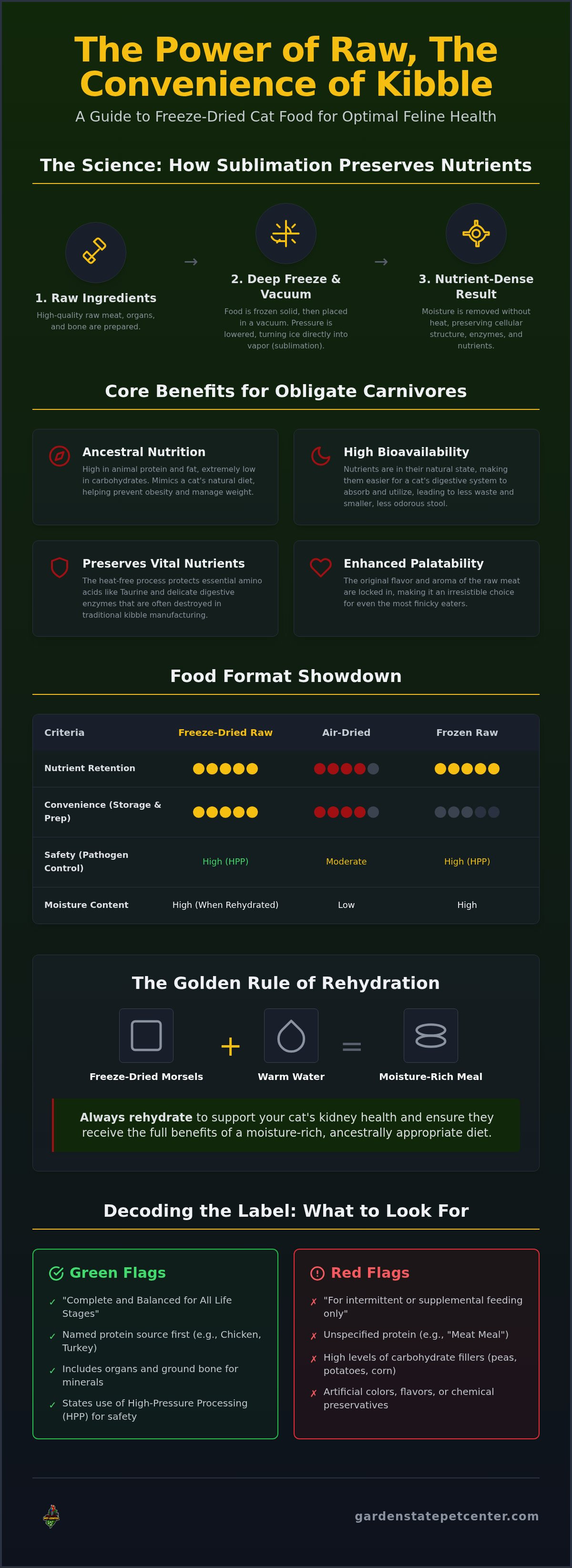
Freeze-drying isn't just a clever way to store snacks; it's a sophisticated preservation method known as sublimation. During this process, raw ingredients are frozen and then placed in a vacuum chamber. The ice turns directly into vapor without ever becoming liquid. This allows the food to retain its original cellular structure and nutrient density. Most commercial Cat food relies on extrusion, which uses intense heat and pressure to create kibble. While efficient, this heat can degrade delicate proteins and vitamins. Freeze-Dried Cat Food avoids these high temperatures entirely, keeping the ingredients as close to their natural state as possible.
To better understand this concept, watch this helpful video:
For owners who are raw-curious but worried about the mess or safety of frozen diets, this method offers a perfect entry point. It's shelf-stable and easy to portion out. At Garden State Pet Center, our on-site certified pet nutritionist works to verify that every brand we carry meets strict quality standards. You can browse our full range of freeze-dried cat food to find options that align with your cat's specific health needs and your lifestyle.
The Cold-Press Advantage: Preserving Enzymes and Nutrients
Because the process stays cold, heat-sensitive nutrients like Taurine remain fully intact. Taurine is an essential amino acid that cats cannot produce on their own. In traditional kibble, manufacturers often have to add synthetic vitamins back in after the cooking process. Freeze-dried recipes preserve these naturally. This method also protects digestive enzymes. These enzymes help your cat process protein more efficiently, leading to better nutrient absorption. Since the moisture is removed without heat, the original flavor and aroma of the meat stay locked in, making it highly palatable for even the pickiest eaters.
Is it Truly Raw? Safety and Pathogen Control
Safety is a common concern for those moving away from highly processed diets. To ensure high standards, many manufacturers use High-Pressure Processing (HPP). This cold-water pressure technique neutralizes harmful pathogens like Salmonella without using heat. The lack of moisture in the finished product also prevents bacterial growth during storage. Under the FDA's FSMA preventive controls, manufacturers must validate these pathogen-reduction steps. When feeding a multi-pet household, treat these morsels with the same care as raw meat. Wash your hands and bowls after every meal to maintain a clean environment for everyone.
Nutritional Benefits: Why Obligate Carnivores Thrive on Freeze-Dried Diets
Cats are built to process meat, not starches. As obligate carnivores, their bodies are fine-tuned to extract energy and vitality from animal proteins and fats. Freeze-Dried Cat Food excels here because it maintains the raw molecular structure of the protein. This leads to high bioavailability, meaning your cat actually absorbs and utilizes more of the nutrients in their bowl. When veterinarians discuss the question, Is Freeze-Dried Cat Food Better?, they often point to this superior nutrient uptake as a primary advantage over heat-processed alternatives.
You'll likely notice the benefits in the litter box first. Because the food is so nutrient-dense and lacks heavy fillers, there's less waste for the body to expel. Owners frequently report smaller, firmer, and significantly less odorous stools. For indoor cats with lower activity levels, the lack of carbohydrate binders like corn, peas, or potatoes helps prevent the insulin spikes that lead to feline obesity. It's an efficient way to manage weight while ensuring your pet feels satisfied and energetic throughout the day.
Protein Purity: Meat, Organs, and Bone
Most premium freeze-dried formulations follow the 80/10/10 rule. This ratio includes 80% muscle meat, 10% organ meat, and 10% bone. It's a precise mimic of what a cat would eat in the wild. While dry kibble often relies on plant-based proteins to hit target numbers, these can be taxing on a cat's liver and kidneys. In contrast, organ meats like heart and liver act as natural multivitamins. They provide essential taurine, Vitamin A, and iron without the need for synthetic additives. This ancestral approach ensures your pet gets the specific amino acids they need for heart health and vision.
Long-Term Health Impacts: From Skin to Vitality
The benefits of a raw-based diet extend to the very surface of your cat. Rich in natural Omega fatty acids, these diets help soothe inflammatory skin conditions and result in a noticeably softer, glossier coat. For senior cats, the low-glycemic nature of a meat-first diet supports stable blood sugar levels, which is crucial for metabolic health. When properly rehydrated, a freeze-dried diet provides the moisture levels necessary to support optimal feline urinary tract health and kidney function. If you want to see how these ingredients can improve your pet's life, you can explore our curated cat food selection to find a formula tailored to their life stage.
Freeze-Dried vs. Air-Dried vs. Frozen Raw: A Comparison
Choosing a diet that honors your cat's biology doesn't mean you're limited to one format. While we've discussed the science of sublimation, it's helpful to see how it stacks up against other raw alternatives. Freeze-Dried Cat Food stands out as the lightest and most nutrient-dense option available. Because the water is removed while the ingredients are frozen, it retains the raw integrity cats need as obligate carnivores. However, it does require rehydration to mimic the moisture levels of natural prey, which is a step some owners forget. You can find a wide variety of these options in our premium cat food collections.
Air-dried food offers a different experience. It's more like a dense, chewy jerky. Manufacturers use a steady stream of air to dehydrate the meat slowly. While this process creates a calorie-dense product that doesn't require adding water, it often involves higher temperatures than freeze-drying. This can impact some of the delicate enzymes and heat-sensitive vitamins we mentioned earlier. It's a great middle-ground for convenience, but it doesn't quite reach the "ancestral" purity of a freeze-dried morsel.
Frozen raw is the most traditional approach to raw feeding. It provides maximum moisture right out of the bag. The downside is the logistical hurdle. You'll need dedicated freezer space and plenty of time to thaw each meal safely. If you forget to pull a bag out of the freezer the night before, you're left with a hungry cat and a frozen block of meat. This is where the shelf-stable nature of other types of Cat food becomes a major advantage for busy families.
Don't let the price tag on a small bag of freeze-dried morsels fool you. When you buy this format, you aren't paying for water weight. A 14-ounce bag of freeze-dried food can often provide as many servings as several pounds of frozen raw food once you rehydrate it. It's a concentrated form of nutrition that goes much further than it looks on the shelf.
Convenience and Storage: Which Fits Your Lifestyle?
Travel is where freeze-dried truly wins. It's incredibly lightweight. This makes it perfect for trips, boarding, or emergency kits. It also boasts a shelf life of up to 18 months, compared to just 3 months for most frozen options. Clean-up is also much simpler. You don't have to worry about the "bloody" mess or the intensive bowl sanitization often associated with thawing raw meat. It's the "Goldilocks" solution for owners who want raw benefits with dry-food ease.
Texture Preferences: What Your Cat Will Actually Eat
Texture is a major factor for "kibble addicts." If your cat loves a crunch, they might enjoy freeze-dried morsels served dry as a high-value treat. For a full meal, crumbling the morsels over their current food makes an excellent transition tool. Some cats prefer the soft, pate-like texture that occurs when you add warm water. This versatility allows you to customize the meal to your cat's specific "mouthfeel" preferences, ensuring they actually enjoy the transition to a healthier diet.
How to Feed: Rehydration, Toppers, and Transitioning
Success with Freeze-Dried Cat Food depends on how you introduce it to your cat's routine. While the nutritional profile is superior, cats are famous for being skeptical of new textures. You don't need to commit to a 100% raw-style diet immediately to see results. Many owners use these nutrient-dense morsels as a "Flavor Booster" for picky eaters. This approach provides a high-quality protein punch while keeping your monthly pet care budget manageable. If you're ready to start, you can shop our premium freeze-dried cat food collection to find the perfect starter flavor for your feline friend.
The Golden Rule of feeding freeze-dried is simple: always prioritize rehydration. Cats have a low thirst drive because they evolved to get moisture from their prey. Feeding dry morsels without adding liquid can strain their kidneys over time. By adding moisture back into the food, you're supporting long-term renal health and ensuring they stay hydrated even if they rarely visit the water bowl.
The 10-Day Transition Strategy
Change takes time. Follow this structured timeline to avoid digestive upset and ensure your cat accepts the new diet. Start on Days 1 through 3 by using the food as a "Topper." Crumble a small amount over their current kibble or wet food to introduce the scent. From Days 4 through 7, move to a 50/50 ratio and begin introducing light rehydration. This helps them get used to the softer texture. By Days 8 through 10, you can move to full meal replacement. During this phase, monitor their litter box. You should notice smaller, firmer waste as their body begins to absorb more nutrients.
Rehydration Hacks for Maximum Palatability
Getting the texture right is the secret to winning over a stubborn cat. Use a 1:1 ratio by volume as your starting point. One cup of food generally needs one cup of liquid. For a nutritional upgrade, skip the plain water. Use warm goat milk or a pet-safe bone broth instead. These liquids add probiotics and collagen that support gut health. Always use lukewarm liquid rather than cold water. This mimics the temperature of fresh prey and releases the natural aromas of the meat. Allow the food to sit for 3 to 5 minutes before serving. This ensures the moisture is fully absorbed into the center of the morsel, providing a consistent texture that cats find irresistible.
Choosing the Best Freeze-Dried Cat Food: Label Red Flags
Not all bags on the shelf are created equal. When selecting Freeze-Dried Cat Food, your first task is to locate the AAFCO statement. Look for the phrase "Complete and Balanced." This indicates the food meets the essential nutritional requirements for a specific life stage. If a label says "For Intermittent or Supplemental Feeding Only," it's a treat or a topper, not a meal. Feeding these as a primary diet can lead to severe nutritional deficiencies over time. If you feel overwhelmed by the options, our Pet Nutritional Consultations can help you design a diet that fits your cat's unique biological needs.
Follow the "First Five Ingredients" rule. In a high-quality feline diet, animal protein should occupy all five of these top spots. Cats lack the enzymes to process plant-based fillers efficiently. Watch out for "ingredient splitting." This is when a manufacturer lists "peas," "pea protein," and "pea fiber" separately to hide the total volume of legumes. Avoid recipes heavy in peas, lentils, or chickpeas. These are often used as cheap protein boosters but can interfere with nutrient absorption. Also, stay away from excessive synthetic preservatives like BHA or BHT, which are unnecessary in a properly freeze-dried product.
Premium Brands to Watch: Smallbatch and Vital Essentials
We've curated our selection to include only the most reliable manufacturers. Smallbatch is a standout for its commitment to local sourcing and small-run production. This ensures a level of freshness and quality control that large-scale operations simply can't match. Vital Essentials takes a different approach with their "Alpha" prey model. Their recipes are incredibly limited, often consisting of just meat, organs, and bone without any added fruits or vegetables. This mimics a cat's ancestral diet with clinical precision. You can find both of these trusted names in our Cat Collection, where we prioritize holistic wellness.
Traceability and Ethical Sourcing
Quality starts at the farm. Humanely raised meat isn't just an ethical choice; it affects the nutrient profile of the food. Animals raised without growth hormones or preventative antibiotics produce cleaner, more nutrient-dense protein. Pay close attention to the naming conventions on the bag. "Chicken" refers to clean flesh and skin, whereas "Chicken Meal" is a rendered product that has been pre-cooked at high temperatures. In the world of freeze-drying, you want whole, recognizable animal parts. Before you make your first purchase, use this checklist:
- Does it have a "Complete and Balanced" AAFCO statement?
- Is the first ingredient a specific animal protein (e.g., Turkey, not "Poultry")?
- Are there zero grains, potatoes, or heavy legumes?
- Is the sourcing clearly defined on the packaging?
Choosing the right food is the most powerful tool you have for your cat's longevity. Trust your instincts, read every label, and prioritize the ingredients that honor their nature as hunters.
Empower Your Cat with Biologically Appropriate Nutrition
Transitioning to a raw-based diet doesn't have to be complicated or messy. By understanding the science of sublimation and the "Golden Rule" of rehydration, you can provide your cat with the ancestral nutrition they need to thrive. Focus on protein purity and avoid common label red flags to ensure your pet gets the best possible support for their long-term vitality. Finding the right Freeze-Dried Cat Food is a journey toward better health, improved digestion, and a more energetic companion.
At Garden State Pet Center, we bring over 30 years of expertise in specialized pet nutrition to help you make informed choices. Our on-site certified pet nutritionist is always available to answer your questions and guide you toward holistic solutions that fit your lifestyle. Shop our curated Freeze-Dried Cat Food Collection for nationwide shipping on all premium holistic brands. We look forward to helping you transform your cat's bowl into a source of pure, life-changing health.
Frequently Asked Questions
Do I have to add water to freeze-dried cat food?
Yes, rehydration is highly recommended to support feline kidney health. Cats have a low thirst drive and evolved to get moisture from their prey. Adding warm water, bone broth, or goat milk helps mimic that natural moisture content. While you can feed it dry as an occasional treat, serving it as a full meal without water can lead to dehydration over time. Always wait a few minutes for full absorption.
Is freeze-dried cat food better than canned wet food?
It depends on your priorities, but Freeze-Dried Cat Food often offers higher nutrient density and less processing. Many canned foods use high-heat sterilization and thickeners like carrageenan or guar gum. This specialized diet preserves natural enzymes and proteins through sublimation. While both provide moisture if rehydrated, the raw integrity of freeze-dried ingredients often leads to better digestion and smaller stools compared to commercial canned options.
Can I mix freeze-dried food with regular kibble?
Mixing is an excellent way to boost the nutritional value of a standard diet. Use crumbled morsels as a topper to entice picky eaters or to introduce raw benefits gradually. This hybrid approach is cost-effective and helps with the transition process. Just ensure you adjust the total caloric intake to prevent overfeeding. If your cat has a sensitive stomach, introduce the new mix slowly over several days.
How long does an opened bag of freeze-dried cat food last?
Most bags remain fresh for about 30 days after opening if stored properly. Keep the food in its original packaging and ensure the seal is airtight after each use. Store it in a cool, dry place away from direct sunlight. Because the moisture has been removed, it's shelf-stable, but exposure to humidity can cause the texture to change. For maximum flavor and nutrient preservation, try to use the bag within a month.
Why is freeze-dried cat food so expensive?
The cost reflects the high-quality ingredients and the energy-intensive manufacturing process. You aren't paying for water or heavy fillers like corn or soy. One pound of Freeze-Dried Cat Food is much more concentrated than a pound of wet or dry food because the moisture has been removed. When you calculate the cost per serving after rehydration, the price gap often narrows significantly. You're investing in premium, human-grade proteins and specialized safety processing.
Is freeze-dried food safe for kittens and senior cats?
It's safe and often highly beneficial for both life stages, provided the formula is labeled as "Complete and Balanced." Kittens benefit from the high-quality protein for growth, while seniors often find the rehydrated texture easier to chew. The low-carbohydrate profile is particularly helpful for senior cats managing weight or blood sugar levels. Always consult with a professional to ensure the specific nutrient ratios meet your pet's life-stage requirements.
Can freeze-dried food cause constipation in cats?
It shouldn't cause constipation if it's properly rehydrated. In fact, the high digestibility of raw-structured protein usually leads to better bowel movements. However, if fed dry without adequate water intake, the lack of moisture could potentially lead to harder stools. Always follow the 1:1 rehydration ratio mentioned in earlier sections. If you notice any changes in bathroom habits, try increasing the amount of warm liquid added to each meal.
What is the difference between freeze-dried and dehydrated pet food?
The main difference lies in the temperature and the preservation of cellular structure. Dehydration uses low heat to evaporate moisture, which can slightly cook the food and change its texture. Freeze-drying uses a vacuum and freezing temperatures to turn ice into vapor. This process keeps the food's shape, flavor, and nutritional profile almost exactly like the original raw state. Freeze-dried morsels also rehydrate much faster and more completely than dehydrated pieces.

Article by
Victor Santucci
Victor Santucci is the owner of Garden State Pet Center in Audubon, NJ, where he specializes in premium pet nutrition, exotic animals, and expert-level care. With years of hands-on experience and a passion for helping pets thrive, Victor is dedicated to educating pet owners on proper nutrition, enrichment, and species-specific care. His mission is simple: provide every pet with the highest quality products and every customer with honest, knowledgeable guidance.
Share this post
- 0 comment
- Tags: cat diet, cat food, cat nutrition, feline health, Freeze-Dried Cat Food, pet care, raw feeding, rehydration