

Freeze-Dried Dog Food: The Ultimate Guide to Raw Nutrition Made Easy


What if you could provide your dog with the biological power of a raw diet without the messy prep, bacteria concerns, or the need for a dedicated freezer? Many pet parents feel caught between the nutritional excellence of raw feeding and the practical reality of a busy lifestyle. You want the best for your companion, but managing frozen meat can feel like a chore. It's completely understandable to feel frustrated when a picky eater refuses standard kibble or when labels leave you confused. If you've been searching for a way to integrate Freeze-Dried Dog Food into your routine, you aren't alone in wanting a safer, simpler solution.
This guide explores how freeze-dried options serve as the ultimate nutritional bridge, locking in live enzymes and high-quality proteins while offering the shelf-stable convenience of traditional food. With the global freeze-dried pet food market valued at $1.69 billion as of April 2026, it's clear that more owners are choosing this specialized care. We'll show you exactly how to use these nutrient-dense recipes as a topper or a complete meal to improve your dog's digestion and coat health. You're about to discover a reliable, expert-approved way to simplify mealtime without ever compromising on your dog's long-term well-being.
Key Takeaways
- Learn how the science of sublimation preserves 98% of moisture-free nutrition without damaging the essential cellular structure or enzymes of raw ingredients.
- Understand why Freeze-Dried Dog Food eliminates the need for the high-carb binders and starches commonly found in processed kibble.
- Master the professional 90/5/5 rule to ensure your dog’s meal is packed with the correct biological ratios of muscle meat, organs, and bone.
- Explore a curated selection of industry-leading brands like SmallBatch and Open Farm that meet our rigorous standards for holistic health.
- Follow our structured 10-day slow-mix method to transition your pet safely and avoid digestive upset during their nutritional upgrade.
What is Freeze-Dried Dog Food? The Modern Raw Revolution
Freeze-dried dog food represents a significant shift in how we approach canine nutrition. It starts as high-quality raw meat, organs, and bone, which then undergo the science of freeze-drying. This process, known as sublimation, removes moisture by turning ice directly into vapor without passing through a liquid phase. Because the food never reaches high temperatures, the delicate cellular structure remains intact. This results in a product that's nutritionally identical to raw meat but safely shelf-stable for your pantry.
Unlike traditional kibble or even dehydrated options, freeze-dried recipes don't rely on heavy heat. Dehydration uses warm air to pull out moisture, which can unintentionally cook the ingredients and degrade heat-sensitive vitamins. By choosing Freeze-Dried Dog Food, you're providing the raw power your dog's biology requires without the logistical headache of a second freezer. It's an ideal solution for owners who want the health benefits of raw feeding but lack the space for bulky frozen blocks. Plus, the intense, natural scent of real meat makes it an instant favorite for even the most selective eaters.
The Key Benefits of a Freeze-Dried Diet
- Bioavailability: Raw proteins are naturally easier for a dog’s short digestive tract to process. This efficiency often leads to smaller, firmer stools and better nutrient absorption.
- Enzyme Preservation: The cold process keeps live enzymes active. These support gut health and strengthen the immune system by maintaining a healthy, balanced microbiome.
- Minimal Processing: Most formulas feature short, recognizable ingredient lists. This simplicity is vital for preventing allergy flare-ups and managing food sensitivities in your pet.
Freeze-Dried vs. Air-Dried vs. Dehydrated
Freeze-drying is widely considered the gold standard for nutrient retention because it avoids heat entirely. While air-drying uses low heat over a long period, it can still cause minor changes to the protein structure. Texture is another major differentiator. Air-dried food often has a jerky-like, chewy consistency. In contrast, freeze-dried pieces are porous and light. This makes them easy to crumble as a topper or rehydrate with water to create a fresh, moist meal.
When looking at the cost-per-serving, the value becomes clear. While the initial bag price might seem higher, the nutrient density is extreme. You often feed less by volume compared to dehydrated foods that may contain more plant-based fillers. Our team at Garden State Pet Center prioritizes brands that maintain these high standards, ensuring you get the most nutritional value for your investment.
The Science of Sublimation: How Freeze-Drying Locks in Health
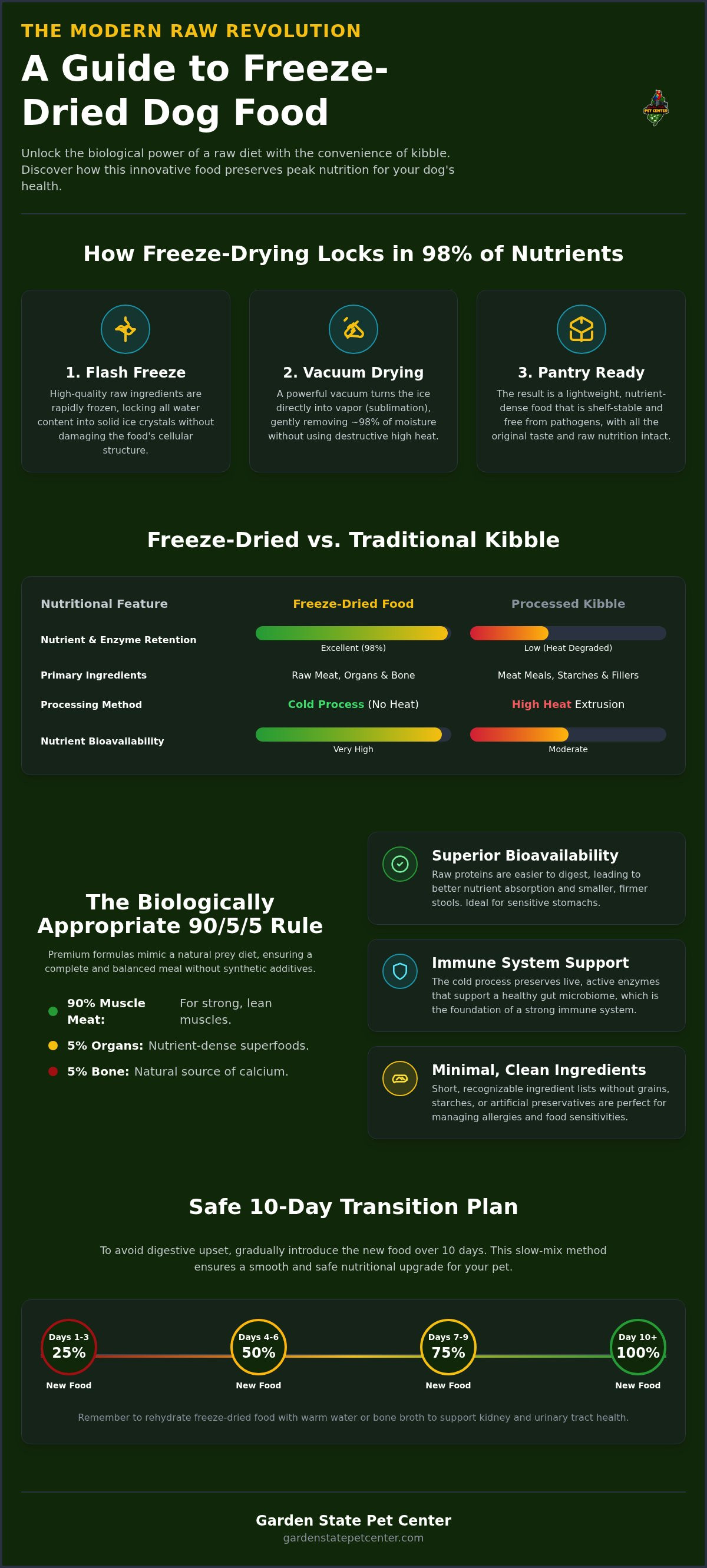
The journey from fresh, human-grade raw meat to a shelf-stable nugget involves a sophisticated three-stage process. First, the ingredients are flash-frozen to a temperature where all water content turns into ice. Next comes primary drying, or sublimation, where a vacuum pulls the ice directly into vapor. Finally, secondary drying removes any remaining bound water molecules. This meticulous method eliminates roughly 98% of the moisture while keeping the delicate cellular structure of the meat entirely intact. By starting with premium raw materials, manufacturers ensure that the finished Freeze-Dried Dog Food retains the same nutritional profile as the day it was sourced.
This extreme moisture removal is the secret to both longevity and safety. Bacteria, mold, and yeast require water to survive and reproduce. By stripping away that moisture, the food becomes naturally resistant to spoilage without the need for artificial preservatives or chemicals. It's a clean, reliable way to provide raw nutrition that stays fresh in your pantry for months. If you are ready to upgrade your dog's bowl, you can explore our curated selection of premium dog food to find the perfect fit for your pet’s needs.
Why Moisture Matters: The Role of Rehydration
While these nuggets are shelf-stable, they are biologically designed for hydration. Dogs often have a low thirst drive, and providing moisture-rich food supports essential kidney and urinary tract health. Adding warm water or bone broth back into the bowl does more than just hydrate. Rehydration unlocks the flavors and aromas that trigger a dog’s natural hunting drive. This sensory experience makes the meal much more appealing to picky eaters who might ignore dry kibble. We recommend letting the food soak for a few minutes to ensure the core is fully softened before serving.
Safety and Pathogen Control
Safety is a common concern for many pet owners considering raw diets. Reputable brands mitigate these risks through High-Pressure Processing (HPP) or rigorous batch testing. This is a critical distinction, as Cornell University on raw food risks highlights the importance of evidence-based safety measures in raw nutrition. Because the food is dry, it's often significantly easier for pet parents to handle than frozen raw meat. To maintain a sterile environment, follow these simple steps:
- Wash your hands and the feeding bowl thoroughly after every meal.
- Seal the bag tightly and store it in a cool, dry place to prevent environmental moisture from creeping in.
- Discard any rehydrated food that has been sitting out for more than two hours.
By following these professional standards, you can enjoy the benefits of Freeze-Dried Dog Food with complete peace of mind.
Freeze-Dried vs. Kibble: A Comparative Analysis
Standard kibble relies on an industrial process called extrusion. To create those uniform, crunchy pellets, manufacturers must include high levels of starch, such as peas, lentils, or potatoes, to act as a binder. Without these carbohydrates, the kibble would simply fall apart. Freeze-Dried Dog Food bypasses this mechanical requirement entirely. Because the structure is maintained through specialized cold-press and vacuum technology, these recipes can remain almost entirely meat-based. This difference is vital for your dog’s metabolic health and overall energy levels.
The high starch content in many kibble brands creates a high glycemic index, leading to rapid insulin spikes that contribute to canine obesity. In contrast, the protein-heavy profile of freeze-dried diets supports lean muscle mass and stable blood sugar. You’ll also notice a significant change in the "Poo Factor." Because raw proteins are highly digestible, your dog’s body utilizes more of the food and produces smaller, firmer, and less odorous waste. While the initial price point of a bag is higher, many owners find the long-term ROI comes in the form of fewer weight-related health issues and lower veterinary bills over time.
Cost Comparison: Is it Really More Expensive?
When evaluating the price, it's essential to understand the concentrated nature of the product. Removing the water means that one pound of freeze-dried food is often nutritionally equivalent to about four pounds of fresh raw meat. For budget-conscious owners, we often recommend a "Topper Strategy." By mixing a portion of freeze-dried nuggets with high-quality dog dry food, you can significantly boost the bowl's nutritional value without a full-diet price tag. This approach provides specialized care for your dog's gut health while remaining financially sustainable.
Shelf Life and Storage Convenience
One of the greatest advantages of this format is its portability. Unlike frozen raw diets that require coolers and careful temperature monitoring, freeze-dried bags are lightweight and shelf-stable. This makes them the perfect companion for traveling, camping, or when you're leaving your pet with a professional service. If you're planning a trip, check out our Expert Pet Boarding Guide for tips on keeping your dog’s routine consistent while you’re away. To maintain peak freshness at home, follow these simple storage steps:
- Squeeze excess air out of the bag before sealing to prevent oxidation.
- Keep the food in its original packaging to preserve the manufacturer's barrier against light and moisture.
- Store the bag in a cool, dry pantry away from direct sunlight; no refrigeration is required.
The Nutritionist’s Guide: How to Choose a Premium Formula
Selecting the right Freeze-Dried Dog Food requires a discerning eye for biological value. As an expert curator of pet health, we recommend following the 90/5/5 Rule. This guideline ensures the recipe contains 90% muscle meat, 5% organ meat, and 5% ground bone. This specific ratio provides the essential amino acids and minerals your dog would naturally consume in the wild. Avoid brands that rely on "fillers" like peas, lentils, or potatoes. While these ingredients are common in processed diets, they often serve as inexpensive protein boosters that lack the bioavailability of animal tissue. Check the guaranteed analysis for protein levels; AAFCO standards require a minimum of 18% for adult maintenance and 22% for growth, though premium freeze-dried options often far exceed these baselines.
Focus on recipes that utilize "Whole Food" vitamins rather than synthetic premixes. High-quality formulas derive their nutrient profile from ingredients like kelp, organic berries, or leafy greens. It is also vital to consider the protein-to-fat ratio based on your dog's lifestyle. Active dogs require higher fat content for sustained energy, while sedentary or senior dogs benefit from leaner proteins to prevent weight gain. If you want to enhance your pet's routine further, you can explore our dog vitamins & supplements to provide targeted support for joints or immunity.
Deciphering the Label: What to Look For
Read the ingredient list carefully to distinguish between high-quality meat and rendered meals. Look for specific names like "Chicken" or "Beef" rather than "Meat Meal." In premium freeze-dried diets, the ingredients should be recognizable and minimally processed. Organ meats like heart, liver, and kidney are essential superfoods. They offer concentrated doses of Vitamin A, B-vitamins, and taurine, which are often missing from muscle meat alone. To meet AAFCO standards for a complete and balanced freeze-dried diet, the recipe must provide every essential nutrient in the correct proportions to support specific life stages without requiring additional supplementation.
Specialized Diets: Allergies and Sensitivities
If your dog struggles with chronic skin issues or digestive upset, consider switching to "Novel Proteins." Ingredients like Venison or Rabbit are less likely to trigger the immune responses associated with common proteins like beef or chicken. Many top-tier brands also integrate probiotics or fermented ingredients to strengthen the gut microbiome. These additions act as a proactive defense against environmental allergens. If you need help navigating these choices, schedule a nutritional consultation with our on-site expert to find a formula tailored to your dog's unique biology.
Elevating the Bowl: Premium Brands and Transitioning
Choosing the right Freeze-Dried Dog Food is only the first step toward improved vitality. To ensure success, you must select brands that prioritize ingredient transparency and ethical sourcing. We recommend industry leaders like Vital Essentials, SmallBatch, and Open Farm. These manufacturers avoid the common pitfalls of mass-market production by focusing on high-quality animal proteins and minimal processing. Beyond serving these as full meals, these nuggets make excellent high-value training treats. Their intense aroma and light, crunchy texture keep dogs focused during complex sessions without the need for messy pouches or refrigerated snacks.
Rotate your dog’s protein sources every few months. This rotational feeding strategy prevents the development of food sensitivities and ensures a broader spectrum of amino acids. If your dog has always eaten chicken, try introducing beef, lamb, or fish. When you're ready to switch, follow the 10-day slow-mix method to prevent digestive upset. Start with 25% of the new food mixed with 75% of the old diet for the first three days. Gradually increase the ratio until your dog is eating 100% of the new formula by day ten. This patience allows the gut microbiome to adjust to the higher protein density safely.
Expert Curation at Garden State Pet Center
Our inventory isn't chosen at random. Our on-site certified pet nutritionist meticulously vets every brand we carry to filter out low-quality fillers and synthetic additives. We take pride in offering niche favorites like Green Juju and OC Raw, which provide targeted support for inflammation and immune health. These specialized brands are often hard to find at general retailers but are essential for a truly holistic approach to pet care. If you feel overwhelmed by the options, we invite you to book a Pet Nutritional Consultation to receive a personalized feeding plan for your companion.
Final Checklist for New Freeze-Dried Feeders
Before you serve that first bowl, use this checklist to ensure a smooth experience. Preparation is the key to maximizing the benefits of a raw-inspired diet. Follow these steps to get started:
- Step 1: Calculate your dog’s daily caloric need. Remember that freeze-dried food is highly concentrated; you'll likely feed less by volume than you did with kibble.
- Step 2: Choose a primary protein that aligns with your dog’s activity level and specific sensitivities.
- Step 3: Decide on a rehydration liquid. While filtered water is standard, using bone broth or raw goat milk can provide an extra boost of minerals and electrolytes.
For more detailed advice on choosing the right diet, read our Premium Pet Food Guide. Our team is always ready to help you make these choices with confidence and professional care.
Transforming Your Dog’s Health with Every Bowl
You now understand how the science of sublimation preserves essential enzymes and why removing starch binders leads to better metabolic health. By applying the 90/5/5 rule to your selection, you ensure your companion receives the precise biological ratios they need to thrive. Switching to Freeze-Dried Dog Food is a reliable way to simplify your daily routine while providing top-tier nutrition that mirrors a natural diet. It's the ultimate bridge between raw power and modern convenience.
Since 1990, our team has provided specialized care for pets, and our on-site certified pet nutritionist is always available to help you navigate these premium choices. We make it easy to access the best brands through our nationwide shipping options. Take the next step in your pet’s wellness journey by exploring our expert-vetted inventory today. Shop Our Curated Selection of Premium Freeze-Dried Dog Food. Your dog's journey to better digestion and a shinier coat starts with a single, nutrient-dense meal.
Frequently Asked Questions
Do I have to add water to freeze-dried dog food?
Yes, rehydration is highly recommended to support your dog’s kidney health and overall digestion. While the food is shelf-stable in its dry form, dogs naturally have a low thirst drive and benefit from moisture-rich meals. Adding warm water, bone broth, or goat milk helps restore the hydration found in a fresh raw diet. This process also enhances the natural aromas that entice picky eaters. Aim for a 1:1 ratio for the best results.
Is freeze-dried dog food safe for puppies and senior dogs?
Yes, it's safe for all life stages provided the formula is labeled as complete and balanced for that specific age group. Puppies benefit from the high-quality proteins and fats that support rapid growth and brain development. For senior dogs, the soft texture of rehydrated food is easier on aging teeth and sensitive gums. The high bioavailability of the nutrients also ensures that older pets with slower metabolisms get the most out of every bite.
How long does a bag of freeze-dried dog food last once opened?
Most bags remain fresh for about 30 to 60 days after opening if stored correctly in a cool environment. Freeze-Dried Dog Food is naturally shelf-stable, but exposure to air can cause the healthy fats to oxidize over time. Always squeeze out excess air before resealing the bag and keep it in a dry pantry. Avoid storing the bag in areas with high humidity, like under a sink, to prevent moisture from compromising the product.
Can I mix freeze-dried dog food with regular kibble?
Yes, mixing freeze-dried nuggets with kibble is an excellent way to boost the bowl's nutritional value without a full-diet commitment. This topper strategy is popular for budget-conscious owners who want to provide raw benefits efficiently. Simply crumble the nuggets over the dry food or rehydrate them separately before mixing. This adds live enzymes and high-quality animal proteins to a standard processed meal, making it much more appealing and healthy for your companion.
Is freeze-dried dog food as good as frozen raw food?
Nutritionally, it's nearly identical to frozen raw food because the cold sublimation process preserves the cellular structure and essential enzymes. The primary difference is convenience and storage; freeze-dried options don't require freezer space and are much easier for travel or boarding. While frozen raw is the closest to nature in terms of moisture, rehydrating your freeze-dried meals bridges that gap effectively. Both choices offer superior nutrition compared to traditional high-heat diets.
Can freeze-dried dog food cause salmonella or other bacterial infections?
The risk is extremely low because reputable brands use safety measures like High-Pressure Processing to eliminate pathogens before the food is packaged. While raw ingredients are used, the removal of 98% of the moisture creates an environment where bacteria cannot thrive. However, you should still practice standard safe handling procedures. Wash your hands and your dog's bowl after every feeding to prevent any environmental contamination, just as you would with fresh meat.
Why is freeze-dried dog food so expensive compared to kibble?
The higher cost reflects the premium quality of the ingredients and the complex manufacturing process involved. Freeze-Dried Dog Food is highly concentrated; since the water is removed, one pound of dry product is equivalent to several pounds of fresh raw meat. You are paying for pure animal protein rather than inexpensive starch binders like peas or potatoes. Many owners find the investment pays off through reduced veterinary costs and improved long-term health.
What is the best way to transition my dog to a freeze-dried diet?
Use a slow, 10-day transition period to allow your dog’s digestive system to adjust to the increased protein density safely. Start by replacing 25% of their current food with the new recipe for the first three days. Increase to a 50/50 mix for days four through six, then move to 75% for days seven through nine. By day ten, your dog should be fully transitioned. This gradual pace prevents stomach upset and ensures success.

Article by
Victor Santucci
Victor Santucci is the owner of Garden State Pet Center in Audubon, NJ, where he specializes in premium pet nutrition, exotic animals, and expert-level care. With years of hands-on experience and a passion for helping pets thrive, Victor is dedicated to educating pet owners on proper nutrition, enrichment, and species-specific care. His mission is simple: provide every pet with the highest quality products and every customer with honest, knowledgeable guidance.
Share this post
- 0 comment
- Tags: dog food, dog food toppers, dog health, Freeze-Dried Dog Food, freeze-dried raw, pet nutrition, picky eater dogs, raw diet