

The Best Beginner Reptile Pets: A Complete Guide to Starting Your Journey


What if the most intimidating part of bringing home a reptile isn't the animal itself, but the complex equipment required to keep it healthy? Many aspiring keepers hesitate to start because they fear a single mistake with a heat lamp might lead to disaster. It's a valid concern when searching for the right beginner reptile pets, especially with so much conflicting advice available. You want a companion that is docile and hardy, not a high-stress science project that requires constant troubleshooting.
We believe that starting your journey should be an exciting milestone, not a source of anxiety. This guide will help you identify species that balance ease of care with a truly rewarding personality. You'll discover which animals thrive in a home environment and learn the essential care strategies to ensure their long-term well-being. We'll walk through a clear list of required supplies, explain the daily time commitment involved, and even address common worries about feeding routines. By the end, you'll have the confidence and professional-grade knowledge needed to build a perfect habitat for your new exotic friend.
Key Takeaways
- Identify species with a wide margin for environmental error to ensure your first experience is stress-free and successful.
- Discover why the Leopard Gecko and Corn Snake are considered the gold standard for beginner reptile pets because of their docile temperaments and simple care requirements.
- Learn to master thermoregulation and habitat design by selecting the right enclosure style, whether you prefer a bioactive or a sterile setup.
- Protect your pet's health by following a strict acclimation period during the first month, focusing on observation rather than handling.
- Ensure long-term vitality through professional-grade nutrition and a reliable schedule for light and heat cycles.
What Makes a Reptile "Beginner-Friendly"?
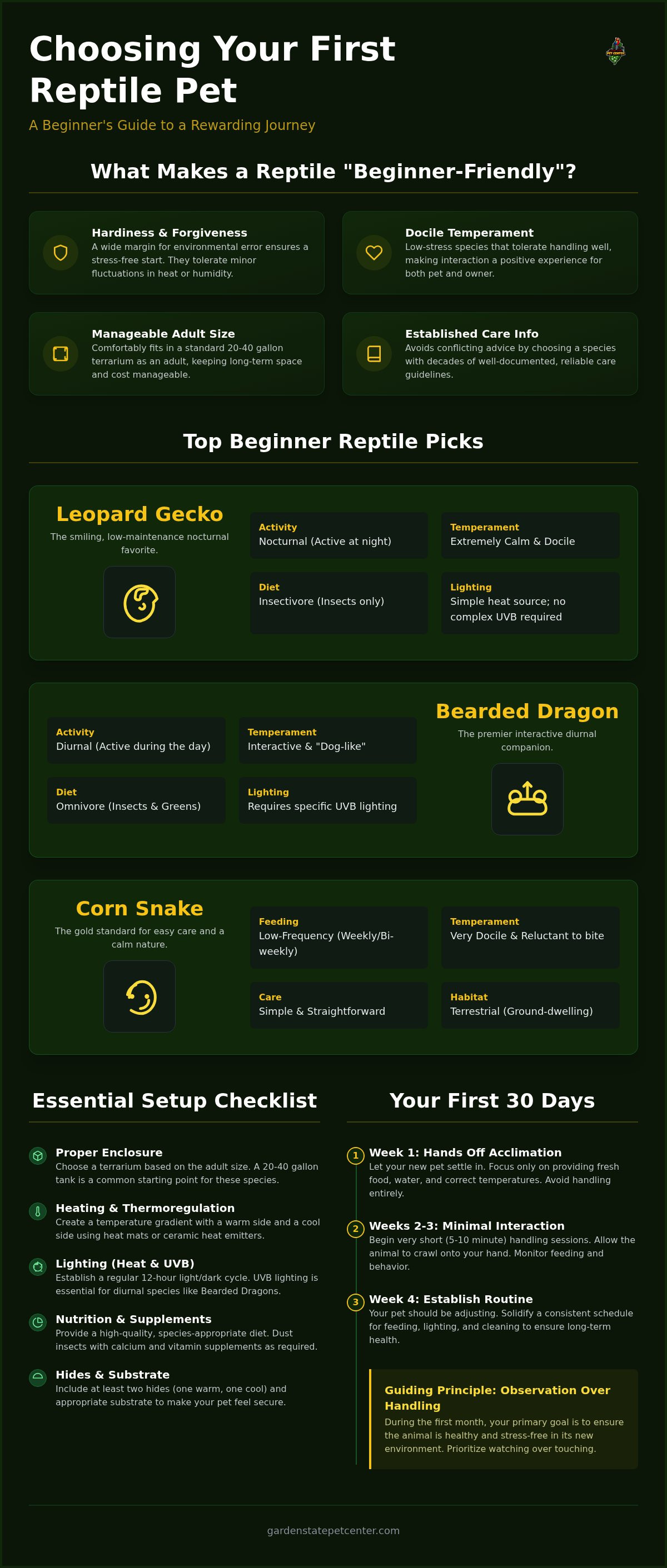
Choosing your first pet in the world of Herpetoculture involves more than just picking a species that looks interesting. A true beginner reptile is defined by its margin for error. New keepers are still learning the nuances of humidity, temperature gradients, and lighting cycles. Therefore, the best beginner reptile pets are those that won't suffer immediate health declines if a heat bulb burns out while you're at work or if the humidity fluctuates slightly. Hardiness is the foundation of a successful start. You want a species that naturally thrives in standard household conditions with minimal, easy-to-manage adjustments.
Reliable care information is another vital metric for success. If you choose a rare or "expert-only" species, you'll find yourself trapped in digital spaces with conflicting, unverified advice. Stick to animals with well-documented care requirements. This ensures that when you have a question about shedding or appetite, the answers are clear, consistent, and backed by decades of successful keeping. Our goal is to set you up for a rewarding relationship with your pet, not a stressful guessing game.
Assessing Temperament and Handleability
Not every reptile enjoys being touched. We distinguish between "display animals," which are meant to be observed like living art, and "handleable pets" that tolerate or even seem to enjoy human interaction. For a beginner, a docile temperament is essential. Look for species that don't instinctively bite or bolt when you reach into the enclosure. Watch for signs of stress, such as a flattened body, open-mouth gaping, or rapid tail-waving. Engaging with your pet during its juvenile stage helps it acclimate to your presence, building a bond of trust that lasts for years. If you view your enclosure as a design piece, you might visit Nicholas Wells Antiques to learn how the color green has historically shaped the aesthetics of fine and decorative arts.
Space and Habitat Scalability
Think about the future before you buy. A tiny hatchling might look perfect in a small plastic tub, but you must plan for its adult size. High-quality reptile terrariums are long-term investments. Many beginner reptile pets fit comfortably in a standard 20 to 40-gallon tank as adults, keeping long-term costs manageable. Consider whether the animal is arboreal (climbing) or terrestrial (ground-dwelling). A climbing species needs vertical height, while a ground-dweller requires more floor space to roam. Matching the enclosure shape to the animal's natural behavior prevents stress and encourages healthy movement.
The Top Beginner Lizards: Engaging and Docile Companions
Lizards are widely considered the most interactive category of reptiles. They offer a unique opportunity for keepers to observe complex behaviors and, in many cases, develop a form of bond with their pets. When you start the process of choosing a healthy pet reptile, lizards often stand out because of their distinct personalities and varied lifestyles. Whether you want a companion that is active while you’re at work or one that wakes up just as you’re winding down, there is a lizard that fits your schedule. These beginner reptile pets provide a rewarding entry into the hobby without the steep learning curve of more sensitive species.
The Leopard Gecko: Low Maintenance, High Reward
Leopard Geckos are the perfect nocturnal entry point for new keepers. They're famous for their calm nature and a unique facial structure that makes them look like they're constantly smiling. Unlike many other lizards, they don't require complex UV lighting setups to survive, though providing low-level UVB is often beneficial. Their heating requirements are simple; you can effectively use undertank heating pads or overhead ceramic emitters to create a warm spot. Their diet is strictly insect-based, which makes feeding a straightforward task. They're slow-moving and generally tolerate handling very well, making them a top choice for families.
The Bearded Dragon: A Truly Interactive Pet
If you want a pet that feels more like a traditional companion, the Bearded Dragon is the premier diurnal choice. These lizards are renowned for their "dog-like" personalities. They often recognize their owners, sit on shoulders, and exhibit fascinating social signals like arm-waving. Because they're active during the day, you'll get to enjoy their full range of behaviors. Their diet is omnivorous, requiring a balance of live insects and fresh leafy greens. To ensure they receive the vitamins and minerals necessary for their bone health, it's vital to provide high-quality bearded dragon food and proper calcium supplementation. You can find everything needed to start your journey in our specialized reptile collection.
For keepers who want something a bit different, the Blue Tongue Skink is a fantastic, hardy alternative. These lizards are long-lived, often reaching 20 years or more with proper care. They have a very broad diet and a sturdy build, which makes them less delicate than some smaller lizard species. Their intelligence and distinctive blue tongues make them a conversation starter in any home.
Best Beginner Snakes: Low-Frequency Feeding and Simple Care
Snakes often surprise new keepers with how little daily work they actually require. While many lizards demand daily salad preparation or insect dusting, snakes thrive on a much slower rhythm. This makes them some of the most manageable beginner reptile pets for those who value a low-maintenance lifestyle. Most adult species in this category only need to eat once every seven to fourteen days. This significantly reduces the time spent on food procurement and habitat cleanup, allowing you to focus on the enjoyment of observing and handling your new companion.
Corn Snakes: Active and Hardy
Corn snakes are widely considered the gold standard for a reason. They are incredibly hardy and tolerate a wide range of humidity levels, usually thriving between 40% and 50%. Their curious nature means you'll often see them exploring their enclosure or utilizing climbing branches. One of the biggest draws is the variety of colors available. From vibrant oranges to deep reds and ghostly greys, there is a "morph" for every aesthetic preference. They are active during the day and evening, providing plenty of opportunities for interaction. Their slender bodies and predictable movements make them easy for even nervous beginners to handle with confidence.
Ball Pythons: The Gentle Giants of the Beginner World
If you prefer a slower, more sedentary pet, the Ball Python is an excellent choice. These snakes are known for their shy, docile temperament. Instead of striking when they feel vulnerable, they typically curl into a tight ball, hiding their head in the center. This behavior makes them very predictable. However, they do have more specific environmental needs than corn snakes. Maintaining humidity between 60% and 80% is critical for healthy shedding. Without this, they may struggle with "stuck shed," which can lead to discomfort or skin issues.
You should also be prepared for occasional hunger strikes. Ball Pythons are notorious for refusing food during seasonal changes or if their habitat isn't perfect. To avoid these "picky eater" issues, ensure your enclosure is curated with the right hiding spots and consistent heat gradients. You can find professional-grade supplies to support these needs in our reptile collection. Consistent temperatures and a secure environment are the best ways to keep their appetite steady.
For keepers with limited space, the Rosy Boa is a fantastic alternative. These small, heavy-bodied snakes rarely exceed three feet in length. They are exceptionally docile and thrive in simpler, desert-style setups. Their slow movement and calm demeanor make them perfect for first-time handlers who might be intimidated by the speed of a corn snake.
Mastering the Setup: Nutrition, Lighting, and Enclosures
Mastering the habitat is the bridge between a surviving pet and a thriving one. For beginner reptile pets, the environment is their entire world. You have two primary paths for habitat design: bioactive or sterile. A bioactive setup acts as a mini-ecosystem with live plants and beneficial insects that break down waste. While beautiful, many new keepers prefer a sterile setup initially. This approach uses simpler materials like paper towels or specialized liners. It makes it much easier to monitor your pet's health and hygiene during the critical first month of acclimation.
Creating a thermal gradient is non-negotiable for success. Your pet needs a warm basking spot and a cooler retreat to regulate its internal temperature. Without this range, their digestion and immune systems can fail. Similarly, high-quality UVB lighting is essential for most species to prevent metabolic bone disease. This condition is painful and permanent, but it's entirely preventable with the right bulbs. You can explore our expert-curated reptile collection to find the exact lighting and heating elements suited for your specific species.
The Foundation of Reptile Nutrition
High-quality care starts from the inside out. Many beginners don't realize that the value of an insect is only as good as what that insect recently ate. This process, known as "gut-loading," involves feeding your feeder insects a nutrient-dense diet twenty-four hours before they become a meal. This ensures your reptile receives a concentrated boost of vitamins. Additionally, most indoor reptiles require a rotation of Calcium and Vitamin D3 powders. Transitioning to a premium pet food strategy that includes specialized reptile supplements will safeguard your pet against common nutritional deficiencies.
Choosing the Right Terrarium
Selecting the right enclosure depends on your climate and the animal's needs. Glass terrariums offer excellent visibility and are widely available. However, PVC enclosures are superior at retaining heat and humidity, which is vital for tropical species like Ball Pythons. Regardless of the material, ensure the lid is absolutely secure. Snakes are notorious escape artists and can squeeze through surprisingly small gaps. Finally, select a substrate that balances aesthetics with safety. Avoid loose sands for juveniles to prevent accidental ingestion, opting instead for cypress mulch or specialized soil blends that support natural burrowing behaviors.
Build your perfect habitat today by browsing our professional-grade reptile enclosures and supplies.
Long-Term Success: Your First 30 Days as a Keeper
The first month with your new companion is the most critical period for establishing a healthy foundation. For beginner reptile pets, this time is less about interaction and more about observation and stability. Your primary goal is to minimize stress while the animal adjusts to its new environment. Follow these steps to ensure a smooth transition and long-term vitality for your pet.
Step one is the "Look but Don't Touch" period. Resist the urge to handle your new reptile for at least the first seven to ten days. Moving to a new home is a massive event for a small animal. Constant handling during this phase can lead to a suppressed immune system or a refusal to eat. Use this time instead to establish step two: a consistent light and heat cycle. Automate your habitat with timers to ensure your pet receives a reliable day-night rhythm. This predictability helps lower their cortisol levels and encourages natural behaviors.
Step three involves tracking milestones. Keep a simple log of your pet's first successful feeding and their first shed. A clean, one-piece shed is a great indicator that your humidity levels are perfect. Finally, step four is scheduling a baseline health check. Consulting with an exotic pet expert early on allows you to verify that your setup is correct and that your pet is free from underlying issues. Since we have focused on specialized care since 1990, we know that these early check-ins prevent common mistakes from becoming long-term health problems.
Identifying Healthy vs. Stressed Behavior
Learning to read your pet's body language is a skill that develops over time. A healthy reptile typically displays clear eyes, an alert posture, and active tongue flicking as they explore. Their skin should look vibrant and free of stuck patches. Conversely, be on the lookout for warning signs. Lethargy, labored breathing, or prolonged hiding beyond the first week can indicate an issue. If you notice your pet is constantly soaking in their water bowl or has a sudden change in appetite, it's time to consult a specialist for nutritional or environmental adjustments.
Building a Relationship with a Specialized Resource
Your journey doesn't end once you leave the store. Choosing a specialized reptile store over a big-box retailer provides you with a partner in your pet's care. Specialized resources offer professional-grade advice that generalists simply can't match. You gain access to vital services like professional grooming, pet boarding for when you travel, and expert nutritional consultations. Even if you aren't local, you can utilize nationwide shipping to keep your pet's habitat stocked with the highest quality supplies. This ongoing support ensures that your first experience with beginner reptile pets is just the beginning of a lifelong passion for these fascinating animals.
Begin Your Exotic Pet Journey with Confidence
We've been dedicated to specialized exotic pet care since 1990, providing the expertise you need to feel like a pro from day one. Our on-site certified pet nutritionist is available to guide you through the complexities of premium diets and supplementation. We also offer nationwide shipping on our full range of professional-grade supplies, ensuring you have access to the best equipment no matter where you are located. Take the first step toward building a perfect habitat today. Shop Premium Reptile Supplies and Habitats to explore our curated selection. We're excited to support you and your new pet every step of the way.
What is the absolute easiest reptile for a child to keep?
The Leopard Gecko is widely considered the most manageable choice for children. These lizards are slow-moving and rarely bite; they tolerate handling much better than most other species. Their nocturnal nature means they don't require complex UV lighting setups, which simplifies daily maintenance. Because they stay relatively small, a standard 20-gallon enclosure is sufficient for their entire life. They offer a perfect introduction to the responsibility of pet ownership without overwhelming a young keeper.
Do all beginner reptiles require live food like crickets or mice?
No, not all beginner reptile pets require live feeding. While many lizards rely on live insects, most pet snakes can be easily trained to accept frozen-thawed rodents, which is much more convenient for squeamish owners. Some species, like the Blue Tongue Skink, are omnivorous and can thrive on a mix of prepared diets, fruits, and vegetables. We recommend consulting with an expert to find a species that matches your comfort level regarding food procurement and preparation.
How much does it cost to set up a beginner reptile habitat?
The total investment for a habitat varies significantly depending on the specific species you choose. You will need to account for the enclosure itself, specialized heating elements, lighting systems, and safe substrate. High-quality terrariums and professional-grade lighting are essential for long-term health and safety. While initial costs can fluctuate based on the complexity of the setup, investing in reliable equipment early on prevents expensive medical issues or equipment replacements later in your pet's life.
Can two different reptile species live together in the same tank?
It is almost never a good idea to house different species together in the same enclosure. Every animal has unique requirements for temperature, humidity, and diet that are difficult to balance in a shared space. Co-habitation often leads to territorial aggression, cross-contamination of bacteria, and chronic stress for both pets. To ensure the welfare of your animals, provide each one with its own dedicated habitat tailored to its specific biological needs and behavioral patterns.
How long do beginner reptiles typically live?
Many popular beginner species are surprisingly long-lived. Leopard Geckos and Corn Snakes often live for 15 to 20 years with proper care; some Blue Tongue Skinks can even exceed 20 years. This longevity makes them a significant commitment rather than a short-term hobby. Understanding the lifespan of your chosen pet is crucial for planning their long-term welfare and ensuring you are ready for a relationship that could last two decades or more in your home.
Do beginner reptiles need a heat lamp on all night?
Most reptiles require a distinct day and night cycle, meaning bright heat lamps should be turned off at night. However, if your home drops below 65 degrees Fahrenheit, you may need a non-light-emitting heat source like a ceramic heater or a heat mat. This maintains a safe baseline temperature without disrupting the animal's sleep patterns. Always use a reliable thermometer to monitor these levels and ensure the environment remains stable and comfortable throughout the night.
Is it better to buy a baby reptile or an adult for a first-time owner?
An adult reptile is often a better choice for a first-time owner. While babies are undeniably cute, they are much more fragile and sensitive to minor environmental errors. Adults have established immune systems and more predictable temperaments, which makes them more forgiving as you learn the nuances of their care. Choosing an older animal also allows you to skip the frequent feeding schedules required for rapidly growing juveniles, making the experience much more relaxed and successful.
What are the signs that my reptile is not getting enough UV light?
Insufficient UV exposure often manifests as lethargy or a noticeable lack of appetite. In more advanced cases, you might see signs of metabolic bone disease, such as a soft or rubbery jaw, swollen limbs, or muscle tremors. These symptoms indicate that your pet cannot process calcium correctly. If you notice any changes in their posture or movement, check your bulbs immediately; most UV lights lose their effectiveness after six to twelve months of use regardless of brightness.

Article by
Victor Santucci
Victor Santucci is the owner of Garden State Pet Center in Audubon, NJ, where he specializes in premium pet nutrition, exotic animals, and expert-level care. With years of hands-on experience and a passion for helping pets thrive, Victor is dedicated to educating pet owners on proper nutrition, enrichment, and species-specific care. His mission is simple: provide every pet with the highest quality products and every customer with honest, knowledgeable guidance.
Share this post
- 0 comment
- Tags: beginner reptile pets, Corn Snake, Exotic Pets, Leopard Gecko, Pet Care, Reptile Care, Reptile Habitat, Reptiles