

Pet allergy testing cost Best Practices and Expert Advice


Environmental allergy diagnoses in dogs increased by about 30% over a single decade. If you are watching your companion struggle with constant skin irritations, you aren't alone. Many owners feel trapped in a cycle of recurring vet bills for symptomatic treatments that never seem to solve the root cause. You might be searching for a clear pet allergy testing cost to see if a permanent answer is finally within reach. It is often frustrating to navigate confusing marketing for at-home kits while your pet continues to suffer.
We believe that specialized care and professional knowledge are the best tools for your pet's long-term welfare. This article provides a complete breakdown of industry expenses for diagnostic procedures, from intradermal skin tests to serum blood work. You will discover which tests offer the highest accuracy for your specific species and learn how to move beyond temporary fixes. We also share expert advice on building a long-term plan to reduce allergen exposure through specialized nutrition and high-quality dietary strategies. By focusing on reliable diagnostics and precise maintenance, you can provide the relief your pet deserves.
Key Takeaways
- Identify the core differences between environmental allergies and food intolerances using the three most reliable diagnostic methods available today.
- Evaluate the total pet allergy testing cost for 2026, including specialist consultation fees and itemized laboratory expenses for blood and skin panels.
- Discover why traditional screenings aren't effective for exotic birds or reptiles and learn the importance of specialized health testing for these unique species.
- Compare the recurring financial commitment of immunotherapy against the proactive benefits of high-quality nutritional management strategies.
- Learn how to maximize your diagnostic investment by working with a certified pet nutritionist to design a precise and effective food elimination trial.
Understanding Pet Allergy Testing: Methods and Objectives
Choosing the right diagnostic path for your pet is a significant step toward their long-term comfort. Before you commit to a specific procedure, you must understand that testing is rarely the first step in a clinical workup. Most veterinarians begin by ruling out more common issues like fleas, mites, or yeast infections. Understanding the biological basis of Allergies in dogs and cats helps clarify why a diagnostic test is necessary once these basic factors are addressed. It's a journey that requires patience and a commitment to specialized care.
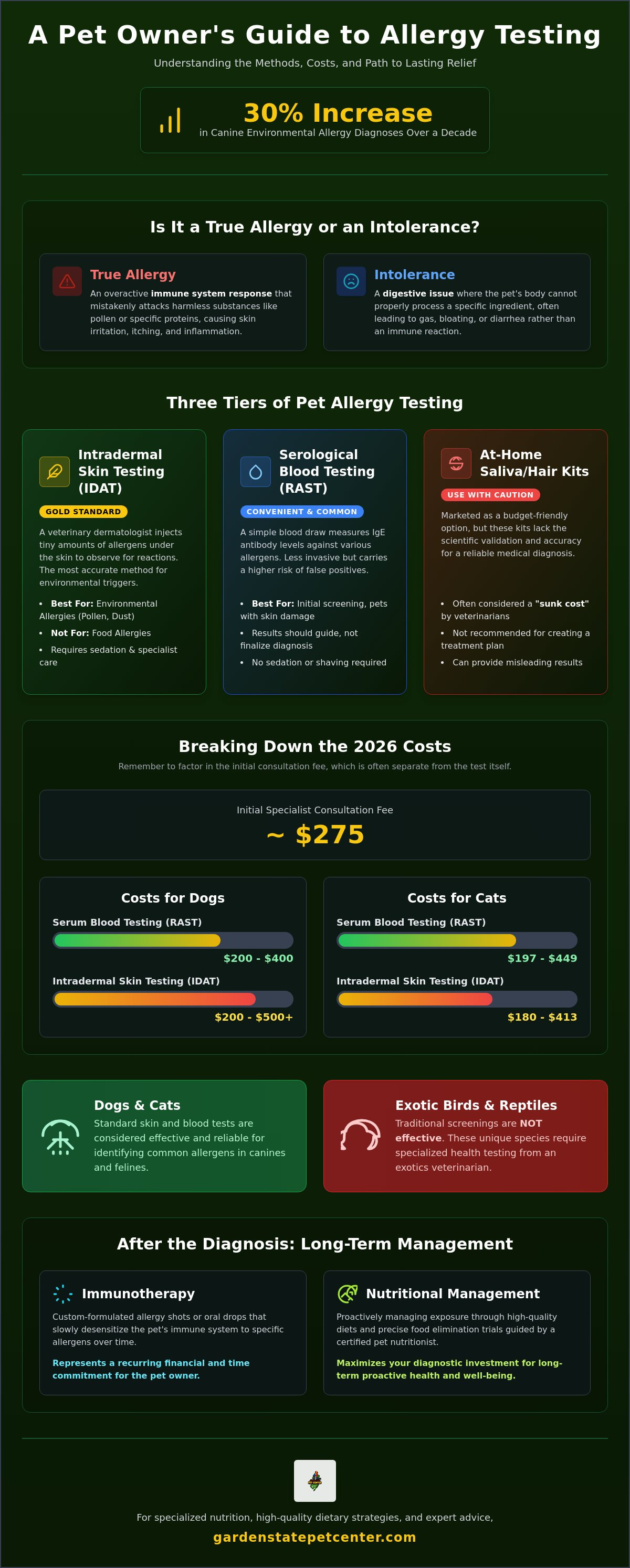
There is also a vital distinction between a true allergy and a simple intolerance. An allergy is an overactive immune response where the body mistakenly attacks harmless substances like pollen or protein. An intolerance is typically a digestive failure where the pet's system simply cannot process a specific ingredient. Understanding the pet allergy testing cost starts with knowing what you are actually paying for. While the initial pet allergy testing cost might seem high, it provides the data needed for a precise management plan rather than a series of guesses.
This proactive approach to wellness is a value shared by reputable breeders like Dallas Maine Coons, who focus on genetic health and proper care to ensure their kittens are as healthy as possible before they ever reach their new homes.
To better understand this concept, watch this helpful video:
Intradermal Skin Testing (IDAT)
This procedure remains the gold standard for identifying seasonal and environmental triggers in dogs and cats. A veterinary dermatologist shaves a small patch of fur and injects tiny amounts of specific allergens just under the skin. They then observe the area for localized inflammatory responses like redness or swelling. Because the pet must remain perfectly still, sedation is usually required. This method is highly reliable for environmental triggers but is not effective for diagnosing food allergies.
Serological Blood Testing (RAST)
Many pet owners prefer serological testing because it's a simple blood draw that doesn't require shaving or sedation. These tests measure the levels of IgE antibodies in the bloodstream. While they are convenient for general practice veterinarians, they carry a higher risk of false positives compared to skin testing. They are excellent for pets with severe skin damage who cannot undergo intradermal tests. However, you should use these results as a guide for further investigation rather than a final diagnosis for food sensitivities.
Breaking Down the Pet Allergy Testing Cost in 2026
Understanding the total pet allergy testing cost requires looking past the laboratory fee. Many owners are surprised to find that the test itself is only one line item on a larger invoice. A comprehensive diagnostic journey begins with an initial consultation. For those seeking expert clarity, a new client exam with a veterinary dermatologist typically costs around $275 as of June 2026. This fee covers the specialist's time to review your pet's history and perform a detailed physical examination before any needles are even touched. Geographic variations also play a role. Clinics in major urban centers often have higher overhead, which reflects in the final invoice compared to rural practices.
Average Cost Ranges by Test Type
The specific method chosen significantly impacts your investment. For dogs, serum blood testing usually ranges between $200 and $400. This is a popular choice for its convenience. Intradermal testing is more involved and typically costs between $200 and $500 or more. This higher price point reflects the specialized involvement of a dermatologist and the technical precision required for the procedure. For cats, the national average for skin testing sits between $180 and $413, while blood testing ranges from $197 to $449. You might see at-home saliva or hair kits marketed for $70 to $200. While these seem budget-friendly, many clinical professionals view them as a sunk cost. These kits often lack the accuracy needed for a medical diagnosis and rarely provide a clear path to relief.
Additional Clinical Expenses
Hidden costs can quickly increase the total bill. Sedation is often a requirement for intradermal testing to ensure your pet remains still and the results are accurate. Depending on the animal's size and the level of monitoring needed, this adds another layer to the invoice. Follow-up appointments are also necessary to interpret the data and build a treatment plan. These typically cost around $135 per visit. While waiting for results, you may also face pharmacy costs. Medications like Apoquel can cost between $1,200 and $2,400 per year, while Cytopoint injections range from $350 to $2,600 annually. These medications provide essential comfort during the diagnostic phase. If you are looking to support your pet's recovery through diet, exploring high-quality dog food can be a vital part of your long-term strategy after testing is complete.
Species-Specific Screening: From Dogs to Exotic Birds
While dogs and cats are the primary focus of most dermatological studies, exotic companions have their own unique health requirements. You cannot simply apply a canine blood panel to a parrot or a bearded dragon. The biological markers for inflammation in these species differ vastly from domestic mammals. Consequently, the traditional pet allergy testing cost you might see quoted for common pets doesn't translate to the avian or reptilian world. Instead, specialized health screenings and environmental audits are the most effective ways to manage "allergic" symptoms in these sensitive animals.
Avian Health and Disease Screening
Feather picking is a common concern that often leads owners to suspect an allergy. However, this behavior is frequently linked to stress, hormonal changes, or viral diseases rather than environmental triggers. A comprehensive avian health panel is essential to rule out these underlying issues. We recommend starting with Avian DNA Sexing and disease screening to establish a baseline for your bird's health. While a standard DNA test is a modest investment, a full disease panel for conditions like Polyomavirus or PBFD requires more specialized laboratory work. Pairing these screenings with a holistic diet of parrot food and targeted vitamins can significantly reduce respiratory sensitivities and improve plumage quality.
Small Animal and Reptile Sensitivity
Small mammals like rabbits and guinea pigs often show signs of respiratory distress or skin flaking. Before assuming your pet has a rare allergy, evaluate their immediate environment. Dust from low-quality hay or aromatic oils from certain wood shavings are frequent irritants that mimic allergic reactions. By consulting on small animal environments and switching to premium, dust-free bedding, you can often solve these issues without expensive laboratory work. This proactive approach helps you avoid the unnecessary pet allergy testing cost associated with environmental irritants that are easily managed through better husbandry.
Reptiles also face unique challenges within their terrariums. What looks like an allergic skin reaction is often a result of incorrect humidity levels or a substrate that is too abrasive. These animals are highly sensitive to chemical cleaners and synthetic fragrances used in the home. Ruling out these irritants through a professional environmental audit is a more reliable path to health than attempting standard allergy panels. Focusing on high-quality enclosures and specialized care ensures your exotic pet thrives without the need for invasive and often inconclusive testing.
Long-Term Costs: Immunotherapy vs. Nutritional Management
Managing allergies is a marathon, not a sprint. While the upfront pet allergy testing cost establishes your roadmap, the following years require a strategic financial plan. You are essentially choosing between modifying the immune system through medicine or supporting it through specialized care and diet. Both paths have distinct price points and timelines for success. Most owners find that a combination of these methods provides the most reliable relief for their pets while keeping long-term veterinary bills manageable.
The Price of Immunotherapy
Allergen-specific immunotherapy is a common medical route for environmental triggers. A year of immunotherapy shots typically costs between $150 and $300, though the total annual workup can exceed $1,000 when you include specialist oversight. If you prefer under-the-tongue drops, known as sublingual immunotherapy, expect to invest between $50 and $150 per month. These drops are convenient for at-home administration but require a higher monthly commitment. While these costs are recurring, the financial ROI comes from reducing the need for expensive emergency visits and chronic medications like Apoquel, which can cost up to $2,400 annually. Most pets show significant improvement within six to twelve months of starting their custom serum.
The Role of Premium and Holistic Diets
Investing in Premium Pet Food is often the most proactive way to manage systemic inflammation from the inside out. For pets with dietary sensitivities, a strict food elimination trial is the gold standard for diagnosis. These trials typically cost between $50 and $100 per month for specialized diets. While raw or freeze-dried options from brands like SmallBatch or Open Farm have a higher per-bag price, they eliminate the common fillers and low-quality proteins that trigger reactions. This high-end approach often pays for itself by preventing secondary skin infections that require costly antibiotic rounds.
Choosing a holistic path means focusing on ingredient transparency and clinical precision. Many "budget" foods use ingredients that lead to chronic gut inflammation and skin flaking. By switching to gently cooked or raw dog food, you provide bioavailable nutrients that strengthen the skin barrier. This reduces the pet's overall "allergic load," making them less reactive to environmental triggers like pollen or dust. If you are ready to build a custom nutrition plan for your companion, we invite you to consult with our specialized team to find the right formula for your pet's specific needs.
Maximizing Your Investment: Choosing the Right Management Path
Deciding when to pivot from symptomatic treatment to deep diagnostics is a pivotal moment for any pet owner. While the pet allergy testing cost represents a significant upfront commitment, it is also a tool for long-term financial efficiency. Identifying the specific trigger allows you to stop spending money on ineffective treatments and start investing in solutions that actually work. Whether you choose immediate medical testing or a proactive nutritional intervention depends on the severity of your pet's symptoms and your budget for specialized care.
Expert Nutritional Consultations
Consulting with a professional can often save you more money than any laboratory panel. A certified pet nutritionist helps you navigate the dense information found on Dog Food labels, identifying hidden triggers like specific grains or low-quality protein byproducts. This expertise is particularly vital for exotic birds. Many parrots suffer from respiratory issues or plumage loss that owners mistake for allergies, but these often stem from simple nutritional deficiencies. Tailoring a diet with species-specific vitamins and holistic bird food can resolve these issues without the need for invasive testing. Strengthening the immune system through precise nutrition is a foundational step in any management plan.
High-quality supplements also play a critical role in reducing your pet's "allergic load." Omega-3 fatty acids and probiotics are excellent tools for supporting the skin barrier and gut health. By making the body less reactive to the environment, you might find that your pet no longer requires the expensive monthly medications discussed earlier. These proactive steps create a more resilient animal and a more predictable monthly budget.
A Final Checklist for Pet Parents
Before you commit to a $500 diagnostic panel, perform a thorough audit of your pet's immediate environment. Small changes can lead to big results. Review this checklist to ensure you are maximizing your diagnostic investment:
- Rule out parasites: Ensure your pet is on a reliable, veterinarian-approved flea and tick preventative, as a single bite can mimic severe environmental allergies.
- Audit your cleaning supplies: Switch to fragrance-free, pet-safe detergents and floor cleaners to rule out contact dermatitis.
- Evaluate substrate: For those selecting Reptile supplies, choose dust-free, non-aromatic substrates that won't irritate sensitive respiratory systems.
- Ask about "The Why": Ask your vet if the results of a specific test will change the treatment plan. If the answer is no, a food elimination trial might be a more cost-effective first step.
Ultimately, the goal is to provide a high-quality life for your companion. By combining professional expertise with a low-allergen home environment, you can manage the pet allergy testing cost effectively. We are here to partner with you on this journey, providing the specialized resources and reliable advice you need to keep your pet comfortable and thriving.
Empowering Your Pet’s Health Through Precise Care
Navigating the total pet allergy testing cost involves more than just reading a laboratory invoice. It requires a dedicated commitment to finding the root cause of your companion's discomfort. By choosing reliable diagnostics over unreliable at-home kits and prioritizing specialized environmental audits for exotic species, you stop the cycle of ineffective treatments. Whether you manage a dog with seasonal triggers or a parrot with respiratory sensitivity, the goal is always a higher quality of life through precise care.
Our team has specialized in exotic bird and reptile care since 1990, and we provide the professional expertise you need to move from confusion to clarity. We have a certified pet nutritionist on-site to help you design a management plan that actually works for your household. Take the first step toward lasting relief and consult with our certified pet nutritionist to find the perfect holistic diet for your sensitive pet. With nationwide shipping on premium holistic pet diets, we ensure high-quality care is always within reach.
Your companion doesn't have to struggle with chronic irritation. With the right diagnostic data and a proactive nutritional strategy, you can build a vibrant and healthy future together.
Frequently Asked Questions
Is pet allergy testing worth the cost?
Yes, investing in a professional diagnosis is worth it because it eliminates the expensive guesswork of symptomatic treatment. By identifying specific environmental or dietary triggers, you can target the cause directly rather than paying for recurring vet visits for secondary skin infections. This proactive approach often reduces the total lifetime pet allergy testing cost by preventing chronic inflammation and the need for long-term prescription medications.
How much does a dog allergy blood test cost on average?
A dog allergy blood test, also known as a RAST or serological test, typically costs between $200 and $400. This fee usually covers the laboratory analysis of IgE antibodies in the bloodstream. Keep in mind that this figure does not include the initial specialist consultation fee, which can add another $275 to your total invoice. While blood tests are convenient and non-invasive, they are primarily used for environmental triggers.
Can I use an at-home pet allergy kit instead of a vet test?
You should avoid relying on at-home kits because they lack the clinical accuracy required for a medical diagnosis. Most kits use hair or saliva samples, which are considered unreliable by veterinary dermatologists for identifying true immune responses. While they are marketed for $70 to $200, they often result in false positives. This leads to unnecessary dietary restrictions and a higher overall pet allergy testing cost when you eventually need professional intervention.
Does pet insurance typically cover the cost of allergy testing?
Most accident-and-illness pet insurance plans cover the costs of allergy testing and subsequent treatments. The primary requirement is that the allergy must not be a pre-existing condition that was documented before your coverage began. Some premium plans even offer reimbursement for prescription hypoallergenic diets used during food elimination trials. Always review your specific policy details to confirm your deductible and reimbursement levels for specialized dermatological care.
How long do pet allergy test results take to come back?
The turnaround time depends on the specific diagnostic method your veterinarian chooses. Serological blood tests usually require one to two weeks for laboratory processing and specialist interpretation. In contrast, intradermal skin testing provides immediate results as the inflammatory reactions are observed in real-time during the procedure. Regardless of the method, your vet will need additional time to review the data and design a customized immunotherapy or nutritional management plan.
What is the cheapest way to find out what my pet is allergic to?
A strict food elimination trial is the most cost-effective way to diagnose dietary sensitivities. This involves feeding a specialized, limited-ingredient diet for eight to twelve weeks to observe symptom resolution. For environmental issues, performing a thorough home audit is a free first step. Switch to fragrance-free cleaners and high-quality bedding to rule out irritants before booking expensive laboratory panels. These proactive changes often solve the problem without a large financial investment.
Are food trials more effective than blood tests for allergies?
Yes, a food elimination trial is the gold standard for diagnosing dietary allergies because blood and skin tests are notoriously unreliable for food triggers. Serological tests often produce false positives for common proteins, leading to confusing results. A controlled trial using a hydrolyzed or novel protein diet provides a clear, clinical answer. This method ensures you are investing in the right high-quality nutrition rather than paying for inconclusive laboratory data.
Can exotic birds have allergies, and how are they tested?
Exotic birds can suffer from sensitivities, but true allergies are less common than in mammals. Testing usually involves a comprehensive health panel to rule out viral diseases and a detailed environmental audit. Veterinarians focus on ruling out irritants like aerosol sprays, tobacco smoke, or dust from low-quality substrate. Establishing a baseline through DNA sexing and disease screening is the most reliable way to distinguish behavioral feather picking from underlying medical or environmental sensitivities.

Article by
Victor Santucci
Victor Santucci is the owner of Garden State Pet Center in Audubon, NJ, where he specializes in premium pet nutrition, exotic animals, and expert-level care. With years of hands-on experience and a passion for helping pets thrive, Victor is dedicated to educating pet owners on proper nutrition, enrichment, and species-specific care. His mission is simple: provide every pet with the highest quality products and every customer with honest, knowledgeable guidance.
Share this post
- 0 comment
- Tags: Allergy Testing, Blood Testing, Dog Allergies, Exotic Pet Health, Immunotherapy, Pet Allergies, pet allergy testing cost, Pet Care Costs, Pet Health, Skin Testing