

Avian DNA Sexing: The Complete Guide to Bird Gender and Health Testing


What if the "he" you've been bonding with for years is actually a "she" at risk for life-threatening egg-binding? It's a common anxiety for many bird owners who want the best for their feathered companions. You want to provide specialized care, but without knowing your bird's true biology, you're often left guessing about their specific nutritional and medical requirements. We understand that your bird is a member of the family, and uncertainty about their health or gender can be deeply stressful.
This guide will show you how avian DNA sexing provides the definitive proof you need to protect your bird’s long-term wellbeing. With an accuracy rate greater than 99.9%, modern testing has moved far beyond invasive procedures. We will explore the science behind the CHD1 gene marker, explain the benefits of non-invasive feather or eggshell sampling, and discuss how combined disease screening can identify silent viral threats before they impact your flock. You'll gain the actionable advice needed to move forward with confidence and clarity regarding your bird's unique health needs.
Key Takeaways
- Eliminate the guesswork of visual identification by understanding how molecular testing identifies Z and W chromosomes in monomorphic species.
- Learn how modern avian DNA sexing uses non-invasive samples like feathers or eggshells to provide clinical accuracy without stressing your bird.
- Discover how identifying your bird's gender allows for proactive management of health risks like egg-binding and gender-specific behavioral shifts.
- Protect your entire flock by combining sexing with vital disease screening to detect asymptomatic viral carriers early.
- Ensure long-term wellness by partnering with professional laboratory services for definitive results and expert guidance on specialized care.
The Science of Avian DNA Sexing: Why Visual Identification is Unreliable
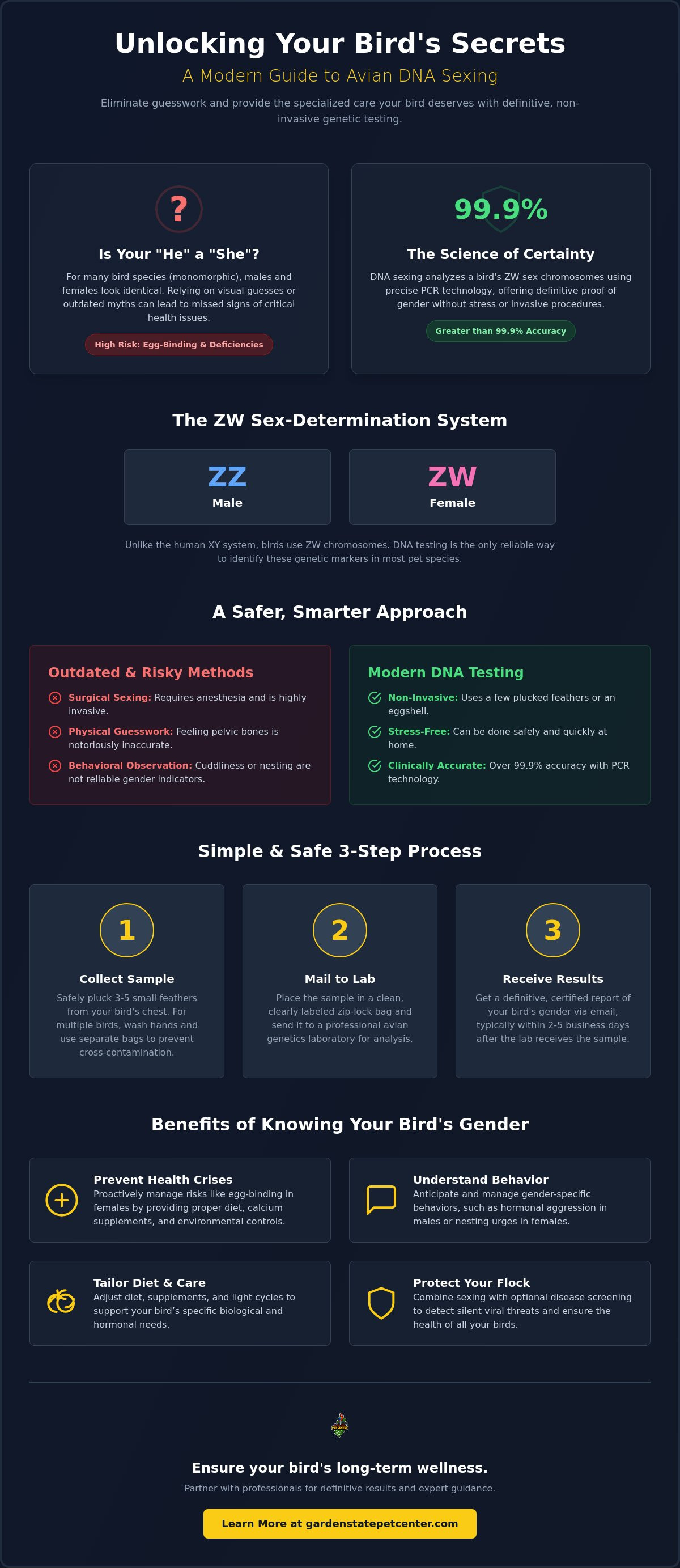
Identifying whether your bird is male or female isn't just about picking a name. It's a critical step in providing the specialized care they deserve. Avian DNA sexing is a sophisticated molecular method that analyzes a bird's genetic code to identify their specific sex chromosomes. Unlike humans who have an XY system, birds operate on a ZW sex-determination system, where males have two Z chromosomes (ZZ) and females have one Z and one W chromosome (ZW). Because these markers are hidden deep within their DNA, you simply cannot rely on physical appearance for many species.
For years, owners relied on myths like feeling the width of pelvic bones or observing nesting behaviors. These methods are notoriously inaccurate and often lead to preventable health crises. A "cuddly" bird isn't necessarily female, and a wider pelvic gap doesn't guarantee your bird will lay an egg. Relying on a "wait-and-see" approach is medically risky. If you assume a bird is male but she is actually a female, you might miss early signs of calcium deficiency or egg-binding. These conditions can progress rapidly and become fatal if not caught in time. Knowing the gender early allows you to adjust light cycles and diet to manage hormonal triggers safely.
To better understand how this scientific process works in a practical setting, watch this helpful video:
Monomorphic vs. Dimorphic Bird Species
Many popular companion birds are monomorphic, meaning males and females look identical to the naked eye. This group includes iconic species like African Greys, Macaws, Sun Conures, and most Cockatoos. Without avian DNA sexing, even experienced breeders can't be certain of a bird's gender. In contrast, dimorphic species like Eclectus parrots show striking differences, but juveniles often look identical until their first molt, making early testing essential for proper care. If you are preparing to welcome a new feathered friend, exploring our exotic bird collection is the perfect first step toward building a healthy flock.
The Role of PCR Technology in Accuracy
Modern laboratories use Polymerase Chain Reaction (PCR) technology as the gold standard for testing. This process allows scientists to amplify specific DNA markers unique to either the Z or W chromosome. This method is incredibly precise, offering a 99.9% accuracy rate. It's a massive leap forward from older, riskier methods like surgical sexing, which required anesthesia. By choosing a professional lab test, you get definitive answers without putting your pet through unnecessary stress or guesswork.
Step-by-Step: How Avian DNA Samples are Collected and Processed
Collecting a sample for avian DNA sexing is a straightforward process that you can safely perform at home. Modern techniques have replaced the need for stressful veterinary visits or invasive surgeries. Today, the focus is on speed and comfort for your pet. When you choose a professional laboratory partner, you are opting for a streamlined system that typically delivers results within two to five business days once the sample arrives. This quick turnaround helps you move forward with gender-specific care and nutritional planning without delay.
Precision is vital during this stage. Because laboratories are looking for a completely different gene (called DMRT1) or specific CHD markers, preventing cross-contamination is your top priority. If you have multiple birds, you must wash your hands thoroughly between handling each individual. Even a microscopic amount of DNA from another bird can lead to an inconclusive or incorrect result. Always use a clean, unused zip-lock bag for each sample and label it clearly with the bird's name and species before you begin the collection.
Feather Collection: The Least Invasive Method
Plucking feathers is the most common method for DNA testing because it's fast and causes minimal discomfort. You must use freshly plucked feathers from the bird's chest or breast area. Molted feathers found at the bottom of the cage are useless; the DNA at the follicle degrades quickly once the feather is shed. Follow these three steps for a successful collection:
- Sanitize: Wash your hands and ensure the collection area is clean.
- Pluck: Firmly grasp 4 to 6 feathers near the skin and pull in one quick motion.
- Secure: Place the feathers immediately into a labeled bag without touching the follicles (the tips).
Blood Spot and Eggshell Membrane Testing
For some owners, a blood spot is preferred for its high DNA yield. This involves a tiny clip of the toenail just enough to produce a single drop of blood on a collection card. You must sterilize the bird's foot and your clippers with an alcohol wipe beforehand. For breeders, eggshell membrane testing is a brilliant way to identify hatchling gender early. By sending in the crushed shell and its internal membrane after a successful hatch, you can identify the sex of the chick without ever handling the delicate newborn. If you are preparing for new arrivals, it's a great time to browse our bird enclosures and accessories to ensure your growing flock has plenty of space.
Once your samples are bagged and labeled, ship them in a sturdy envelope. Avoid using standard paper envelopes that might tear in sorting machines. Most laboratories provide a submission form where you can list your contact details and the specific tests required. By following these clinical standards at home, you ensure the laboratory receives a high-quality sample that leads to the definitive proof you need for your bird's long-term health.
Gender-Specific Care: Managing Health and Behavioral Risks in Birds
Knowing your bird's gender isn't just a curiosity; it's a blueprint for their daily care. Once you receive your results from avian DNA sexing, you can move from general bird ownership to targeted husbandry. Nutritional requirements vary significantly between the sexes. A female bird's body undergoes massive physiological shifts during hormonal cycles, even if she never mates. Her metabolic needs for specific minerals are distinct from a male's. Without this data, you're essentially guessing about their long-term health and dietary requirements.
Behavioral interpretation also becomes much clearer with definitive proof. Many owners mistake nesting behaviors for general play or boredom. If you know you have a female, seeing her shred paper or explore dark corners takes on a new medical significance. In multi-bird homes, this information is the only reliable way to prevent unplanned breeding. It saves you from the stress of managing unexpected clutches and ensures your flock remains stable and manageable. This proactive approach allows you to create a harmonious environment tailored to each bird's biological reality.
The Danger of Egg-Binding in Unsuspected Females
Dystocia, commonly known as egg-binding, is a life-threatening medical emergency where a female bird is unable to pass an egg. This condition often arises from a severe calcium deficiency. When her body lacks the minerals to form a proper shell, the resulting soft-shelled egg can become lodged in the reproductive tract. This leads to intense pressure on internal organs and can even cause sudden leg paralysis or rapid death. Knowing a bird is female allows for proactive calcium supplementation to ensure she has the nutritional reserves needed to stay safe and healthy.
Hormonal Management and Environmental Triggers
Hormones drive many of the challenging behaviors owners face during the breeding season. For females, you can discourage chronic egg laying by limiting daylight hours to mimic winter cycles and removing cardboard or shreddable nesting materials. Males often exhibit territorial aggression or intense "mate guarding" of their favorite humans. Managing these social interactions requires a calm, structured environment and clear boundaries. Physical maintenance is equally important for behavioral stability. Consult our guide on Professional Bird Grooming Services for advice on keeping your bird comfortable and healthy. Using avian DNA sexing early in your bird's life ensures you are never caught off guard by these natural, yet complex, biological shifts.
Protecting Your Flock: Combining DNA Sexing with Viral Disease Screening
Bringing a new bird into your home is an exciting milestone, but it carries hidden risks for your existing flock. Smart owners use the same sample collected for avian DNA sexing to perform comprehensive disease screening. This "New Bird Panel" is the gold standard for biosecurity in any multi-bird household. Many deadly viruses exist in asymptomatic carriers. A bird might look vibrant and energetic while secretly shedding viral particles that can devastate your other pets. Processing multiple tests from a single sample is cost-effective and significantly reduces the stress of repeated handling for your new companion.
Diagnostic security is the only way to ensure your home remains a safe haven. When you introduce an untested bird, you're essentially gambling with the health of every other animal in your care. By bundling these services, you receive a complete biological profile that dictates how you manage the bird's integration. This proactive approach allows you to address potential issues before they become clinical emergencies. It's a small investment that provides immense peace of mind for any conscientious bird owner.
PBFD and Polyomavirus: The Silent Killers
Psittacine Beak and Feather Disease (PBFD) is a highly contagious circovirus that is often fatal. It attacks the immune system and causes severe feather abnormalities or beak deformities. Avian Polyomavirus is equally dangerous, particularly for young birds and hatchlings, where it can cause sudden death without prior symptoms. Always verify that your laboratory partner also screens for Chlamydophila (Psittacosis). This bacterial infection is zoonotic, meaning it can spread from birds to humans, making precise testing essential for your entire family's safety.
Quarantine Protocols and Diagnostic Security
Visual physical exams are never a substitute for DNA-based diagnostic screening. Even a skilled avian expert cannot see a viral load with the naked eye. While you wait for laboratory confirmation, follow a strict quarantine protocol to protect your home. Use this checklist to maintain biosecurity:
- House the new bird in a separate room with a dedicated air filtration system.
- Use separate feeding dishes and cleaning tools for the quarantined bird.
- Wash your hands and change your clothes after handling the new arrival.
- Wait for a "clear" lab report before allowing any physical contact between birds.
For secure, temporary housing during this vital quarantine period, explore our bird collection of cages and enclosures. Protect your flock today by scheduling professional disease screening alongside your sexing request to ensure every bird in your home stays healthy and vibrant.
Reliable Laboratory Testing Services for Conscientious Bird Owners
Professional laboratory testing is the foundation of responsible bird ownership. While some might consider DIY home equipment, these methods lack the rigorous validation and official certification required for clinical accuracy. Choosing a certified partner for avian DNA sexing ensures that every sample is processed in a controlled environment where cross-contamination is strictly prevented. This level of precision is essential when you are making decisions about your bird's long-term health or future breeding plans. It's a simple step that provides lifelong benefits for your feathered companion.
Booking your service through an expert provider is designed to be seamless and efficient. We offer nationwide shipping for sample collection kits, bringing high-end diagnostics directly to your door. You don't need to live near a specialized avian facility to access professional care. Once your kit arrives, the instructions guide you through a safe, low-stress collection process. This accessibility ensures that every bird, regardless of location, can benefit from the same high standards of medical screening. You are consulting with a partner that values clinical precision as much as you value your pet's welfare.
What to Expect from Your Lab Results
Once the analysis is complete, you receive an official certificate of DNA analysis. This document is a vital addition to your bird's permanent records. It provides definitive proof of gender that is necessary for future breeding, resale, or travel. We encourage all owners to share these results with their avian veterinarian. Having this data on file allows your vet to tailor medical exams and recognize gender-specific health trends early. It's a proactive way to build a comprehensive health history for your pet.
A Holistic Approach to Avian Wellness
Understanding your bird's biology is just the first step toward total wellness. Use your DNA results to refine your bird's lifestyle, starting with specialized nutrition. High-quality bird food is essential for supporting the metabolic needs of both males and females. If you feel hesitant about collecting samples yourself, consider professional bird grooming as a safe way to have feathers or blood spots gathered by an experienced hand. This holistic approach ensures your bird remains healthy, vibrant, and well-cared for throughout their life. Order Your Avian DNA Sexing and Disease Screening Kit Today to secure the definitive answers your bird deserves.
Invest in Your Bird’s Long-Term Wellness
Providing the best life for your feathered companion starts with understanding their unique biological needs. You've learned that visual identification is simply unreliable for many species; waiting for physical symptoms to appear can lead to avoidable medical emergencies. By utilizing professional avian DNA sexing, you gain the clinical certainty needed to tailor your bird's diet, light cycles, and social environment perfectly. Combining this test with viral screening is the most proactive step you can take to shield your entire flock from silent, contagious threats.
We bring over 30 years of avian expertise to every case, ensuring your samples are managed with specialized handling for exotic species. Our certified partner laboratories provide the documented proof you need for medical records or future breeding. Don't leave your pet's health to chance when definitive answers are just a few days away. Explore Our Professional Avian DNA Sexing and Health Services to begin your journey toward a more informed and secure partnership with your bird. We are ready to help you provide the high-quality care your pet deserves.
Frequently Asked Questions
Is DNA sexing painful for my bird?
No, it is a minimally invasive procedure that causes very little discomfort for your pet. Plucking a few chest feathers is similar to a quick pinch and is far less stressful than older surgical methods. If you use the eggshell membrane method, the bird feels nothing at all. Most birds return to their normal activities and play immediately after the sample collection is finished.
How accurate is avian DNA testing compared to surgical sexing?
DNA-based testing is more than 99.9% accurate and much safer than traditional surgical sexing. While surgical methods allow a veterinarian to see the reproductive organs, they require general anesthesia and carry significant surgical risks. DNA analysis provides a definitive result based on the bird's genetic code without any physical danger or recovery time for your pet.
Can I use molted feathers for a DNA sexing test?
You cannot use molted feathers found at the bottom of the cage for avian DNA sexing. These feathers lack the fresh cellular material at the follicle needed for a successful PCR analysis. Always use freshly plucked feathers or a blood spot to ensure the laboratory has a high-quality sample for testing. This ensures you get a clear result on the first attempt.
How long does it typically take to get bird DNA results back?
Most owners receive their results within two to five business days after the laboratory receives the sample. This timeline can vary slightly depending on the specific tests requested and the lab's current volume. You'll typically receive an official certificate of analysis via email or mail once the laboratory scientists finalize the genetic profile for your bird.
What is the best age to have my bird DNA tested?
You can test your bird at any age, even as a newly hatched chick using eggshell membranes. There is no medical reason to wait for a bird to mature or go through its first molt. Testing early helps you establish a gender-specific nutritional plan and manage environmental triggers before hormonal behaviors begin to emerge in your home.
Why should I test for diseases at the same time as DNA sexing?
Testing for diseases simultaneously is the most efficient way to ensure your bird's long-term health and protect your entire flock. Since the lab already has the sample for avian DNA sexing, adding a health panel allows you to screen for silent killers like PBFD and Polyomavirus. This provides a complete biological profile with a single, low-stress collection process.
Can I tell my bird’s gender by its personality or behavior?
You cannot accurately determine gender through personality alone, as behaviors often overlap between males and females. While some owners believe "cuddliness" or "aggression" indicates a specific sex, these traits are usually individual personality quirks or environmental responses. Only molecular testing can provide the clinical proof required for specialized medical care and proper long-term maintenance.
What happens if my bird’s DNA test comes back as "inconclusive"?
An inconclusive result usually means the sample didn't contain enough viable DNA or was contaminated during the collection process. If this happens, you'll need to submit a new sample, such as a fresh set of feathers or a blood spot. Following strict hygiene protocols and using clean collection tools for every bird will help prevent this from occurring.

Article by
Victor Santucci
Victor Santucci is the owner of Garden State Pet Center in Audubon, NJ, where he specializes in premium pet nutrition, exotic animals, and expert-level care. With years of hands-on experience and a passion for helping pets thrive, Victor is dedicated to educating pet owners on proper nutrition, enrichment, and species-specific care. His mission is simple: provide every pet with the highest quality products and every customer with honest, knowledgeable guidance.
Share this post
- 0 comment
- Tags: Avian Disease Screening, avian DNA sexing, Avian Genetics, Bird Care, Bird Gender Test, Bird Health, Parrot Care, Pet Birds