

Silkie chicks: Everything You Need to Know


What if the softest addition to your backyard was actually a specialized exotic pet in disguise, requiring a care protocol that differs from almost every other breed? While most poultry enthusiasts are drawn to the irresistible fluff of silkie chicks, these unique birds demand a higher level of attention than standard livestock. It's completely natural to feel a bit overwhelmed by their early fragility or the notorious difficulty of sexing them before they mature. You want more than just a bird; you're looking for a healthy, docile companion that fits perfectly into your family life.
Discover the professional standards for raising silkie chicks, moving beyond basic backyard tips to focus on premium nutritional needs and laboratory-verified health protocols. We'll show you how to protect their unique feather structure from the elements and ensure they get the specialized vitamins they need to thrive. This guide provides a clear roadmap through the first critical weeks of brooding, explains the science behind DNA sexing, and prepares you to raise a handleable, high-quality pet with confidence. By the end, you'll have the expert knowledge required to maintain the fluff factor and long-term well-being of these extraordinary birds.
Key Takeaways
- Understand how the unique genetic traits of silkie chicks require a more specialized care approach than traditional backyard poultry breeds.
- Implement a high-protein, holistic nutritional strategy during the critical first 48 hours to support optimal follicle development and health.
- Skip the six-month wait for eggs or crowing by utilizing laboratory-verified DNA screening for early and precise gender identification.
- Protect your birds from environmental hazards by mastering essential grooming techniques and managing their lack of natural waterproofing.
- Establish a professional brooder environment with safe heat sources and precise temperature gradients tailored for sensitive bantam breeds.
What Are Silkie Chicks? Understanding Their Unique Biology
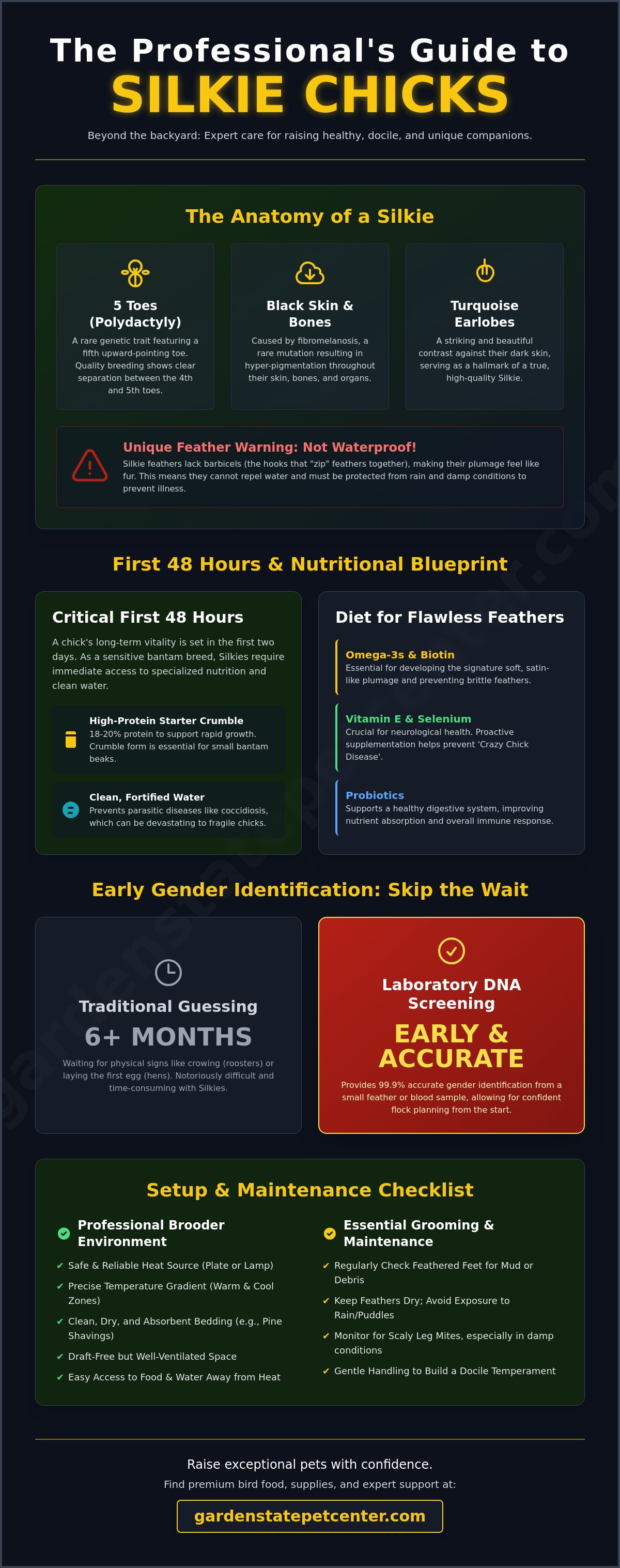
Silkies are the undisputed "lap dogs" of the poultry world. These bantam birds stand out immediately because of their hair-like plumage that feels more like satin or fur than typical feathers. Unlike standard breeds, silkie chicks lack barbicels. These are the tiny hooks that usually zip feathers together into a sleek, waterproof vane. Without them, their feathers remain open and fluffy, creating a soft silhouette that makes them look like living cotton balls. This unique structure also means they are flightless, contributing to their calm and grounded nature. They don't have the flighty, nervous energy of production breeds, making them much easier to handle for beginners.
Beyond the fluff, three specific biological markers define a true Silkie. First, they possess five toes on each foot, a rare trait called polydactyly. Second, they exhibit melanistic characteristics, including deep black skin and bones. Finally, they feature striking turquoise earlobes that contrast beautifully against their dark skin. You can find more comprehensive Silkie chicken breed information regarding these traits through historical records and genetic studies. For those starting their journey with these birds, exploring our premium bird collections can help you find the right supplies to support their specialized needs.
The Genetic Marvel of Fibromelanosis
Fibromelanosis is a rare genetic mutation that causes an overabundance of pigment. This isn't just a surface-level trait. It extends through their internal organs, connective tissues, and skeletal structure. Historically, this hyper-pigmentation made Silkies a centerpiece in holistic and cultural practices across Asia for centuries. While standard breeds have pale skin, the Silkie's internal darkness is a hallmark of their high-end genetic lineage. It's a fascinating biological quirk that highlights their status as a premium exotic breed rather than traditional livestock.
Polydactyly and Feathered Feet
Most chickens have four toes, but Silkies carry a fifth toe that points upward. When you're selecting silkie chicks, look for clear separation between the fourth and fifth toes to ensure high-quality breeding. Their feet are also heavily feathered, which adds to their charm but requires proactive care. Mud can easily ball up in these feathers, leading to discomfort or "scaly leg" mites. Regularly check their feet to ensure they remain clean and dry. Maintaining these foot feathers is essential for their overall mobility and long-term health in a backyard setting.
Premium Nutrition for Growing Silkie Chicks
The first 48 hours of a chick's life determine its long-term vitality. Because silkie chicks are a bantam breed, they possess smaller beaks and a higher metabolism than standard poultry. Provide a high-protein starter crumble immediately upon arrival. This specific texture is easier for them to consume than large pellets. Protein levels should stay between 18% and 20% to support rapid muscle and organ growth. Always ensure they have access to clean, fortified water. Since these birds are more fragile in their early days, maintaining a sterile water source helps prevent coccidiosis, a parasitic disease that can quickly overwhelm a bantam's system.
Holistic Diets and Feather Health
The signature fluff of a Silkie starts at the follicle. Incorporating omega-3 fatty acids and biotin into their diet improves the sheen and texture of their unique plumage. High-quality nutrition ensures that feathers don't become brittle or dull as the bird matures. You can find specialized options in our collection of premium bird food designed for ornamental poultry. A holistic nutritional approach prevents brittle plumage and supports the dense, cloud-like appearance that exhibition-quality birds require. This Guide to raising Silkie chickens also highlights how proper housing and diet work together to keep these delicate feathers in peak condition.
Avoiding Common Nutritional Deficiencies
Silkies are particularly susceptible to Vitamin E and Selenium deficiencies. A lack of these nutrients can lead to encephalomalacia, commonly known as 'crazy chick disease,' which causes neurological issues. Proactive supplementation is the best defense. Adding probiotics to their diet during the brooding phase maintains a healthy avian gut microbiome, which is essential for nutrient absorption. Explore our bird vitamins and supplements for targeted growth support that addresses these specific bantam needs.
As your silkie chicks transition from their initial down to adult plumage, their nutritional requirements will shift. Move them to a developer or grower feed around eight weeks of age. This transition diet provides the necessary calcium and minerals for bone density without the excessive protein of a starter feed. If you're looking for the right supplies to start your flock, browsing our specialized bird supplies is a great way to ensure your birds get exactly what they need from day one.
Gender Identification and Health: The Case for Avian DNA Testing
Identifying the sex of silkie chicks is one of the most significant challenges for new owners. Most poultry breeds show distinct physical differences within weeks, but Silkies are monomorphic, meaning males and females look nearly identical until they reach sexual maturity. You might wait six months or longer before hearing a first crow or finding a first egg. For families living in residential areas with strict "no-rooster" ordinances, this "wait and see" approach is a high-stakes gamble that often ends in the heartbreak of rehoming a beloved pet. Professional testing provides a reliable alternative to the stress of uncertainty, allowing you to manage your flock dynamics from day one.
This level of precision is essential for maintaining a peaceful backyard environment and staying within the legal limits of your local municipality. Beyond gender, laboratory testing serves as a vital pillar of biosecurity. When you introduce new birds to an established group, you're not just adding a pet; you're introducing their entire biological history. Proactive screening ensures that your new additions are healthy and won't compromise the well-being of your current flock.
How Avian DNA Sexing Works
To eliminate the guesswork, we recommend professional Avian DNA Sexing. The process is straightforward and minimally invasive. You can collect either a small blood sample from a quicked toenail or several fresh feather follicles that contain viable DNA in the "blood" of the quill. These samples are then sent to a specialized laboratory for analysis. Unlike traditional vent or wing-sexing, which is notoriously inaccurate for bantam breeds, DNA testing offers a 99% accuracy rate. This allows you to plan your coop space and social structure with absolute confidence while the birds are still in the brooder.
Screening for Marek’s Disease and Pullorum
Biosecurity is equally critical when expanding your flock. Silkie chicks are particularly susceptible to avian viruses like Marek’s Disease and Pullorum compared to hardier standard livestock. Marek's is a highly contagious viral infection that can devastate a small flock, often appearing as sudden paralysis or respiratory distress. To protect your investment and your existing pets, follow these protocols:
- Purchase birds only from NPIP-certified (National Poultry Improvement Plan) sources.
- Conduct independent laboratory screening for new birds before they leave quarantine.
- Monitor for asymptomatic carriers that may appear healthy but shed pathogens into the environment.
By prioritizing these health protocols, you ensure that your avian community remains vibrant and safe. Disease screening is not just a precaution; it's a commitment to the long-term welfare of every bird in your care.
Grooming and Maintenance for Ornamental Poultry
The unique feather structure of silkie chicks makes them one of the most high-maintenance breeds in the poultry world. Because their plumage lacks the interlocking barbicels found in standard breeds, they have zero water-shedding capabilities. If a Silkie gets caught in a rainstorm, the water soaks directly to the skin, which can lead to rapid hypothermia or respiratory distress. You must ensure they always have access to a dry, covered run. Beyond moisture control, their signature "crest" or top-knot often grows so dense that it blocks their peripheral and forward vision. Trimming these feathers away from the eyes prevents them from becoming skittish and ensures they can easily locate their food and water sources.
Foot feathers also require diligent monitoring. These beautiful plumes act as magnets for mud and fecal accumulation, which can lead to "mud-balling" on the toes. If left unaddressed, these hardened clumps can cause toe deformities or infections. Regular dust baths are the best natural defense for your birds. Providing a dedicated area filled with fine sand or food-grade diatomaceous earth allows them to condition their feathers and naturally repel external parasites like mites and lice.
Professional Grooming for Exotic Birds
While daily checks are manageable at home, some tasks benefit from an expert touch. Bantam breeds often require periodic beak trimming or nail filing to maintain proper alignment and comfort. We offer Professional Bird Grooming Services to help you manage these more delicate procedures safely. For those currently brooding silkie chicks, pay close attention to the vent area. "Pasty butt," a condition where droppings dry and block the vent, is common in young chicks and must be cleaned gently with warm water to prevent life-threatening blockages. If you're unsure about handling these needs yourself, our team is ready to provide the specialized care your birds deserve.
Habitat Design for Vulnerable Plumage
Silkies don't fly. Their hair-like feathers cannot catch the air, so your habitat must reflect a ground-dwelling lifestyle. Replace high perches with low-profile bars or wide ramps to prevent leg injuries from failed flight attempts. Choosing the right bedding is equally critical for feather health. Avoid straw, which can harbor mold; instead, opt for hemp or large-flake pine shavings. These materials are highly absorbent and less likely to cause respiratory issues or feather breakage. To keep your flock secure, explore our bird enclosures for predator-proof housing options that cater to the specific vulnerabilities of ornamental poultry.
Preparing for Your Silkie Chicks: A Setup Checklist
Preparing your home for silkie chicks is an exercise in precision and patience. These birds are smaller and more sensitive to environmental changes than standard poultry, so your preparation must be thorough. Establishing a draft-free brooder with clear temperature gradients is the first step toward success. This setup allows chicks to move between warmer and cooler zones as their internal thermostats dictate. It's a proactive way to prevent the chilling that often affects smaller bantam breeds.
Choosing the right heat source is a critical safety decision. While traditional heat lamps are common, many professional keepers now prefer brooder plates for sensitive bantam breeds. Plates mimic the natural warmth of a mother hen and eliminate the fire risks associated with high-wattage bulbs. They also help establish a natural day-night cycle, which is essential for healthy growth and socialization. This rhythm helps your birds feel secure from their very first night.
Bonding with your birds starts the moment they enter the brooder. Silkies are prized for their docile nature, but this temperament is nurtured through consistent, gentle interaction. Spend time each day hand-feeding small treats or simply resting your hand in the brooder. This early socialization ensures your chicks grow into the famous "lap dogs" of the poultry world, remaining handleable and calm throughout their lives. They'll soon learn to recognize your voice and seek out your company.
The Essential Brooder Environment
A successful brooder focuses on stability and accessibility. Use a non-slip substrate like paper towels or burlap during the first week. Slippery surfaces can cause "splayed leg," a developmental condition that's difficult to correct in bantam breeds. Maintain a steady temperature of 95°F for the first seven days. Reduce this by 5°F each subsequent week until they've fully feathered out and can regulate their own body heat. Ensure that all feeders and waterers are specifically designed for bantams. Standard equipment is often too deep, posing a risk of accidental drowning or making it difficult for smaller silkie chicks to reach their food.
Long-Term Commitment and Boarding
Ready to begin your journey? Consult with our certified pet nutritionist for a custom Silkie chick starter plan to give your new companions the best possible start in life. Our team is here to support you through every stage of your flock's development.
Build a Thriving Future for Your Silkie Flock
Raising silkie chicks is a rewarding journey that transforms these unique, fluffy bantams into affectionate family companions. Success depends on recognizing their specialized requirements, from maintaining a dry habitat that protects their delicate plumage to establishing a precise nutritional foundation. By prioritizing professional health protocols like DNA sexing and specialized grooming, you eliminate the uncertainty of flock management and ensure your birds remain healthy and docile throughout their lives.
Since 1990, our team has focused on exotic welfare and providing a higher standard of care for sensitive species. Our on-site certified pet nutritionist is ready to help you craft the perfect diet, while our professional avian DNA sexing and health screening services offer the clinical precision your birds deserve. We aren't just a vendor; we're your partner in long-term poultry health and happiness. We're committed to helping both newcomers and seasoned hobbyists feel at home while navigating the specific needs of ornamental poultry.
Take the first step toward a vibrant flock and Shop Premium Bird Nutrition and Care Supplies today. We look forward to seeing your birds thrive and helping you navigate every stage of their development with confidence.
Frequently Asked Questions
How many eggs do Silkie chickens lay per year?
A healthy Silkie hen typically lays about 100 small, cream-colored eggs in an ideal year. While they aren't high-volume producers like Leghorns, they prioritize maternal instincts over quantity. They frequently take breaks from laying when they go broody, meaning they'll often stop production to sit on a clutch of eggs, whether those eggs are fertile or not.
Are Silkie chickens good with children and other household pets?
Silkies are exceptionally gentle and make wonderful pets for children due to their calm, handleable nature. They often enjoy being carried and petted, acting more like "lap dogs" than traditional poultry. When it comes to other household pets, always supervise interactions. Their small size and flightless nature make them vulnerable to overly playful dogs or curious cats.
Can Silkies fly or do they need high fencing for their run?
Silkies cannot fly because their unique feather structure lacks the hooks needed to create a solid wing surface. You don't need high fencing to keep them contained, as they won't clear even a standard garden gate. However, your fencing must be predator-proof. Since they can't fly away from danger, a secure, fully enclosed run is vital for their safety.
What is the difference between bearded and non-bearded Silkies?
The primary difference lies in the feathering around the face and throat. Bearded Silkies have an extra muff of feathers that covers their earlobes and runs under their beak, giving them a very full, puffed-out appearance. Non-bearded varieties lack this extra fluff, leaving their turquoise earlobes and wattles more visible. Both types share the same docile temperament and soft plumage.
Why do my Silkie chicks have five toes instead of the usual four?
Having five toes is a standard genetic trait of the breed known as polydactyly. While most chicken breeds have only four toes, silkie chicks are born with an extra digit on the back of each foot. This is a hallmark of high-quality breeding. Ensure the toes are well-separated and don't interfere with their walking as they mature.
How do I tell the difference between a Silkie hen and a rooster?
Distinguishing between a hen and a rooster is notoriously difficult because Silkies are monomorphic. Roosters may eventually develop larger, "walnut" shaped combs and longer "streamer" feathers in their crests, but these markers often don't appear until six months. For those who need an answer sooner, we recommend DNA sexing to avoid the uncertainty of waiting for a first crow.
Can Silkies live in cold climates or do they need heat?
Silkies are surprisingly cold-hardy, but they have a critical vulnerability to moisture. Their feathers aren't waterproof, so if they get wet in cold weather, they can quickly develop hypothermia. They don't usually need supplemental heat in a well-insulated, dry coop. Always provide a draft-free environment and ensure they have a covered space to stay dry during rain or snow.
Do Silkies need special food compared to standard farm chickens?
While they can eat standard poultry feed, silkie chicks thrive on specialized bantam-sized crumbles. Their smaller beaks make it difficult to consume large pellets, which can lead to wasted food or malnutrition. We recommend a high-protein, holistic diet that includes specific vitamins to support their unique feather development and overall immune health.

Article by
Victor Santucci
Victor Santucci is the owner of Garden State Pet Center in Audubon, NJ, where he specializes in premium pet nutrition, exotic animals, and expert-level care. With years of hands-on experience and a passion for helping pets thrive, Victor is dedicated to educating pet owners on proper nutrition, enrichment, and species-specific care. His mission is simple: provide every pet with the highest quality products and every customer with honest, knowledgeable guidance.
Share this post
- 0 comment
- Tags: backyard poultry, bantam breeds, brooding, chick care, DNA sexing, raising chickens, silkie chickens, silkie chicks