

Bird DNA Sexing Service: What to Expect from Testing


A bird’s appearance isn’t always a reliable clue to whether it’s male or female. If you’re unsure, a bird DNA sexing service can provide a laboratory-based answer instead of relying on visual identification alone. You may be wondering what sample collection involves, how testing works, and whether the test also checks your bird’s health. Understanding what the result can and cannot tell you helps set clear expectations.
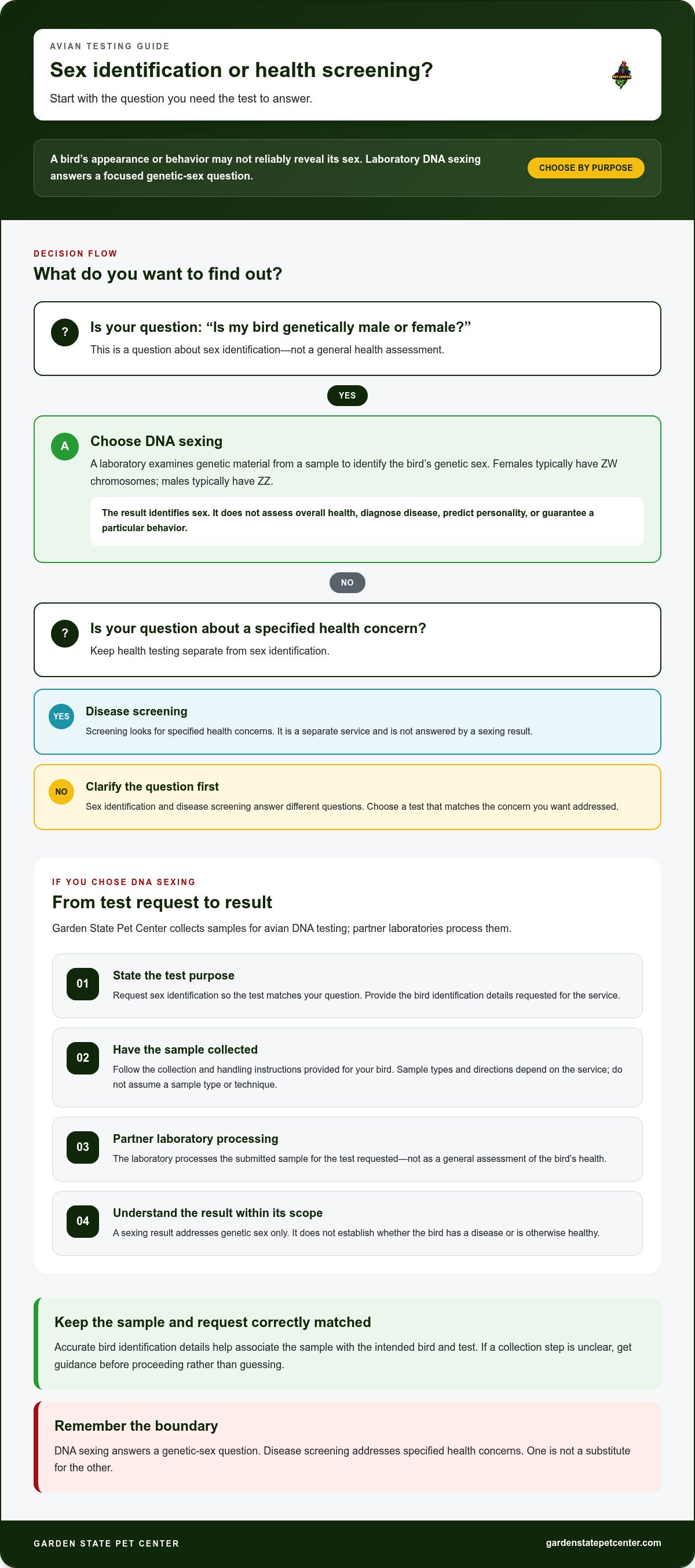
Avian DNA sexing identifies a bird’s sex. It isn’t a general health assessment. Disease screening is a separate service, so first decide which question you need answered. Garden State Pet Center collects samples for avian DNA testing and has them processed through partner laboratories. This guide explains what DNA sexing establishes, how collection and lab processing fit together, how sex identification differs from disease screening, and how to prepare for testing.
Key Takeaways
- A bird’s appearance may not reveal its sex. DNA testing is designed to identify genetic sex.
- Learn how a bird dna sexing service moves from arranging a test to sample collection, laboratory processing, and results.
- Choose the right testing purpose by distinguishing sex identification from screening for specific health concerns.
- Prepare by understanding the test request and following the collection instructions provided for your bird.
- Garden State Pet Center collects samples for avian DNA testing and uses partner laboratories for processing.
What a Bird DNA Sexing Service Can Tell You
Avian DNA sexing is laboratory testing that examines a bird’s genetic material to identify its sex. A bird dna sexing service is useful when appearance or behavior leaves you unsure. The result addresses one specific question: whether the bird is genetically male or female. It does not assess overall health or diagnose disease.
Birds have a different sex-chromosome system from mammals. Females typically have ZW chromosomes, while males have ZZ. A laboratory can use genetic information from a sample to distinguish these patterns. You can explore the basics of the ZW sex-determination system to understand the biological basis of the test.
Why owners seek gender identification
Owners may want to know a bird’s sex to inform care planning, consider future breeding, or resolve an uncertainty. A result adds useful information, but it doesn’t predict personality or guarantee a particular behavior.
A name isn’t evidence of sex, and behavior can’t replace a laboratory result. Even a confident guess based on appearance may be wrong. Treat DNA sexing as a focused identification tool, then consider the result alongside your bird’s individual needs.
When appearance does not provide a clear answer
Visible differences between male and female birds vary by species. Some birds show noticeable features, while others look very similar. Age, individual variation, and lighting can also make visual clues difficult to interpret. A bird that looks familiar may still be hard to sex reliably by sight alone.
If you’re uncertain, avoid treating a visual guess as fact in your care records or plans. DNA testing is designed to answer the genetic-sex question directly. For broader context on bird gender and health testing, read the complete avian DNA sexing guide.
Keep the scope clear: sex identification and disease screening have different purposes. A sexing result doesn’t tell you whether a bird has a health condition. Screening tests look for specified concerns. If your goal is to learn your bird’s sex, request sex identification. If your question is about health, disease screening addresses a different concern.
Once you have the answer, it can support more informed care conversations without defining your bird by sex alone. Everyday needs still matter, including suitable food and enrichment. Explore bird food, toys, and care essentials for your bird’s routine.
How Bird DNA Sexing Works from Sample Collection to Results
A bird DNA sexing service follows a clear sequence: arrange the test, have a sample collected, send it for laboratory processing, and receive the result for the test requested. Garden State Pet Center collects samples and uses partner laboratories for processing. Follow the collection instructions provided for your bird, since the correct steps depend on the service.
- Arrange testing. State that you want sex identification so the requested test matches your question. Provide the bird’s identification details requested for the service.
- Have the sample collected. Garden State Pet Center collects the sample for testing. Follow the specific collection and handling instructions provided rather than assuming a sample type or technique.
- Laboratory processing. The collected sample is processed through a partner laboratory. The laboratory examines the submitted material for the requested test, not as a general assessment of your bird’s health.
- Receive the result. The result relates to the test requested and the sample submitted. If you selected sexing, it addresses sex identification. It is not a report on unrelated health concerns.
What happens during sample collection?
Sample collection is part of Garden State Pet Center’s avian DNA testing service. Accepted sample types and handling directions depend on the service, so follow the instructions provided for your bird. Keep the bird’s identification details accurate and associated with the correct test request. This helps connect the sample to the intended bird and question.
Don’t substitute an independently collected sample or rely on online instructions unless they match the guidance for this service. Arrange testing and follow the collection instructions provided. If a step is unclear, pause and get guidance before proceeding rather than guessing about preparation or handling.
What happens after a sample reaches the laboratory?
After collection, the sample goes through partner-laboratory processing. The lab evaluates it for the requested test, and the result should be understood within that scope. A sex-identification result addresses genetic sex. It doesn’t establish whether the bird has a disease or is otherwise healthy. Those are separate testing questions.
The key is to keep the sample, bird details, and test request correctly associated. Sample collection and laboratory analysis are connected stages, and the result corresponds to the request. Keep the result with the bird’s records so it can inform future care planning without being mistaken for a broader health assessment.
To begin, arrange avian DNA testing with Garden State Pet Center and follow the service’s sample-collection instructions.
DNA Sexing vs. Bird Disease Screening: Know Which Test Answers Your Question
Choose a test based on the question you want answered. A bird dna sexing service identifies a bird’s genetic sex, while disease screening looks for specified health concerns. These services have different purposes, so one isn’t a substitute for the other.
| Testing service | Question it answers | Purpose and scope |
|---|---|---|
| DNA sexing | Is the bird genetically male or female? | Gender identification only; it does not assess general health. |
| Disease screening | Is the bird being tested for a specified health concern? | Health-focused testing within the scope of the screening requested; it does not identify genetic sex. |
DNA sexing identifies a bird’s genetic sex; disease screening tests for specified health concerns. Keeping that distinction clear helps you choose testing based on your goal instead of expecting one result to answer unrelated questions.
What bird DNA sexing does, and doesn’t, establish
A sex-identification result tells you the outcome of the genetic-sex test for the sample submitted. It doesn’t establish whether a bird is healthy, explain its behavior, or determine whether it is suitable for future breeding. Those questions require different information and shouldn’t be inferred from a sexing result.
If you want to know whether your bird is male or female, sexing addresses that question. If you’re concerned about a change in health or behavior, don’t use a sexing result as a diagnosis or reassurance. Consult an appropriate avian-care professional about health concerns and suitable assessment.
When disease screening is a separate consideration
Disease screening is for questions about particular health concerns. Its scope depends on the testing requested. A screening result relates to the concern being tested and isn’t a general declaration of health. Garden State Pet Center offers disease screening separately from avian DNA sexing, keeping each testing purpose clear.
Before arranging testing, put your main question into plain words: “Do I need to identify my bird’s sex?” or “Am I seeking testing for a health concern?” This distinction helps you choose the appropriate service. If you have both questions, they may call for separate tests rather than one test covering both.
Testing is one part of responsible bird care, alongside attention to the bird’s environment, nutrition, and enrichment. For ongoing supplies that support a bird’s routine, browse the bird care and supply collection. Keep health questions separate from shopping decisions, and seek avian-care guidance if you’re concerned about your bird’s wellbeing.
How to Prepare for a Bird DNA Sexing Service
A little preparation can make arranging a bird dna sexing service feel more manageable. Start by identifying the question you want answered, then follow the collection instructions provided for this service. You don’t need to guess at a sample type or adapt general advice from online sources.
Before arranging testing
Be clear about your goal: are you seeking genetic sex identification, or do you have a separate health concern? Knowing the question keeps the test request focused. Species and individual details may affect the information or instructions needed, so follow the service requirements for your bird instead of assuming every bird follows the same process.
Use this short checklist as you get ready:
- Identify the test purpose. State that you’re seeking sex identification rather than disease screening.
- Gather the requested bird details. Provide accurate identification information required for the service, such as details that distinguish this bird from others in your care.
- Review collection directions first. Read the service-specific instructions before handling your bird or preparing a sample.
- Set aside time to follow the directions calmly. If handling makes you nervous, pause and review the steps rather than rushing.
Follow sample instructions carefully
Garden State Pet Center collects samples for avian DNA testing, and partner laboratories process them. Use the collection and handling instructions provided for the specific test. Sample types and procedures can vary, so a generic guide may not describe the process for your test.
Pay attention to how the directions connect the sample to your bird’s identification details and test request. Accurate information helps keep the request clear from collection through processing. Don’t add storage, packaging, or shipping steps unless the instructions for your service call for them. Unverified handling advice can create confusion.
It’s understandable to feel cautious about handling your bird. Read the directions before beginning and follow them one step at a time. If an instruction is unclear, pause and get guidance through Garden State Pet Center’s customer-support process before proceeding. Avoid improvising a collection method or substituting steps from advice written for another service.
Once the test is arranged, keep the instructions accessible and provide consistent bird details wherever they’re requested. This preparation can help you feel more confident without having to guess what sample to use or how to handle it. Arrange avian DNA sexing with Garden State Pet Center and follow the service-specific guidance for your bird.
Arrange Bird DNA Sexing with Garden State Pet Center
If you want a testing-based answer about your bird’s genetic sex, Garden State Pet Center offers avian DNA sexing, with sample collection and processing through partner laboratories. The bird dna sexing service answers a focused question: whether the submitted sample identifies the bird as genetically male or female. It isn’t a general health assessment, and its result shouldn’t be used to draw conclusions about behavior or future breeding suitability.
What to expect from a specialized testing service
The process connects sample collection with laboratory processing, then provides information related to the test requested. A sexing result is not a health report. Disease screening is a separate service for testing specific health concerns, so consider what you want to learn before arranging testing. If your concern is your bird’s health, discuss it with an appropriate avian-care professional.
This distinction keeps expectations clear. DNA sexing is useful when visual clues don’t settle the question and you want a laboratory-based answer. Garden State Pet Center collects the sample, and partner laboratories process it. The result is limited to the test requested and the sample submitted. No result can answer every question about your bird, so keep the purpose of the test in view as you plan next steps.
Take the next step with confidence
Before arranging testing, take a moment to prepare. These points help keep the request and collection process clear:
- Your question: Decide whether you’re seeking genetic sex identification or separate disease screening.
- Your bird’s details: Have accurate identification information ready and provide the details requested for the service.
- Sample instructions: Follow the collection and handling guidance provided for this test. Don’t rely on generic advice or assume a sample type.
If you’re concerned about handling your bird, read the directions before beginning. Follow each step calmly, and use the service’s customer-support process if an instruction is unclear. There’s no need to guess or improvise. Understanding what the test is intended to provide, and what it cannot establish, lets you arrange testing with realistic expectations.
Garden State Pet Center provides a clear process from sample collection to partner-laboratory processing for avian DNA testing. Choose sex identification when you want an answer about genetic sex, and keep health concerns distinct from that request. Explore the service when you’re ready to take the next step for your bird.
Explore bird DNA sexing services
Make Your Next Bird-Care Decision with Confidence
Knowing the question you want answered is a useful first step toward making thoughtful choices for your bird. A bird dna sexing service can clarify genetic sex when appearance leaves you uncertain, while a separate screening request addresses a specific health concern. Garden State Pet Center offers both services, with samples collected and processed through partner laboratories.
As you decide what to do next, keep your goal specific. Note what you hope to learn, have your bird’s identifying details ready, and follow the collection guidance provided for the testing you arrange. A clear request helps keep the process focused on the information you’re seeking.
You don’t need every answer before you begin. Take the next step at a pace that feels comfortable, and use the service information to guide your decision. Explore bird DNA sexing services and move forward with greater confidence in your bird’s care.
Frequently Asked Questions
Can DNA testing determine the sex of a young bird?
Yes, DNA testing can identify a young bird’s sex because it examines genetic information rather than waiting for visible adult characteristics to develop. The bird still needs to be suitable for the particular test, and collection requirements can vary. If you’re arranging a bird dna sexing service for a young bird, provide accurate identification details and follow the service’s instructions for that individual.
Is bird DNA sexing the same as disease screening?
No. DNA sexing answers a question about genetic sex, while disease screening looks for specified health concerns. If you need to know whether a bird is male or female, sexing is the relevant purpose. If you’re concerned about a health issue, a sexing result won’t address it. Keep the two questions distinct when deciding what information you need.
Can you tell whether a bird is male or female by looking at it?
Sometimes visible traits can offer clues, but appearance isn’t a dependable guide for every bird. Differences between sexes vary among species, and individual birds may not show an obvious distinction. Behavior and a bird’s name aren’t proof either. If the answer matters for your records or plans, a testing-based result can provide information that visual observation alone may not settle.
What sample is used for bird DNA sexing?
The sample used depends on the service’s collection instructions. Don’t assume a particular sample type or follow generic online directions, since they may not fit the test being arranged. Garden State Pet Center collects samples for avian DNA testing, so use the guidance provided for the service and your bird. If a collection step is unclear, pause and get guidance before proceeding.
Does bird DNA sexing hurt the bird?
The test is analyzed in a laboratory, but the bird’s experience during collection depends on the collection method and how it is handled. It wouldn’t be responsible to promise that every collection feels the same for every bird. Follow the service-specific instructions and don’t improvise. If you’re worried that handling could be difficult for your bird, discuss the concern with an appropriate avian-care professional.
How long does bird DNA testing take?
There isn’t one timeline that applies to every bird DNA test. Processing time can depend on the requested test and the partner laboratory’s workflow, so don’t assume you’ll receive a result by a particular date. If you have a time-sensitive decision, plan around receiving the result rather than relying on an estimated schedule, and use the service’s guidance about result delivery.
Can a DNA sexing result tell me whether my bird is healthy?
No. A sexing result identifies genetic sex; it doesn’t assess general health or rule out a medical concern. If your bird seems unwell, changes its eating habits, or behaves differently, don’t use a sexing result as reassurance or diagnosis. Contact an appropriate avian-care professional about those signs. Disease screening is a separate testing purpose and focuses on the specific health concerns requested.

Article by
Victor Santucci
Victor Santucci Jr. is the owner of Garden State Pet Center and a Certified Clinical Pet Nutritionist specializing in premium pet nutrition, raw and fresh feeding, holistic pet wellness, birds and exotic animals. Through years of hands-on retail and animal-care experience, Victor helps pet parents make informed decisions about nutrition, enrichment and species-appropriate care.
Share this post
- 0 comment
- Tags: avian dna testing, avian health, bird care, bird dna sexing service, bird dna test, bird sexing, parrot care, pet birds