

Essential Reptile Supplies Checklist: The 2026 Guide to Habitat Success


A thriving reptile habitat is a precision-engineered life-support system, not just a glass tank. It's completely normal to feel overwhelmed when you're staring at a wall of technical lighting or trying to calculate the perfect enclosure size for a growing hatchling. You want to get it right the first time, but the jargon often makes specialized care feel out of reach. We understand that pressure. Since 1990, we've helped keepers build safe, sustainable homes for their exotic companions. This 2026 guide provides a professional-grade essential reptile supplies checklist to ensure your pet thrives in a habitat that mirrors their natural environment.
You'll gain the confidence to master complex heating systems and understand exactly why certain substrates are vital for health. We've simplified the shopping process into a clear, actionable list that covers everything from life-support equipment to specialized nutrition. By the end of this guide, you'll have a complete roadmap for success. Let's move past the guesswork and build a setup that truly prioritizes your reptile's well-being. We're here to help you manage these choices with clinical precision and a neighborly touch.
Key Takeaways
- Plan for the long term by selecting an enclosure that accommodates your pet’s adult size, ensuring a stable microclimate boundary from day one.
- Master the thermal gradient to support your reptile’s metabolism, using specialized lighting to mimic a natural and healthy day-night cycle.
- Choose substrates and decor that provide vital mental enrichment while maintaining the precise humidity levels required for tropical or arid species.
- Follow our essential reptile supplies checklist to integrate professional-grade nutrition and hydration systems recommended by certified experts.
- Implement a consistent maintenance routine using digital monitoring tools to ensure your habitat remains a sterile and safe environment.
Selecting the Right Enclosure: The Foundation of Your Habitat
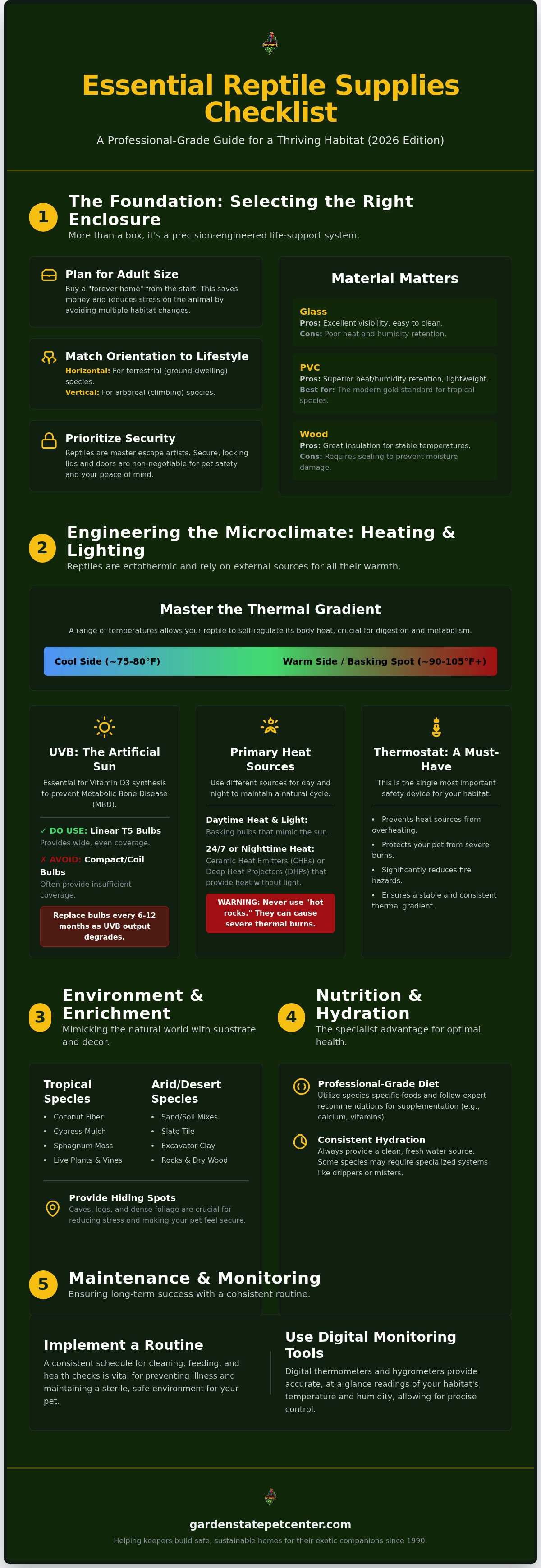
The enclosure is much more than a box. It's the primary microclimate boundary that stands between your pet and the fluctuating temperatures of your home. Think of it as a precision-engineered life-support system. When starting your journey in Herpetoculture, the first item on your essential reptile supplies checklist should be a high-quality habitat that accounts for your pet's adult size. Many keepers fall into the trap of buying for a juvenile, only to find themselves replacing the entire setup six months later. Buying a "forever home" from the start saves money and reduces stress for the animal.
Security is another non-negotiable factor. Reptiles are surprisingly strong and incredibly curious. Enclosures with locking lids or front-sliding doors prevent escapes and keep your pet safe from other household animals. Whether you are looking for reptile terrariums or specialized racks, prioritize a design that offers both visibility and total containment. A secure door ensures peace of mind for you and safety for your pet.
Material Matters: Glass, PVC, and Wood
Glass terrariums are the most common choice because they offer excellent visibility and are easy to clean. However, they don't always retain heat and humidity as well as other materials. PVC enclosures have become the modern gold standard for tropical species. These lightweight, durable units are exceptional at maintaining stable temperatures and high humidity levels. Wooden vivariums, often used for desert species, provide great insulation but require proper sealing to prevent rot in damp environments. Choose your material based on the specific climate your pet requires.
Size and Orientation Requirements
Your pet's lifestyle determines the shape of their home. Terrestrial or ground-dwelling species, like many snakes and leopard geckos, need horizontal floor space for roaming and hunting. In contrast, arboreal species like chameleons and crested geckos require vertical height for climbing. For common species like bearded dragons, a 40 to 50 gallon enclosure is often cited as a minimum starting point, though larger is always better. Always verify the specific dimensions needed for your species to ensure they have enough room to move, hide, and thermoregulate effectively. This focus on spatial needs is a vital part of your essential reptile supplies checklist.
Heating and Lighting: Engineering a Natural Microclimate
Reptiles are ectothermic, which means they can't produce their own body heat. They rely entirely on your habitat setup to regulate their metabolism, digestion, and immune function. To provide a healthy home, you must create a "thermal gradient." This setup offers a warm side for basking and a cool side for retreating. It allows your pet to move back and forth to reach their ideal internal temperature, just as they would in the wild.
Success starts with understanding the difference between ambient air temperature and localized basking spots. A basking lamp provides high-intensity heat in one specific area, while other tools maintain the overall warmth of the enclosure. A non-negotiable item on your essential reptile supplies checklist is a high-quality thermostat. Many keepers overlook this, but a thermostat is the only way to prevent heat sources from reaching lethal levels. It protects your pet from thermal burns and significantly reduces fire hazards in your home.
UVB Lighting: The Artificial Sun
Most reptiles require UVB lighting to survive. This specific wavelength of light triggers the synthesis of Vitamin D3, which allows the animal to process calcium. Without a proper UVB source, reptiles are at high risk for Metabolic Bone Disease (MBD), a debilitating condition that causes bone deformities and tremors. Linear T5 bulbs are the superior choice over small coil bulbs. They provide a much wider area of coverage, ensuring your pet receives the necessary radiation regardless of where they sit. Keep in mind that these bulbs expire. Even if the light is still visible, the UVB output typically fades after 6 to 12 months, making regular replacement mandatory.
Heat Sources: Basking Lamps and Radiant Heat
Diurnal species need bright basking bulbs that mimic the sun's intensity during the day. For nighttime warmth, Ceramic Heat Emitters (CHEs) or Deep Heat Projectors (DHPs) are excellent because they provide heat without emitting light. This allows your pet to maintain a natural sleep cycle. We strongly advise keepers to avoid "hot rocks." These internal heaters are notorious for malfunctioning and causing severe burns because reptiles often don't move away even when their skin is being damaged. For a safer approach, explore our collection of vetted heating supplies to find reliable, professional-grade equipment for your specific species.
Substrate and Decor: Mimicking the Natural Environment
Creating a functional ecosystem inside a glass or PVC box requires more than just a floor covering. It involves building a world that supports your pet's biological needs. Substrate selection is a critical component of your essential reptile supplies checklist because it does more than just line the bottom of a tank. It acts as a primary tool for humidity control and physical comfort. Choosing the wrong material can lead to health issues like respiratory infections or impaction, where an animal accidentally eats its bedding and suffers a blockage.
Enrichment is just as vital as the floor your pet walks on. Decor should never be viewed as purely aesthetic. It provides the mental stimulation and physical exercise necessary for a reptile to remain healthy in captivity. When you select your reptile supplies, prioritize items that encourage natural behaviors like burrowing, climbing, or hunting. A sterile environment leads to lethargy and stress, while a complex one promotes longevity and vitality.
Choosing the Right Substrate
Your choice depends entirely on the humidity requirements of your species. For tropical animals, coconut fiber and cypress mulch are excellent because they hold moisture without molding. Desert species require a different approach. While many big-box stores sell "calcium sand," it's often safer to use screened play sand or specialized soil mixes to avoid impaction risks. The biggest trend for 2026 is the bioactive base. These setups use "cleaner crews" like isopods and springtails to break down organic waste. This creates a self-sustaining cycle that mirrors a natural forest floor and significantly reduces your cleaning workload.
Hides and Enrichment Decor
Every habitat must follow the "Three Hide Rule" to ensure your pet feels secure. You need one hide on the warm side, one on the cool side, and a "humid hide" filled with damp moss to assist with shedding. This allows the animal to choose its environment without sacrificing its sense of safety. Vertical space is equally important. Use climbing branches and cork bark to give your pet a way to explore the full volume of the enclosure. While fake plants are easier to sanitize, live plants offer the most natural experience and help maintain higher humidity levels. Balancing these elements ensures your pet's home is both functional and stimulating.
Specialized Nutrition and Hydration: The Specialist Advantage
Most basic guides treat nutrition as an afterthought, focusing almost entirely on the tank and lights. However, even the most expensive habitat can't compensate for a poor diet. At Garden State Pet Center, our on-site certified pet nutritionist helps keepers move beyond generic pellets to develop species-specific meal plans. A thriving reptile requires variety. In the wild, these animals consume a massive range of prey and vegetation. Relying on a single feeder insect leads to nutritional deficiencies and lethargy. Your essential reptile supplies checklist must include a rotating schedule of high-quality foods to ensure your pet receives a full spectrum of vitamins and minerals.
Mastering "gut-loading" is the secret to professional-grade care. This process involves feeding your insects a nutrient-dense diet 24 to 48 hours before you offer them to your reptile. By doing this, you turn a simple cricket or worm into a biological vitamin capsule. If you're looking for expert guidance on exotic diets, check out our guide to premium pet food to learn how specialized nutrition prevents common health issues.
Feeders and Supplements
Choose between live feeders and frozen-thawed options based on your species' hunting instincts and safety needs. While live insects promote natural behavior, frozen-thawed rodents are often safer for snakes as they eliminate the risk of bite injuries. Regardless of the prey type, supplementation is mandatory. Use the "shake and bake" method to dust your feeders with calcium and multivitamin powders before every feeding. For indoor reptiles, ensure your calcium supplement includes Vitamin D3. This works alongside your UVB lighting to prevent bone disease and support a strong immune system.
Hydration Systems
Hydration needs vary wildly between species. While a simple water bowl works for many, arboreal species like chameleons often won't recognize standing water and require drip systems or leaf-misting. Use a high-quality hygrometer to monitor the humidity levels your substrate provides. If the air is too dry, automated misting or fogging systems can maintain the target range without constant manual effort. Never use straight tap water without a conditioner. Chlorine and heavy metals found in municipal water can be toxic over time, so we recommend using water conditioners or a reverse osmosis (RO) system for maximum safety. Shop our professional hydration and feeding tools to give your pet the specialist advantage they deserve.
Maintenance and Health Monitoring: Long-Term Success
Maintenance isn't just about keeping a tank tidy. It's about preserving the sterile environment your pet needs to thrive over the long term. This final stage of your essential reptile supplies checklist involves a commitment to consistency. You must monitor your habitat daily using high-quality digital tools. Analog thermometers are notoriously inaccurate and can lead to dangerous temperature fluctuations that stress your animal's immune system. Digital thermometers and hygrometers provide the precision needed to keep your microclimate within the safe range established in your initial setup.
Identifying illness in reptiles requires a keen eye because these animals are masters at hiding weakness. Watch for subtle changes like lethargy, unusual skin textures, or a sudden loss of appetite. These are often the first indicators of an underlying issue. For those keeping multiple species or seeking advanced health insights, we recommend reviewing our guide on Avian DNA Sexing and Health Testing. It highlights the importance of professional screening and disease prevention in exotic animals, which is a foundational principle for any serious keeper.
Cleaning and Sanitation
Use only reptile-safe disinfectants for your enclosure. Many household cleaners contain phenols or ammonia, which are toxic to a reptile's sensitive respiratory system. Establish a routine of spot cleaning waste daily to prevent bacterial growth. Perform a deep clean once a month by removing all substrate and sanitizing every surface, including the glass and decor. Regularly scrubbing water and food bowls is equally vital to prevent bacterial blooms that can contaminate your pet's specialized nutrition.
Professional Support and Boarding
Keeping a "Reptile Journal" is a highly effective way to track sheds, weights, and feeding cycles. This data is invaluable when you consult an exotic specialist, as it provides a clear history of your pet's health. If you're traveling, don't leave your pet's complex life-support systems to chance. Our professional pet boarding services ensure your animal remains in a controlled, expert-monitored environment while you are away. This proactive approach to maintenance ensures your habitat remains a safe, healthy home for years to come.
Build a Thriving Future for Your Exotic Companion
Mastering the complexities of reptile care starts with a commitment to quality. By following this essential reptile supplies checklist, you've moved beyond basic survival and toward true habitat success. You now understand that a precision-engineered enclosure, specialized nutrition, and consistent monitoring are the pillars of long-term health. We've been exotic pet specialists since 1990, and we're here to support your journey with professional-grade solutions and expert guidance from our on-site certified pet nutritionist.
Don't leave your pet's well-being to chance or settle for generic big-box store options. Whether you need an advanced PVC terrarium or species-specific supplements, we offer nationwide shipping to bring elite care directly to your door. Shop our complete collection of premium reptile supplies and enclosures today to create the natural environment your companion deserves. We're excited to help you build a habitat where your reptile won't just live, but truly thrive.
Frequently Asked Questions
What is the most important item on a reptile supplies checklist?
A high-quality digital thermostat is the most critical item on your essential reptile supplies checklist. While enclosures and lights are visible, the thermostat acts as the brain of the entire system. It prevents heat sources from reaching lethal temperatures, protecting your pet from burns and reducing fire risks. Without this tool, you cannot maintain the stable microclimate required for your reptile to digest food and maintain a healthy immune system.
Do all reptiles need UVB lighting to survive?
Not every reptile requires high-intensity UVB to survive, but almost all species benefit from it for long-term health. Diurnal reptiles like bearded dragons must have it to process calcium. Crepuscular species, such as leopard geckos, can survive without it if they receive Vitamin D3 supplements, though modern research suggests they still use low-level UVB for enrichment. Always research your specific pet's needs to determine if they require a linear T5 bulb.
How much does it typically cost to set up a reptile habitat?
Setting up a proper habitat requires a variable investment depending on the species and the size of the enclosure. You'll need to budget for the primary tank, specialized lighting, heating elements, and safety controllers like thermostats. While entry-level acrylic setups are more affordable for hatchlings, larger professional-grade PVC terrariums for adult snakes or lizards represent a higher initial cost. Investing in quality equipment early prevents the need for expensive upgrades later.
Can I use regular sand from the beach for my reptile substrate?
You should never use regular sand from the beach in your reptile habitat. Wild sand often contains harmful bacteria, parasites, and high salt levels that can irritate your pet's skin and eyes. Additionally, the grain size in beach sand is inconsistent, which significantly increases the risk of impaction if your reptile accidentally ingests it. It's much safer to use vetted substrates like screened play sand or specialized bioactive soil mixes designed for reptiles.
How do I know if my reptile’s tank is too hot or too cold?
The only reliable way to know if a tank is too hot or cold is by using digital thermometers on both the warm and cool sides. You should also watch for behavioral cues. If your reptile is constantly glass surfing on the cool side, the basking spot might be too intense. Conversely, if they never leave the heat source and appear lethargic, the ambient temperature may be too low to support their metabolism.
What is Metabolic Bone Disease and how do I prevent it?
Metabolic Bone Disease (MBD) is a debilitating condition caused by a lack of calcium or Vitamin D3. It leads to soft bones, tremors, and eventually paralysis. You can prevent this by providing a high-quality linear UVB light and consistently dusting your feeder insects with calcium powder. Our certified pet nutritionist emphasizes that a varied diet combined with proper supplementation is the best defense against this common but preventable illness.
Is it better to buy a reptile starter kit or individual components?
Individual components are usually the better choice for keepers seeking long-term success. While a starter kit offers convenience for beginners, many included items like analog gauges or small heat mats often need replacement quickly as you gain experience. By selecting each piece of equipment separately, you can ensure every item on your essential reptile supplies checklist meets professional standards. This approach allows you to tailor the habitat to your animal's exact needs.
How often should I replace my reptile’s UVB bulb?
You should replace your UVB bulbs every 6 to 12 months, even if they haven't burned out yet. The coating inside the bulb that produces the necessary UV radiation degrades over time, eventually leaving your pet without the light they need to process calcium. T5 linear bulbs generally last longer than older T8 models. Using a digital UVI meter is the most accurate way to check if your bulb is still providing safe radiation levels.

Article by
Victor Santucci
Victor Santucci is the owner of Garden State Pet Center in Audubon, NJ, where he specializes in premium pet nutrition, exotic animals, and expert-level care. With years of hands-on experience and a passion for helping pets thrive, Victor is dedicated to educating pet owners on proper nutrition, enrichment, and species-specific care. His mission is simple: provide every pet with the highest quality products and every customer with honest, knowledgeable guidance.
Share this post
- 0 comment
- Tags: Beginner Guide, essential reptile supplies checklist, Herpetology, Pet Supplies, Reptile Care, Reptile Checklist, Reptile Enclosure, Reptile Habitat, Reptile Lighting