

Signs your cat needs grooming: Everything You Need to Know


Did you know the average cat spends 30% to 50% of their waking hours grooming themselves? When that meticulous self-care routine stops, it's often a combined signal of physical limitation and nutritional deficiency. It's frustrating to watch your companion struggle with persistent shedding or painful mats, and you may be searching for the specific signs your cat needs grooming before the situation worsens. You want to provide the best care possible, but confusion over why a fastidious cat has suddenly stopped cleaning themselves can be overwhelming.
To complement professional services, you can also explore an Online retail of premium pet products to find specialized accessories that help manage shedding and maintain your cat's coat at home.
You'll learn to identify the physical and behavioral red flags that indicate your cat requires professional attention to maintain their well-being. This article provides a clear checklist to justify a professional visit and explains how specialized nutrition, such as raw or holistic diets, supports a healthy coat from the inside out. We'll explore the vital connection between your cat's diet and their grooming habits to help you prevent future skin issues. Discover how the right vitamins and high-quality proteins can transform your pet's coat and keep them feeling comfortable and vibrant.
Key Takeaways
- Learn to spot the early "clumping" phase of matting and skin flaking before they cause your cat significant physical distress.
- Recognize how subtle behavioral shifts, like sudden hiding or petting-induced aggression, are actually common signs your cat needs grooming.
- Understand the critical link between hydration and skin elasticity, specifically how raw or holistic pet food supports a tangle-free coat.
- Discover the hidden risks of at-home maintenance and why sensitive tasks like sanitary trims are safer when performed by a professional.
- Gain insight into feline tongue anatomy to understand why long-haired breeds require specialized care that goes beyond their own self-cleaning capabilities.
Beyond the Tongue: Why Cats Cannot Always Groom Themselves
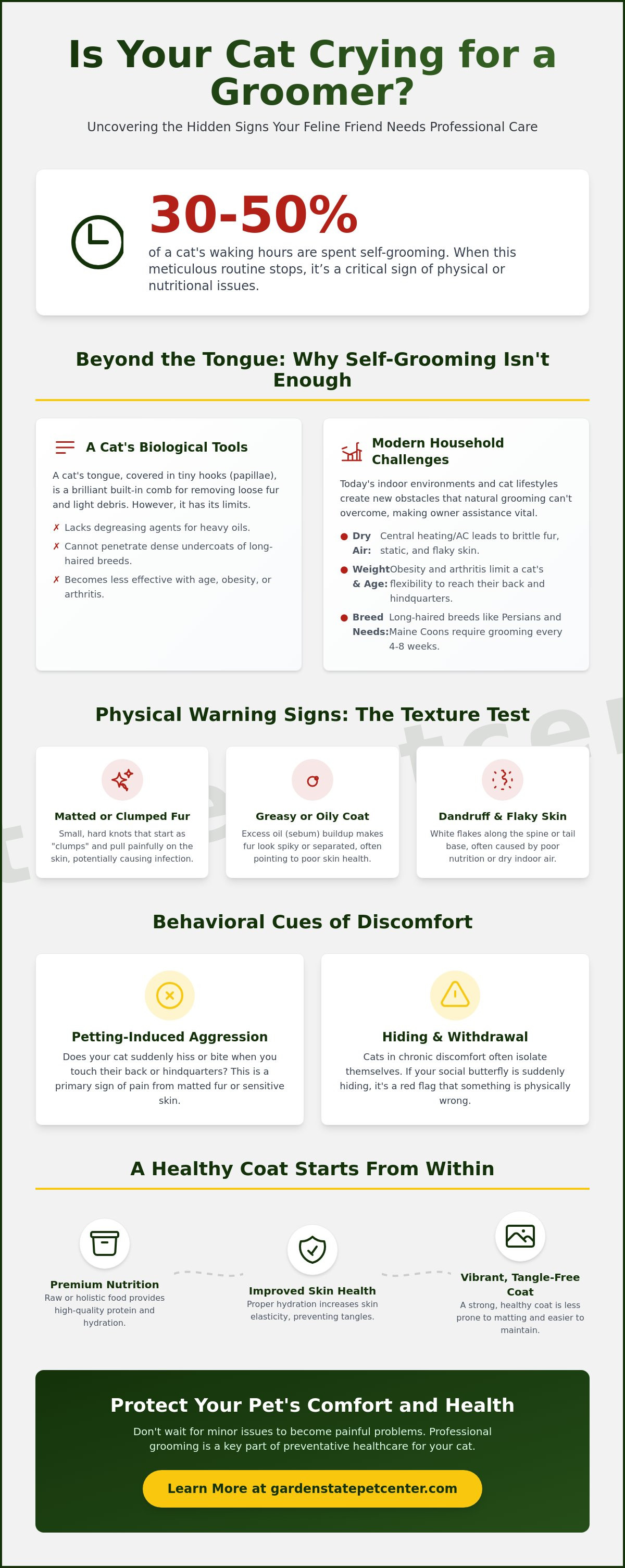
A cat's tongue is a biological marvel. It's covered in tiny, backward-facing hooks called papillae. These rigid barbs are perfect for removing loose fur and surface debris during natural grooming behaviors. However, relying solely on this built-in comb is often a mistake. Many owners fall for the "self-grooming myth," believing their pets are entirely self-sufficient. This misconception often leads people to overlook the early signs your cat needs grooming, especially as environmental factors and age begin to take a toll on their ability to stay clean.
To better understand the gentle touch required for feline maintenance, watch this helpful video:
Long-haired breeds like Persians or Maine Coons face unique challenges that short-haired cats do not. Their dense undercoats easily trap oils and moisture that a tongue simply cannot reach. While a short-haired cat might manage for longer, a Maine Coon often requires professional attention every 4 to 8 weeks to prevent painful matting. Physical limitations also play a huge role in hygiene. Senior cats struggling with arthritis or younger cats dealing with obesity often lose the flexibility needed to reach their lower back or hindquarters. When you notice greasy fur or "clumping" in these hard-to-reach spots, these are clear signs your cat needs grooming from a specialist who understands their physical limitations.
The Biological Limits of Feline Self-Care
Cat saliva lacks the degreasing agents necessary to break down heavy environmental oils or stubborn dander. In modern homes, central heating and air conditioning strip moisture from the air, which can make a cat's coat brittle or prone to static. This lack of humidity often leads to increased flaking that self-grooming cannot resolve. Additionally, cats with a higher body mass index simply cannot reach every inch of their body, leaving certain areas prone to skin infections. Browse our specialized cat supplies to find tools that help bridge the gap between their efforts and their needs.
When "Self-Cleaning" Becomes a Health Risk
Relying on a cat to brush themselves often results in excessive hairball production. When a cat ingests too much loose fur, it can lead to dangerous digestive blockages or chronic vomiting. Professional deshedding removes the dead coat before your cat swallows it, protecting their internal health. Functional grooming is a balance between pet effort and owner assistance. Invest in your pet's comfort by recognizing when their internal tools aren't enough to maintain a healthy, vibrant coat.
The Texture Test: Identifying Physical Signs Your Cat Needs Help
Running your hands through your cat's fur should be a smooth, effortless experience. If you feel small, hard knots or notice the hair separating into oily clumps, these are clear signs your cat needs grooming. While some owners assume a slightly dirty coat is just part of aging, it often points to a breakdown in skin health or a physical inability to reach certain areas. Identifying these markers early prevents a minor maintenance issue from becoming a painful emergency that requires medical intervention.
A greasy coat occurs when excess sebum builds up, causing the fur to look "spiky" or separated rather than fluffy. This often accompanies dandruff, which manifests as white flakes near the base of the tail or along the spine. According to the Cornell Feline Health Center, changes in skin and coat texture can sometimes signal internal health shifts that require professional observation. Don't ignore your nose, either. A healthy cat has a neutral or slightly dusty scent. A sour or musty smell suggests a bacterial or yeast overgrowth trapped against the skin by excess oil and dead hair.
Listen to your cat's movement on hard surfaces. If you hear a distinct "clicking" sound as they walk on hardwood or tile, their nails have overgrown. This isn't just a noise issue; long nails can curl back and pierce the sensitive paw pads, leading to infection. Regular professional trims ensure the quick is respected and the paws remain healthy. Explore our premium cat care collection to find specialized solutions for skin and coat maintenance between professional visits.
Detecting Mats Before They Become Pelts
Mats don't just appear overnight; they start as small "clumps" in high-friction areas like the armpits, groin, and behind the ears. You must feel for these hidden tangles during your daily petting sessions. Never attempt to cut a mat out with household scissors. Feline skin is paper-thin and incredibly elastic, making it easy to accidentally create a deep laceration. Professionals use specialized clippers and guards to safely remove these obstructions without risking a trip to the emergency clinic.
Skin Health and the Dander Dilemma
Distinguishing between seasonal shedding and abnormal hair loss is vital for early detection of skin issues. If you see bald patches or "stud tail"—a waxy, crusty buildup at the base of the tail—your cat needs a professional deep clean. A professional bath does more than just clean the surface; it removes deep-seated allergens and dead skin cells that a cat's tongue cannot reach. This process redistributes natural oils, effectively ending the cycle of chronic flaking and itching.
Behavioral Red Flags: How Discomfort Manifests as Attitude
Many owners dismiss a sudden hiss or a sharp swat as a simple personality quirk or a sign of aging. However, shifts in temperament are frequently the most reliable signs your cat needs grooming. Cats are masters at hiding physical pain, so they often express discomfort through their actions rather than obvious vocal cries. If your normally affectionate companion suddenly avoids your touch or reacts poorly to being petted, it's time to investigate the state of their skin and coat.
Petting-induced aggression is a common response to the hidden tension caused by mats. When you stroke a cat with tangled fur, the movement of your hand pulls the skin tight against the knot, creating a sharp, pinching sensation. Experts at the Texas A&M College of Veterinary Medicine emphasize that regular maintenance prevents these painful developments and helps maintain the bond between pet and owner. Instead of assuming your cat is becoming "grumpy," consider that they may be living in a constant state of physical irritation that makes human contact unbearable.
A cat's instinct to hide often triggers when they feel vulnerable, restricted, or physically unclean. If your pet is spending more time under the bed or in the back of a closet, they might be struggling with a heavy, greasy coat that limits their range of motion. This discomfort can also lead to changes in litter box habits. Long-haired cats often suffer from waste becoming trapped in the fur around their hindquarters. This is not only unsanitary but can cause a cat to associate the litter box with the tugging and pulling of soiled fur, leading them to seek out other areas of the home to relieve themselves.
The Link Between Matting and Chronic Pain
Mats do not just sit on top of the fur; they actively pull on the skin with every step and stretch. This constant tension can lead to skin bruising or even open sores that are hidden beneath the hair. A "grumpy" cat is often just a matted cat in search of relief. Owners frequently report an immediate and dramatic personality shift after a professional grooming session, as the removal of these "pelts" allows the cat to move freely without pain for the first time in months.
Lethargy and Grooming Avoidance
Distinguishing between a normal afternoon nap and pain-related withdrawal is essential for any pet parent. If your cat stops attempting to groom themselves altogether, it may indicate that the act of reaching certain spots has become too painful due to arthritis or skin sensitivity. A complete lack of self-care is a major red flag for underlying systemic issues or severe coat compaction. Behavioral changes are often the first silent cry for grooming help.
The Nutritional Link: How Premium Food Impacts Grooming Needs
Your cat's skin is their largest organ. It requires a significant amount of daily protein and fat to maintain its barrier function. When you notice the physical signs your cat needs grooming, such as a dull coat or persistent flakes, the root cause is often sitting in their food bowl. Omega-3 fatty acids are essential for maintaining skin elasticity and a healthy shine. Without these vital nutrients, the skin becomes dry and the fur loses its natural luster, making it much easier for tangles to form and escalate into painful mats.
High-carb "filler" foods often contribute to excessive shedding and an overproduction of skin oils. These fillers don't provide the high-quality amino acids necessary for strong hair follicles. This leads to a weak coat that sheds prematurely, forcing your cat to swallow more fur than their digestive system can handle. Transitioning to holistic pet food reduces the frequency of "emergency" grooming visits by supporting the coat's health from the inside out. A well-nourished cat naturally has a more manageable coat that resists clumping and oil separation.
Raw and Freeze-Dried Benefits for Coat Health
Bioavailability is the key to a vibrant coat. The nutrients found in freeze-dried cat food are more easily absorbed than those in heavily processed kibble. Raw and gently cooked diets are naturally moisture-rich, providing the internal hydration necessary to prevent the dry, brittle fur that leads to matting. If you're struggling with a coat that feels like straw, consider how a moisture-first approach can change the texture of your pet's fur. Schedule a pet nutritional consultation with our team to build a "Grooming-First" diet plan tailored to your cat's specific breed and lifestyle.
Supplements That Support the Grooming Process
Follicle strength depends on specific minerals like zinc and vitamins like biotin. During seasonal transitions, your cat's body undergoes significant stress as they blow their old coat and grow a new one. Using targeted cat vitamins & supplements can help manage these periods, ensuring the new fur grows in strong and smooth. For a deeper look at how quality ingredients transform pet health, read our Premium Pet Food Guide. Proactive supplementation paired with a high-protein diet is the most reliable way to minimize the signs your cat needs grooming and keep their skin comfortable year-round.
Professional Grooming vs. At-Home Maintenance: Making the Choice
Deciding whether to handle coat care yourself or book a professional visit depends on the severity of the signs your cat needs grooming. While light brushing is a rewarding bonding activity, attempting to remove deep mats with household scissors is dangerous. Feline skin is thin and highly elastic. A small slip often leads to deep nicks or hematomas. These painful bruises occur when blood vessels under the skin rupture due to the extreme tension of tight mats. Avoid the risk of injury by recognizing when a situation requires a professional's specialized tools and steady hand.
Certain maintenance tasks, such as the "sanitary trim," are best left to experts. This procedure involves clearing the fur around the hindquarters to prevent waste from trapping in the coat, a common issue for long-haired breeds. While short-haired cats might only need occasional help, breeds like Persians or Maine Coons typically require a professional session every 4 to 8 weeks. Establishing this rhythm ensures your pet stays clean and prevents the behavioral withdrawal associated with matted, uncomfortable skin.
The Professional Advantage
Professional groomers utilize high-velocity dryers to effectively remove the dead undercoat that causes heavy shedding. This process is far more efficient than manual brushing and significantly reduces the hairballs your cat might otherwise ingest. Groomers also provide specialized shampoos tailored to specific skin conditions, from chronic flaking to excessive oiliness. This professional environment offers a "second pair of eyes." An experienced groomer often detects hidden lumps, skin lesions, or parasites that are easily missed during routine petting at home.
Creating a Maintenance Routine
Create a consistent daily brushing routine to extend the time between professional appointments. Frequent, gentle sessions prevent small tangles from escalating into the painful "clumping" phase. To make these sessions more enjoyable, use pet toys and accessories to provide mental enrichment and positive reinforcement. This helps your cat associate grooming with reward and reduces the stress of future visits. Explore our specialized cat care collection for professional-grade maintenance tools to keep your pet's coat in peak condition between salon visits.
Prioritize Your Cat's Long-Term Comfort and Health
Understanding that grooming is a vital health diagnostic tool allows you to act before minor issues become painful emergencies. You've learned how to distinguish between normal shedding and the early "clumping" phase of matting. You also understand the deep connection between a moisture-rich, raw diet and a resilient, shiny coat. By staying vigilant for the physical and behavioral signs your cat needs grooming, you protect your pet from the chronic tension and skin irritation that often leads to withdrawal or aggression.
At Garden State Pet Center, we bring family-owned expertise since 1990 to every customer interaction. Our specialized care for sensitive and exotic requirements ensures your pet receives the highest level of professional attention. Consult with our on-site certified pet nutritionist to discover how premium holistic food can transform your cat's skin health. Take the next step in proactive care today. Shop Premium Cat Food and Grooming Supplies to support your companion's well-being from the inside out. Your cat's comfort is our passion, and we're ready to help them thrive.
Frequently Asked Questions
How often should a cat be professionally groomed?
Most cats benefit from a professional session every 4 to 12 weeks depending on their coat length and health. Long-haired breeds like Persians or Maine Coons specifically require attention every 4 to 8 weeks to prevent painful compaction. Short-haired cats often only need seasonal visits for deshedding. Regular appointments help you stay ahead of the signs your cat needs grooming before they become physical emergencies.
Can I cut my cat’s mats out with scissors at home?
Avoid using scissors to remove mats at home because feline skin is incredibly thin and elastic. It's very easy to accidentally create a deep laceration or hematoma while trying to cut through a tight knot. Professionals use specialized clippers with safety guards to remove mats without risking injury. If you find a mat you can't gently brush out, it's safer to book a professional appointment.
Why does my cat have dandruff even though they groom themselves?
Dandruff often indicates skin dehydration or a lack of essential fatty acids in the diet. While cats are fastidious, their saliva lacks the degreasing agents necessary to remove deep-seated oils and dead skin cells. Low indoor humidity also contributes to flaking. If you notice persistent white flakes, it's a signal that your pet's skin needs better internal hydration or a professional deep-cleaning bath.
Is professional grooming too stressful for an older cat?
Professional grooming is actually very beneficial for senior cats who can no longer reach certain areas due to arthritis. Many groomers use specialized techniques to minimize stress and prioritize the cat's comfort. Since older cats are more prone to matting and skin issues, regular maintenance is essential for their quality of life. Always inform your groomer of any age-related health conditions before the appointment starts.
What is a "lion cut" and does my cat need one?
A lion cut involves shaving the cat's body while leaving the fur long on the head, paws, and tip of the tail. This style is typically reserved for cats with severe, full-body matting or those who struggle with extreme heat. Your cat doesn't necessarily need this cut if you maintain a consistent brushing routine and provide high-quality nutrition to keep the coat manageable and tangle-free.
How does diet affect how much my cat sheds?
Diet directly impacts coat strength and the amount of fur your cat loses daily. High-carb filler foods often lead to weak hair follicles and excessive shedding. Switching to raw or holistic pet food provides the Omega-3 fatty acids and moisture needed for a resilient, shiny coat. Better nutrition means fewer hairballs and a coat that's much easier for you to maintain at home.
What should I do if my cat is aggressive during grooming?
Stop the session immediately if your cat becomes aggressive. This behavior is often a reaction to the pain caused by mats pulling on the skin. It's one of the common behavioral signs your cat needs grooming from a professional who understands feline stress signals. Experts use specialized handling techniques and tools to complete the process safely without escalating your pet's anxiety or fear.
Does my short-haired cat ever need a professional bath?
Short-haired cats definitely benefit from professional baths to remove surface allergens and excess oils. While they don't mat like long-haired breeds, they still accumulate dander and dead hair that a tongue simply can't clear. A professional deep clean redistributes natural skin oils and leaves the coat looking vibrant. It's also an excellent way to reduce the amount of cat hair found around your home.

Article by
Victor Santucci
Victor Santucci is the owner of Garden State Pet Center in Audubon, NJ, where he specializes in premium pet nutrition, exotic animals, and expert-level care. With years of hands-on experience and a passion for helping pets thrive, Victor is dedicated to educating pet owners on proper nutrition, enrichment, and species-specific care. His mission is simple: provide every pet with the highest quality products and every customer with honest, knowledgeable guidance.
Share this post
- 0 comment
- Tags: cat behavior, cat care tips, cat grooming, cat health, feline nutrition, long-haired cats, matted fur, professional grooming, signs your cat needs grooming